The chemical formula for aluminum sulfite is $\text{Al}_2(\text{SO}_3)_3$. This inorganic compound consists of two aluminum cations ($\text{Al}^{3+}$) and three sulfite anions ($\text{SO}_3^{2-}$). It is primarily recognized in industrial chemistry for its specific role in paper pulping, leather tanning, and as a specialized reagent in chemical synthesis, though it is notably less stable in aqueous environments than its counterpart, aluminum sulfate.
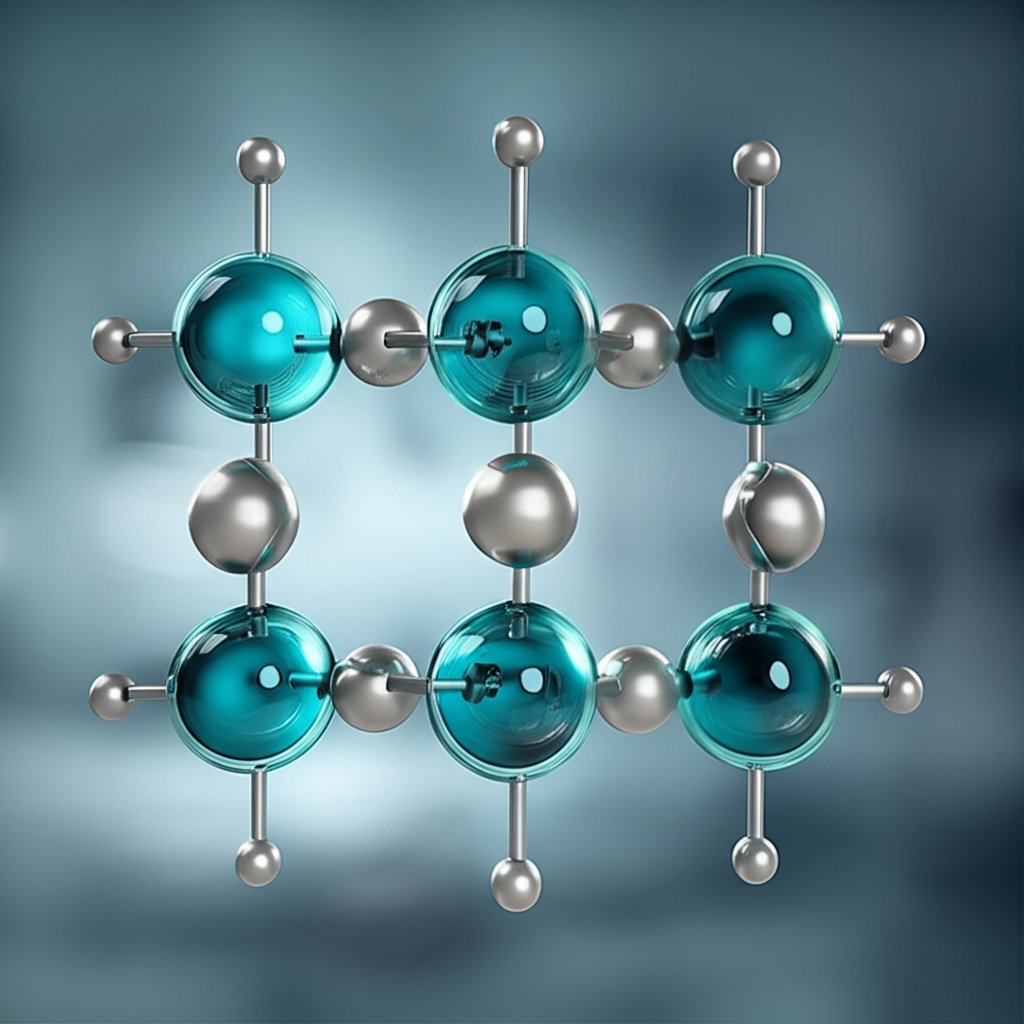
Understanding the Chemical Composition and Structure
To understand aluminum sulfite, one must first look at the constituent ions that form the lattice of this salt. The compound is a product of the ionic bonding between a Group 13 metal and a polyatomic oxoanion of sulfur.
The Aluminum Ion ($\text{Al}^{3+}$)
Aluminum is a trivalent metal. In almost all of its chemical compounds, it loses its three valence electrons to achieve a stable noble gas configuration (Neon). This results in a high charge density for the $\text{Al}^{3+}$ ion. This high charge density makes aluminum ions very effective at polarizing nearby electron clouds, which influences how aluminum sulfite interacts with water and other polar solvents.
The Sulfite Ion ($\text{SO}_3^{2-}$)
The sulfite anion consists of one sulfur atom covalently bonded to three oxygen atoms. In this configuration, the sulfur atom is in the +4 oxidation state. The geometry of the sulfite ion is trigonal pyramidal, a result of the lone pair of electrons remaining on the sulfur atom according to Valence Shell Electron Pair Repulsion (VSEPR) theory. This lone pair is chemically significant because it makes the sulfite ion a potential ligand in coordination chemistry and a reducing agent in various redox reactions.
Stoichiometry and Bonding
The formula $\text{Al}_2(\text{SO}_3)_3$ is derived from the need for electrical neutrality. Since each aluminum ion carries a +3 charge and each sulfite ion carries a -2 charge, the simplest ratio that balances these charges is two aluminum ions ($2 \times +3 = +6$) for every three sulfite ions ($3 \times -2 = -6$). The resulting ionic lattice is held together by strong electrostatic forces, although, as we will explore, these bonds are susceptible to disruption by water molecules.
Physical and Chemical Properties
Aluminum sulfite is typically encountered as a white or off-white crystalline powder or as a granular solid. However, its existence as a pure, stable solid is often complicated by its tendency to hydrate or decompose.
Stability and Hydrolysis
One of the most critical aspects of aluminum sulfite's "context" is its instability in the presence of moisture. When aluminum sulfite is introduced to water, it undergoes a process known as hydrolysis. Unlike many other salts that simply dissolve into their component ions, aluminum sulfite reacts chemically with water.
The reaction can be summarized as follows: $$\text{Al}_2(\text{SO}_3)_3 + 6\text{H}_2\text{O} \rightarrow 2\text{Al}(\text{OH})_3 + 3\text{H}_2\text{SO}_3$$
The sulfurous acid ($\text{H}_2\text{SO}_3$) further decomposes into water and sulfur dioxide gas ($\text{SO}_2$): $$\text{H}_2\text{SO}_3 \rightleftharpoons \text{H}_2\text{O} + \text{SO}_2(g)$$
Because of this reaction, aqueous solutions of aluminum sulfite are rarely stable. They tend to precipitate aluminum hydroxide—a gelatinous white solid—and release the pungent, suffocating odor of sulfur dioxide. This characteristic limits the "shelf life" of the compound in humid environments and dictates how it must be stored and handled in industrial settings.
Thermal Decomposition
When heated in its solid form, aluminum sulfite decomposes before reaching a true melting point. The decomposition typically yields aluminum oxide ($\text{Al}_2\text{O}_3$) and sulfur dioxide gas. This thermal behavior is utilized in certain specialized pyrotechnic and chemical manufacturing processes where a controlled release of $\text{SO}_2$ is required at high temperatures.
Synthesis and Formation Methods
The production of aluminum sulfite in a laboratory or industrial environment requires careful control of pH and temperature to prevent immediate hydrolysis.
Precipitation Reaction
The most common method for synthesizing aluminum sulfite is the reaction between a soluble aluminum salt and a soluble sulfite salt. For example, mixing aluminum chloride ($\text{AlCl}_3$) with sodium sulfite ($\text{Na}_2\text{SO}_3$) in a controlled environment can yield a precipitate of aluminum sulfite:
$$2\text{AlCl}_3(aq) + 3\text{Na}_2\text{SO}_3(aq) \rightarrow \text{Al}_2(\text{SO}_3)_3(s) + 6\text{NaCl}(aq)$$
To obtain a high-purity yield, the reaction is often conducted in a non-aqueous solvent or under conditions where the water content is strictly minimized.
Direct Reaction with Sulfur Dioxide
Another method involves passing sulfur dioxide gas through a suspension of aluminum hydroxide. This "gas-solid" or "gas-slurry" reaction allows for the formation of the sulfite directly:
$$2\text{Al}(\text{OH})_3 + 3\text{SO}_2 \rightarrow \text{Al}_2(\text{SO}_3)_3 + 3\text{H}_2\text{O}$$
In this process, the water produced must be removed continuously to prevent the backward reaction (hydrolysis) from occurring.
Industrial and Laboratory Context
While aluminum sulfate ($Al_2(SO_4)_3$) is a "workhorse" chemical used in massive quantities for water treatment and papermaking, aluminum sulfite occupies a more specialized niche.
The Pulp and Paper Industry
In the context of the paper industry, sulfites are used in the sulfite pulping process. While magnesium or calcium sulfites are more common, aluminum sulfite has been researched and occasionally employed for specific grades of paper. The acidic nature of the aluminum-sulfite system helps break down the lignin that binds wood fibers together. As of 2026, the industry has largely shifted toward "greener" or more recyclable pulping liquors, but aluminum sulfite remains relevant in the production of high-opacity specialty papers.
Leather Tanning
Aluminum salts are used in "tawing," a process similar to tanning that produces white leather. Aluminum sulfite can act as a source of aluminum ions that cross-link the collagen fibers in animal hides. The sulfite component provides a milder acidic environment compared to sulfates, which can be beneficial for preserving the structural integrity of certain delicate skins.
Chemical Reagent and Catalyst
In organic synthesis, aluminum sulfite can serve as a catalyst for dehydration reactions or as a mild reducing agent. Its ability to release sulfur dioxide in a controlled manner makes it a useful reagent in the synthesis of sulfonated organic compounds.
Comparison of Aluminum-Sulfur Compounds
To better understand aluminum sulfite, it is helpful to compare it with related compounds that are often confused with it.
| Feature | Aluminum Sulfite | Aluminum Sulfate | Aluminum Sulfide |
|---|---|---|---|
| Formula | $\text{Al}_2(\text{SO}_3)_3$ | $\text{Al}_2(\text{SO}_4)_3$ | $\text{Al}_2\text{S}_3$ |
| Sulfur Oxidation State | +4 | +6 | -2 |
| Water Stability | Low (Hydrolyzes to $\text{SO}_2$) | High (Highly Soluble) | Very Low (Reacts to $\text{H}_2\text{S}$) |
| Common Use | Specialty Pulping, Tanning | Water Treatment, Deodorant | Lab Synthesis of $\text{H}_2\text{S}$ |
| Odor | Acrid (due to $\text{SO}_2$) | Odorless | Rotten Eggs (due to $\text{H}_2\text{S}$) |
Safety, Handling, and Storage Guidelines
As of 2026, safety protocols for aluminum sulfite are governed by stringent international standards regarding the handling of sulfur-releasing compounds.
Health Hazards
- Inhalation: The primary risk is the inhalation of sulfur dioxide gas produced upon decomposition. $\text{SO}_2$ is a potent respiratory irritant that can cause bronchospasm, especially in individuals with asthma.
- Skin and Eye Contact: The powder is acidic and hygroscopic. It can cause irritation or chemical burns upon contact with moist skin or eyes.
- Ingestion: While not acutely toxic in small amounts, ingestion can cause severe gastrointestinal distress due to the release of gas and the presence of aluminum ions.
Handling and Storage
- Dry Storage: Aluminum sulfite must be stored in airtight containers, preferably under an inert gas like nitrogen, to prevent moisture from triggering hydrolysis.
- Ventilation: Workspaces using this compound must have robust local exhaust ventilation to manage any escaped $\text{SO}_2$.
- Personal Protective Equipment (PPE): Workers should use chemical-resistant gloves, safety goggles, and, in cases of dust or gas release, appropriate respiratory protection (N95 or gas-specific cartridges).
Environmental Impact and 2026 Regulations
The environmental footprint of aluminum sulfite is primarily linked to the release of aluminum ions into waterways and the acidification caused by sulfur dioxide. In 2026, environmental agencies like the EPA (United States) and ECHA (European Union) have implemented stricter limits on "sulfur-heavy" industrial waste.
When aluminum sulfite enters an aquatic ecosystem, the resulting aluminum hydroxide precipitate can coat the gills of fish, leading to respiratory failure. Furthermore, the drop in pH caused by the formation of sulfurous acid can disrupt the local biodiversity. Therefore, industrial facilities are required to treat their effluent to neutralize acidity and precipitate aluminum before discharge.
Frequently Asked Questions
Is aluminum sulfite the same as aluminum sulfate?
No. While they sound similar, they are chemically distinct. Aluminum sulfite ($\text{Al}_2(\text{SO}_3)_3$) contains sulfur in the +4 oxidation state and is relatively unstable in water. Aluminum sulfate ($\text{Al}_2(\text{SO}_4)_3$) contains sulfur in the +6 oxidation state, is very stable in water, and is much more widely used in consumer products like antiperspirants and water purification tablets.
Why does aluminum sulfite smell like burnt matches?
The "burnt match" smell is characteristic of sulfur dioxide ($\text{SO}_2$) gas. Because aluminum sulfite reacts with moisture in the air or on your nasal membranes, it releases small amounts of $\text{SO}_2$, which the human nose perceives as a sharp, acrid odor similar to a freshly struck match.
Can aluminum sulfite be used in food?
Generally, no. While some sulfites (like sodium bisulfite) are used as preservatives in dried fruits and wine, aluminum sulfite is not approved for food use due to the potential for aluminum toxicity and the compound's inherent instability, which would lead to off-flavors and gas production within packaging.
How do I calculate the molar mass of $\text{Al}_2(\text{SO}_3)_3$?
To calculate the molar mass, add the atomic masses of all atoms in the formula:
- Aluminum (Al): $2 \times 26.98 = 53.96\text{ g/mol}$
- Sulfur (S): $3 \times 32.06 = 96.18\text{ g/mol}$
- Oxygen (O): $9 \times 16.00 = 144.00\text{ g/mol}$
- Total Molar Mass: $294.14\text{ g/mol}$
What happens if aluminum sulfite is mixed with a strong acid?
Mixing aluminum sulfite with a strong acid (like hydrochloric acid) accelerates its decomposition. The acid provides an abundance of protons ($H^+$), which react with the sulfite ions to rapidly evolve sulfur dioxide gas. This reaction is often used in laboratories to generate small, controlled amounts of $\text{SO}_2$ for experiments.
Final Recommendations for Researchers and Industry
When working with aluminum sulfite in 2026, the priority must be the control of atmospheric moisture. Researchers should prioritize anhydrous conditions if the goal is to maintain the integrity of the salt. For industrial users in tanning or pulping, transitioning to stabilized liquid formulations—where the pH is carefully buffered—can mitigate the risks associated with $\text{SO}_2$ off-gassing. Always consult the most recent Safety Data Sheet (SDS) from your chemical supplier, as regulatory thresholds for aluminum and sulfur compounds are subject to periodic updates to reflect new toxicological data.