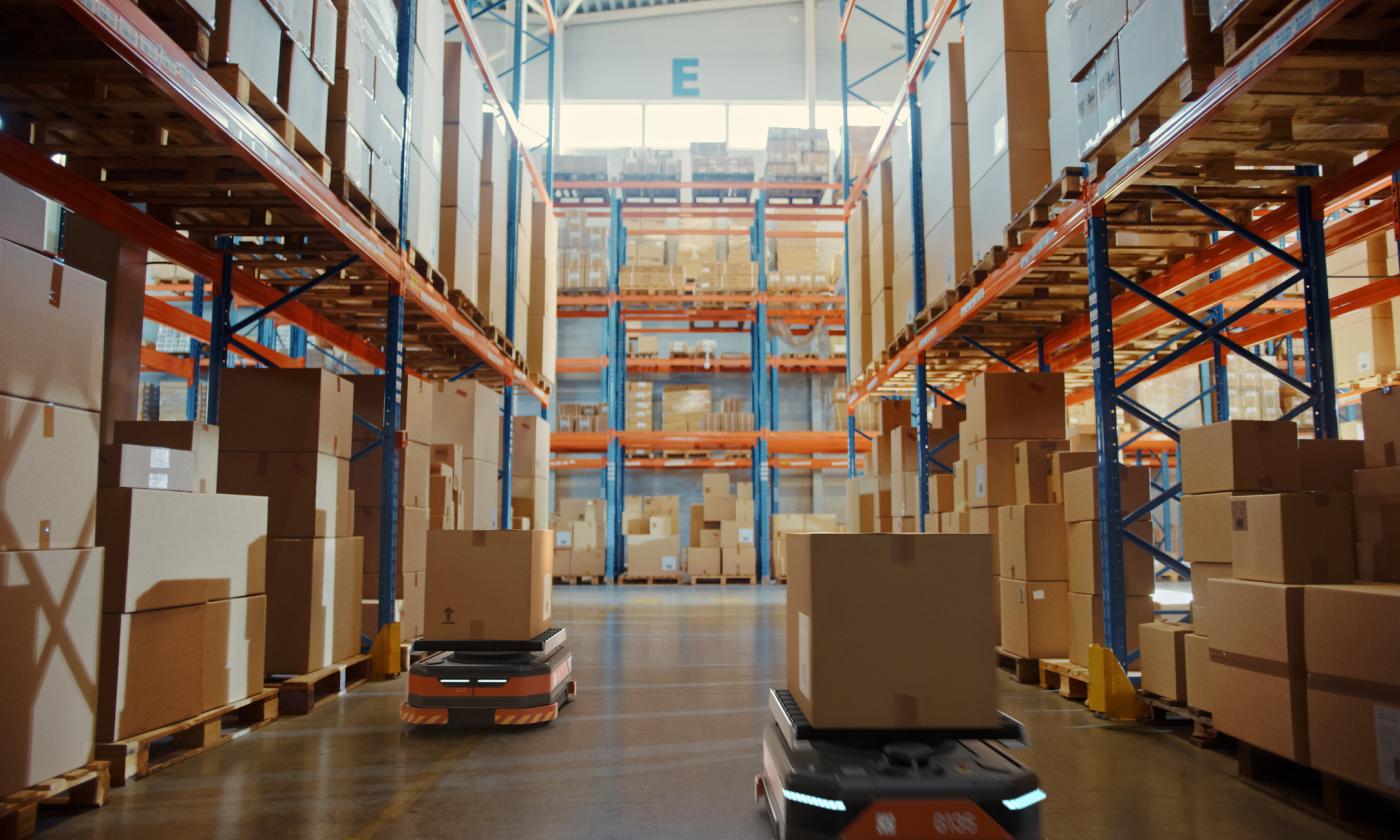
Allied Technology has evolved from a specialized engineering firm into a premier provider of integrated robotic systems and modular automation. By 2026, the company has successfully transitioned its core focus toward standardized, AI-enhanced robotic cells and end-of-line solutions, helping manufacturers bridge the gap between complex custom machinery and accessible, flexible automation.
Industrial automation is no longer a luxury reserved for the world’s largest automotive plants. As of 2026, the landscape is defined by the democratization of robotics, where small and medium-sized enterprises (SMEs) utilize the same high-level precision once limited to industrial giants. At the center of this shift is the evolution of Allied Technology. Originally known for bespoke conveyor systems and individual machine builds, the organization has spent decades refining its approach to solve the most pressing problem in modern manufacturing: the need for rapid scalability in an era of labor shortages and volatile consumer demand.
The Early Foundations: Custom Engineering and Material Handling
The journey of Allied Technology began with a focus on solving specific mechanical problems through custom engineering. In the early stages of its evolution, the company operated primarily as a problem-solver for niche manufacturing hurdles. This period was characterized by the production of "one-off" machines—equipment designed for a single task within a specific facility.
During this era, the primary technical challenge was mechanical synchronization. Automation relied heavily on hard-wired logic and mechanical cams. Allied’s early reputation was built on its ability to manufacture robust conveyor systems that could handle difficult materials, from heavy industrial parts to delicate food products. This foundation in material handling provided the critical data and operational experience needed to understand how products behave "in flow," which later became the backbone of their robotic integration strategies.
By mastering the movement of goods, the company identified a recurring bottleneck: the transition points between different machines. These "transfer zones" were where most downtime occurred. The realization that automation is only as strong as its weakest link prompted the shift from being a component manufacturer to a systems integrator.
The Shift Toward Robotic Integration and Partnerships
As the 21st century progressed, Allied Technology recognized that mechanical hardware alone could not meet the increasing demands for flexibility. The "evolution" truly accelerated when the company began integrating 6-axis articulated robots into their systems. By partnering with industry leaders such as FANUC and Universal Robots (UR), Allied began to replace fixed-path machinery with programmable robotic arms.
This transition was not merely about swapping a pneumatic pusher for a robot; it was a fundamental shift in control philosophy. Robotic integration allowed a single station to handle multiple product SKUs (Stock Keeping Units) without requiring physical retooling. For manufacturers, this meant that a line producing 12-ounce bottles in the morning could be reprogrammed to handle gallon jugs in the afternoon with minimal downtime.
The Rise of Collaborative Robots (Cobots)
A significant milestone in Allied’s evolution was the early adoption and integration of collaborative robots. Unlike traditional industrial robots that require extensive safety fencing, cobots are designed to work alongside human operators. In the 2026 manufacturing environment, Allied has refined the use of cobots for "cobotic palletizing" and "pick-and-place" operations.
These systems use advanced force-torque sensors and vision systems to ensure safety. By 2026, Allied’s cobot solutions have moved beyond simple tasks to complex assembly and testing, utilizing high-speed processors that allow cobots to move at near-industrial speeds while maintaining a safety-rated monitored stop capability.
Standardizing the Bespoke: Modular Automation Cells
One of the most significant achievements in Allied Technology’s evolution is the "productization" of automation. Historically, every automation project was a "clean sheet" design, which led to long lead times and high engineering costs. Allied addressed this by developing modular, pre-engineered automation cells.
These cells—often referred to as "The Allied Brand" of equipment—are standardized units for palletizing, case packing, and tray loading. Instead of designing a new system from scratch, engineers now configure these modules to fit the client’s specific footprint and throughput requirements.
Why Modularity Matters in 2026:
- Reduced Lead Times: Standardized frames and components mean systems can be deployed in weeks rather than months.
- Ease of Maintenance: Common parts across different modules simplify the spare parts inventory for the end user.
- Scalability: Manufacturers can start with a single palletizing cell and add modular "plug-and-play" conveyors or case packers as their budget allows.
Technical Specifications and System Comparison
To understand the current state of Allied’s offerings in 2026, it is helpful to compare the different tiers of automation they provide. The following table outlines the technical differences between traditional fixed automation and the modern integrated robotic systems developed through Allied's evolution.
| Feature | Traditional Fixed Automation | Allied Modular Robotic Cells (2026) | Collaborative (Cobot) Systems |
|---|---|---|---|
| Flexibility | Low (Single product/task) | High (Multiple SKUs via software) | Ultra-High (Portable & adaptable) |
| Footprint | Large (Requires safety cages) | Moderate (Optimized for floor space) | Minimal (Often fence-less) |
| Programming | Proprietary PLC Logic | Intuitive HMI / Vision-Guided | Lead-through teaching / AI |
| Typical Payloads | 50kg - 1000kg+ | 10kg - 250kg | 3kg - 30kg |
| Deployment Time | 6 - 12 Months | 12 - 16 Weeks | 4 - 8 Weeks |
| Primary Vision | None or Basic Sensors | 3D AI Vision / LiDAR | 2D/3D Integrated Sensors |
The Role of AI and Vision Systems in 2026
In 2026, Allied Technology’s evolution has reached a stage where "blind" robots are obsolete. The integration of advanced 3D vision systems and artificial intelligence has revolutionized how these machines interact with their environment.
In the past, parts had to be perfectly oriented in a fixture for a robot to pick them up. Today, Allied’s systems utilize "Random Bin Picking" technology. Using high-resolution cameras and AI algorithms, the robot can identify a part's orientation in a cluttered bin, calculate the optimal grip point, and adjust its path in real-time to avoid collisions.
Furthermore, AI is now used for predictive maintenance. Allied's systems in 2026 are equipped with sensors that monitor vibration, heat, and current draw in the robotic joints. This data is analyzed to predict a component failure before it happens, allowing manufacturers to schedule repairs during planned downtime rather than reacting to an unexpected breakdown.
Addressing the Labor Crisis Through Automation
A driving force behind the evolution of Allied Technology has been the global shift in the labor market. As of 2026, the shortage of skilled manufacturing labor has become a permanent fixture of the economy. Allied has positioned its automation solutions not as a replacement for humans, but as a "labor multiplier."
By automating "D3 jobs"—tasks that are Dull, Dirty, or Dangerous—companies allow their human workforce to move into higher-value roles such as quality control, machine programming, and facility management. For example, in a traditional palletizing role, a worker might lift several thousand pounds of product per shift, leading to long-term repetitive strain injuries. Allied’s evolution in robotic palletizing has virtually eliminated these risks in the facilities where their systems are deployed.
Integration of Digital Twins and Simulation
A critical component of Allied’s modern workflow is the use of "Digital Twin" technology. Before a single piece of steel is cut, Allied creates a complete virtual replica of the proposed automation system. This 2026-standard practice allows for:
- Virtual Commissioning: Testing the PLC code and robotic paths in a digital environment to ensure there are no mechanical interferences.
- Throughput Verification: Running "what-if" scenarios to prove that the system can handle the required parts-per-minute (PPM) targets.
- Operator Training: Using VR (Virtual Reality) to train plant staff on the new equipment before it even arrives on the factory floor.
This evolution from 2D blueprints to 4D simulations (where the fourth dimension is time/motion) has significantly reduced the risks associated with capital investment in automation.
Frequently Asked Questions
What industries does Allied Technology primarily serve in 2026?
Allied Technology provides solutions across a broad spectrum of industries, but their primary focus remains on food and beverage, pharmaceuticals, consumer packaged goods (CPG), and light industrial manufacturing. Their systems are specifically designed to meet the strict sanitary requirements of food-grade environments while maintaining the high speeds required for CPG lines.
Can Allied Technology’s systems be integrated into existing production lines?
Yes, a hallmark of Allied’s evolution is their expertise in "brownfield" integration. This involves retrofitting modern robotic cells into existing, older facilities. Their engineering team specializes in creating custom interfaces that allow new robotic controllers to communicate with legacy PLC systems and conveyors.
What is the typical ROI for an Allied Technology automation system?
In 2026, the typical Return on Investment (ROI) for a modular Allied system ranges from 12 to 24 months, depending on the complexity and the number of shifts the equipment runs. These calculations typically factor in labor savings, reduced product damage, improved throughput, and lower insurance premiums due to reduced workplace injuries.
Does Allied Technology provide post-installation support and training?
Comprehensive support is a core part of their service model. Allied offers remote monitoring services where their engineers can log into a system (via secure VPN) to troubleshoot issues in real-time. They also provide on-site training for maintenance teams to ensure the end user can perform basic programming and mechanical upkeep independently.
How does Allied Technology handle safety compliance?
All Allied systems are designed to meet or exceed current ISO and ANSI/PMMI safety standards. This includes the implementation of Safety-Rated Monitored Stops, protective guarding, and ergonomic assessments of human-machine interfaces. By 2026, they also incorporate advanced safety features like "speed and separation monitoring," which slows the robot down as a human approaches and stops it completely if they enter the restricted zone.
Final Recommendations for Implementation
For organizations looking to adopt or upgrade their automation through Allied Technology’s modern solutions, the following steps are recommended:
- Conduct a Throughput Audit: Before selecting a system, accurately measure your current manual cycle times and identify where the actual bottlenecks occur. Automation is most effective when applied to the slowest part of the line.
- Prioritize Modular Solutions: Unless your process is highly unique, opt for Allied’s pre-engineered modular cells. The savings in lead time and long-term maintenance generally outweigh the benefits of a 100% custom-built machine.
- Plan for Data Integration: Ensure your facility’s IT infrastructure is ready to handle the data output from modern robotic systems. Utilizing the "Smart Factory" features of 2026 requires a robust local network for real-time monitoring and OEE (Overall Equipment Effectiveness) tracking.
- Invest in Staff Training: The most successful automation deployments are those where the existing workforce feels empowered by the new technology. Work with Allied to provide deep-dive training for your lead operators and maintenance staff early in the process.