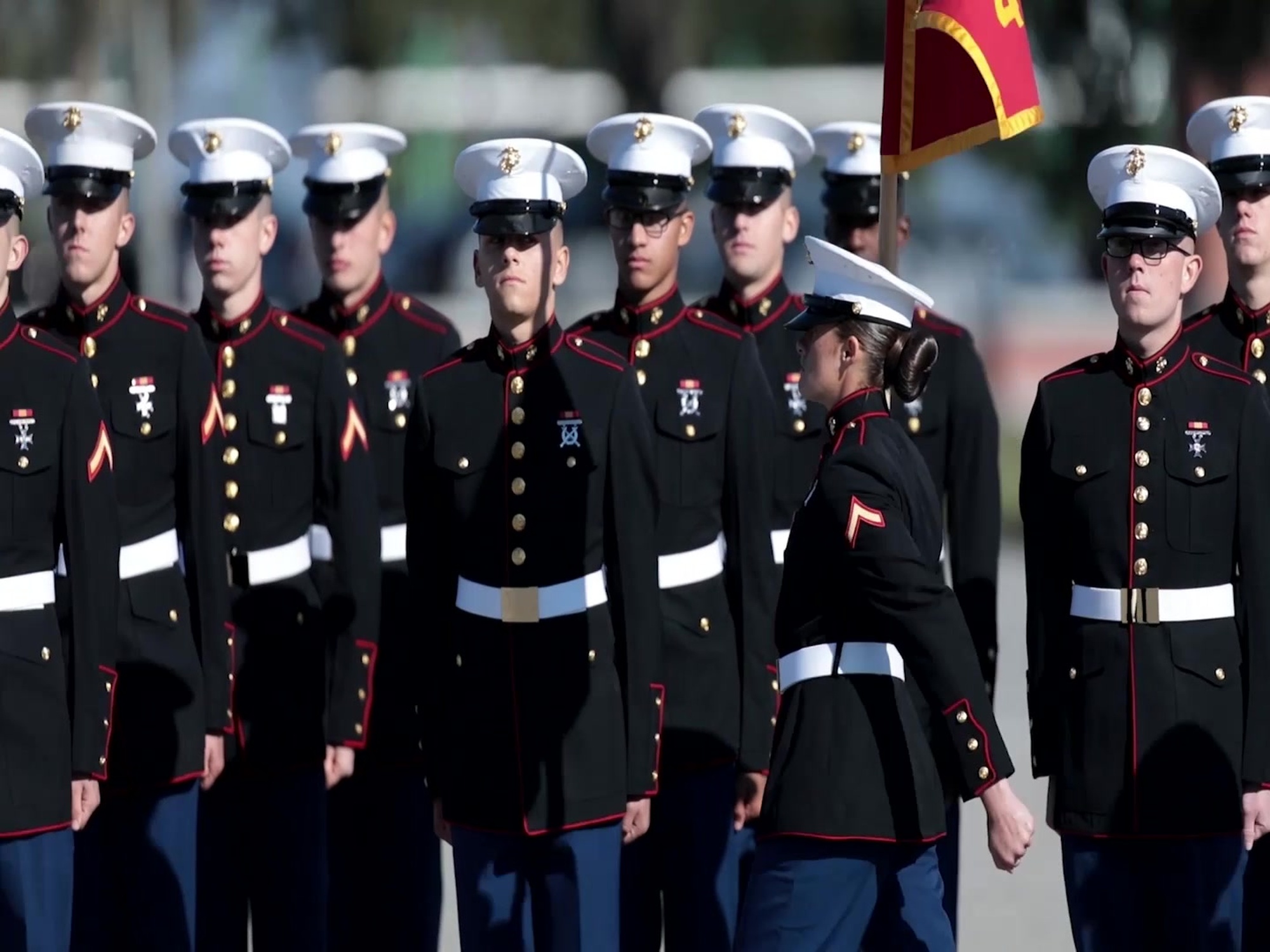
The United States Marine Corps (USMC) serves as the nation’s premier expeditionary force in readiness, specialized in amphibious operations, crisis response, and littoral warfare. Operating as a distinct branch within the Department of the Navy, the Marines provide rapidly deployable air-ground task forces capable of conducting operations across the full spectrum of military conflict globally.
The United States Marine Corps is often recognized by its distinct culture, rigorous training, and the unique role it plays within the Department of Defense. As of 2026, the Corps continues to undergo a significant structural transformation, pivoting from the sustained land-based campaigns of the early 21st century toward a more agile, technologically advanced force designed for maritime competition. Understanding the Marines requires a look at their historical foundation, their specific legal mandates under Title 10 of the U.S. Code, and the rigorous standards required of those who earn the title.
The Mission and Legal Mandate of the Marine Corps
The purpose of the Marine Corps is codified in federal law, specifically within Title 10 of the U.S. Code. This mandate requires the Corps to be "most ready when the nation is least ready." Unlike the Army, which is designed for sustained land combat, or the Navy, which focuses on maritime dominance, the Marine Corps exists to bridge the gap.
The primary missions include:
- Amphibious Warfare: Seizing or defending advanced naval bases and conducting land operations essential to a naval campaign.
- Expeditionary Operations: Maintaining a forward-deployed presence to respond immediately to international crises, ranging from humanitarian disasters to full-scale combat.
- Security of Naval Property: Providing security detachments for U.S. Embassies through the Marine Corps Security Guard (MSG) program and protecting naval installations.
- Presidential Support: The Marine Corps is responsible for the helicopter transport of the President of the United States (Marine One) via the HMX-1 squadron.
In 2026, the strategic focus remains centered on Expeditionary Advanced Base Operations (EABO). This concept involves small, highly mobile Marine units operating within "contested spaces" to provide reconnaissance, anti-ship strikes, and logistical support for the wider naval fleet.
Historical Evolution: Shaping the "Few and the Proud"
The history of the Marine Corps is inseparable from its identity. Founded on November 10, 1775, at Tun Tavern in Philadelphia, the Continental Marines were established to serve as sharpshooters and boarding parties aboard Navy vessels during the Revolutionary War.
Throughout the 19th century, the Marines participated in the Barbary Wars (inspiring the line "To the shores of Tripoli" in the Marines' Hymn) and the Mexican-American War ("The halls of Montezuma"). However, it was the 20th century that defined the modern USMC. During World War I, at the Battle of Belleau Wood, German forces reportedly nicknamed them "Teufel Hunden" or Devil Dogs, a moniker the Corps still embraces today.
World War II saw the Marines perfect the art of amphibious assault in the Pacific Theater. Battles at Iwo Jima, Guadalcanal, and Tarawa proved the necessity of a dedicated maritime landing force. In the post-Cold War era, the Marines were heavily utilized in Iraq and Afghanistan, serving as a second land army. However, current leadership has pushed the Corps back toward its maritime roots, divesting from heavy armor like tanks in favor of long-range precision fires and unmanned systems.
Force Design and Modern Structure in 2026
The Marine Corps of 2026 looks significantly different than it did two decades ago. Under the Force Design initiatives, the Corps has streamlined its structure to become lighter and more lethal. This reorganization is built around the Marine Air-Ground Task Force (MAGTF), a scalable organizational structure that combines command, ground, aviation, and logistics elements.
The Four Elements of a MAGTF:
- Command Element (CE): Provides the headquarters and leadership for the task force.
- Ground Combat Element (GCE): Includes infantry, artillery, reconnaissance, and combat engineers.
- Aviation Combat Element (ACE): Provides air support, transport, and electronic warfare using assets like the F-35B Lightning II and the MV-22 Osprey.
- Logistics Combat Element (LCE): Responsible for supply, maintenance, medical, and transportation services.
The most notable change in recent years has been the creation of Marine Littoral Regiments (MLRs). These units are specifically designed to operate in island chains and coastal regions, utilizing the NMESIS (Navy/Marine Expeditionary Ship Interdiction System) to engage enemy vessels from the shore.
Joining the Marine Corps: Requirements and Training
Becoming a Marine is widely considered the most difficult entry-level path in the U.S. military. The process begins with meeting strict eligibility criteria and culminates in a transformation process designed to instill the core values of Honor, Courage, and Commitment.
Recruitment Prerequisites
To enlist in the Marine Corps in 2026, applicants must generally meet the following:
- Citizenship: U.S. citizenship or legal permanent residency.
- Age: 17 to 28 (17-year-olds require parental consent).
- Education: A high school diploma is standard; GEDs are accepted but in limited quotas.
- Testing: Achieving a qualifying score on the ASVAB (Armed Services Vocational Aptitude Battery).
- Physicality: Passing a physical and medical screening at a Military Entrance Processing Station (MEPS).
Recruit Training (Boot Camp)
Marine Corps Recruit Training is 13 weeks long and is held at either Parris Island, South Carolina, or San Diego, California. It is divided into phases that focus on physical conditioning, marksmanship, martial arts, and core history. The final hurdle is "The Crucible," a 54-hour continuous training exercise involving food and sleep deprivation, culminating in the "Eagle, Globe, and Anchor" ceremony where recruits are finally called "Marines."
Officers are trained differently, primarily through the Officer Candidates School (OCS) in Quantico, Virginia, followed by The Basic School (TBS), where every officer—regardless of their future specialty—is trained to lead a provisional rifle platoon.
Rank Structure and Compensation
The Marine Corps maintains a traditional hierarchy. Ranks are divided into Enlisted (E-1 to E-9), Warrant Officers (W-1 to W-5), and Commissioned Officers (O-1 to O-10).
| Rank Category | Typical Grades | Roles and Responsibilities |
|---|---|---|
| Junior Enlisted | E-1 to E-3 | Focus on technical skills and following orders. |
| Non-Commissioned Officers (NCOs) | E-4 to E-5 | Corporals and Sergeants who provide direct leadership to small units. |
| Staff NCOs (SNCOs) | E-6 to E-9 | Senior technical experts and advisors to commanding officers. |
| Warrant Officers | W-1 to W-5 | Highly specialized technical experts in specific fields like ordnance or intelligence. |
| Company Grade Officers | O-1 to O-3 | Lieutenants and Captains leading platoons and companies. |
| Field Grade Officers | O-4 to O-6 | Majors, Lt. Colonels, and Colonels managing battalions and regiments. |
| General Officers | O-7 to O-10 | Strategic leadership of major commands and the entire Corps. |
As of 2026, pay is determined by the annual Basic Pay tables established by Congress. In addition to basic pay, Marines receive allowances for housing (BAH) and subsistence (BAS), which are typically tax-free. Benefits also include 100% tuition assistance while on active duty and the Post-9/11 GI Bill for education after service.
Military Occupational Specialties (MOS)
Every Marine is first and foremost a rifleman, but they also hold a specific job known as an MOS. This four-digit code determines their daily duties and training path.
- 03xx (Infantry): The core of the GCE, including riflemen, machine gunners, and mortars.
- 02xx/05xx (Intelligence & Plans): Analyzing satellite imagery, signals, and human intelligence to support operations.
- 60xx/61xx/62xx (Aircraft Maintenance): Ensuring that the sophisticated fleet of jets and tilt-rotor aircraft remain flight-ready.
- 06xx (Communications): Managing the secure radio and data networks essential for modern "network-centric" warfare.
- 17xx (Cyberspace Operations): A rapidly growing field in 2026, focusing on offensive and defensive digital operations.
The choice of MOS is often influenced by ASVAB scores and the "needs of the Corps," although many recruits can secure specific "program codes" that guarantee a general field of work before they even ship to boot camp.
Life as a Marine: Expectations and Culture
Life in the Marines is defined by discipline and a high operational tempo. Marines are expected to maintain peak physical fitness, passing the Physical Fitness Test (PFT) and Combat Fitness Test (CFT) annually. The lifestyle often involves frequent "deployments," which can mean six to seven months aboard a Navy ship as part of a Marine Expeditionary Unit (MEU).
Uniformity is a hallmark of the branch. From the iconic "Dress Blues" with the standing collar to the "MARPAT" (Marine Pattern) utility uniforms, the Corps emphasizes a professional appearance. Social life often revolves around the base, with major installations located at Camp Lejeune, NC, Camp Pendleton, CA, and Marine Corps Base Hawaii.
The Transition to Civilian Life
The Marine Corps provides the Transition Assistance Program (TAP) to help members move into civilian careers. Veterans often find success in law enforcement, security, logistics, and management, as the leadership skills developed in the Corps are highly transferable.
Frequently Asked Questions
What is the difference between the Army and the Marine Corps?
While both are ground combat forces, the Army is a massive, sustained-land-force organization capable of long-term occupation. The Marine Corps is smaller and designed for rapid entry and "expeditionary" missions, often operating from the sea. In 2026, the Marines focus more on high-tech, maritime-denial missions compared to the Army’s broader multi-domain focus.
Can women serve in the Marine Corps?
Yes. Since 2016, all MOS positions, including infantry and special operations (MARSOC), have been open to women who meet the physical and performance standards. In 2026, the Corps continues to integrate its recruit training at both Parris Island and San Diego to be fully gender-neutral.
How long is a standard Marine Corps enlistment?
The most common enlistment contract is for four years of active duty, followed by four years in the Individual Ready Reserve (IRR). Some technical fields, particularly aviation or cyber, may require five-year active-duty commitments due to the length of the required training schools.
What is MARSOC?
The Marine Corps Forces Special Operations Command (MARSOC) is the Marine component of the U.S. Special Operations Command (SOCOM). Marines in this unit are known as Raiders. They specialize in direct action, special reconnaissance, and foreign internal defense. Becoming a Raider requires a separate, rigorous selection and assessment process.
Is the Marine Corps part of the Navy?
The Marine Corps is a co-equal branch of service within the Department of the Navy, similar to how the Space Force is within the Department of the Air Force. While they share a Secretary of the Navy, the Marine Corps is led by the Commandant of the Marine Corps, who is a member of the Joint Chiefs of Staff.
Next Steps for Prospective Marines
For those considering service in 2026, the first practical step is to contact a local recruiting office to take a practice ASVAB test. This will identify which career paths are available. It is also recommended to begin a physical conditioning program focusing on running, pull-ups, and core strength, as the Initial Strength Test (IST) is a prerequisite for shipping to recruit training. Researching the various MOS options will ensure that you enter the Corps with a clear understanding of your future role and how it aligns with your long-term career goals.