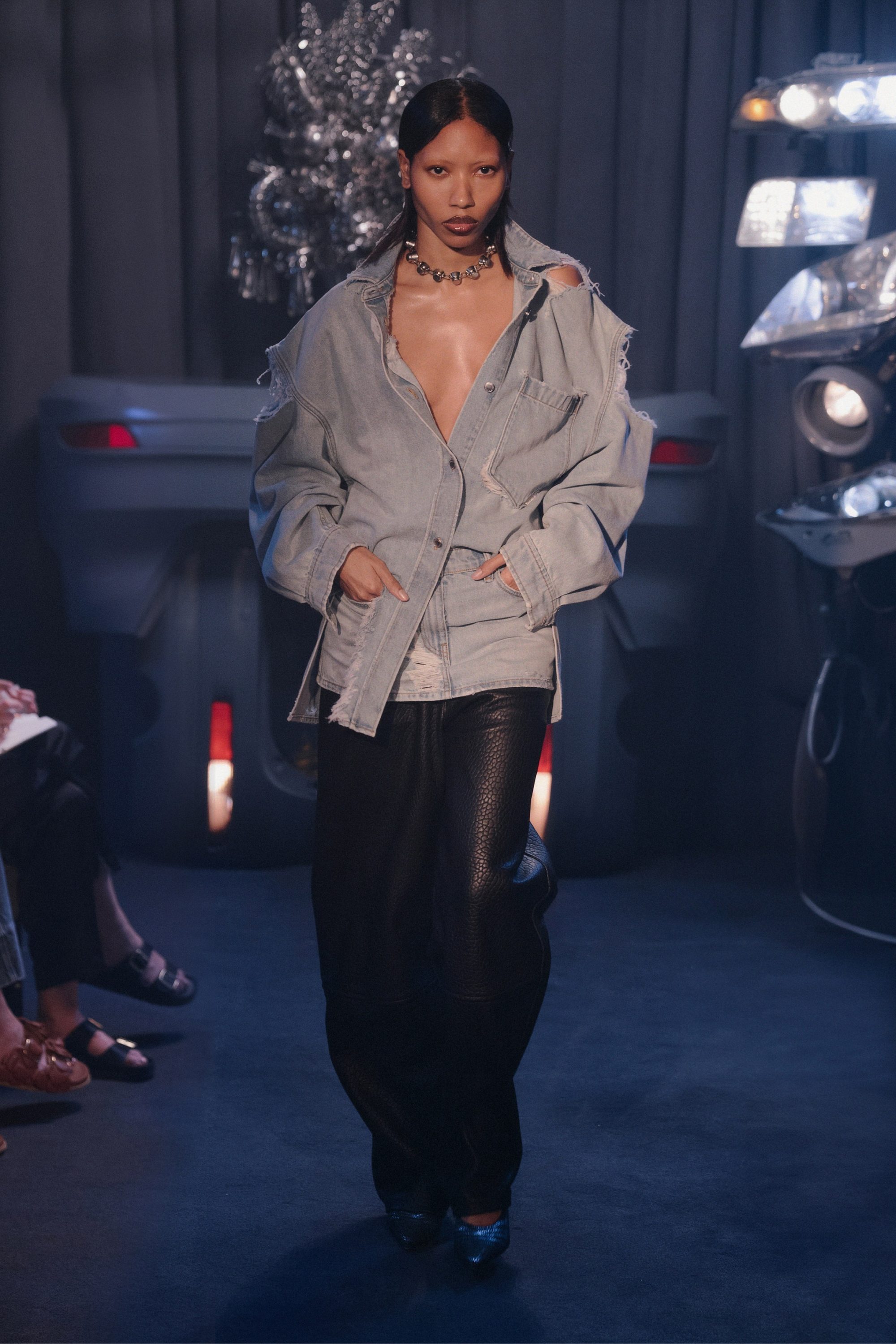
Alexander Wang advertising is defined by its "downtown cool" aesthetic, high-energy celebrity "Wang Squad" campaigns, and a strategic shift toward digital-first, provocative storytelling. By 2026, the brand has transitioned from traditional print media to immersive social-first content, leveraging cultural provocateurs and high-concept visual irony to maintain its status as an urban luxury pioneer.
The Foundations of the Alexander Wang Advertising Aesthetic
The visual language of Alexander Wang advertising has always been rooted in the "model off-duty" persona. Since the brand's inception, the advertising strategy has avoided the overly polished, sterile environments typical of mid-century European luxury houses. Instead, Wang opted for a gritty, urban realism that resonated with a younger, metropolitan audience.
The core of this aesthetic is the subversion of high-fashion tropes. Early campaigns often featured monochromatic palettes, stark lighting, and settings that ranged from industrial warehouses to the back of laundromats. This approach was not merely a stylistic choice but a calculated move to position the brand as "attainable luxury" that prioritized attitude over traditional opulence. By emphasizing the lifestyle of the wearer—someone who is likely to spend their nights at a warehouse rave rather than a gala—the advertising created a powerful, relatable narrative that bridged the gap between streetwear and high fashion.
In the mid-2010s, this aesthetic evolved to incorporate more cinematic elements. Working with legendary photographers like Steven Klein and Inez & Vinoodh, the advertising began to play with themes of voyeurism, youth rebellion, and nocturnal energy. The lighting became more dramatic, the compositions more crowded, and the overall mood shifted toward a celebration of the "Wangover"—the glamorous aftermath of a night of excess. This era solidified the brand’s identity as the uniform of the global "it-girl."
The "Wang Squad" Era: Influencer Marketing Before the Term Existed
One of the most significant contributions Alexander Wang made to fashion advertising was the formalization of the "Wang Squad." Long before the term "influencer marketing" became a boardroom staple, Wang understood the power of community and collective identity.
The "Wang Squad" campaigns, particularly during the 2016-2018 period, were less about the clothes and more about the cast. By featuring a diverse group of musicians, models, and cultural icons—ranging from Kylie Jenner and Travis Scott to Anna Ewers and Binx Walton—the advertising created a sense of exclusivity that was paradoxically highly visible on social media. The "squad" was not just a group of models; it was a curated reflection of contemporary pop culture.
Strategic Use of "Teaser" Campaigns
The advertising strategy during this era pioneered the use of "leaked" style content. Instead of a single high-resolution image released to a major magazine, Wang would release grainy, polaroid-style snippets on Instagram. This created a digital scavenger hunt for fans, driving engagement rates far higher than traditional media buys could achieve. By 2026, this "low-fi" aesthetic has become a standard industry practice, but Wang’s early adoption gave the brand a decade of head-start in mastering the digital-first attention economy.
Advertising Through Crisis: The 2021–2024 Rebrand
The trajectory of Alexander Wang advertising cannot be discussed without addressing the significant shift that occurred following personal and legal controversies surrounding the designer in late 2020 and 2021. The advertising strategy underwent a necessary and dramatic pivot, moving away from the "party boy" image toward a more conceptual and, at times, heritage-focused narrative.
During the 2022 "Fortune City" show in Los Angeles' Chinatown and the subsequent advertising campaigns, the brand began to lean heavily into Wang’s Asian-American heritage. This was a strategic move to both broaden the brand's appeal in the critical APAC (Asia-Pacific) market and to redefine the brand’s soul. The advertising became more structured, focusing on themes of family, community, and cultural identity.
By 2024 and 2026, the advertising has balanced this newfound maturity with a return to the brand’s provocative roots. Recent campaigns have featured polarizing figures such as Julia Fox, utilizing her "unconventional" celebrity status to spark conversation. This "provocateur" strategy ensures that the brand remains at the center of the cultural zeitgeist, even as it navigates a more complex social landscape.
Technical Execution and Creative Direction
The technical execution of an Alexander Wang ad is characterized by a high degree of contrast—both in lighting and in conceptual content. The brand frequently employs high-fashion photographers known for their edgy, often dark visual styles.
- Cinematography: In video advertisements, there is a preference for handheld camera work and fast-paced editing. This creates a sense of urgency and "realness" that resonates with Gen Z and Millennial consumers who are wary of overly produced commercial content.
- Visual Irony: A recurring theme in the advertising is the placement of luxury goods in mundane or even "low-brow" settings. A $2,000 bag might be photographed next to a discarded soda can or on the floor of a crowded subway car. This visual irony serves to democratize the luxury experience while maintaining the brand’s "cool" factor.
- Audio Identity: Music plays a vital role. Alexander Wang ads often feature underground techno, heavy bass-driven hip-hop, or distorted electronic tracks, reinforcing the brand's connection to the nightlife scene.
The 2026 Advertising Landscape: Digital and Global Focus
As of 2026, Alexander Wang's advertising has almost entirely abandoned traditional print media in favor of a hybrid model of CGI-enhanced social content and immersive physical activations.
The brand has become a leader in "faux out-of-home" (FOOH) advertising. For instance, viral videos showing giant, hyper-realistic versions of the "Ricco" bag draped over the Great Wall of China or the Brooklyn Bridge have generated millions of organic views. These campaigns blur the line between reality and digital art, providing a high-impact visual experience that is specifically designed for the "shareability" of platforms like TikTok and Instagram.
Furthermore, the focus has shifted heavily toward the Chinese market. Advertising campaigns are now frequently localized for platforms like Little Red Book (Xiaohongshu) and Douyin. These ads often feature top-tier Chinese celebrities and KOLs (Key Opinion Leaders), blending New York "downtown" energy with East Asian aesthetic preferences.
Comparative Evolution of Alexander Wang Campaigns
The following table outlines the shifts in advertising focus over three distinct eras of the brand's history.
| Feature | Early Era (2007–2014) | The Squad Era (2015–2020) | The Modern Era (2021–2026) |
|---|---|---|---|
| Primary Medium | High-fashion print (Vogue, i-D) | Instagram, YouTube, Billboards | TikTok, CGI/FOOH, WeChat/Douyin |
| Core Theme | Model off-duty, minimalism | The "Wangover," youth party culture | Cultural identity, provocation, digital surrealism |
| Key Talent | Emerging high-fashion models | Mega-influencers (Kylie Jenner, Hanne Gaby) | Cultural provocateurs (Julia Fox, Cardi B) |
| Visual Style | Monochromatic, gritty realism | High-gloss, high-energy, nocturnal | Surrealist, CGI-integrated, heritage-conscious |
| Target Audience | Fashion insiders, NYC locals | Global youth, social media enthusiasts | Global luxury consumers, APAC market |
Strategic Takeaways for Modern Marketers
The success of Alexander Wang’s advertising provides several lessons for those operating in the luxury and lifestyle sectors:
- Community over Reach: Building a "squad" or a dedicated community creates a sense of belonging that is more valuable than raw impression counts.
- Subverting Expectations: By placing luxury products in non-traditional environments, a brand can maintain an edge and avoid the "stuffy" reputation that plagues older fashion houses.
- Adaptive Storytelling: The ability to pivot the advertising narrative in response to cultural shifts or corporate crises is essential for brand longevity.
- Platform-Specific Creative: A 2026-ready strategy requires content that is built specifically for the mechanics of social algorithms, rather than just "repurposing" a TV spot for a phone screen.
FAQ
What is the "Wang Squad" in Alexander Wang advertising?
The "Wang Squad" was a marketing concept introduced by Alexander Wang that featured a recurring group of celebrities, musicians, and models in his campaigns. It wasn't just a list of ambassadors; it was presented as a close-knit group of friends, making the brand feel like an exclusive club that consumers wanted to join.
Who are the most famous photographers for Alexander Wang?
Steven Klein is perhaps the most influential photographer associated with the brand, responsible for many of its darker, more cinematic campaigns. Other notable collaborators include Inez & Vinoodh, Juergen Teller (notably for the T by Alexander Wang line), and more recently, digital artists specializing in CGI for the brand's viral social media ads.
How did the 2021 controversies affect the brand's advertising?
The controversies led to a temporary pause in major advertising and a subsequent shift in tone. The brand moved away from hyper-sexualized and party-centric imagery toward campaigns that emphasized heritage, Asian-American culture, and a more sophisticated, "conceptual" fashion identity.
Does Alexander Wang still use traditional print ads in 2026?
By 2026, the brand has significantly reduced its investment in traditional print advertising. While it may still appear in select high-fashion collectors' editions or "zines," the vast majority of the advertising budget is allocated to digital platforms, short-form video, and CGI-based social activations.
What role does the APAC market play in current advertising?
The APAC market, particularly China, is currently a primary focus. Advertising is heavily tailored for Chinese social platforms and often features localized storytelling that bridges the gap between New York street style and Asian luxury trends.
How does Alexander Wang use CGI in advertising?
The brand uses CGI to create "impossible" scenarios, such as giant handbags moving through city streets or gravity-defying garments. These "faux out-of-home" ads are designed to go viral, capitalizing on the visual novelty of hyper-realistic digital art.
Recommended Action for Brand Managers
To replicate the success of the Alexander Wang advertising model in 2026, brands should focus on visual subversion. Instead of showcasing products in aspirational, perfect environments, consider how the product interacts with the "real" or even "uncomfortable" world. Investing in high-concept digital art (CGI) that can live natively on social platforms is no longer optional; it is the primary driver of brand awareness in the modern luxury landscape.