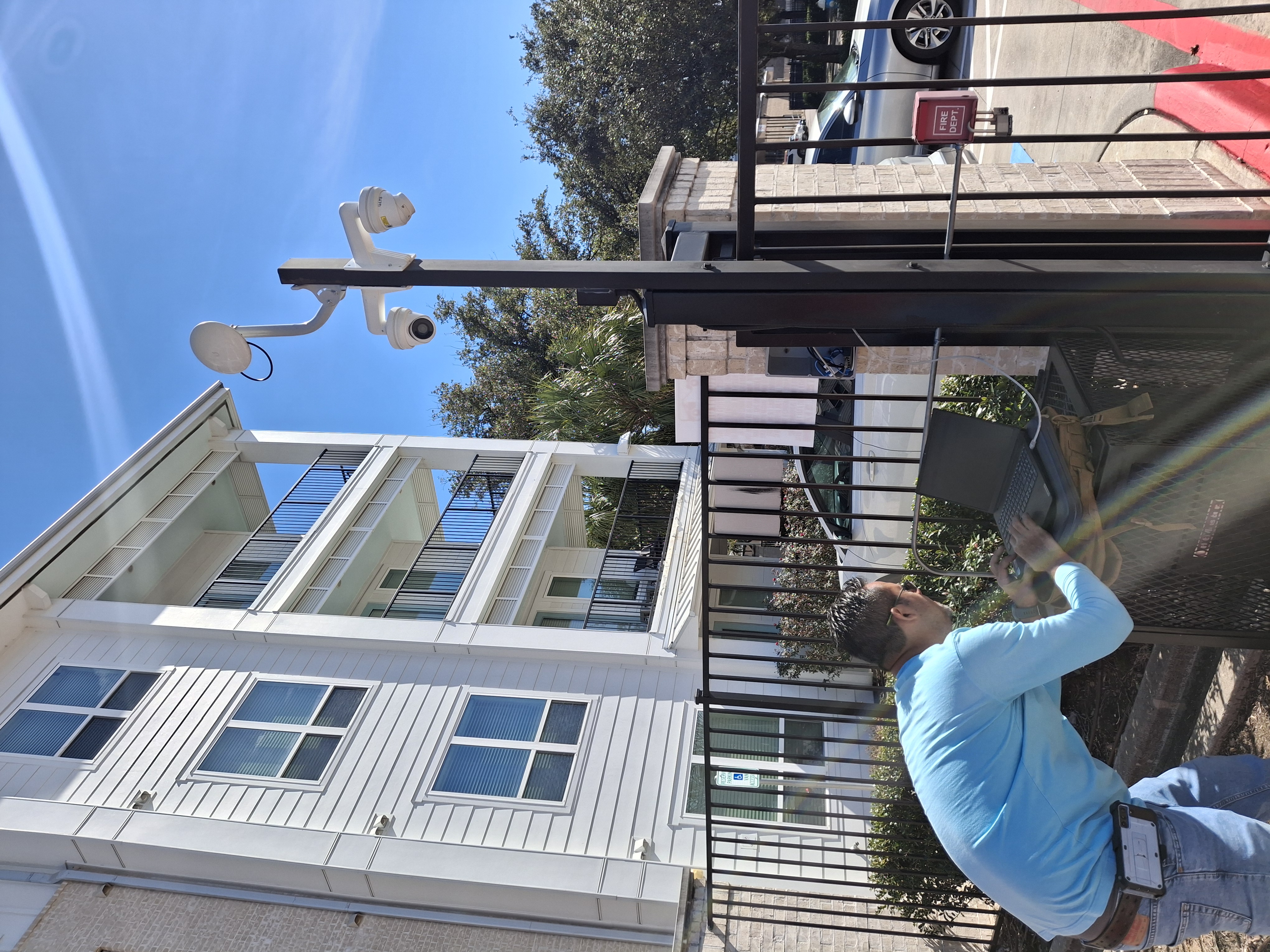
In 2026, securing a property with alarm monitoring in Houston requires a combination of reliable 24/7 professional oversight, a valid City of Houston burglar alarm permit, and modern hardware capable of cellular or IP communication. Effective monitoring ensures that emergency signals are verified and dispatched to the Houston Police Department or local fire stations.
The Essential Role of Alarm Monitoring in Houston's Urban Environment
Houston remains one of the most sprawling metropolitan areas in the United States, presenting unique challenges for property security. From the dense urban corridors of the Heights and Midtown to the expansive residential stretches of Sugar Land and The Woodlands, the sheer geography of the region influences how security signals are transmitted and processed. Alarm monitoring is the critical link between a triggered sensor—such as a door contact, glass break detector, or motion sensor—and the arrival of first responders.
In 2026, "unmonitored" systems are increasingly rare because they rely entirely on the property owner to notice a smartphone notification and call 911 themselves. In a high-stress scenario, or when the owner is asleep or traveling, this delay can be catastrophic. Professional monitoring centers, preferably those with Underwriters Laboratories (UL) certification, provide a redundant layer of safety. These facilities are staffed 24/7 by trained operators who follow strict protocols to verify the alarm's validity before requesting a dispatch, which is vital in a city that strictly regulates emergency responses to minimize resource waste.
Furthermore, Houston’s diverse infrastructure means that connectivity can vary. While fiber-optic internet is prevalent in new developments, older neighborhoods may still rely on aging copper lines or have "dead zones" for certain cellular carriers. A robust monitoring service in 2026 accounts for these variables by utilizing multi-path communication—often combining 5G cellular backup with high-speed internet—to ensure that a signal reaches the central station even if the primary internet line is cut or the power goes out.
Legal Requirements: Navigating Houston’s Burglar Alarm Permits
The City of Houston, through the Administration & Regulatory Affairs (ARA) Department, mandates that every burglar alarm system within the city limits be permitted. This is not a suggestion; it is a legal requirement under Chapter 11, Article II of the Houston Code of Ordinances. The primary purpose of this regulation is to reduce the number of false alarms, which historically account for a massive percentage of calls to the Houston Police Department (HPD).
As of 2026, a residential alarm permit typically carries an annual fee of approximately $50, while commercial permits are higher, often around $110. Failure to obtain a permit can lead to significant financial penalties. More importantly, if an alarm is triggered at a non-permitted location, HPD may refuse to dispatch officers unless there is independent verification of a crime in progress (such as an eyewitness or video evidence). This "Verified Response" policy makes the permit the single most important administrative step for any Houston resident.
The permit application requires the property owner to provide contact information for at least two people who can reach the location within 20 to 30 minutes if an alarm is triggered. This ensures that someone can secure the property or reset the system once the police have completed their sweep. Residents can manage their permits through the City of Houston's official portal, which allows for online payments and renewals. It is also important to note that many surrounding municipalities, such as Pasadena, Katy, and Pearland, have their own distinct permit requirements that mirror Houston’s structure but require separate registration.
Technical Architecture of Modern Monitoring Systems in 2026
The technology behind alarm monitoring has evolved significantly. In the past, systems relied on "POTS" (Plain Old Telephone Service) lines. These were vulnerable to being cut from the outside of a home. In 2026, the industry standard has shifted almost entirely to digital and wireless communication.
Cellular Monitoring (5G and 6G Integration)
Cellular monitoring is the gold standard for reliability in Houston. It uses a dedicated cellular chip within the alarm panel to communicate with the central station. This is independent of the home's Wi-Fi or phone lines. By 2026, these systems utilize 5G or early-stage 6G networks, providing near-instantaneous signal transmission. This is particularly useful in Houston’s flood-prone areas, where underground cables can be damaged by water, but cellular towers remain operational.
IP and Wi-Fi Monitoring
Many modern DIY-hybrid systems use a primary internet connection for monitoring. This allows for high-bandwidth data transmission, which is necessary for video verification—where the monitoring center can view a live feed of the triggered zone to confirm an intruder. However, for maximum security, IP monitoring should always be paired with a cellular backup to account for the frequent power fluctuations and internet outages common during Houston’s hurricane and thunderstorm seasons.
Encryption and Cybersecurity
With the rise of the Internet of Things (IoT), alarm monitoring in 2026 places a heavy emphasis on end-to-end encryption. Monitoring companies now use sophisticated protocols to prevent "signal jamming" or "hacking" of the alarm system. When choosing a provider, it is essential to verify that the hardware is compliant with the latest UL 1610 standards for central-station burglar alarm units.
Comparing Local vs. National Alarm Companies in the Houston Market
When seeking alarm monitoring in Houston, consumers generally choose between massive national brands and smaller, locally-owned firms. Both have distinct advantages and drawbacks in the 2026 market.
National Providers (e.g., ADT, Vivint, Brinks)
National providers often offer the most advanced hardware and integrated smart home ecosystems. Because they operate multiple monitoring centers across the country, they provide excellent redundancy. If a hurricane hits Houston and knocks out local infrastructure, a national company can seamlessly route monitoring signals to a facility in another state. However, these companies often require long-term contracts (36 to 60 months) and may have higher monthly fees to offset the cost of professional installation.
Local Houston Companies (e.g., Smith Thompson, Texas Central Alarm)
Local companies often pride themselves on lower monthly rates and "no-contract" options. Because they are based in Texas, their technicians are often more familiar with local building codes and the specific security needs of Houston neighborhoods. Local firms often use third-party central stations that are TMA Five Diamond Certified, ensuring a high level of operator training. The trade-off is that their proprietary apps or smart home integrations might not be as polished as those of national giants.
Understanding the Financial Investment: Fees, Contracts, and Fines
The cost of alarm monitoring in Houston is bifurcated into upfront equipment costs and ongoing monthly service fees. In 2026, the market has seen a shift toward more transparent pricing, though "hidden" costs still exist.
| Feature/Cost Component | Professional Installation (National) | DIY Setup (Professional Monitoring) | Local Texas Providers |
|---|---|---|---|
| Initial Equipment | $0 - $500 (Often subsidized) | $200 - $800 (Paid upfront) | $99 - $300 |
| Monthly Monitoring | $45 - $65 | $20 - $40 | $15 - $30 |
| Contract Length | 3 - 5 Years | Month-to-Month | Month-to-Month or 1 Year |
| Cellular Backup | Included in premium tiers | Often an extra $10/mo | Usually included |
| City Permit Fee | Paid by homeowner ($50) | Paid by homeowner ($50) | Paid by homeowner ($50) |
The Cost of False Alarms
In Houston, false alarms are not just a nuisance; they are expensive. The City of Houston currently allows for a limited number of "free" false burglar alarm calls per year (usually three). Beyond that, the fines escalate quickly, often reaching $75 to $150 per incident. False panic or robbery alarms are treated even more strictly, sometimes incurring fines on the very first occurrence. Quality monitoring services help mitigate these costs through "Two-Call Verification," where the operator attempts to reach multiple contacts before calling the police.
Smart Home Synergy and AI Integration (2026 Trends)
By 2026, alarm monitoring is no longer a standalone service; it is the "brain" of the smart home. AI-driven video analytics have become a standard feature in Houston security packages. These systems can distinguish between a stray cat, a swaying tree branch, and a human intruder.
This technological leap is particularly beneficial for reducing false alarms. If a sensor is triggered, the AI quickly scans the video footage; if it identifies a human, it flags the event as "High Priority" for the monitoring agent. Furthermore, integration with smart locks and lighting allows the monitoring center to (with permission) turn on all exterior lights or lock down certain zones when an intrusion is detected. For Houston residents, this means that even if they are caught in traffic on I-10 or the 610 Loop, they can maintain total control over their home's security via their mobile device.
Critical Considerations for Houston’s Specific Climate and Infrastructure
Houston’s environment is uniquely harsh on electronic security components. When selecting alarm monitoring hardware and services, these local factors must be considered:
- Humidity and Corrosion: Outdoor sensors, cameras, and gate contacts are subject to extreme humidity and salt air (especially in coastal areas like Clear Lake or Baytown). In 2026, high-quality providers offer weather-rated hardware with IP66 or higher ingress protection.
- Power Grid Instability: Houston’s power grid can be unpredictable during summer peaks or winter freezes. An alarm monitoring system is only as good as its battery backup. Professional systems should have at least 24 hours of standby power for the main control panel.
- Flood Monitoring: Given Houston’s history with major flooding events, many monitoring companies now offer water leak and rising water sensors. These can be integrated into the central monitoring plan, notifying the owner and the monitoring center the moment water is detected in a laundry room or basement, potentially saving thousands in damages.
Choosing the Right Provider: A Step-by-Step Selection Guide
To ensure you receive the best alarm monitoring in Houston, follow this structured approach:
- Check Licensing: Any company installing or monitoring alarms in Texas must be licensed by the Texas Department of Public Safety (DPS). Verify their "B" license number before signing a contract.
- Audit Your Connectivity: Determine if you have a reliable cellular signal at your keypad location. If you live in a "dead zone," look for a provider that offers an external high-gain antenna or dual-path (Wi-Fi + Cellular) monitoring.
- Evaluate the Monitoring Center: Ask if their central station is UL-Listed and TMA Five Diamond Certified. These designations ensure the facility has redundant power, high-level security, and rigorous staff training.
- Review the Permit Policy: Ensure the provider will assist you with the paperwork or information needed to secure your City of Houston alarm permit.
- Test the "Panic" Response: Ask about their average response time. In 2026, a top-tier monitoring center should acknowledge an alarm signal in under 30 seconds.
Frequently Asked Questions
Do I need a permit for a Ring or Nest camera in Houston?
If the camera is used strictly for self-monitoring (you get alerts on your phone), a City of Houston burglar alarm permit is generally not required. However, if you subscribe to a professional monitoring tier where a call center dispatches the police on your behalf based on camera footage or integrated sensors, a permit is mandatory.
What happens if my alarm goes off and I don't have a permit?
If the Houston Police Department is dispatched to a non-permitted location, you will likely be issued a citation. Additionally, HPD may place your address on a "No Response" list for future non-verified alarms, meaning they will only respond if a crime is confirmed by a person on-site or via live video.
Can I use a DIY security system with professional monitoring in Houston?
Yes. Many companies like SimpliSafe, Ring, and Abode offer professional monitoring services in the Houston area. You must still register these systems with the City of Houston ARA and pay the annual permit fee, just as you would with a professionally installed system from ADT or a local firm.
Does alarm monitoring work during a hurricane or power outage?
Yes, provided your system has a functional battery backup and utilizes cellular communication. Most professional alarm panels include a battery that lasts 12 to 24 hours. Since cellular towers often have their own industrial backup power, the system can still send signals to the monitoring center even when the grid is down.
Are there discounts on homeowners insurance for alarm monitoring?
Most insurance providers in Texas offer a discount ranging from 5% to 20% for homes with a monitored security system. To claim this, you will need a "Certificate of Monitoring" provided by your alarm company, which confirms the system monitors for burglary, fire, and sometimes medical emergencies.
Practical Recommendation
For the average Houston homeowner in 2026, the most balanced approach is to select a dual-path monitoring service (Cellular + IP) from a provider that offers no-contract or short-term contract options. Ensure your system includes environmental sensors for flood and smoke detection, as these provide the highest value for Houston’s specific risks. Immediately upon installation, visit the City of Houston ARA website to secure your burglar alarm permit; this ensures that your monitoring service is actually effective in securing a police response when every second counts.