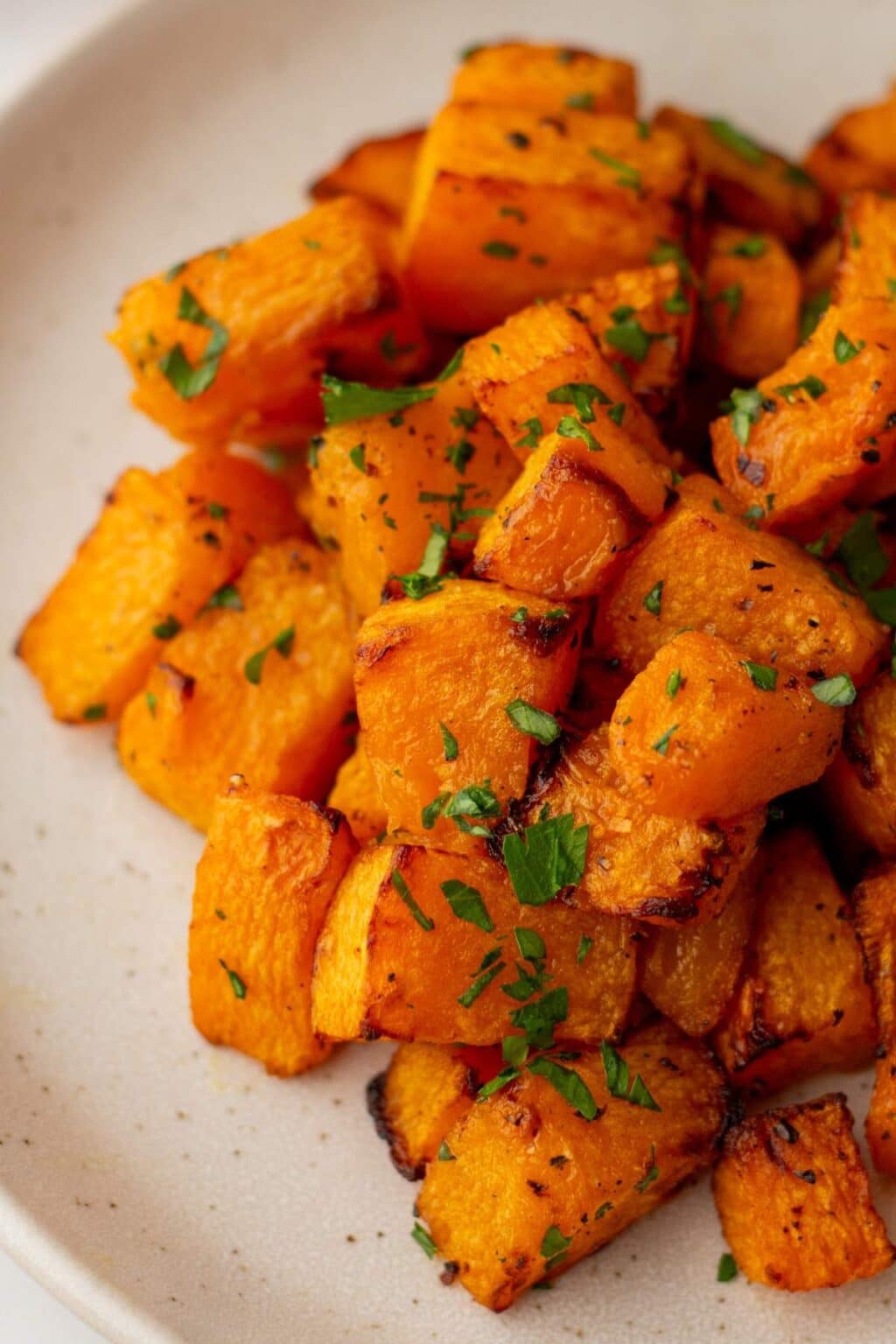
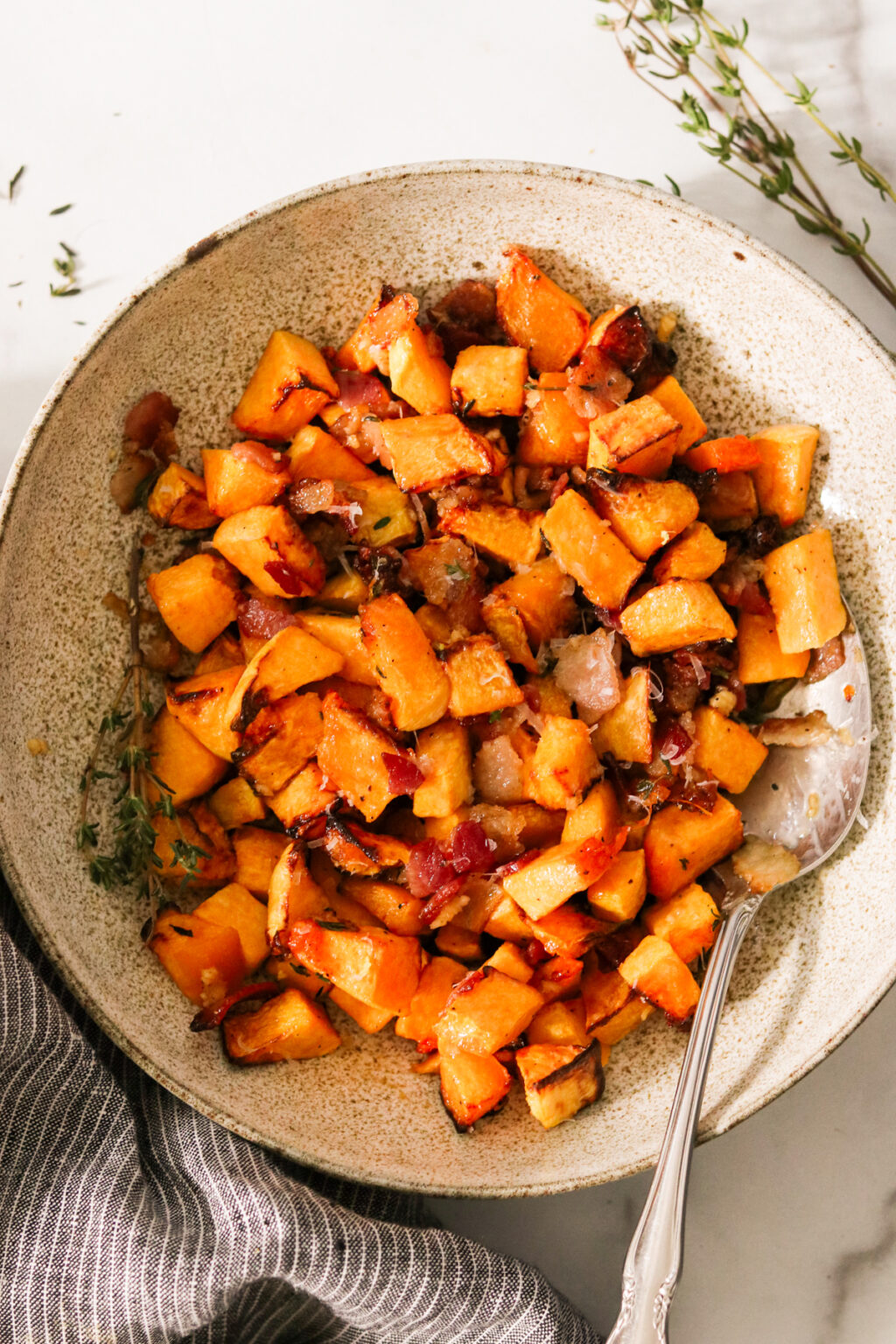
To make air fryer butternut squash that is quick, crispy, and flavorful, toss one-inch cubes with a high-smoke-point oil and seasonings, then cook at 400°F (204°C) for 12 to 15 minutes. Shaking the basket halfway through is essential to ensure even heat distribution and the characteristic golden-brown caramelization.
Butternut squash is a staple of autumnal and winter cuisine, prized for its nutty, sweet profile and dense nutritional value. Historically, achieving a truly crispy exterior while maintaining a creamy interior required long roasting times in a conventional oven—often upwards of 40 minutes. However, as of 2026, the air fryer has become the definitive tool for this task. By leveraging high-velocity convection currents, the air fryer removes surface moisture more efficiently than a standard oven, allowing for rapid caramelization of the squash’s natural sugars through the Maillard reaction.
The Mechanics of Crisping: Why the Air Fryer Excels
The primary challenge with butternut squash is its high water content. In a traditional oven, the steam released during cooking can often lead to a "mushy" texture unless excessive oil or very high temperatures are used. The air fryer solves this through its compact design and powerful fan system.
Convection and Surface Dehydration
An air fryer is essentially a high-powered countertop convection oven. The heating element is positioned closely above the food, and a large fan circulates hot air at high speeds. This creates a "wind chill" effect in reverse: the moving air constantly strips away the layer of moisture that forms on the surface of the squash as it heats. This rapid dehydration of the exterior is the prerequisite for crisping.
The Maillard Reaction in Squash
Butternut squash contains significant amounts of natural sugars and amino acids. When subjected to temperatures above 285°F (140°C), these components undergo the Maillard reaction, creating complex flavor compounds and a browned crust. Because the air fryer reaches these temperatures on the surface of the food almost instantly, the exterior can crisp up before the interior overcooks and loses its structural integrity.
Selecting and Preparing Your Butternut Squash
The quality of your final dish begins with the selection of the produce. In 2026, while pre-cut squash is widely available in most grocery stores, starting with a whole squash often yields better results because the flesh has not been exposed to air, which can cause it to become dry or starchy.
Choosing the Right Specimen
Look for a squash that feels heavy for its size. The skin should be matte, not shiny; a shiny skin indicates it was picked too early or has a wax coating. Avoid any squash with soft spots or deep gashes. The "neck" of the squash is the most desirable part for cubing, as it contains solid flesh without the seed cavity found in the "bulb" end.
The Art of the Uniform Cube
Consistency is the enemy of uneven cooking. If your cubes vary in size, the small pieces will burn while the large pieces remain raw.
- Peeling: Use a high-quality Y-peeler to remove the tough outer skin. You must peel past the thin white veins until you reach the deep orange flesh.
- Dicing: Aim for 3/4-inch to 1-inch cubes. This size provides enough surface area for crisping while remaining large enough to stay moist in the center.
- Drying: After dicing, pat the squash cubes dry with a paper towel. Any surface moisture will turn to steam in the air fryer, delaying the crisping process.
Essential Ingredients for Maximum Flavor
While the air fryer does the heavy lifting, the ingredients you choose will determine the depth of flavor.
The Role of Oil
Even in an "air" fryer, oil is a thermal conductor. It helps transfer heat from the air to the food more efficiently and prevents the spices from burning. Use an oil with a high smoke point, such as avocado oil or refined grapeseed oil. Avoid extra virgin olive oil for 400°F cooking, as its low smoke point can lead to an acrid, bitter taste.
Seasoning Profiles
Butternut squash is a versatile canvas. You can take it in several directions:
- Savory-Herb: Garlic powder, onion powder, dried thyme, and smoked paprika. Garlic powder is preferred over fresh garlic in the air fryer, as fresh minced garlic often burns at high temperatures.
- Warm-Spice: Cumin, coriander, and a touch of chili powder. This pairs excellently with a lime juice finish.
- Sweet-Spice: Cinnamon and nutmeg. If using maple syrup or honey, add it only in the last 2 minutes of cooking to prevent the sugars from charring.
Step-by-Step Air Frying Instructions
Follow these steps to ensure a perfect result every time.
1. Preheating the Air Fryer
Many modern 2026 air fryer models claim they don't need preheating, but for maximum crispiness, it is highly recommended. Run the air fryer at 400°F (204°C) for 3–5 minutes before adding the squash. This ensures that the Maillard reaction begins the second the food hits the basket.
2. Seasoning the Squash
In a large bowl, toss the squash cubes with 1 tablespoon of oil per pound of squash. Add your salt and spices. Tossing in a bowl ensures every side of every cube is coated, which is far more effective than spraying oil directly into the air fryer basket.
3. The Single Layer Rule
Do not overcrowd the basket. If the cubes are stacked on top of each other, the air cannot circulate, and the squash will steam rather than fry. Cook in batches if necessary.
4. The Cooking Process
- Duration: 12 to 15 minutes total.
- The Shake: At the 7-minute mark, remove the basket and give it a vigorous shake. This redistributes the oil and ensures that the sides previously touching the bottom of the basket are now exposed to the air.
5. Final Check
The squash is done when the edges are dark brown (caramelized) and a fork slides easily into the center of a cube. If you want extra crunch, add 2 more minutes at 400°F.
Comparison of Cooking Methods for Butternut Squash
The following table compares the air fryer to other common preparation methods as of 2026.
| Method | Avg. Time | Texture | Oil Requirement | Effort Level |
|---|---|---|---|---|
| Air Fryer | 12–15 mins | Very Crispy / Creamy | Low (1 tbsp) | Low |
| Oven Roasting | 35–45 mins | Tender / Slightly Crisp | Medium (2-3 tbsp) | Medium |
| Pan Frying | 20–25 mins | Crispy / Firm | High (4-5 tbsp) | High (Active) |
| Steaming | 10–12 mins | Soft / Mushy | None | Low |
| Microwaving | 5–8 mins | Soft / Rubberic | None | Low |
Advanced Tips for Pro-Level Texture
If you want to take your air fryer butternut squash to the next level, consider these professional techniques.
The Cornstarch Trick
For an ultra-shatteringly crisp exterior, toss the oiled and seasoned squash in 1 teaspoon of cornstarch or arrowroot powder before air frying. The starch absorbs any remaining surface moisture and creates a thin, crispy "shell" around the vegetable.
Acid and Freshness
A common mistake is neglecting the "bright" notes. After the squash comes out of the air fryer, hit it with a squeeze of fresh lemon juice or a drizzle of balsamic glaze. According to the USDA Food Composition Database, butternut squash is rich in potassium and Vitamin A, and adding a slight acid helps balance its natural earthiness and the richness of the oil.
Using Frozen Butternut Squash
You can cook frozen squash in the air fryer, but you must adjust your technique. Do not thaw the squash; thawing makes it limp. Place the frozen cubes directly into the air fryer at 400°F. They may require 3–5 additional minutes to reach the desired crispness. Be aware that frozen squash is often blanched before freezing, which may result in a slightly softer interior than fresh squash.
Troubleshooting Common Issues
Even with the best equipment, things can go wrong. Here is how to fix common problems:
- Problem: The squash is burnt on the outside but raw inside.
- Solution: Your cubes are likely too large, or your temperature is too high for your specific air fryer model. Reduce the temperature to 375°F and increase the time.
- Problem: The squash is soft and lacks any crunch.
- Solution: You likely overcrowded the basket or used too much oil. Ensure the squash is in a single layer and that you patted it dry before seasoning.
- Problem: The spices taste bitter.
- Solution: This is often caused by using dried herbs with high chlorophyll content (like parsley) or fresh garlic, both of which burn quickly. Stick to granulated spices for the high-heat duration of the cook.
Nutritional Profile and Health Benefits
Choosing the air fryer is not just about speed; it is also a health-conscious decision. Traditional roasting often requires significant amounts of oil to prevent the squash from sticking to the sheet pan. The air fryer’s non-stick basket and convection power allow you to use 50-70% less oil.
Butternut squash is a nutritional powerhouse. It is exceptionally high in beta-carotene, which the body converts to Vitamin A. According to Harvard T.H. Chan School of Public Health, winter squashes are excellent sources of fiber, which aids in digestion and helps maintain steady blood sugar levels. By air frying at 400°F, you preserve much of the fiber and mineral content while making the vegetable more palatable to those who might otherwise find it too "mushy."
Frequently Asked Questions
Do I need to peel the butternut squash before air frying?
Yes, for the best texture. While the skin of some squashes like delicata or honeynut is edible, the skin of a standard butternut squash is thick, fibrous, and doesn't soften well in the air fryer. Peeling allows the heat to directly contact the flesh for better caramelization.
Can I use butter instead of oil?
Butter contains milk solids that burn at 350°F. If you want a buttery flavor, it is best to use a neutral oil for the cooking process and then toss the finished, hot squash with a small knob of butter right before serving. This provides the flavor without the charred, bitter notes.
How do I reheat leftover air fryer butternut squash?
To maintain the crispy texture, avoid the microwave. Place the leftovers back in the air fryer at 350°F for 3–4 minutes. This will evaporate any moisture that moved from the interior to the crust during refrigeration, restoring the original crunch.
Is it necessary to soak the squash in water first?
Unlike potatoes, which are soaked to remove excess starch for French fries, butternut squash does not benefit from soaking. Soaking squash will actually make it harder to achieve a crispy exterior because the flesh is more porous than a potato and will absorb the water.
Can I cook the seeds in the air fryer too?
Absolutely. The seeds of a butternut squash are very similar to pumpkin seeds. Clean them, pat them dry, season them, and air fry at 325°F for 8–10 minutes for a crispy snack. They cook much faster than the squash itself, so they should be done separately.
Practical Recommendation for Next Actions
To achieve the best air fryer butternut squash today, start by dicing a fresh squash into uniform one-inch cubes and preheating your machine to 400°F. Focus on the "less is more" approach with oil and ensure the basket is never more than half full. For a sophisticated side dish, toss the finished squash with toasted pumpkin seeds (pepitas) and a crumble of feta cheese. This adds a salty, crunchy contrast to the sweet and tender squash, creating a restaurant-quality dish in under twenty minutes.