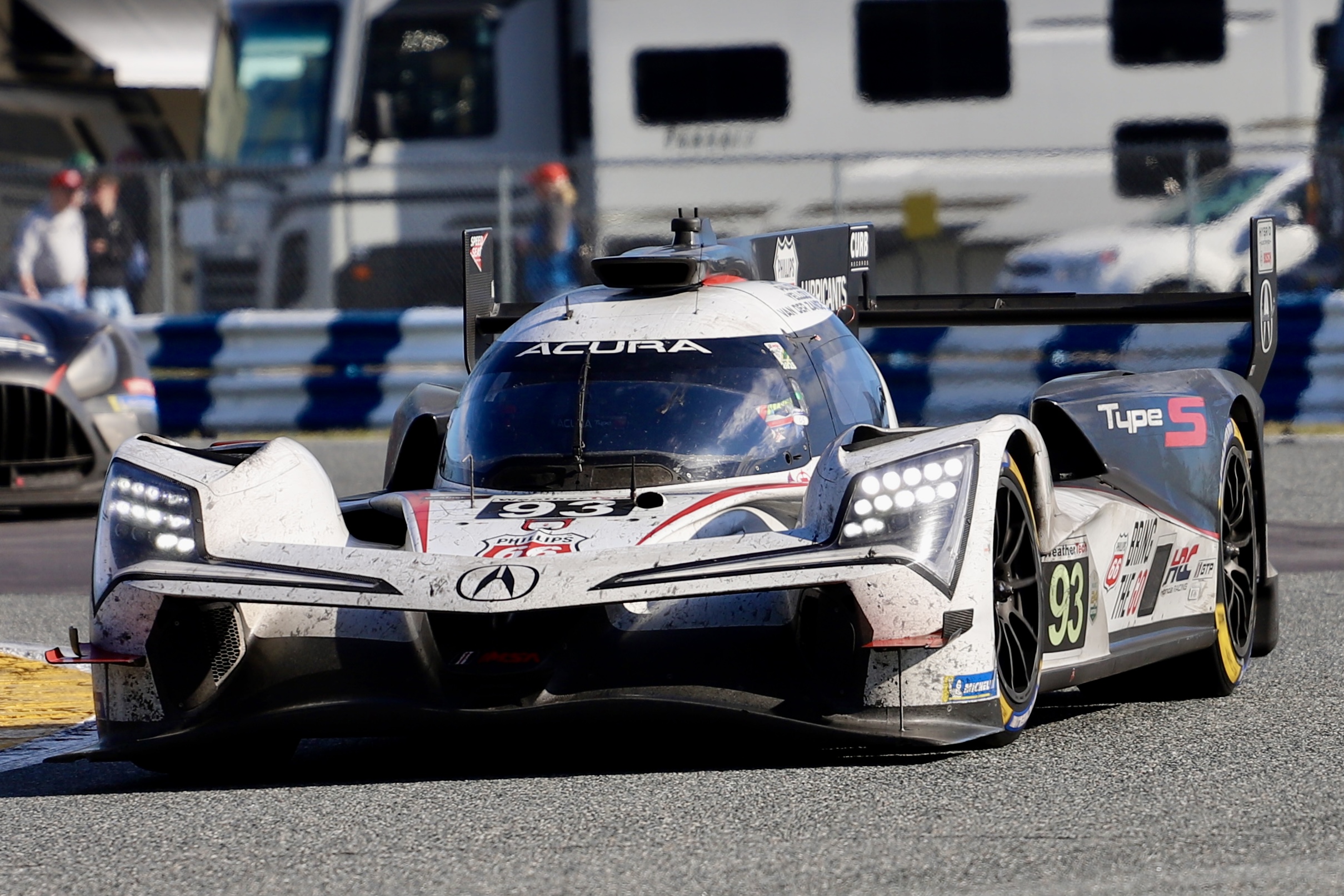
Acura remains a dominant force in the 2026 IMSA WeatherTech SportsCar Championship, primarily competing in the premier Grand Touring Prototype (GTP) class with the electrified ARX-06. Through its partnership with Honda Racing Corporation USA (HRC US), Acura focuses on high-performance hybrid technology, campaigning multiple factory-supported entries to secure overall victories at iconic endurance events like the Rolex 24 at Daytona and the Twelve Hours of Sebring.
The Evolution of Acura’s Prototype Strategy
The current landscape of Acura in IMSA racing is the culmination of a decade-long transition from traditional internal combustion powerplants to highly complex, electrified hybrid systems. Since the inception of the Daytona Prototype international (DPi) era, Acura has prioritized chassis partnerships and bespoke engine development to maintain a competitive edge.
The transition to the GTP class in 2023 marked a significant turning point. The ARX-06 was developed to meet the LMDh (Le Mans Daytona h) regulations, which require a spec hybrid system paired with a manufacturer-developed engine and a choice of four approved chassis providers. Acura chose to continue its long-standing relationship with ORECA, a partnership that had already proven successful during the ARX-05 DPi era.
By 2026, the ARX-06 has matured into one of the most reliable and technologically advanced platforms on the grid. The development cycle has shifted from initial "teething" issues—largely related to software integration and the spec Bosch/Williams hybrid components—to a phase of refinement and optimization. Acura’s strategy centers on "Total Performance," balancing raw speed with the fuel efficiency required to win on strategy in long-distance endurance races.
Technical Deep Dive: The Acura ARX-06
The heart of Acura's IMSA program is the ARX-06, a vehicle that represents the pinnacle of Honda Racing Corporation’s engineering capabilities in North America. Unlike some competitors who utilize modified production-based engines, Acura opted for a "clean sheet" design specifically for the GTP regulations.
The Power Unit
The ARX-06 is powered by the Acura AR24e, a 2.4-liter twin-turbocharged V6 engine. This powerplant was designed entirely in-house by HRC US (formerly HPD) in Santa Clarita, California. It features a 90-degree V-angle and is capable of reaching a maximum of 10,000 RPM, though it is typically governed by the IMSA Balance of Performance (BoP) tables to stay within the mandated 500-kilowatt (approximately 670 horsepower) combined output.
The choice of a smaller-displacement V6 was strategic. It allows for a lower center of gravity and better packaging within the ORECA chassis. Furthermore, the twin-turbo setup provides a broad torque curve that integrates seamlessly with the electric motor’s instant torque, aiding in corner exit and low-speed acceleration.
Hybrid Integration
The GTP class utilizes a spec hybrid system consisting of a Bosch motor-generator unit (MGU), a Williams Advanced Engineering battery pack, and an Xtrac gearbox. Acura’s primary technical challenge has been the "handshake" between their internal combustion engine (ICE) and these spec components. By 2026, the software mapping developed by Acura engineers has become a benchmark for the paddock, allowing for smoother regenerative braking and more efficient energy deployment during overtaking maneuvers.
Aerodynamics and Chassis
The ORECA-based chassis features Acura-specific bodywork that incorporates styling cues from the brand’s production line, particularly around the LED headlight signatures and the "Diamond Pentagon" grille motifs. Aerodynamically, the ARX-06 is designed for high efficiency, minimizing drag while maintaining the high downforce levels required for technical sections of tracks like WeatherTech Raceway Laguna Seca or Road Atlanta.
Key Team Partnerships and the 2026 Grid
Acura does not operate a traditional "factory" team in the sense of a fully in-house squad. Instead, they rely on elite professional racing organizations to campaign the cars with significant factory support, engineering personnel, and funding from HRC US.
Wayne Taylor Racing with Andretti (WTRAndretti)
As of the 2026 season, WTRAndretti remains a cornerstone of the Acura program. This powerhouse partnership combines Wayne Taylor’s decades of sports car expertise with Andretti Global’s vast technical resources. The team typically campaigns two ARX-06 entries, often featuring a mix of veteran endurance champions and rising stars from the Honda/Acura ladder system.
Meyer Shank Racing (MSR)
After a brief hiatus from the Acura GTP program, Meyer Shank Racing’s involvement remains a critical element of the brand's competitive landscape. MSR has historically delivered some of Acura's biggest wins, including multiple Rolex 24 at Daytona titles. Their role in 2026 continues to be one of data sharing and high-level execution, ensuring that Acura has a multi-pronged attack against the likes of Porsche, Cadillac, and BMW.
The Competitive Landscape: GTP Class Rivals
In 2026, the GTP class is more crowded and competitive than ever. Acura faces stiff competition from a diverse field of manufacturers, each bringing a different technical philosophy to the grid.
| Manufacturer | Model | Engine Configuration | Chassis Partner |
|---|---|---|---|
| Acura | ARX-06 | 2.4L Twin-Turbo V6 | ORECA |
| Cadillac | V-Series.R | 5.5L Naturally Aspirated V8 | Dallara |
| Porsche | 963 | 4.6L Twin-Turbo V8 | Multimatic |
| BMW | M Hybrid V8 | 4.0L Twin-Turbo V8 | Dallara |
| Lamborghini | SC63 | 3.8L Twin-Turbo V8 | Ligier |
| Aston Martin | Valkyrie | 6.5L Naturally Aspirated V12 | Multimatic (LMH) |
The primary rival for Acura remains the Cadillac V-Series.R. While the Cadillac relies on a large-displacement, high-torque V8, Acura relies on its superior agility and turbo-charged efficiency. The 2026 season has seen these two manufacturers trade blows, with the BoP adjustments often determining which car has the upper hand at specific circuits. Porsche’s 963 has also become a formidable opponent due to its high volume of customer cars, which provides the German manufacturer with a massive amount of data compared to Acura's more concentrated factory effort.
Acura in the GTD Classes: The Status of the NSX GT3
While the GTP class receives the majority of the headlines, Acura’s presence in the Grand Touring Daytona (GTD) and GTD Pro classes is in a state of transition in 2026. The Acura NSX GT3 Evo22, which has been the brand’s workhorse in GT racing for years, is reaching the end of its competitive lifecycle.
With the production of the second-generation NSX having concluded several years ago, Acura’s GT3 program is currently focused on supporting privateer teams through the HRC US customer racing program. These teams compete for the IMSA Sprint Cup and the overall GTD championship.
Speculation within the 2026 paddock suggests that Acura is evaluating a successor based on a future performance model, but for now, the Evo22 remains a reliable, if aging, platform. Its strengths lie in its mid-engine balance and its friendliness to "Bronze" and "Silver" rated amateur drivers in the standard GTD class.
The Role of HRC US: A Global Alignment
A significant factor in the current landscape is the formal rebranding and integration of Honda Performance Development (HPD) into Honda Racing Corporation USA (HRC US). This move, which was finalized prior to the 2026 season, aligns the North American racing arm with Honda’s global racing efforts, including Formula 1.
For the IMSA program, this means:
- Greater Resource Access: Engineers in California can now collaborate more directly with the F1 engine specialists in Sakura, Japan, particularly regarding hybrid energy recovery and battery chemistry.
- Global Talent Pool: We are seeing more crossover in driver talent and engineering staff between the IMSA program and Honda’s other international endeavors.
- Strategic Stability: The alignment ensures that Acura’s participation in IMSA is viewed as a key pillar of Honda’s global marketing and technical development strategy, providing long-term stability for the program.
Challenges and Future Outlook
Despite its successes, the Acura IMSA program faces several challenges as it navigates the 2026 season and looks toward 2027.
Reliability in a Hybrid Era
While the spec hybrid components have become more reliable, the high-stress environment of 24-hour racing continues to find weaknesses. Acura must continue to work closely with the spec suppliers to ensure that a third-party failure does not derail their championship aspirations.
Balance of Performance (BoP)
As with any production-based or formula-governed racing series, BoP remains a contentious issue. Acura’s 2.4L V6 is highly efficient, but if IMSA’s technical committee mandates weight additions or air restrictors to balance the field, that efficiency can be negated. Maintaining a constructive relationship with IMSA officials is as important as the engineering itself.
The Rise of LMH Entries
With the introduction of Le Mans Hypercar (LMH) entries into the IMSA field, such as the Aston Martin Valkyrie, Acura faces cars built under a different set of rules. Ensuring that the LMDh-spec ARX-06 remains competitive against these bespoke hypercars is a major priority for the HRC US technical team.
Frequently Asked Questions
What engine does the Acura GTP car use?
The Acura ARX-06 uses a bespoke 2.4-liter twin-turbocharged V6 engine known as the AR24e. It was designed specifically for endurance racing by HRC US and features a hybrid system that brings total power output to approximately 670 horsepower, depending on current BoP regulations.
Which teams represent Acura in IMSA for the 2026 season?
In 2026, the primary factory-supported teams are Wayne Taylor Racing with Andretti (WTRAndretti) and Meyer Shank Racing. These teams operate the ARX-06 in the GTP class. Additional privateer teams may campaign the NSX GT3 Evo22 in the GTD classes.
Is the Acura ARX-06 eligible to race at Le Mans?
Yes, the ARX-06 is built to LMDh regulations, making it eligible for both the IMSA WeatherTech SportsCar Championship and the FIA World Endurance Championship (WEC), including the 24 Hours of Le Mans. While Acura has focused primarily on North American racing, the HRC US alignment has made a Le Mans entry a frequent topic of strategic discussion.
How does the hybrid system work in Acura's IMSA car?
The system captures energy under braking via a motor-generator unit (MGU) and stores it in a battery pack. This energy is then deployed during acceleration to supplement the internal combustion engine. In the GTP class, this system is a "spec" unit provided by Bosch, Williams Advanced Engineering, and Xtrac, but manufacturers like Acura write their own software to manage how that power is integrated.
Why did Acura change from HPD to HRC US?
The change was made to unify Honda's racing efforts worldwide. By rebranding Honda Performance Development as HRC US, the company can better share technology, personnel, and branding between its North American programs (IMSA, IndyCar) and its global programs (Formula 1, MotoGP).
Final Recommendations for Fans and Stakeholders
For those following the current landscape of Acura in IMSA, the 2026 season represents a peak in technical maturity. Fans should pay close attention to the Rolex 24 at Daytona and Motul Petit Le Mans, as these high-attrition events best demonstrate the reliability and fuel-mapping advantages of the ARX-06 platform.
For stakeholders and potential sponsors, the program's alignment with HRC US offers a rare level of technical prestige and a direct link to the highest levels of global motorsport. As Acura continues to refine the ARX-06, the focus will likely shift toward securing a legendary overall win at Le Mans to cement the car's legacy alongside its numerous North American titles.