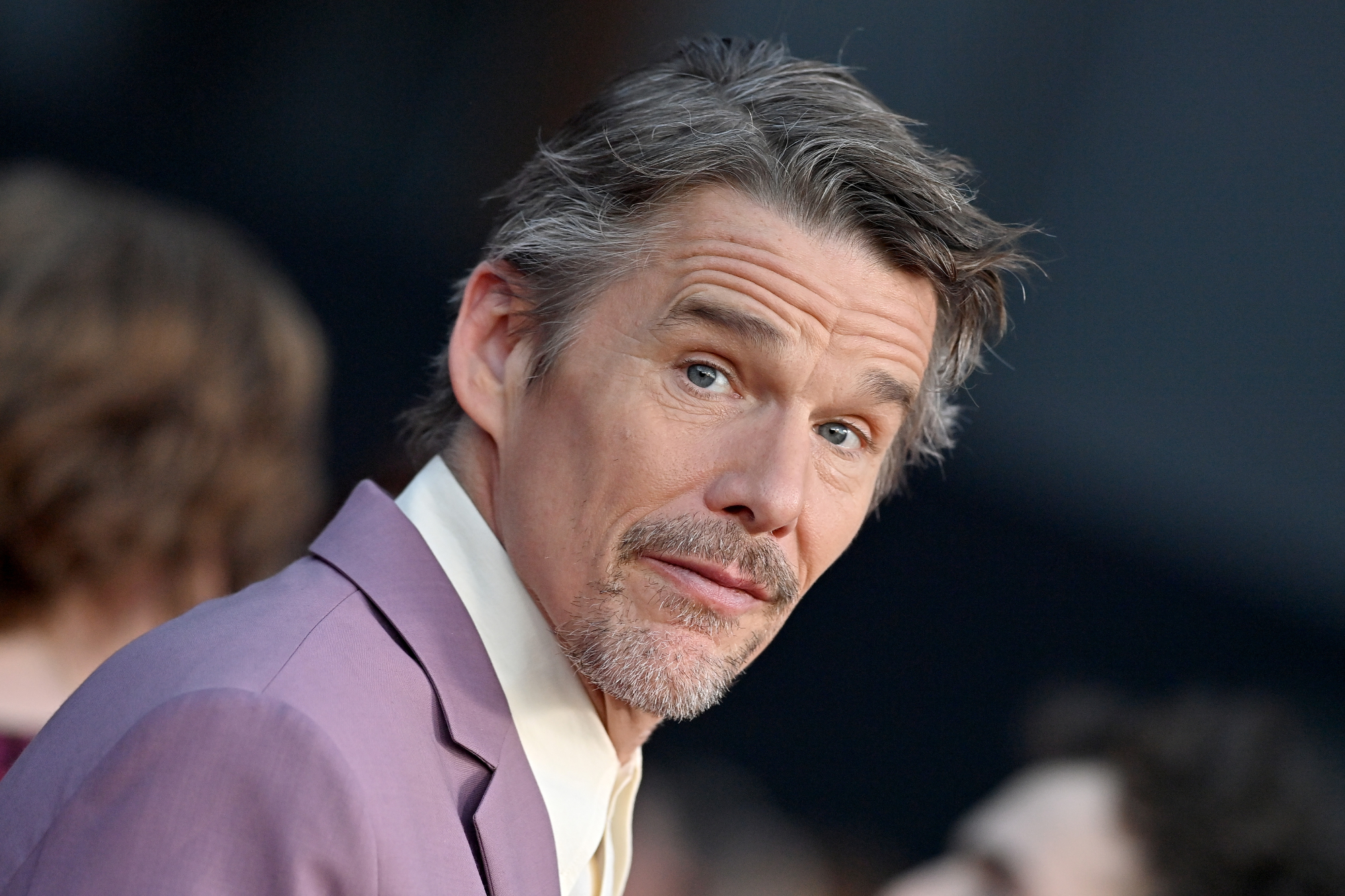
Ethan Hawke is an American actor, director, writer, and producer known for his versatility, intellectual depth, and commitment to independent cinema. Since emerging as a teenage talent in the late 1980s, Hawke has built a career defined by artistic risk-taking, consistent collaboration with visionary directors, and a prolific output that spans film, theater, and literature. His work is characterized by a naturalistic acting style and a recurring focus on themes of time, human connection, and moral ambiguity.
Early Life and Professional Breakthrough
Born in Austin, Texas, in 1970, Ethan Green Hawke grew up in a household that eventually settled in Princeton Junction, New Jersey. His entry into the performing arts began during his youth, with his first professional role occurring in the 1985 science fiction film Explorers. However, it was his pivotal role as Todd Anderson in the 1989 drama Dead Poets Society that established him as a serious screen talent.
This breakthrough was not merely a commercial success; it served as the foundation for his reputation as a "thinking person's" actor. Following his early success, Hawke balanced mainstream projects with experimental theater and smaller, character-driven films. His decision to attend Carnegie Mellon University, though interrupted by his burgeoning career, signaled an intellectual seriousness that has remained a hallmark of his professional choices throughout the decades leading up to 2026.
Artistic Philosophy: The Collaborative Spirit
A defining feature of Ethan Hawke’s career is his long-term partnership with specific filmmakers, most notably Richard Linklater. Their collaboration is arguably one of the most significant in contemporary cinema, stretching over three decades.
The Linklater Connection
The "Before" trilogy—Before Sunrise (1995), Before Sunset (2004), and Before Midnight (2013)—is the centerpiece of this collaboration. These films, co-written by Hawke, Linklater, and lead actress Julie Delpy, utilized a unique production schedule where the actors and director reunited every nine years to revisit the characters of Jesse and Céline. This approach allowed the audience to witness the physical and psychological aging of the characters in real-time, providing a raw, unvarnished look at romance and maturation.
Literary and Directorial Ambitions
Beyond his screen work, Hawke has cultivated a substantial career as an author and screenwriter. He has penned several novels, including The Hottest State and Ash Wednesday, and received Academy Award nominations for his screenwriting contributions to the Before series. His directorial work, such as Chelsea Walls and the music documentary Seymour: An Introduction, demonstrates his interest in exploring the intersection of art, music, and personal identity.
Significant Filmography and Career Milestones
Hawke’s filmography is marked by a refusal to be pigeonholed into a single genre. His transition from youth-oriented dramas to complex, middle-aged character studies is backed by a diverse portfolio of work.
| Project Title | Release Year | Primary Role | Notable Impact |
|---|---|---|---|
| Dead Poets Society | 1989 | Actor | Established his professional presence |
| Reality Bites | 1994 | Actor | Defined the "Generation X" cultural shift |
| Before Sunrise | 1995 | Actor/Writer | Launched the landmark collaboration with Linklater |
| Training Day | 2001 | Actor | Academy Award nomination for Best Supporting Actor |
| Boyhood | 2014 | Actor | Unique 12-year filming process; critical acclaim |
| First Reformed | 2017 | Actor | Widely cited as a career-best performance |
| The Northman | 2022 | Actor | Return to large-scale, high-concept epic cinema |
The Craft: Acting Style and Technical Approach
Ethan Hawke is widely regarded for a "method-adjacent" style that prioritizes emotional honesty over theatrical artifice. In contemporary interviews and masterclasses, he has emphasized the importance of "listening" as the primary tool of an actor. This philosophy is evident in his performances, where he often reacts to his surroundings and scene partners with a sense of spontaneity that makes the scripted dialogue feel like genuine conversation.
In technical terms, Hawke excels in long-take sequences—a requirement necessitated by his work with Linklater. Maintaining narrative momentum over extended periods requires a high degree of endurance and concentration, as there is little room for traditional "splicing" of takes to mask performance errors. This requires the actor to hold a consistent internal logic across several minutes of screen time, a skill that separates veteran professionals from those reliant on quick-cut editing.
Challenges and Artistic Risks
Throughout his career, Hawke has faced the standard challenges of the industry: the difficulty of transitioning from a "heartthrob" teenager to a character actor, the financial instability inherent in independent cinema, and the high pressure of public scrutiny.
One of his most notable risks was his commitment to Boyhood, a film shot over twelve years. At the time of its inception, there was no guarantee that the financing would remain in place or that the central actors would remain committed to the project. The success of this film is often cited as a testament to Hawke’s loyalty to artistic projects, even when the immediate financial or commercial reward is not guaranteed.
Frequently Asked Questions
What is Ethan Hawke’s primary contribution to modern screenwriting? Hawke is best known for his co-writing work on the Before trilogy. By working closely with his co-stars and director to capture the cadence of authentic human conversation, he helped shift the genre of romantic drama toward a more grounded, realistic, and philosophical framework.
How does Ethan Hawke approach the role of a director? As a director, Hawke focuses heavily on subject matter he feels personally connected to, often highlighting the lives of artists or musicians. His directorial style is unobtrusive, aiming to capture the essence of his subjects' creative processes rather than imposing a stylized, visual ego on the frame.
Why is the collaboration between Ethan Hawke and Richard Linklater considered significant? It is a rare example of long-term artistic continuity in film. By documenting the growth of characters over nearly 20 years, they created a cinematic record of life, aging, and love that is structurally unique and has influenced how modern audiences perceive the concept of a film franchise.
Is Ethan Hawke primarily an indie actor or a mainstream star? Hawke occupies a unique middle ground. While he has appeared in large-scale studio productions and thrillers, his professional identity is firmly rooted in independent and auteur-driven cinema. He often uses his mainstream industry presence to secure funding for smaller, more personal projects.
How has Ethan Hawke’s acting evolved since the 1990s? In the 1990s, he often played the disillusioned, intellectual youth. Since the 2010s, his roles have trended toward weary, introspective, and morally complex men who are grappling with the consequences of their life choices, reflecting a transition in his own maturity as an artist.
Professional Recommendation for Aspiring Performers
For those interested in the craft of acting as practiced by Ethan Hawke, the primary recommendation is to prioritize the work over the celebrity. Hawke’s career suggests that longevity is secured by developing a distinct voice and maintaining strong, long-term relationships with collaborators. Aspiring actors should seek out material that requires high-level listening skills and invest time in the "lesser" aspects of the craft, such as writing and theatrical production, to develop a more holistic understanding of the medium.