Preparing for an interview at Acceptance Auto Insurance for a help desk position requires a dual focus on technical troubleshooting skills and high-level customer service. Candidates must demonstrate proficiency in resolving hardware and software issues while maintaining the empathy needed to support insurance agents and corporate staff in a fast-paced, regulated environment.
Understanding the Role of the Help Desk at Acceptance Insurance
Acceptance Insurance, a leading provider of non-standard auto insurance, relies heavily on its internal IT infrastructure to facilitate policy binding, claims processing, and agent communication. In 2026, the help desk role has evolved beyond simple password resets. It now encompasses supporting a hybrid workforce, managing cloud-based agency management systems, and ensuring that security protocols are strictly followed to protect sensitive policyholder data.
When you sit down for an interview at Acceptance, the hiring managers are looking for individuals who can bridge the gap between complex technical problems and the operational needs of the business. Because insurance agents often work under tight deadlines to provide quotes and bind coverage, help desk technicians must be efficient and decisive. A delay in resolving a technical issue doesn't just frustrate an employee; it can result in a lost sale or a lapse in a customer’s coverage.
The help desk at Acceptance is typically organized into tiers. Tier 1 handles initial contact, basic troubleshooting, and ticket routing, while Tier 2 and Tier 3 deal with more complex networking, server-side issues, and specialized insurance software glitches. Understanding where you fit in this hierarchy and how you contribute to the overall uptime of the company is a critical first step in your interview preparation.
Technical Interview Questions for Help Desk Candidates
Technical questions at Acceptance Insurance are designed to test your diagnostic logic. It is less about knowing every answer and more about how you approach a problem you have never seen before. You should be prepared to discuss current technologies relevant to the 2026 IT landscape, including remote desktop protocols, VPN stability, and multi-factor authentication (MFA) troubleshooting.
1. How do you troubleshoot a user’s inability to access the Agency Management System (AMS)?
This question is specific to the insurance niche. An AMS is the backbone of an agent's daily work. You should explain a systematic approach: first, verify if the issue is localized to a single user or widespread. Check internet connectivity, then move to credential verification and MFA status. If those are clear, investigate browser cache issues or specific software updates that might have broken compatibility with the AMS.
2. Can you explain the difference between a "Blue Screen of Death" (BSOD) and a simple application crash?
This tests your understanding of system-level versus application-level failures. A BSOD usually indicates a hardware failure, driver conflict, or kernel-level error that forces the OS to stop to prevent damage. An application crash, however, is often resolved by ending the process in Task Manager or clearing application data. In an insurance environment, identifying this quickly determines whether a laptop needs to be shipped back for repair or if the user can be back online in minutes.
3. Describe your experience with ITIL frameworks and ticketing systems.
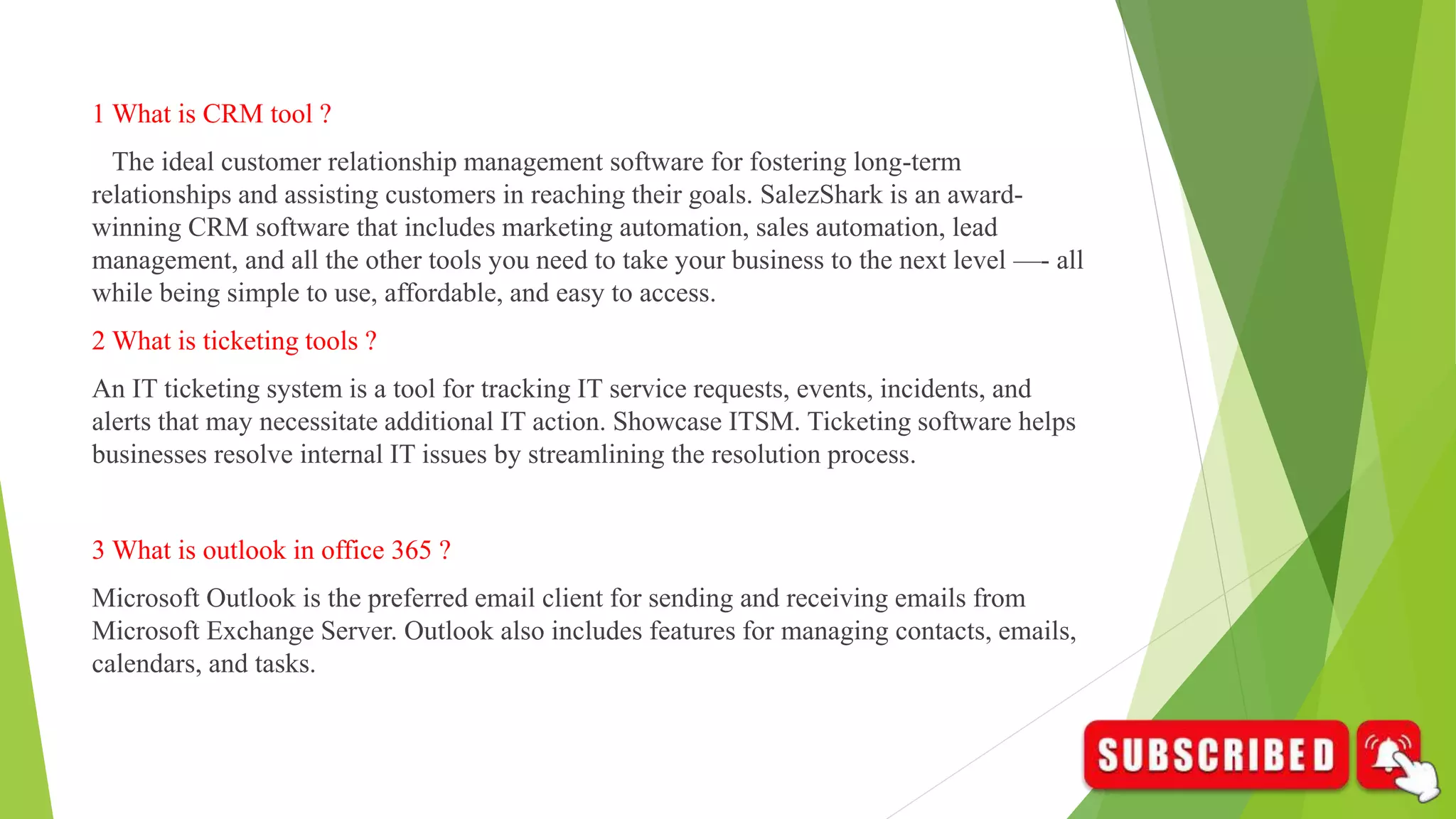
Most large organizations like Acceptance use ITIL (Information Technology Infrastructure Library) practices to manage services. Mention your familiarity with concepts like Incident Management versus Problem Management. Discuss specific tools you have used, such as ServiceNow, Zendesk, or Jira, and emphasize the importance of detailed documentation for future reference and trend analysis.
4. How would you handle a "No Internet" ticket for a remote agent?
In 2026, remote work is standard. Your answer should involve walking the user through physical checks (cables, router lights), basic software commands (IPConfig /release and /renew), and checking for VPN outages. Highlighting your ability to remain patient while a non-technical user crawls under a desk to check a router is a significant plus for this role.
Behavioral and Situational Interview Questions
Soft skills are often the deciding factor in help desk hiring. Acceptance Insurance values "care and respect" in its interactions. Your ability to de-escalate a frustrated agent who cannot process a payment due to a computer glitch is just as important as your ability to fix the glitch itself.
5. Tell us about a time you had to deal with a difficult or irate user.
When answering this, use the STAR method (Situation, Task, Action, Result). Focus on how you listened to the user’s frustration without taking it personally. Explain how you validated their concern—acknowledging that their inability to work is a serious problem—and then shifted the focus toward a collaborative solution. The "Result" should highlight not just that the fix worked, but that the user felt supported.
6. How do you prioritize tasks when you have a backlog of tickets?
The interviewer wants to see that you understand business impact. A broken printer for one person is a low priority; a server issue affecting an entire branch's ability to bind policies is a critical priority. Explain your logic for triaging tickets based on the number of users affected and the severity of the operational halt.
7. Describe a situation where you had to learn a new technology quickly.
The insurance industry frequently updates its rating engines and compliance software. Show that you are a proactive learner. Mention specific resources you use, such as documentation, tech forums, or peer shadowing. Highlighting a time you learned a new security protocol or cloud-based tool independently will demonstrate the agility Acceptance needs in its IT department.
Technical Proficiency and Industry Context
To truly stand out, you must understand the specific constraints of the insurance industry. Security is the highest priority. Acceptance Insurance must comply with various state and federal regulations regarding data privacy (such as the Gramm-Leach-Bliley Act).
During your interview, you should touch upon:
- Data Security: How you ensure passwords are never shared and how you verify a user's identity before resetting credentials.
- Compliance: Understanding that IT changes must be audited and that certain software configurations are dictated by legal requirements for policy documentation.
- Uptime Requirements: Acknowledging that the "busy season" for insurance (such as tax refund season when many people buy cars) requires 100% IT availability.
The following table outlines the key areas of focus for different help desk levels at a company like Acceptance:
| Focus Area | Tier 1 Support (Entry Level) | Tier 2 Support (Mid-Level) | Tier 3 Support (Senior) |
|---|---|---|---|
| Primary Tasks | Password resets, ticket routing, basic software installs. | Network troubleshooting, hardware repair, OS deployment. | Server management, security architecture, system migrations. |
| User Interaction | High volume, direct phone/chat support. | Lower volume, more complex remote sessions. | Internal IT escalations and vendor management. |
| Key Knowledge | Active Directory basics, O365, Ticketing software. | Advanced networking (TCP/IP), Group Policy, Hardware internals. | Scripting (PowerShell), Cloud infrastructure (Azure/AWS), Cybersecurity. |
| Performance Metric | First-call resolution rate. | Average time to resolution for complex tickets. | System uptime and project completion. |
Preparing for the Interview Process
The interview process at Acceptance Insurance typically begins with a phone screening with a recruiter, followed by a technical interview with a help desk manager or lead. In some cases, you may be asked to perform a live troubleshooting simulation or a "role-play" scenario where the interviewer pretends to be a frustrated user.
To prepare, you should:
- Research the Company: Know what Acceptance does. They focus on non-standard insurance, which means their customers often have unique needs. This customer-first mindset should be reflected in your answers.
- Review the Job Description: Look for specific keywords like "Active Directory," "VoIP," or "SaaS." Be prepared to give concrete examples of your experience with each.
- Prepare Your Own Questions: Asking thoughtful questions shows you are thinking about the long-term. Ask about the team culture, the current "tech stack," and how the help desk contributes to the company's 2026 digital transformation goals.
The Importance of Security and Privacy
In a help desk role at an insurance company, you are a gatekeeper. You have access to systems that contain Social Security numbers, addresses, and driving records. Interviewers will likely ask how you handle sensitive information. You must emphasize your commitment to PCI-DSS compliance (for credit card processing) and general data hygiene.
For example, if asked what you would do if a high-level executive asked you to bypass a security protocol because they were in a hurry, your answer must be a firm but polite refusal. You should explain that protocols are in place to protect the company and the executive, and you would offer the fastest possible solution that remains within the bounds of the security policy.
Frequently Asked Questions
What technical skills are most important for the Acceptance Insurance help desk?
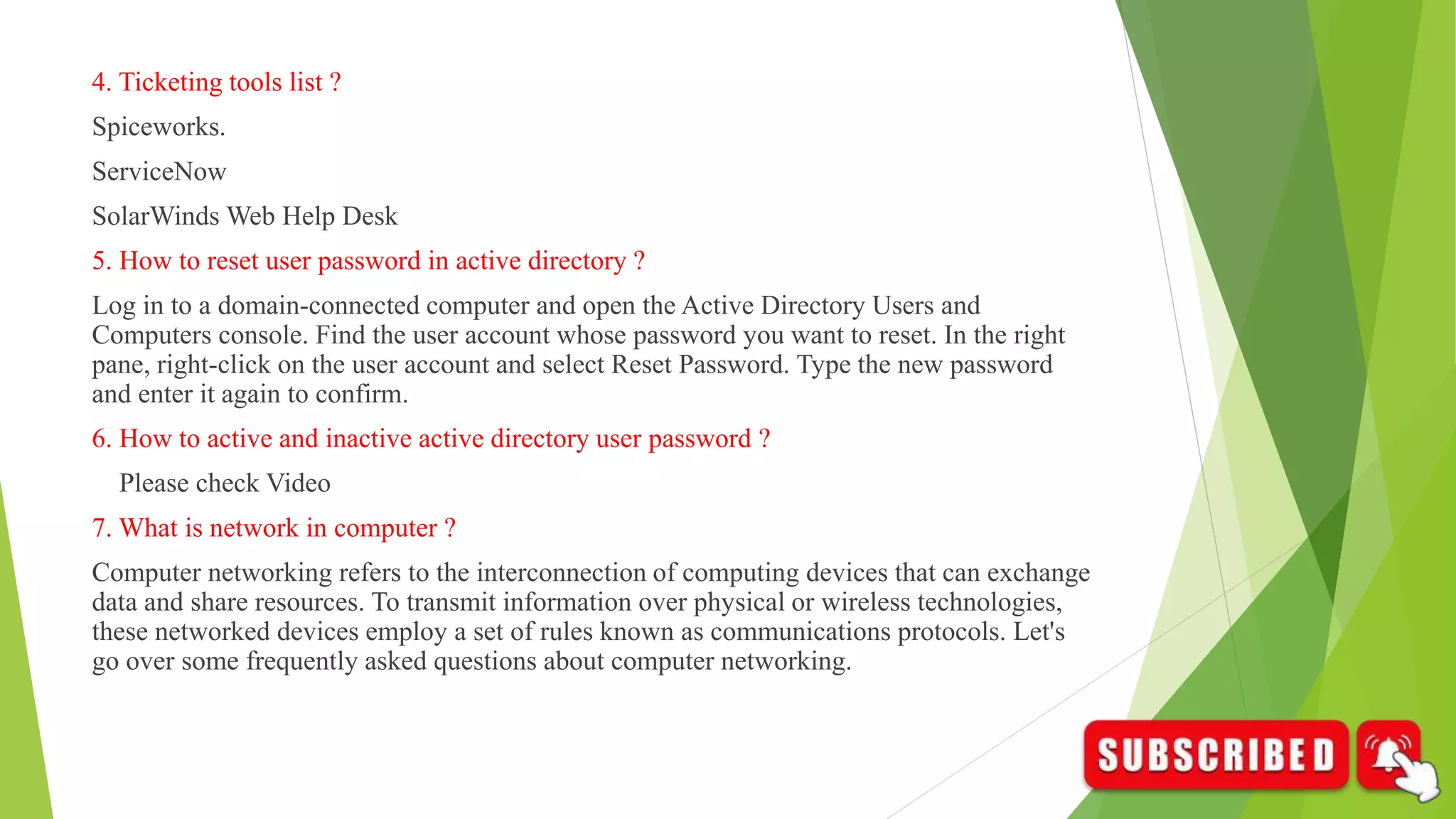
Proficiency in Windows 11/12 environments, Microsoft 365, and Active Directory is essential. Additionally, since Acceptance utilizes proprietary and third-party insurance software, the ability to troubleshoot web-based applications (checking browser compatibility, Java settings, and extensions) is vital. Familiarity with remote support tools like TeamViewer or LogMeIn is also highly valued.
Does Acceptance Insurance offer remote help desk positions in 2026?
Acceptance has moved toward a flexible work model. While some roles may be on-site at corporate headquarters in Nashville or at regional hubs, many help desk positions are now hybrid or fully remote. Candidates for remote roles must demonstrate an ability to manage their time effectively and troubleshoot their own home network issues, as they are expected to be self-sufficient in maintaining their connectivity.
How should I dress for a help desk interview at Acceptance?
Even for a technical role, Acceptance maintains a professional environment. Business casual is the standard. For a video interview, ensure your background is clean and professional, and that your lighting and audio are clear, as this is a direct reflection of your ability to handle technical setups for a remote job.
What is the most common reason candidates fail the help desk interview?
Most candidates fail not because they lack technical knowledge, but because they lack "soft skills" or fail to show a systematic troubleshooting logic. If you rush to a solution without asking clarifying questions, it suggests you might make mistakes on the job. Taking a breath, asking the user for more details, and explaining your thought process is the key to success.
How do I handle a question I don't know the answer to?
Never guess or lie. The best approach is to say, "I haven't encountered that specific issue before, but here is how I would find the answer." Then, explain how you would use internal knowledge bases, search technical forums, or consult documentation to find a resolution. This demonstrates resourcefulness, which is a highly prized trait in IT.
What are the career advancement opportunities within the IT department at Acceptance?
Acceptance Insurance is known for promoting from within. A successful help desk technician can move into specialized roles such as Systems Administration, Cybersecurity Analyst, or IT Project Management. By obtaining certifications like CompTIA Security+ or Microsoft Certified: Azure Administrator during your time at the help desk, you can position yourself for these advancements.
Next Actions for Candidates
To maximize your chances of securing a help desk role at Acceptance Auto Insurance, start by auditing your own technical setup. If you are applying for a remote position, ensure your home internet meets the company's speed requirements. Practice the STAR method with a friend, focusing specifically on scenarios involving customer service and technical troubleshooting.
Finally, update your resume to highlight any experience with insurance-specific software or high-volume ticketing environments. Showing that you understand both the "help" and the "desk" aspects of the role—meaning you are both a service provider and a technical expert—will make you the ideal candidate in the 2026 job market.