To create a sales pitch that converts, you must transition from a product-centric presentation to a customer-centric narrative that solves a specific problem. By combining deep prospect research, psychological triggers like social proof, and a clear, low-friction call to action, you can transform a standard "pitch" into a high-value consultation.
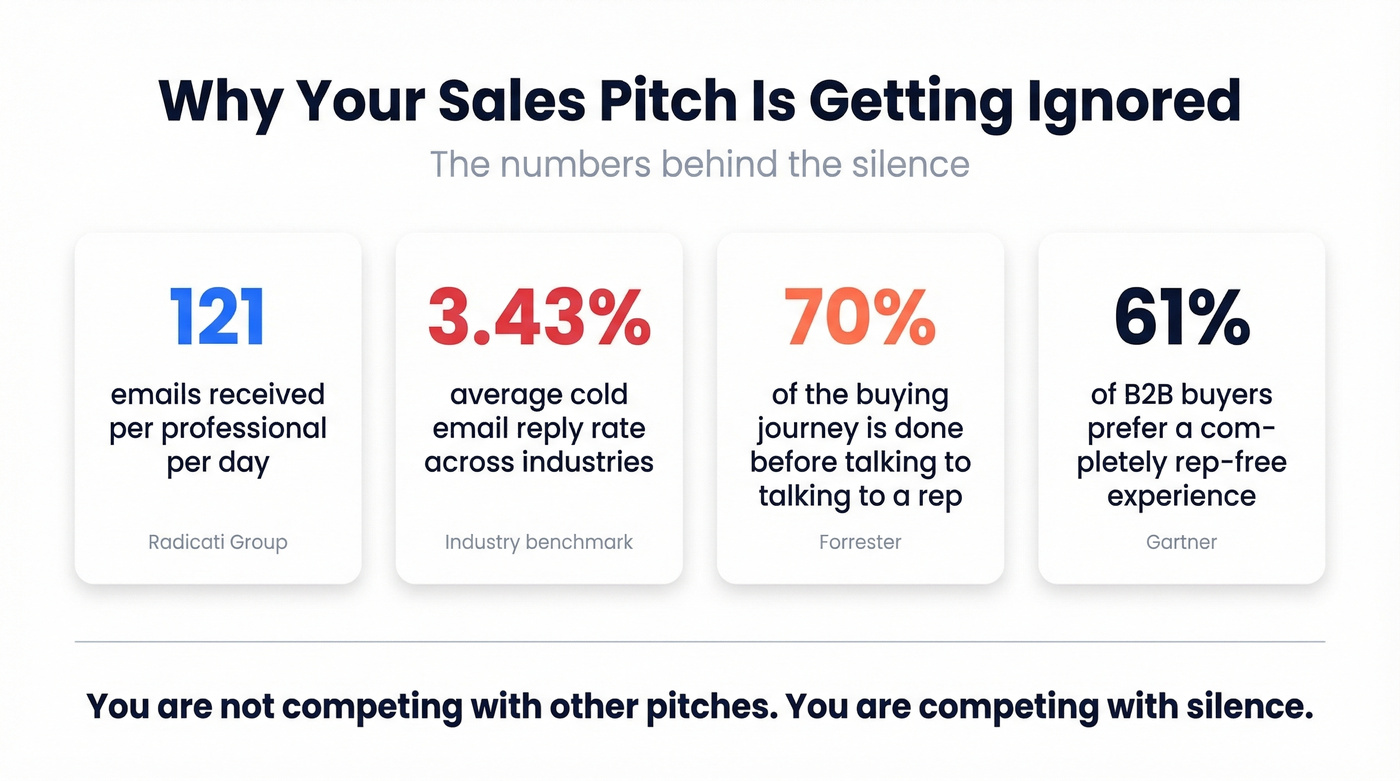
The landscape of professional sales has shifted significantly. As we navigate the business environment of 2026, the traditional "hard sell" has been almost entirely replaced by consultative, data-driven interactions. Buyers are more informed than ever, often completing up to 70% of their research before ever speaking to a sales representative. Consequently, a successful sales pitch is no longer just about explaining what a product does; it is about demonstrating a profound understanding of the buyer’s specific challenges and proving—with evidence—that your solution is the most efficient path to their desired future state.
Effective pitching is an art form backed by behavioral science. Whether you are delivering a 30-second elevator pitch or a 45-minute formal presentation, the fundamental mechanics of persuasion remain constant. Below, we explore seven proven strategies to refine your delivery, build trust, and ultimately close more deals.
1. Conduct Hyper-Specific Prospect Research
The foundation of a high-converting pitch is laid long before you open your mouth or share your screen. In the current market, generic pitches are immediately dismissed as spam. Hyper-personalization is the prerequisite for engagement.
Before drafting your pitch, you must identify the "Ideal Customer Profile" (ICP) and the specific "Buyer Persona" you are addressing. Research should move beyond basic firmographics (company size, location) into technographics and psychographics. What software stack are they currently using? What are the recent trends in their specific sub-vertical?
Key areas to research include:
- Recent Company News: Look for quarterly earnings reports, recent mergers, or new product launches. These events create "trigger moments" where a company is more likely to need new solutions.
- Individual Pain Points: Review the prospect's recent activity on professional networks like LinkedIn. Have they commented on specific industry hurdles?
- Competitive Landscape: Understand who their primary competitors are. A pitch that explains how your solution helps them gain an edge over a specific rival is far more compelling than a general value proposition.
By the time you begin your pitch, the prospect should feel that you have spent hours analyzing their specific business model. This builds immediate rapport and establishes you as a partner rather than a vendor.
2. Lead with the "Why," Not the "What"
One of the most common mistakes in sales is the "feature dump." Salespeople often spend the first ten minutes of a pitch listing technical specifications and product features. However, buyers do not buy features; they buy outcomes.
To convert at a higher rate, adopt the Jobs-to-be-Done (JTBD) framework. This theory suggests that customers "hire" a product to do a specific job. Your pitch should focus on the "gap" between where the customer is now and where they want to be.
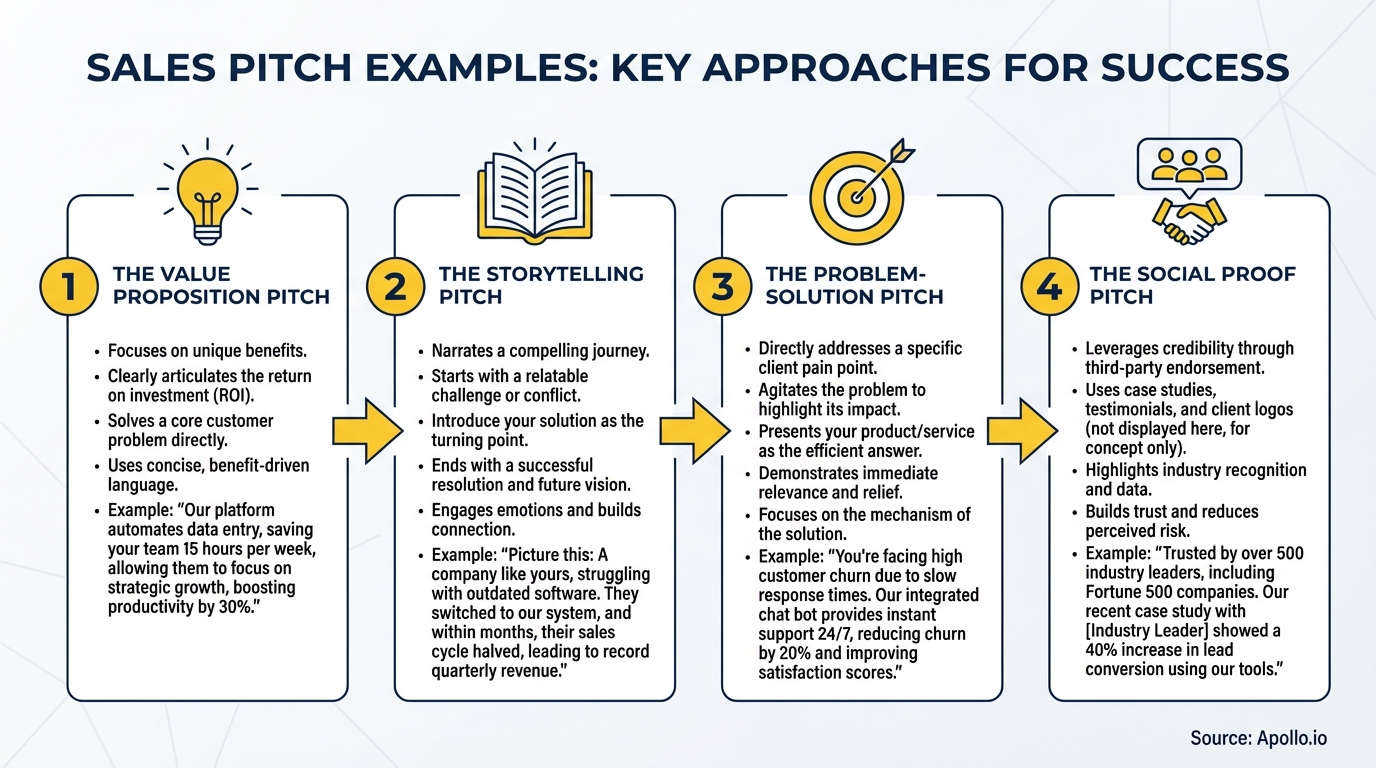
Instead of saying, "Our software has a high-speed AI processing engine," say, "Our system reduces your team's manual data entry by 40 hours a week, allowing your engineers to focus on product innovation rather than administrative tasks."
This shift moves the conversation from the cost of the tool to the value of the result. When the prospect can visualize the "after" state—more time, more revenue, or less stress—the price of the solution becomes a secondary consideration.
3. Structure Your Pitch as a Narrative
Human brains are hardwired for storytelling. A pitch that follows a logical narrative arc is easier to remember and more emotionally resonant. A proven structure for a converting sales pitch is the Problem-Agitation-Solution (PAS) model, enhanced for 2026 with a "Future State" conclusion.
- The Hook/Context: Acknowledge the current industry climate.
- The Problem: Clearly define the struggle the prospect is facing.
- The Agitation: Explain the cost of doing nothing. What happens if this problem persists for another year? (e.g., lost market share, employee burnout).
- The Solution: Introduce your product as the bridge to the solution.
- The Proof: Provide evidence that the bridge holds.
- The Call to Action: Define the next step.
By placing the customer as the "hero" of the story and your product as the "guide" (a concept popularized by the StoryBrand framework), you remove the adversarial nature of sales. You are no longer trying to take their money; you are helping them complete their mission.
4. Leverage Quantitative and Qualitative Social Proof
Trust is the currency of sales. In an era of deepfakes and AI-generated marketing, authentic social proof is more valuable than ever. However, simply saying "we have 500 happy clients" is no longer enough. Your social proof must be relevant and verifiable.
Effective social proof includes:
- Vertical-Specific Case Studies: If you are pitching to a healthcare provider, show them a case study from another healthcare provider.
- The "Rule of Three": Present three distinct examples of success—one focused on ROI (revenue), one on efficiency (time), and one on risk mitigation (security/compliance).
- Third-Party Validation: Reference reports from analysts like Gartner or Forrester, or high-intent review platforms.
- Quantifiable Metrics: Avoid vague terms like "better" or "faster." Use specific numbers: "increased lead conversion by 22% within the first 90 days."
Comparison of Pitch Delivery Methods
| Pitch Type | Optimal Duration | Primary Goal | Key Element |
|---|---|---|---|
| Elevator Pitch | 30–60 Seconds | Secure a follow-up meeting | A single, powerful "hook" |
| Discovery Pitch | 15–20 Minutes | Identify needs and build rapport | Open-ended questions |
| Formal Presentation | 30–45 Minutes | Obtain stakeholder buy-in | Comprehensive ROI data |
| Social/Cold Outreach | 2–3 Sentences | Initiate a conversation | Low-friction question |
5. Preemptively Address Objections
A conversion-killing mistake is waiting for the prospect to bring up their concerns. If a prospect is thinking about a limitation but doesn't voice it, that doubt remains in their mind throughout the pitch.
Top-performing sales professionals use a technique called "Objection Handling in Advance." By identifying the three most common reasons people don't buy (usually price, timing, or complexity) and addressing them mid-pitch, you demonstrate transparency and confidence.
For example: "Usually, when companies see our implementation timeline, they worry about the internal resources required. That’s why we’ve developed a concierge onboarding process that handles 90% of the data migration for you, requiring only four hours of your IT team's time."
By raising the objection yourself, you control the narrative and provide the solution before the doubt can fester.
6. Master the Art of Micro-Commitments
Many sales pitches fail because the "ask" at the end is too large. Asking for a $100,000 contract at the end of a first meeting is often a recipe for rejection. Instead, build a path of "micro-commitments."
A micro-commitment is a small "yes" that leads to the final "yes." During your pitch, check for alignment frequently:
- "Does that challenge sound familiar to what your team is experiencing?"
- "If we could solve that specific issue, would that be a priority for this quarter?"
- "Would it make sense to involve your head of operations in our next technical deep dive?"
Each small agreement builds psychological momentum. By the time you reach the final proposal, the prospect has already agreed with your logic and your value proposition multiple times, making the final "yes" feel like a natural progression rather than a difficult decision.
7. Design a Frictionless Call to Action (CTA)
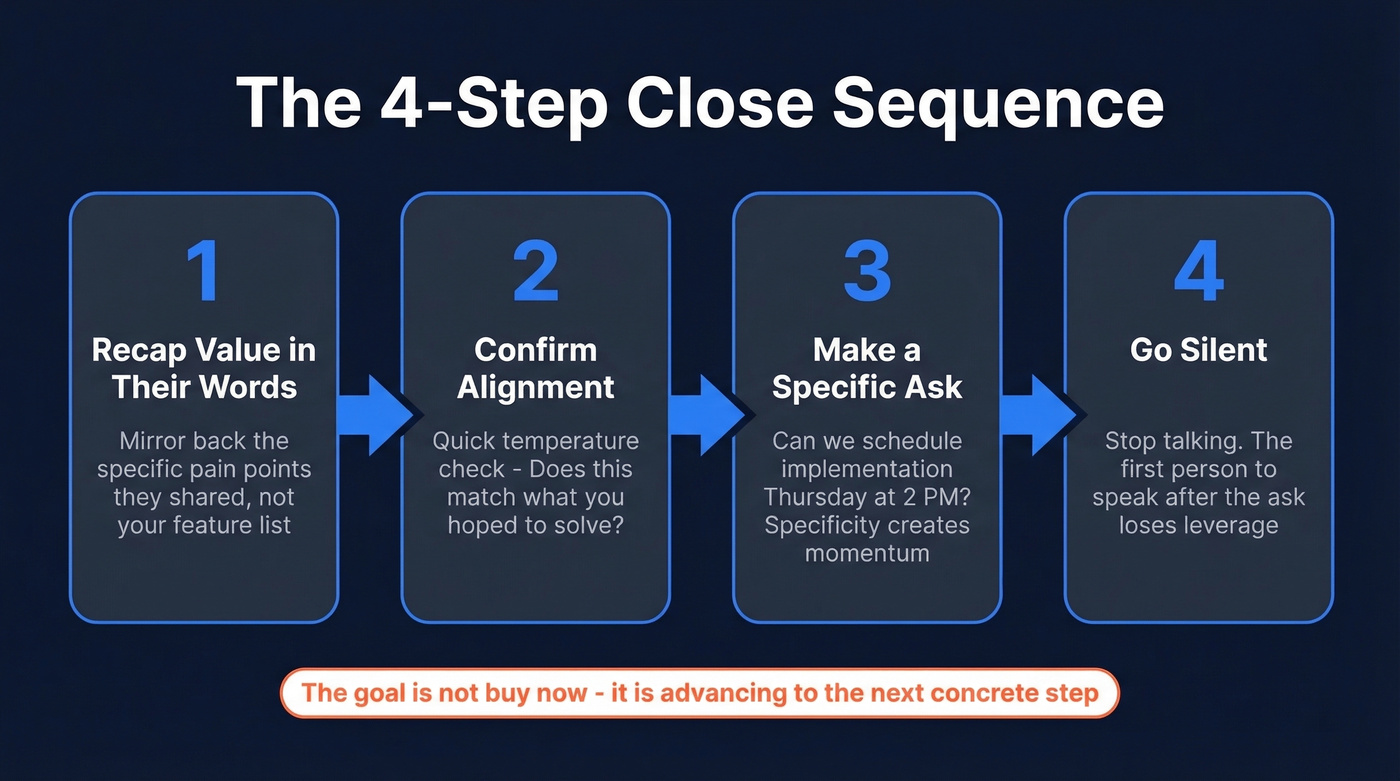
The final 60 seconds of your pitch often determine its success. A vague ending like "Let me know what you think" is the death of a deal. Your CTA must be specific, actionable, and time-bound.
In 2026, the most effective CTAs are those that reduce "buyer's remorse" and perceived risk. Instead of pushing for a close, push for the "Next Logical Step."
Examples of high-converting CTAs:
- "Based on our talk, the next step is a 15-minute scoping call with your technical lead on Tuesday or Wednesday. Which works better?"
- "I’ll send over the customized ROI calculator we discussed. Can we hop on a brief call Friday morning once you've had a chance to review the numbers?"
- "Let’s start with a pilot program for your regional team to prove the concept before we look at a global rollout."
Ensure the prospect knows exactly what they need to do, how long it will take, and what the immediate benefit of that action will be.
Advanced Technical Considerations: The Role of AI in 2026
While the human element remains paramount, the integration of AI tools in 2026 has refined how pitches are delivered. Sales professionals now use real-time sentiment analysis during video calls to gauge prospect engagement. If the software detects a drop in interest or a spike in confusion, the presenter can pivot the conversation immediately.
Furthermore, "Digital Sales Rooms" (DSRs) have become a standard requirement. After the pitch, you should provide a centralized, secure link containing the presentation, relevant case studies, a recorded demo, and a mutual action plan. This allows the prospect to socialise the pitch internally with other stakeholders without losing the core message.
Frequently Asked Questions
How long should a modern sales pitch be?
The length depends on the stage of the sales cycle, but brevity is generally favored. A discovery call pitch should typically be 15–20 minutes of talking and 10–15 minutes of listening/Q&A. For formal presentations involving multiple stakeholders, 30–45 minutes is standard. Always leave at least 25% of the allotted time for the prospect to ask questions.
What is the most effective way to handle price objections?
Never defend the price; instead, re-establish the value. When a prospect says, "This is too expensive," they are usually saying, "I don't see enough value to justify this cost." Pivot back to the cost of the problem you are solving. If the problem costs the company $1 million a year in lost productivity, a $100,000 solution is actually a 90% saving.
Should I use slides in every sales pitch?
Not necessarily. While slides help visualize complex data, they can sometimes create a barrier between you and the prospect. For initial discovery calls, a conversational approach without slides often builds better rapport. Use slides for the "demonstration" and "proposal" phases where visual evidence and data visualization are critical.
How do I pitch to a prospect who is already using a competitor?
Focus on "unmet needs" rather than attacking the competitor. Research common complaints about the competitor's software or service. Your pitch should highlight how your solution addresses those specific gaps. Frame it as an "evolution" of their current process rather than a complete disruption.
What is the "Feel, Felt, Found" method?
This is a classic empathy-based objection handling technique. "I understand how you feel about the implementation time. Other clients have felt the same way initially. However, what they found was that our automated migration tool actually cut the expected setup time in half." It validates the prospect's concern while providing a solution.
Practical Recommendation for Immediate Implementation
To see an immediate improvement in your conversion rates, audit your current pitch deck or script and remove any sentence that begins with "We are..." or "Our product does..." and replace it with "You will get..." or "Your team can..."
This simple linguistic shift forces you to adopt the customer's perspective. Once you have adjusted the language, schedule a "dry run" with a colleague and ask them to interrupt you with the three most difficult objections they can think of. Practicing your responses to these objections until they feel natural will significantly increase your confidence and authority during live interactions.