The Kia K5 remains a standout in the 2026 mid-size sedan market, offering a compelling blend of aggressive styling, advanced cockpit technology, and a class-leading warranty. While it excels in value and aesthetic appeal, potential buyers must weigh these strengths against its lack of a hybrid powertrain and limited rear-seat headroom.
As the automotive landscape shifts increasingly toward electrification and SUVs, the 2026 Kia K5 maintains its position as a bold alternative for drivers who still value the low-slung profile and driving dynamics of a traditional four-door car. Since its major refresh in 2025, which introduced a more powerful base engine and a sophisticated curved-display interior, the K5 has solidified its reputation as the "sporty" sibling in the Hyundai-Kia family. However, choosing the right vehicle requires looking beyond the "Star Map" LED lighting and dual-screen dashboard.
In this comprehensive analysis, we evaluate the five primary advantages and five significant drawbacks of the Kia K5. By understanding these technical specifications, ergonomic realities, and market positioning, you can determine if this sedan meets your specific lifestyle requirements or if a competitor might serve you better.
The 5 Pros of the Kia K5
1. Striking and Aggressive Exterior Design
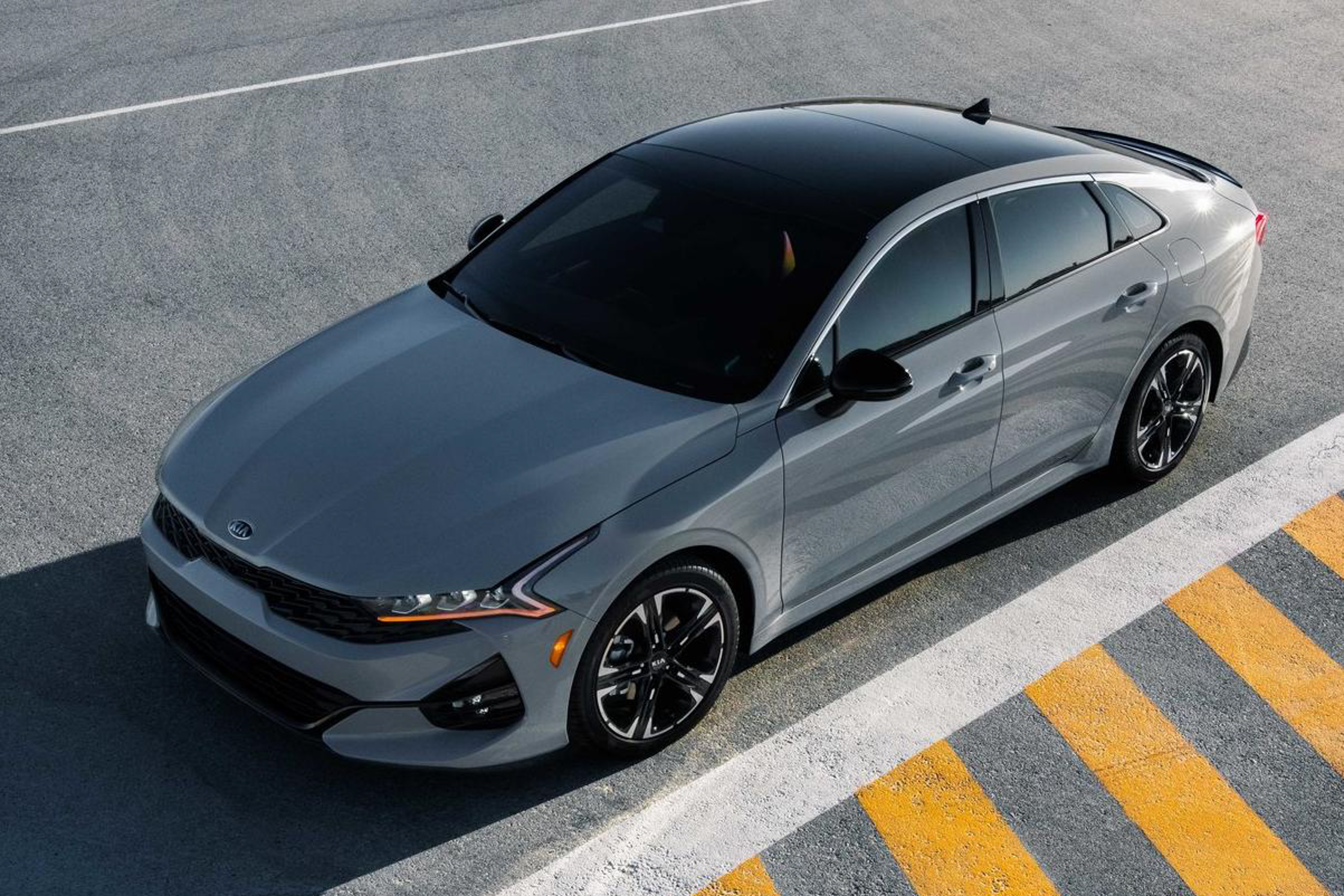
In a segment often criticized for conservative styling, the Kia K5 is a visual outlier. The "fastback" silhouette—characterized by a roofline that slopes seamlessly into the trunk—gives the car a more expensive, European sports-sedan appearance. For 2026, the K5 continues to use the "Star Map" lighting signature, which features amber daytime running lights that zigzag across the front fascia, creating an unmistakable presence on the road.
This design is not merely for show; it serves a functional purpose in differentiating the K5 from its more utilitarian rivals. The GT-Line and GT trims further enhance this with unique front and rear bumpers, neon-green brake calipers (on the GT), and aggressive wheel designs. For buyers who want their daily commuter to reflect a sense of personality and modernism, the K5’s aesthetics are arguably its strongest selling point.
2. State-of-the-Art Interior Technology
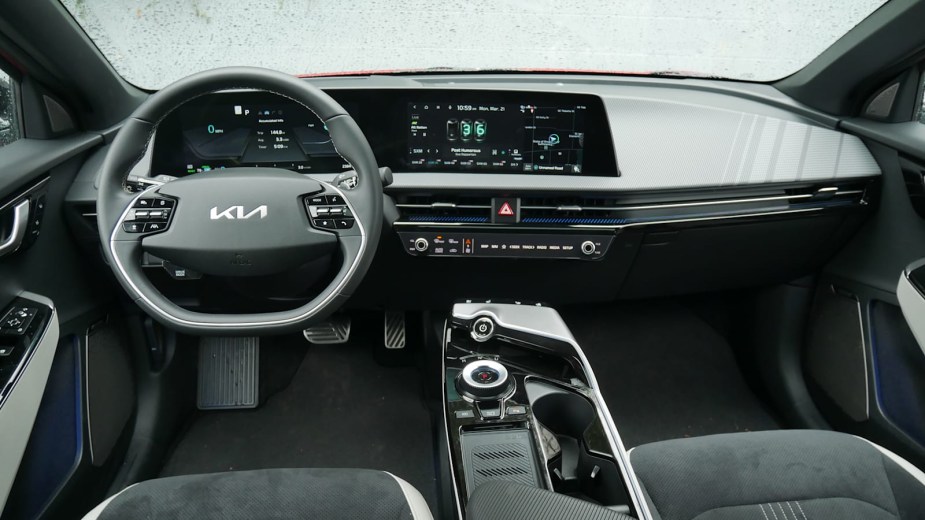
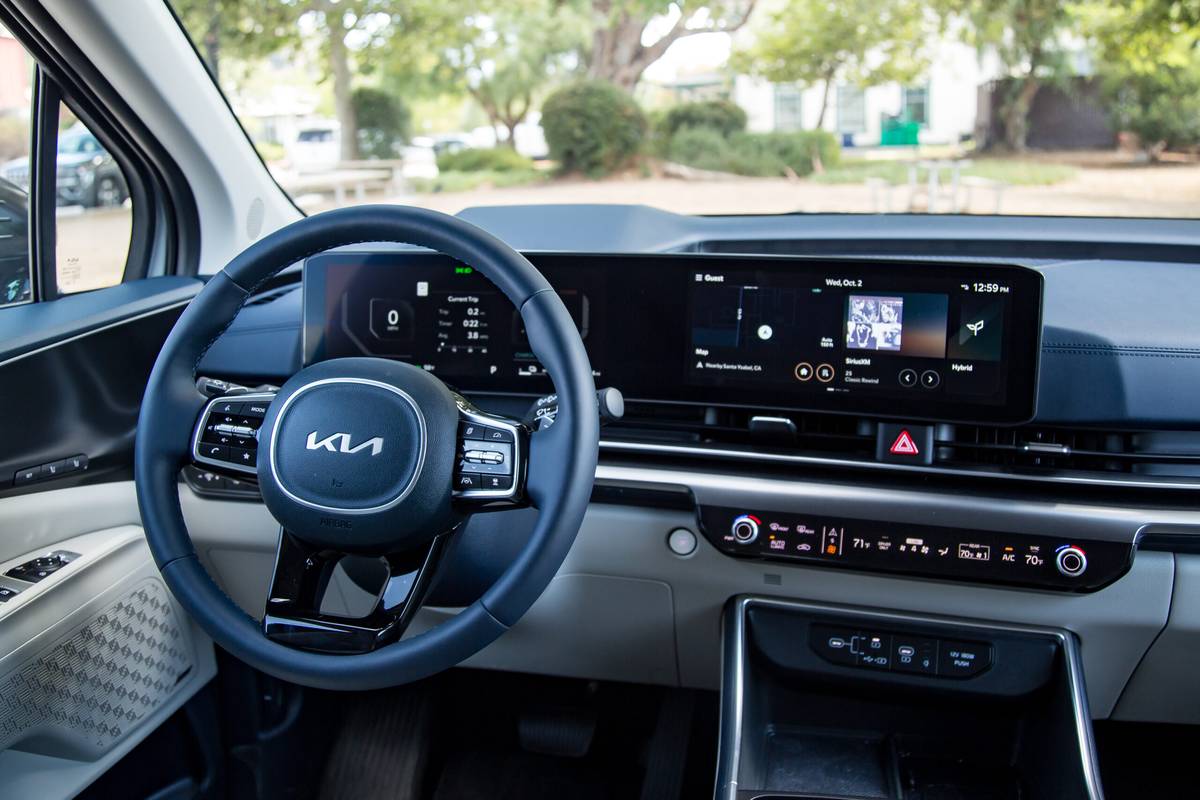
Kia has effectively democratized luxury-grade technology within the K5. The centerpiece of the 2026 model is the "Connected Car Navigation Cockpit" (ccNC), which features a single curved glass panel housing two 12.3-inch displays. One serves as the digital instrument cluster, while the other handles infotainment duties.
Unlike earlier iterations of high-tech dashboards, this system supports wireless Apple CarPlay and Android Auto across all trim levels. Furthermore, the K5 supports Over-the-Air (OTA) updates, allowing Kia to improve vehicle software, refine maps, and even enhance powertrain management without requiring a dealership visit. The inclusion of a fingerprint sensor for driver profile authentication (found on higher trims) adds a layer of personalization and security rarely seen at this price point.
3. The Kia Value Proposition and Warranty
The Kia K5 remains one of the most cost-effective choices in the mid-size segment when considering the "features-per-dollar" ratio. Standard equipment on even the base LXS trim includes LED headlights, dual-zone automatic climate control, and a suite of driver-assistance features that often cost extra on European competitors.
More importantly, the K5 is backed by Kia’s industry-leading warranty program:
- 10-year/100,000-mile limited powertrain warranty.
- 5-year/60,000-mile limited basic warranty.
- 5-year/60,000-mile roadside assistance.
This long-term coverage provides significant peace of mind for owners who intend to keep their vehicle beyond the typical three-year lease cycle, effectively lowering the projected total cost of ownership by mitigating out-of-pocket repair costs for major mechanical components.
4. Balanced Performance and the Potent GT Trim
For the 2026 model year, the K5 offers a simplified but effective powertrain lineup. Most trims utilize a 2.5-liter naturally aspirated four-cylinder engine producing 191 horsepower. This engine, which replaced the older 1.6-liter turbo, provides smoother linear acceleration and better highway passing power for everyday driving.
However, the real "pro" for enthusiasts is the K5 GT. This performance-oriented trim features a 2.5-liter turbocharged engine pumping out 290 horsepower and 311 lb-ft of torque. Paired with a quick-shifting 8-speed wet dual-clutch transmission (DCT), the GT can sprint from 0 to 60 mph in roughly 5.2 seconds. This level of performance is rare in a front-wheel-drive family sedan and allows the K5 to compete with entry-level luxury sport sedans.
5. Advanced Safety and Driver Assistance Suite
Safety is a core pillar of the K5's design. The "Kia Drive Wise" suite is standard across the board, utilizing a combination of radar, cameras, and ultrasonic sensors to provide a 360-degree safety net. Notable features include Forward Collision-Avoidance Assist with Junction Turning, which can detect oncoming vehicles when you are making a left turn at an intersection.
Higher trims offer Highway Driving Assist (HDA), a Level 2 semi-autonomous driving system that combines adaptive cruise control with lane-centering technology. On long highway stints, HDA significantly reduces driver fatigue by maintaining speed, following distance, and lane position with minimal input. The inclusion of the Blind-Spot View Monitor, which displays a live video feed of the car’s blind spot in the instrument cluster when the turn signal is activated, is a standout technical feature that remains a benchmark for the industry.
The 5 Cons of the Kia K5
1. Lack of a Hybrid Powertrain Option
The most glaring omission in the 2026 Kia K5 lineup is a hybrid or plug-in hybrid (PHEV) variant. As competitors like the Toyota Camry have moved to an all-hybrid lineup, and the Honda Accord offers highly efficient hybrid trims for its most popular models, the K5’s reliance on purely internal combustion engines feels dated.
While the 2.5-liter engines are efficient for their class, they cannot match the 45-50+ MPG figures achieved by rival hybrids. For buyers prioritizing fuel economy or those living in areas with high fuel costs, the K5 represents a higher monthly operating expense. This lack of electrification also impacts the vehicle's resale value in a market increasingly focused on sustainability.
2. Compromised Rear Headroom
The very "fastback" design that makes the K5 look so attractive creates a functional drawback in the cabin. The aggressively sloping roofline encroaches significantly on rear-seat headroom. While legroom is generous at 35.2 inches, taller adults (those over 6 feet) may find their heads brushing against the headliner.
Additionally, the small rear windows and the thick C-pillar necessitated by the exterior styling can make the back seat feel somewhat claustrophobic compared to the airy cabins of the Honda Accord or Subaru Legacy. If you frequently transport adult passengers or have tall teenagers, the rear-seat ergonomics of the K5 may be a deal-breaker.
3. Interior Material Consistency
While the K5’s cabin looks spectacular in photos and feels premium at eye level, a closer inspection reveals some cost-cutting measures. As you move your hands lower down on the door panels and the center console, you encounter a significant amount of hard, scratchy plastics.
Furthermore, the extensive use of "Piano Black" (glossy plastic) trim around the gear shifter and infotainment controls is a point of contention. While it looks sleek in the showroom, it is a magnet for fingerprints, dust, and micro-scratches. Maintaining the "new car" look of the interior requires constant cleaning, and the durability of these surfaces over a five-to-ten-year period is often less than that of matte or textured finishes.
4. Traction Issues in the High-Performance GT
While the 290-horsepower engine in the K5 GT is impressive, its delivery to the ground is flawed. Unlike the GT-Line, which offers an optional All-Wheel Drive (AWD) system, the high-performance GT is strictly Front-Wheel Drive (FWD).
Channeling 311 lb-ft of torque through the front wheels often results in significant wheel spin and "torque steer" (the car pulling to one side under hard acceleration), especially in wet or slippery conditions. Without the benefit of AWD to distribute power to the rear wheels, the GT struggles to utilize its full power from a standstill. This limitation prevents the K5 GT from being the true "sports sedan" it aspires to be and makes it feel less composed than rivals like the Subaru WRX or the AWD variants of the Toyota Camry.
5. Transition to Touch-Capacitive Controls
Following a trend in modern automotive design, the K5 has replaced many physical buttons with touch-capacitive surfaces. Specifically, the dual-purpose control panel below the infotainment screen switches between climate and media controls at the touch of a button.
While this saves space and looks modern, it is frequently criticized for being distracting. Adjusting the volume or changing the temperature often requires looking away from the road to ensure the panel is in the correct "mode." Physical knobs and buttons provide tactile feedback that touch panels lack, and for many drivers, this move toward a digital-only interface represents a step backward in terms of daily usability and safety.
Technical Specifications Comparison (2026 Models)
To help visualize how the K5 fits into the market, the following table compares the base and performance trims of the K5 against its primary rivals.
| Feature | Kia K5 (LXS) | Kia K5 (GT) | Toyota Camry (LE) | Honda Accord (EX) |
|---|---|---|---|---|
| Engine | 2.5L 4-Cyl | 2.5L Turbo 4-Cyl | 2.5L Hybrid | 1.5L Turbo 4-Cyl |
| Horsepower | 191 hp | 290 hp | 225 hp (Combined) | 192 hp |
| Drivetrain | FWD (AWD avail.) | FWD Only | FWD (AWD avail.) | FWD Only |
| Transmission | 8-Speed Auto | 8-Speed Wet DCT | ECVT | CVT |
| EPA Est. MPG | ~30 Combined | ~27 Combined | ~51 Combined | ~32 Combined |
| Screen Size | 12.3-inch | Dual 12.3-inch | 8.0-inch | 7.0-inch |
| Warranty | 10yr/100k Mi | 10yr/100k Mi | 5yr/60k Mi | 5yr/60k Mi |
Note: Performance and fuel economy figures are based on manufacturer estimates and standard testing cycles for the 2026 model year.
Detailed Performance and Handling Analysis
Beyond the raw numbers, the Kia K5 offers a driving experience that varies significantly by trim. The LXS and EX models are tuned for comfort. Their suspension systems are adept at soaking up road imperfections, making them excellent highway cruisers. The steering is light and easy to maneuver in parking lots but lacks the communicative feel that driving enthusiasts might desire.
The GT-Line serves as the middle ground. It features the aggressive looks of the GT but retains the more efficient 1.6L or 2.5L (depending on specific regional tuning) engine. Crucially, the GT-Line is the only way to get All-Wheel Drive in the K5 lineup. This makes the GT-Line the preferred choice for drivers in northern climates who face snow and ice, as the AWD system can actively distribute torque to the rear wheels to improve stability.
The GT model features a sport-tuned suspension that is noticeably firmer. While this improves cornering ability and reduces body roll, it does result in a harsher ride over broken pavement. The inclusion of larger brakes and 19-inch wheels wrapped in Pirelli P-Zero tires (often an optional upgrade) signals that this car is built for speed, even if the FWD layout remains its "Achilles' heel."
Ownership and Maintenance Considerations
Owning a Kia K5 in 2026 is generally a low-stress experience due to the warranty coverage, but there are specific maintenance items to be aware of:
- Direct Injection Maintenance: The 2.5-liter engines use Gasoline Direct Injection (GDI). Over time, GDI engines can suffer from carbon buildup on the intake valves. It is recommended to use high-quality fuel and periodic fuel system cleaners as specified in the owner's manual to maintain efficiency.
- Dual-Clutch Transmission (GT Only): The 8-speed wet DCT in the GT is a sophisticated piece of hardware. Unlike traditional automatics, it uses clutches that can experience wear. While the "wet" design (clutches bathed in oil) makes it much more durable than older "dry" DCTs, fluid changes at the recommended intervals are critical for longevity.
- Tire Wear: Due to the FWD nature and the torque output of the K5, front tires tend to wear faster than the rears. Regular tire rotations (every 5,000 to 7,500 miles) are essential to maximize the life of the rubber, particularly on the GT trim.
Frequently Asked Questions (FAQ)
Does the 2026 Kia K5 have a spare tire?
Most trims of the 2026 Kia K5 do not come with a traditional full-size or even a temporary "donut" spare tire. Instead, they are equipped with a Tire Mobility Kit, which includes a sealant and a small air compressor. This is a weight-saving measure used by many manufacturers. Buyers who frequently travel in areas with poor cell service may wish to purchase a spare tire kit separately from the dealership.
Is the Kia K5 expensive to insure?
The Kia K5 typically falls in the mid-range for insurance costs among sedans. While its advanced safety features can lead to discounts, the high-tech sensors in the bumpers (used for adaptive cruise control and parking sensors) can make even minor fender-benders expensive to repair. Insurance rates also vary significantly depending on whether you choose the base LXS or the high-performance GT.
How does the K5 compare to the Hyundai Sonata?
The Kia K5 and Hyundai Sonata share the same underlying platform and many mechanical components. However, they cater to different tastes. The K5 is styled more aggressively and focuses on a "sporty" image, while the Sonata often features a more avant-garde interior and, crucially, offers a hybrid powertrain. If fuel economy is your priority, the Sonata Hybrid is the better choice between the two siblings.
Can the Kia K5 tow a trailer?
The Kia K5 is not rated for significant towing. While some aftermarket hitches are available for bike racks or very light utility trailers, Kia generally does not recommend towing with the K5. Attempting to tow heavy loads can put excessive strain on the transmission and may void portions of your powertrain warranty.
Does the K5 support wireless charging for smartphones?
Yes, wireless charging is standard on the GT-Line, EX, and GT trims. The charging pad is located in a vertical slot in the center console, which helps save space and keeps the phone secure while driving. For 2026, the charging speeds have been improved to better accommodate modern, power-hungry smartphones.
Final Recommendation: Should You Buy the Kia K5?
The 2026 Kia K5 is an ideal choice for buyers who prioritize style, technology, and long-term warranty security. It is a vehicle that feels modern and punches above its weight class in terms of curb appeal. If you are a solo commuter or a young couple who rarely uses the back seat for adults, the K5 offers a premium experience without the premium price tag.
However, if your daily commute involves heavy stop-and-go traffic where a hybrid's efficiency would save you thousands in fuel, or if you regularly transport tall passengers, you should look toward the Toyota Camry or Honda Accord. Furthermore, if you are an enthusiast seeking a true performance car, the traction issues of the K5 GT might prove frustrating; in that case, the all-wheel-drive GT-Line offers a more balanced—though less powerful—daily driving experience.
Next Action: Visit a local dealership to test drive both the GT-Line AWD and the GT. Pay close attention to the rear-seat headroom and the responsiveness of the touch-capacitive control panel to ensure it fits your ergonomic preferences.