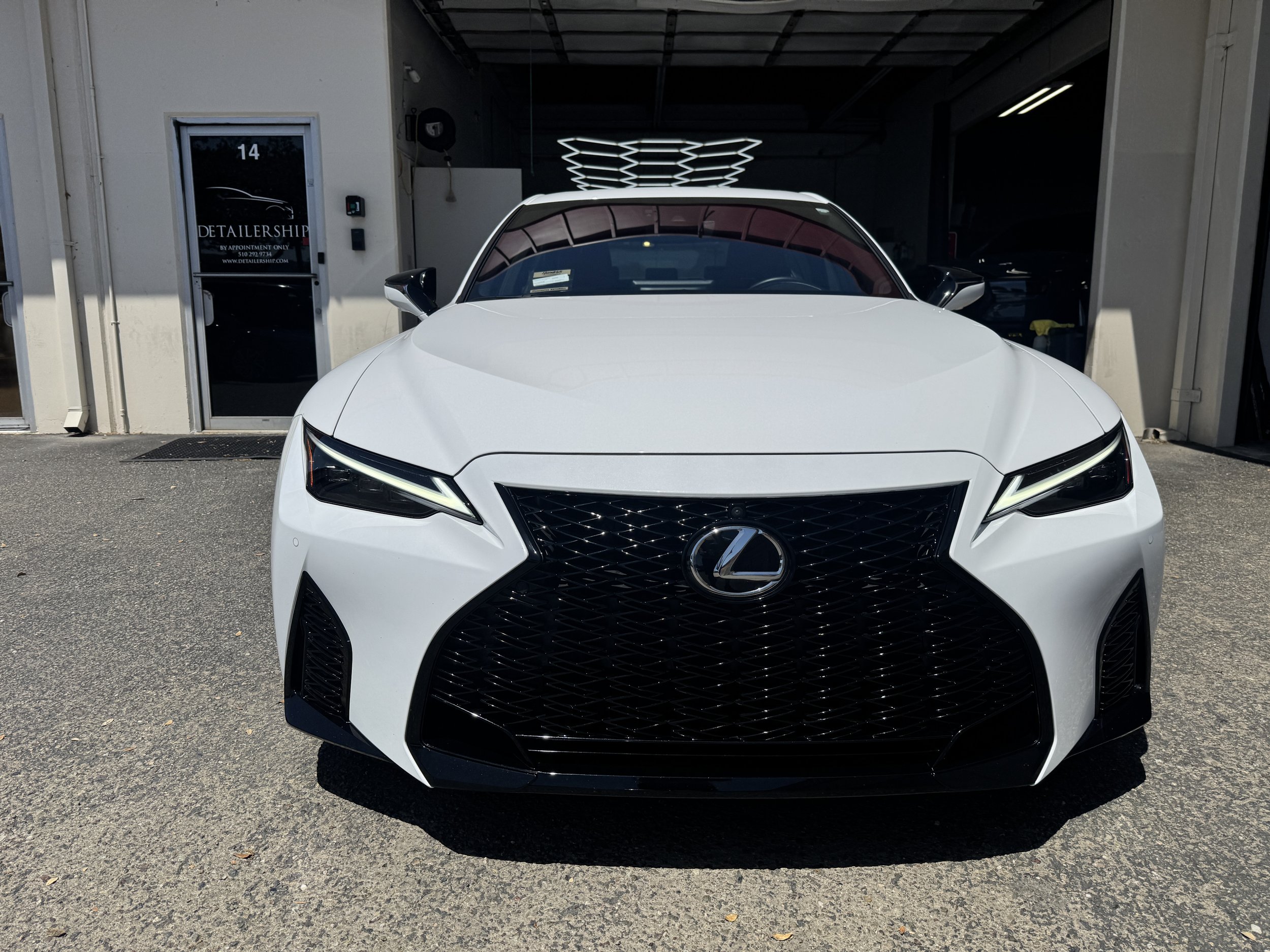
The 2024 Lexus IS 350 F Sport AWD achieves an official factory 0 to 60 mph time of 5.7 seconds, driven by a 3.5-liter naturally aspirated V6 producing 311 horsepower and 280 lb-ft of torque. Power is routed through a six-speed automatic transmission to an all-wheel-drive system featuring a rear-biased 30:70 torque split under normal driving conditions.
Technical Overview: Engine and Powertrain Architecture
To understand how the 2024 Lexus IS 350 F Sport AWD delivers its 5.7-second sprint from zero to 60 mph, one must examine the mechanical foundation beneath its sculpted bodywork. The core of the vehicle’s powertrain is Toyota’s long-standing 2GR-FKS engine, a 3.5-liter naturally aspirated 60-degree V6. This powerplant incorporates advanced engineering features, including the D-4S direct and port fuel injection system, as well as Variable Valve Timing-intelligent Wide (VVT-iW), which allows the engine to alternate between the conventional Otto cycle and the fuel-efficient Atkinson cycle depending on engine load.
- 3.5L V6 Engine (2GR-FKS)
- 311 hp @ 6,600 RPM
- 280 lb-ft @ 4,800 RPM
- 6-Speed Automatic Transmission
- Planetary Center Differential AWD
- Normal: 30% Front / 70% Rear
- Max Slip: 50% Front / 50% Rear
The engine generates its peak output of 311 horsepower at 6,600 RPM and peak torque of 280 pound-feet at 4,800 RPM. Unlike modern luxury sport sedans that rely on low-end turbocharged boost, the naturally aspirated V6 in the IS 350 requires the driver to wind out the tachometer to extract maximum acceleration. Power builds linearly across the rev range, resulting in immediate, predictable throttle response without the delay typical of turbocharger spooling.
The All-Wheel Drive System
The all-wheel-drive architecture in the IS 350 F Sport AWD relies on a full-time system featuring a planetary gear-type center differential coupled with a multi-plate clutch assembly. Under dry, normal driving conditions, the transfer case directs 70 percent of available torque to the rear wheels and 30 percent to the front wheels. This preserves the agile, rear-wheel-drive driving dynamics expected of a compact executive sport sedan.
When wheel slip occurs or dynamic sensors detect aggressive cornering or acceleration, the electronic control system can alter the front-to-rear torque distribution seamlessly up to a 50:50 split. This variable distribution enhances traction during off-the-line launches on low-friction surfaces, such as wet pavement, gravel, or snow. However, on dry asphalt, engaging both axles introduces mechanical friction and rotational mass that plays a direct role in shaping the car's 5.7-second launch baseline.
Why the 2024 Lexus IS 350 F Sport AWD Takes 5.7 Seconds to Reach 60 MPH
While 5.7 seconds represents swift acceleration for daily driving, automotive enthusiasts often ask why a 311-horsepower sport sedan does not breach the sub-5-second barrier. The answer lies in three primary engineering factors: curb weight, transmission gearing, and engine torque curves.
1. Mass and Weight Distribution
The 2024 Lexus IS 350 F Sport AWD carries a curb weight of approximately 3,880 pounds. Adding the all-wheel-drive transfer case, front differential, drive shafts, and reinforced chassis components adds roughly 132 pounds compared to its rear-wheel-drive sibling. Accelerating nearly two tons of mass requires substantial kinetic energy, and while the AWD system eliminates rear-wheel tire spin during launch, the added weight counteracts that initial traction advantage as speeds increase toward 60 mph.
2. Six-Speed Transmission vs. Modern Multi-Speed Gearboxes
A major mechanical distinction between the AWD and RWD variants of the IS 350 lies in the gearbox. While the rear-wheel-drive model employs an 8-speed Sport Direct-Shift automatic transmission, the all-wheel-drive model uses a 6-speed automatic transmission (A760H).
The 6-speed transmission is physically structured to accommodate the transfer case output to the front axle within the vehicle's transmission tunnel frame. However, having only six forward ratios means wider gaps between gears. The wider spacing prevents the engine from remaining constantly in its narrow peak power band (5,000 to 6,600 RPM) during maximal acceleration, resulting in slightly slower velocity accumulation compared to tight-ratio 8-speed or 10-speed gearboxes used by competitors.
3. Torque Output and Delivery Character
Naturally aspirated engines deliver torque gradually rather than in a sudden low-RPM wave. The 2GR-FKS engine reaches its 280 lb-ft torque peak at a relatively high 4,800 RPM. By comparison, modern turbocharged 2.0-liter four-cylinders or 3.0-liter inline-sixes frequently deliver 300+ lb-ft of torque starting as low as 1,600 RPM. Consequently, off-the-line torque multiplication in the IS 350 AWD is softer until the engine climbs past 4,000 RPM, contributing to the 5.7-second standard metric.
AWD vs. RWD IS 350: Performance and Hardware Differences
Choosing between the rear-wheel-drive and all-wheel-drive configurations of the 2024 Lexus IS 350 F Sport involves tradeoffs between initial traction, weight, transmission capability, and overall driving feel.
| Model | Acceleration (0-60 mph) |
|---|---|
| RWD Model (8-Speed) | 5.6 sec |
| AWD Model (6-Speed) | 5.7 sec |
Transmission Mechanics
The RWD IS 350 utilizes the 8-speed automatic transmission, which offers shorter first and second gear ratios. This allows the RWD car to launch aggressively and execute gear shifts faster. The AWD model's 6-speed transmission, while durable and smooth, prioritizes mechanical longevity and system packaging over rapid lightning-fast shifts.
Launch Traction vs. High-Speed Acceleration
- Off-the-Line Launch: From a standstill on poor or slippery surfaces, the AWD model instantly locks power to all four wheels, launching cleanly without intervention from traction control. The RWD model can experience wheel spin or throttle-cutting traction control intervention if launched aggressively on imperfect surfaces.
- Dry Surface Acceleration: On a warm, dry asphalt test track, the lower curb weight (3,748 lbs) and shorter initial gear ratios of the RWD model allow it to post an official factory 0-60 time of 5.6 seconds—one-tenth of a second faster than the AWD version (5.7 seconds).
How the IS 350 F Sport AWD Compares to Segment Rivals
The compact luxury sport sedan segment is highly competitive. To evaluate the 5.7-second benchmark accurately, it is essential to compare the IS 350 F Sport AWD against key rivals in the class, including the BMW 330i xDrive, Audi A4 45 TFSI, Genesis G70 3.3T AWD, and Acura TLX SH-AWD.
1. BMW 330i xDrive
The BMW 330i xDrive uses a 2.0-liter turbocharged inline-four producing 255 horsepower and 295 lb-ft of torque. Despite having 56 fewer peak horsepower than the Lexus, the BMW delivers peak torque at just 1,600 RPM and routes it through a rapid-shifting ZF 8-speed automatic. Combined with a lighter curb weight (~3,700 lbs), the 330i xDrive records a 0-60 time of approximately 5.3 seconds, undercutting the IS 350 AWD by nearly half a second.
2. Audi A4 45 TFSI Quattro
Audi’s A4 45 TFSI features a 2.0-liter turbocharged four-cylinder producing 261 horsepower and 273 lb-ft of torque, paired with a 7-speed dual-clutch transmission. The quick-shifting dual-clutch gearbox and efficient Quattro AWD system launch the Audi A4 to 60 mph in 5.2 seconds, demonstrating the acceleration advantages of forced induction and dual-clutch technology.
3. Genesis G70 3.3T AWD
Comparing the IS 350 AWD to twin-turbocharged six-cylinder competitors highlights a wider gap. The Genesis G70 3.3T AWD generates 365 horsepower and 376 lb-ft of torque from its twin-turbo 3.3-liter V6. It achieves 0-60 mph in 4.5 seconds. However, the G70 carries a higher price tag and greater mechanical complexity compared to the naturally aspirated Lexus.
4. Acura TLX A-Spec / Advance SH-AWD
The Acura TLX SH-AWD is powered by a 2.0-liter turbocharged four-cylinder yielding 272 horsepower and 280 lb-ft of torque mated to a 10-speed automatic. The TLX SH-AWD reaches 60 mph in roughly 5.9 seconds, making it one of the few direct competitors that the Lexus IS 350 AWD out-accelerates off the line.
Specifications & Performance Comparison Matrix
The table below outlines key technical attributes, performance figures, and powertrain characteristics for the 2024 Lexus IS 350 F Sport AWD alongside its main segment rivals.
| Vehicle Model | Engine Architecture | Horsepower @ RPM | Torque @ RPM | Transmission Type | Curb Weight (lbs) | 0-60 MPH Time (Factory / Verified) |
|---|---|---|---|---|---|---|
| 2024 Lexus IS 350 F Sport AWD | 3.5L Naturally Aspirated V6 | 311 hp @ 6,600 | 280 lb-ft @ 4,800 | 6-Speed Automatic | 3,880 | 5.7 sec |
| 2024 Lexus IS 350 F Sport RWD | 3.5L Naturally Aspirated V6 | 311 hp @ 6,600 | 280 lb-ft @ 4,800 | 8-Speed Automatic | 3,748 | 5.6 sec |
| 2024 BMW 330i xDrive | 2.0L Turbocharged I4 | 255 hp @ 5,000 | 295 lb-ft @ 1,600 | 8-Speed Automatic | 3,713 | 5.3 sec |
| 2024 Audi A4 45 TFSI Quattro | 2.0L Turbocharged I4 | 261 hp @ 5,000 | 273 lb-ft @ 1,600 | 7-Speed Dual-Clutch | 3,638 | 5.2 sec |
| 2024 Genesis G70 3.3T AWD | 3.3L Twin-Turbo V6 | 365 hp @ 6,000 | 376 lb-ft @ 1,300 | 8-Speed Automatic | 3,977 | 4.5 sec |
| 2024 Acura TLX SH-AWD | 2.0L Turbocharged I4 | 272 hp @ 6,500 | 280 lb-ft @ 1,600 | 10-Speed Automatic | 3,990 | 5.9 sec |
Real-World Acceleration Factors and Launch Optimization
In independent motoring magazine testing, 0-60 mph acceleration times for the IS 350 F Sport AWD can vary slightly from the official 5.7-second factory rating. Depending on test procedures—such as the inclusion of a 1-foot rollout—times ranging from 5.4 to 5.7 seconds have been logged under optimal environmental conditions.
- Drivers / Launch Parameters
- Sport S+ Mode
- Sharpened Throttle
- Adaptive Dampers Stiff
- Delayed Upshifts
- Launch Strategy
- Hold Brake & Pre-load Engine
- Release Brake at ~2,200 RPM
- All 4 Tires Grab Asphalt
- Sport S+ Mode
Driving Modes and Throttle Mapping
The IS 350 F Sport features Drive Mode Select, offering Eco, Normal, Sport S, and on models equipped with the Dynamic Handling Package, Sport S+ and Custom modes:
- Normal / Eco Mode: Throttle mapping is relaxed, and the transmission shifts early to conserve fuel, which slows zero-to-sixty acceleration.
- Sport S / Sport S+ Mode: The engine control unit (ECU) sharpens throttle sensitivity, allowing faster initial power delivery. Sport S+ also stiffens the Adaptive Variable Suspension (AVS), reducing rearward body squat during a hard launch and ensuring maximum weight transfer is controlled effectively across both axles.
Launch Technique (Brake Torqueing)
Because the Lexus IS 350 F Sport AWD does not feature a dedicated automated launch control system like high-performance sports cars, reaching the fastest possible 0-60 time requires manual pre-loading of the drivetrain:
- Ensure the engine and transmission have reached normal operating temperatures.
- Select Sport S+ mode and disengage Traction Control (TRAC Off).
- Firmly hold the foot brake pedal with the left foot.
- Apply throttle with the right foot to hold engine speed between 2,000 and 2,500 RPM (stall speed of the torque converter).
- Rapidly release the brake while depressing the accelerator fully.
This technique pre-boosts engine torque before movement begins, eliminating off-the-line engine lag and helping the car hit the lower end of its 5.4 to 5.7-second acceleration window.
Environmental Variables
- Ambient Temperature & Altitude: Naturally aspirated engines lose approximately 3% of their power output per 1,000 feet of elevation above sea level due to lower air density. High ambient temperatures also decrease oxygen density, shifting 0-60 performance closer to 6.0 seconds.
- Fuel Octane: Lexus recommends premium unleaded gasoline (91 octane or higher). Operating the 3.5L V6 on lower 87 octane fuel triggers the ECU to retard ignition timing to prevent engine knock, reducing peak output and increasing 0-60 times.
Reliability vs. Speed: The Naturally Aspirated Trade-Off
When evaluating the 5.7-second performance of the 2024 Lexus IS 350 F Sport AWD, prospective buyers must consider what Lexus prioritized in designing this vehicle: long-term mechanical durability and linear power delivery over maximum initial acceleration.
- 2024 Lexus IS 350 F Sport AWD Balancing
- Performance Profile
- 5.7-Second 0-60
- Linear 311 hp V6
- 30:70 Rear-Biased
- Long-Term Ownership
- Proven 2GR Engine
- Simple Mechanicals
- High Resale Value
- Performance Profile
Proven Engine Architecture
The 2GR-FKS V6 engine and A760H 6-speed transmission are among the most proven mechanical components in the automotive industry. Unlike highly stressed small-displacement turbocharged engines that operate under intense cylinder pressures and extreme exhaust heat, the naturally aspirated 3.5L V6 operates under lower thermal stress.
Maintenance Considerations
- No Turbocharger Hardware: Eliminating turbochargers removes potential long-term failure points such as wastegate actuators, intercoolers, oil supply lines, and boost leaks.
- Dual Injection Cleanliness: The combination of port and direct fuel injection prevents carbon buildup on intake valves, a common issue in purely direct-injected turbocharged engines over extended mileage.
- Predictable Power Band: For daily commuting and spirited driving, the linear acceleration curve makes power application progressive, predictable, and easy to modulate when exiting turns.
For buyers seeking a sport sedan designed for ten-plus years of low-maintenance operation, trading two- or three-tenths of a second in 0-60 acceleration for proven Toyota powertrain reliability is a conscious decision built into the IS 350’s engineering philosophy.
Frequently Asked Questions
Is the 2024 Lexus IS 350 F Sport AWD fast?
Yes, a 0-60 mph time of 5.7 seconds makes the IS 350 F Sport AWD fast enough for effortless highway merging, quick passing maneuvers, and engaging daily driving. While it may not match dedicated high-performance models like the V8-powered IS 500 F Sport Performance (4.4 seconds) or twin-turbocharged competitors, its acceleration is responsive and linear.
Why does the AWD IS 350 use a 6-speed transmission instead of an 8-speed?
Lexus uses the 6-speed automatic transmission (A760H) in AWD models due to physical space and packaging limitations. The front-axle differential and transfer case hardware fit alongside the 6-speed housing within the transmission tunnel, whereas the 8-speed automatic was engineered strictly for rear-wheel-drive floorpan configurations.
Can aftermarket tuning lower the 0-60 time of the IS 350 AWD?
Engine ECU tunes and high-flow intake or exhaust upgrades can slightly sharpen throttle response and add 10 to 15 horsepower. However, because the engine is naturally aspirated, electronic tuning gains are modest compared to turbocharged cars. An ECU tune typically reduces 0-60 times by only 0.1 to 0.2 seconds.
Does the IS 350 F Sport AWD have launch control?
No, the 2024 Lexus IS 350 F Sport AWD does not come equipped with an automated launch control program. Drivers seeking maximum off-the-line acceleration must manually hold the foot brake and build engine RPM to around 2,200 RPM before releasing the brake pedal.
How does fuel type impact the 0-60 time in the IS 350 AWD?
Using 91 octane or higher premium fuel is required to achieve the factory-rated 311 horsepower and 5.7-second 0-60 time. Using regular 87 octane fuel causes the engine computer to retard ignition timing, which can reduce output by 10 to 15 horsepower and slow 0-60 acceleration by up to 0.4 seconds.
Summary and Practical Buyer Recommendation
The 2024 Lexus IS 350 F Sport AWD delivers a balanced performance profile defined by its factory 5.7-second 0 to 60 mph acceleration time, confidence-inspiring all-wheel traction, and refined naturally aspirated V6 power delivery. While turbocharged rivals from BMW and Audi offer slightly faster straight-line acceleration metrics, they do so with added turbocharger complexity and different engine sound profiles.
Next Steps for Prospective Buyers:
- Evaluate Climate Requirements: If driving in regions with heavy snowfall or frequent rain, choose the AWD model for its 30:70 to 50:50 variable torque split, which ensures stable, slip-free launches. If living in warm climates, test drive the RWD model to experience the 8-speed transmission and lighter chassis dynamics.
- Conduct a Real-World Test Drive: Pay close attention to how the naturally aspirated 3.5L V6 builds power above 4,000 RPM in Sport S+ mode compared to low-RPM turbocharged alternatives.
- Verify Maintenance Records: When shopping for new or certified pre-owned IS 350 models, ensure the vehicle has been operated exclusively on premium fuel to verify that the fuel system and engine computer have maintained full power output performance.