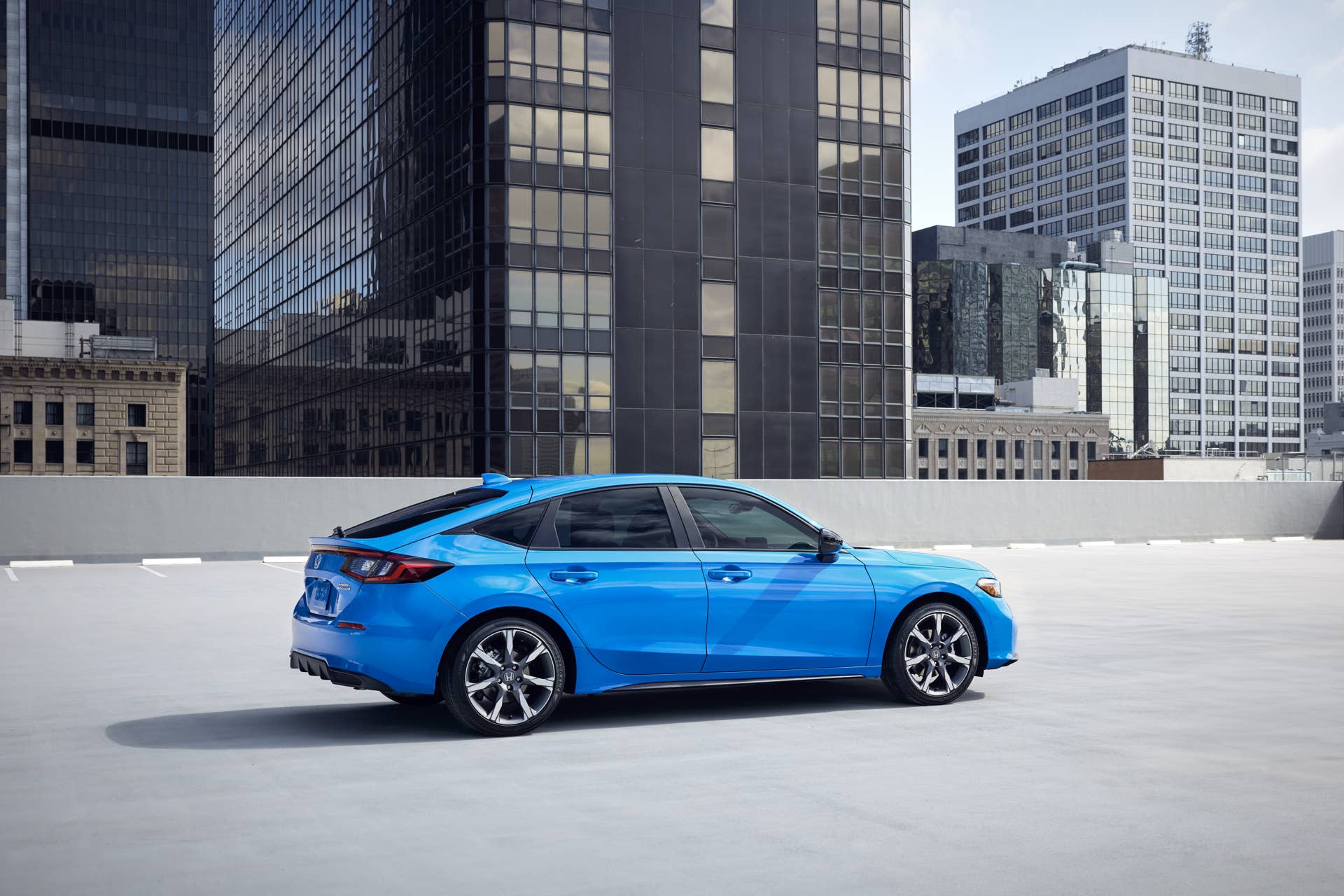
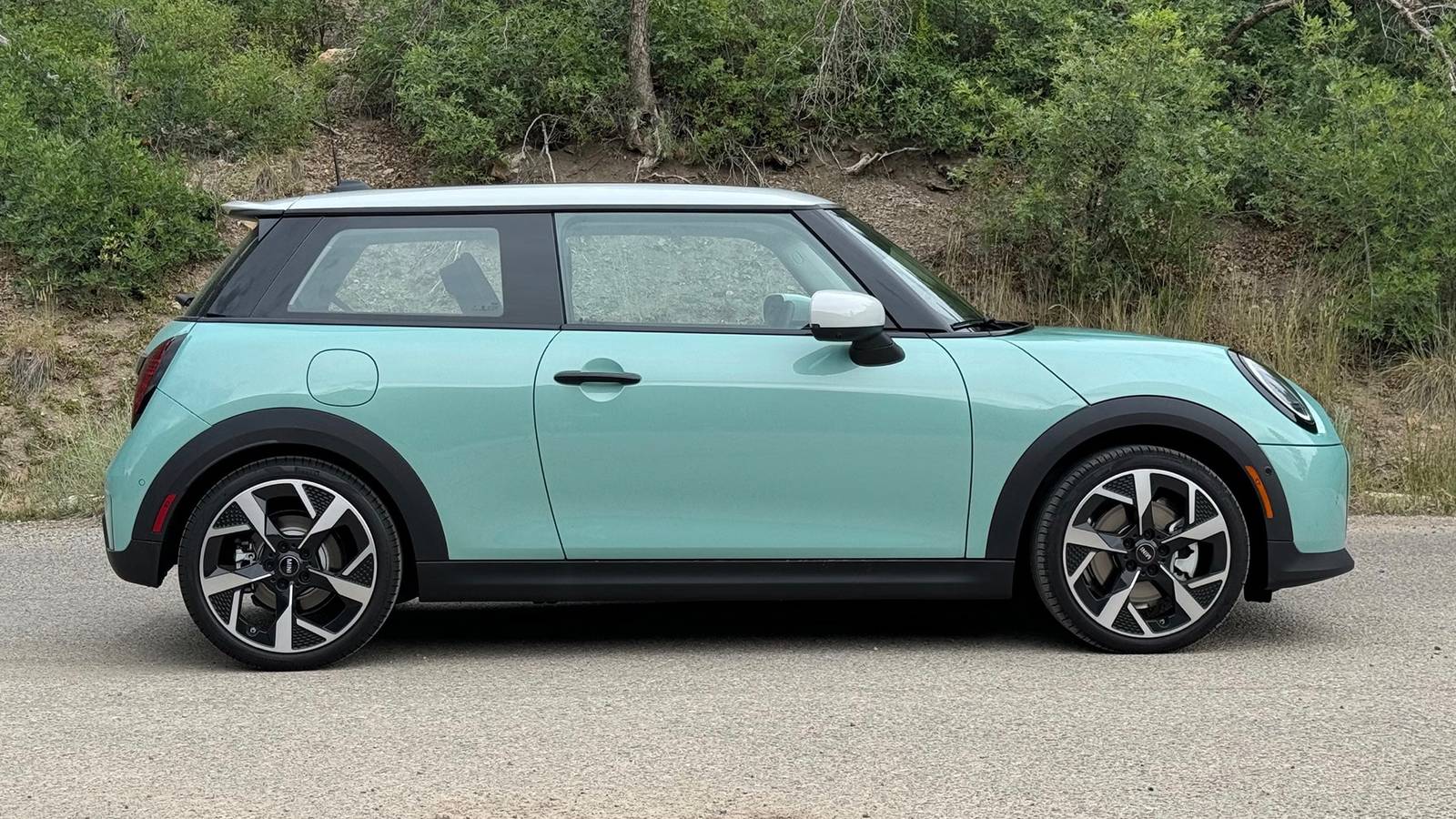
2025 hatchback cars deliver an exceptional mix of commuter fuel efficiency, versatile cargo capacity, and modern cabin technology. From affordable daily commuters like the Toyota Corolla Hatchback to hybrid powerhouses like the Honda Civic Hybrid and high-performance icons like the Volkswagen Golf R, 2025 hatchbacks provide practical alternatives to bulky crossover SUVs across gas, hybrid, and electric powertrains.
The Evolution of the Hatchback Market in 2025
While crossover SUVs dominate sales charts, hatchback cars remain a cornerstone choice for practical drivers, urban commuters, and automotive enthusiasts. The defining characteristic of a hatchback—a single rear door that lifts upward to reveal a shared cabin and cargo hold—offers functional advantages that traditional sedans and taller SUVs struggle to match.
In the 2025 model year, manufacturers refined the hatchback formula by pairing sleeker, liftback profiles with advanced electrified powertrains, updated infotainment operating systems, and stiffer chassis designs. The primary appeal of a 2025 hatchback lies in its efficiency-to-utility ratio. Because hatchbacks sit lower to the ground than equivalent compact SUVs, they generate less aerodynamic drag and benefit from a lower center of gravity. This mechanical reality translates directly into superior fuel economy, sharper handling through corners, and easier maneuverability in tight parking structures.
The 2025 hatchback landscape broadly divides into four distinct categories:
- Subcompact and Economy Hatchbacks: Entry-level vehicles prioritizing low initial acquisition costs, high fuel economy, and minimal footprints.
- Compact Daily Drivers: Balanced, feature-packed vehicles offering near-midsize interior volume, comfortable highway cruising, and optional hybrid drive systems.
- Hot Hatches: Sport-tuned, turbocharged performance variants engineered with upgraded suspensions, specialized differentials, and track-ready brakes.
- Electric Hatchbacks (EVs): Battery-electric compacts optimized for silent operation, instant torque delivery, and zero tailpipe emissions.
Top 2025 Compact and Subcompact Hatchbacks
Honda Civic Hatchback (Gas & Hybrid)
For 2025, Honda updated its iconic Civic line with significant powertrain and styling enhancements. The headline addition is the Honda Civic Hybrid Hatchback, which replaces the previously available 1.5-liter turbocharged engine on top trim levels. The hybrid system combines a 2.0-liter four-cylinder Atkinson-cycle engine with two electric motors, delivering a combined output of 200 horsepower and 232 lb-ft of torque.
The traditional gas-powered Civic Hatchback retains a naturally aspirated 2.0-liter four-cylinder engine producing 158 horsepower, paired with a Continuously Variable Transmission (CVT). Practicality remains a core strength: the Civic Hatchback offers 24.5 cubic feet of cargo volume behind the 60/40 split-folding rear seats. The wider rear hatch opening simplifies loading bulky items like bicycles or large luggage sets. Inside, the cabin features a clean horizontal dashboard layout, honeycomb air-vent trim, and an available 9-inch infotainment touchscreen with wireless Apple CarPlay and Android Auto integration.
Toyota Corolla Hatchback
The 2025 Toyota Corolla Hatchback continues its reputation for long-term mechanical reliability and standard safety equipment. Powered by a 2.0-liter Dynamic Force four-cylinder engine delivering 169 horsepower and 151 lb-ft of torque, the Corolla Hatchback routes power to the front wheels via a Dynamic-Shift CVT that incorporates a physical launch gear for quicker off-the-line acceleration.
While the rear legroom in the Corolla Hatchback is tighter than some class competitors, it makes up for it with nimble handling and compact dimensions. The vehicle provides up to 17.8 cubic feet of rear cargo space, which can be expanded by opting for the tire repair kit in place of a spare tire (Enhanced Cargo Space option). Standard equipment across all trims includes Toyota Safety Sense 3.0, a suite of driver-assist technologies including lane tracing assist, full-speed dynamic radar cruise control, and pre-collision system with pedestrian detection. Official fuel efficiency and safety details can be reviewed at the U.S. Environmental Protection Agency.
- 2025 Hatchback Body Styles
- Traditional Two-Box Hatch
- Engine | Cabin | Cargo
- Upright rear glass
- Maximum vertical space
- E.g., Golf GTI, Impreza
- Sporty Liftback / Fastback
- Engine | Cabin / Cargo
- Slanted rear roofline
- Improved aerodynamics
- E.g., Civic Hatchback
- Traditional Two-Box Hatch
Mazda 3 Hatchback
Drivers seeking luxury-tier cabin refinement at a mainstream price point frequently turn to the 2025 Mazda 3 Hatchback. Styled under Mazda’s Kodo design language, the Mazda 3 features a sweeping, aggressive C-pillar and upscale interior materials, including optional real leather upholstery and soft-touch dashboard surfaces.
Engine options start with a naturally aspirated 2.5-liter Skyactiv-G four-cylinder producing 191 horsepower. For performance enthusiasts, Mazda offers a 2.5-liter Turbocharged engine generating up to 250 horsepower and 320 lb-ft of torque on 93-octane fuel. Unlike many compact competitors, the Mazda 3 offers optional i-Activ All-Wheel Drive (AWD), making it an attractive choice for all-weather driving. Cargo volume stands at 20.1 cubic feet behind the rear seats.
Subaru Impreza
Redesigned for its sixth generation, the 2025 Subaru Impreza is sold exclusively as a five-door hatchback, with the four-door sedan body style officially retired. The Impreza comes standard with Subaru’s Symmetrical All-Wheel Drive, giving it a distinct traction advantage in rainy, icy, or snowy climates.
Base and Sport trims utilize a 2.0-liter 4-cylinder BOXER engine yielding 152 horsepower, while the performance-focused RS trim upgrades to a 2.5-liter BOXER engine delivering 182 horsepower. The Impreza prioritizes visibility and cabin space, boasting up to 20.4 cubic feet of rear cargo room and 56.0 cubic feet with the seats folded flat. Standard EyeSight Driver Assist Technology monitors traffic movement, optimizes cruise control, and warns when departing lanes.
High-Performance "Hot Hatches" of 2025
For driving enthusiasts, the hot hatch segment combines sports-car acceleration with the practical layout of a five-door commuter. The 2025 lineup includes several updated models engineered for high lateral acceleration and track utility.
- 2025 Hot Hatch Performance
- Front-Wheel Drive
- Volkswagen Golf GTI (241 hp)
- Honda Civic Type R (315 hp)
- Hyundai Elantra N (276 hp, sedan)
- All-Wheel Drive
- Volkswagen Golf R (328 hp)
- Toyota GR Corolla (300 hp)
- MINI John Cooper Works GP
- Front-Wheel Drive
Volkswagen Golf GTI and Golf R
The 2025 model year brings a mid-cycle refresh (often referred to as the Golf 8.5) to the Volkswagen Golf GTI and Golf R in North America. Updates include a revised front bumper design, updated LED headlights, illuminated front badges, and a overhauled infotainment interface featuring a standard 12.9-inch standalone touchscreen with dedicated physical climate controls below the screen edge.
- Golf GTI: Powered by a turbocharged 2.0-liter EA888 four-cylinder engine outputting 241 horsepower and 273 lb-ft of torque routed to the front wheels via an electronic limited-slip differential (VAQ). For 2025, the 7-speed DSG dual-clutch automatic becomes the sole transmission offering, as manual options were discontinued.
- Golf R: Features a tuned variant of the 2.0-liter turbo engine producing an upgraded 328 horsepower, routed through Volkswagen's 4MOTION AWD system with rear-axle torque vectoring capable of distributing power between individual rear wheels.
Toyota GR Corolla
Developed by Gazoo Racing, the 2025 Toyota GR Corolla remains one of the most aggressive rally-inspired hot hatches available. It utilizes a 1.6-liter turbocharged G16E-GTS three-cylinder engine outputting 300 horsepower and 295 lb-ft of torque.
For 2025, Toyota updated the GR Corolla lineup by making a new 8-speed GAZOO Racing Direct Automatic Transmission (DAT) available alongside the existing 6-speed intelligent manual transmission (iMT). The GR-FOUR All-Wheel Drive system allows drivers to select power-distribution ratios between front and rear axles (60:40 for daily driving, 30:70 for rear-biased balance, or 50:50 for track stability).
Honda Civic Type R
The Civic Type R continues as Honda’s flagship performance vehicle. Built on the 11th-generation Civic platform, it uses a turbocharged 2.0-liter inline-four engine producing 315 horsepower and 310 lb-ft of torque, mated exclusively to a six-speed manual transmission with automatic rev-matching. Featuring dual-axis front strut suspension, broad track widths, and functional aerodynamic bodywork, the Type R balances extreme track capability with a usable 24.5 cubic feet hatch enclosure.
Electric and Hybrid Hatchbacks
Electrification plays a major role in the 2025 hatchback market, offering drivers reduced operating expenses and quiet driving dynamics.
- 2025 Electrified Powertrains
- Full Hybrid (HEV)
- Gas engine + battery
- Self-charging via braking
- ~50 MPG combined
- E.g., Civic Hybrid
- Plug-in Hybrid (PHEV)
- Larger rechargeable battery
- 25-40 miles pure electric
- Plugs into EV charger
- E.g., Prius Prime
- Electric (BEV)
- 100% Battery
- Zero tailpipe
- 140-250+ mi range
- E.g., Fiat 500e
- Full Hybrid (HEV)
Honda Civic Hybrid Hatchback
The 2025 Civic Hybrid stands out in the compact class by offering a seamless blend of performance and efficiency. The twin-motor hybrid setup produces 200 horsepower—more than the standard non-hybrid Civic—while achieving an EPA-estimated fuel economy rating near 50 MPG in combined city/highway driving. Regeneration paddles behind the steering wheel allow drivers to adjust deceleration drag, feeding energy back into the high-voltage lithium-ion battery during coasting and braking.
Toyota Prius and Prius Prime
Although styled with a modern fastback silhouette, the Toyota Prius is fundamentally a five-door liftback hatchback. The standard Prius hybrid pairs a 2.0-liter engine with an electric motor system to generate up to 196 horsepower (AWD trim) and up to 57 MPG combined.
The Prius Prime plug-in hybrid (PHEV) variant incorporates a larger 13.6 kWh battery pack, offering up to an EPA-estimated 44 miles of all-electric driving range before the gas engine engages. This setup makes it possible for drivers with short daily commutes to operate without using gasoline, while retaining full long-distance highway range.
Fiat 500e
For urban drivers seeking a pure electric subcompact, the 2025 Fiat 500e represents a minimalist design approach. Equipped with a 42 kWh battery pack and a 117-horsepower front electric motor, the 500e yields an EPA-estimated range of roughly 149 miles per charge. Its ultra-compact footprint makes it easy to park, though cargo capacity is limited to 7.5 cubic feet behind the rear seats, expanding to 14.1 cubic feet with the rear seats folded down.
Detailed 2025 Hatchback Comparison
The following table compares key technical specifications, powertrain configurations, cargo dimensions, and estimated fuel economy figures for leading 2025 hatchback models.
| Model | Powertrain Type | Horsepower | Drivetrain | EPA Fuel Economy (Combined) | Rear Cargo Volume (Seats Up) | Max Cargo Volume (Seats Down) |
|---|---|---|---|---|---|---|
| Honda Civic Hatchback | 2.0L 4-Cyl Gas | 158 hp | FWD | 33-35 MPG | 24.5 cu ft | 46.2 cu ft |
| Honda Civic Hybrid | 2.0L 4-Cyl + Hybrid | 200 hp | FWD | ~50 MPG | 24.5 cu ft | 46.2 cu ft |
| Toyota Corolla Hatch | 2.0L 4-Cyl Gas | 169 hp | FWD | 35 MPG | 17.8 cu ft | 23.0 cu ft |
| Mazda 3 Hatchback | 2.5L 4-Cyl Gas | 191-250 hp | FWD / AWD | 26-31 MPG | 20.1 cu ft | 47.1 cu ft |
| Subaru Impreza | 2.0L / 2.5L Flat-4 | 152-182 hp | AWD | 29-30 MPG | 20.4 cu ft | 56.0 cu ft |
| VW Golf GTI | 2.0L Turbo 4-Cyl | 241 hp | FWD | 27 MPG | 19.9 cu ft | 34.5 cu ft |
| Toyota GR Corolla | 1.6L Turbo 3-Cyl | 300 hp | AWD | 22 MPG | 17.8 cu ft | 23.0 cu ft |
| Toyota Prius Prime | 2.0L Plug-in Hybrid | 220 hp | FWD | 52 MPG / 114 MPGe | 20.3 cu ft | 26.7 cu ft |
| Fiat 500e | Single EV Motor | 117 hp | FWD | 116 MPGe | 7.5 cu ft | 14.1 cu ft |
Key Factors to Evaluate When Buying a Hatchback
Selecting the right 2025 hatchback involves weighing physical space against performance, long-term operational costs, and personal driving requirements.
1. Cargo Floor Dimensions and Loading Height
While spec sheets list total cubic feet, cargo usability depends heavily on hatch opening geometry and load-floor depth.
- Vertical Space vs. Sloping Glass: Cars with upright lifgates (such as the Subaru Impreza and Golf GTI) accommodate tall, boxy cargo easily. Fastback models (such as the Mazda 3 or Prius) offer deep floors but lower vertical height near the rear glass.
- Fold-Flat Mechanisms: Verify whether the rear seatbacks fold completely level with the trunk floor or leave a ridge. A flat load floor makes it significantly easier to slide long items forward.
2. Drivetrain and Traction Needs
- Front-Wheel Drive (FWD): Standard on most hatchbacks. Modern FWD cars equipped with traction control and good winter tires manage light to moderate snow effectively while minimizing curb weight and maximizing fuel efficiency.
- All-Wheel Drive (AWD): Standard on the Subaru Impreza and optional on the Mazda 3. AWD adds mechanical complexity and slight weight penalties, but delivers superior off-the-line traction in severe weather conditions.
3. Total Cost of Ownership (TCO)
When analyzing overall financial expense, look beyond the upfront purchase price:
Fuel Expenses: High-mileage commuters save thousands over several years choosing a hybrid (e.g., Civic Hybrid or Prius) over a turbocharged performance hatch.
Insurance Grouping: Performance variants like the Civic Type R, Golf R, or GR Corolla command noticeably higher monthly insurance premiums due to replacement part costs and risk profiles.
Evaluation Matrix for Hatchback Buyers
- Commuter Priority (e.g., Civic Hybrid)
- Max MPG / Hybrid
- Low Maintenance TCO
- Generous Legroom
- Sport Priority (e.g., Golf GTI/GR)
- High Horsepower
- Sport Suspension
- Manual/Dual-Clutch
- All-Weather Priority (e.g., Subaru Impreza)
- Symmetrical AWD
- High Ground Clear.
- Durable Interior
- Commuter Priority (e.g., Civic Hybrid)
Buying and Inspection Checklist
When shopping for new or certified pre-owned 2025 hatchback models, follow this evaluation sequence during dealer test drives:
- Test the Blind Spots: Due to thick rear pillars (C-pillars) designed for structural rigidity and rollover safety, some hatchbacks have reduced rear-quarter visibility. Adjust side mirrors properly and test the blind-spot monitoring systems during your test drive.
- Verify Cargo Floor Configurations: Check if the trunk floor includes dual-height adjustment panels. Many 2025 models offer an adjustable shelf that can drop down 2–3 inches to expand cargo space or raise up to create a flat floor when rear seats are folded down.
- Evaluate Noise, Vibration, and Harshness (NVH): Because a hatchback shares air space between the passenger cabin and cargo hold without a solid trunk wall barrier, tire noise from rear wheel wells can transfer forward. Test drive the car on highway pavement at 65+ MPH to evaluate cabin noise levels.
- Confirm Safety Ratings: Review independent safety testing results from the Insurance Institute for Highway Safety to verify crash-test performance and headlight effectiveness ratings for your selected model year.
Frequently Asked Questions
Why buy a hatchback instead of a subcompact crossover SUV?
Hatchbacks generally offer better fuel economy, superior handling dynamics, and lower purchase costs than equivalent subcompact crossover SUVs. Because hatchbacks sit lower to the road, they experience less body roll in corners and cut through air more efficiently. In many cases, a compact hatchback provides equal or greater cargo floor length compared to a subcompact SUV while maintaining a smaller overall footprint.
Which 2025 hatchback car achieves the best fuel economy?
The Toyota Prius and the 2025 Honda Civic Hybrid Hatchback lead the non-plug-in class, both achieving EPA estimates around 50 MPG combined. Among plug-in hybrids, the Toyota Prius Prime offers up to 44 miles of pure electric driving before achieving 52 MPG combined on gas power. For zero-emissions driving, pure electric models like the Fiat 500e run entirely on electricity.
Do any 2025 hatchback cars come with manual transmissions?
Yes, but availability is restricted primarily to performance-oriented models. The 2025 Honda Civic Type R and Toyota GR Corolla offer manual transmissions (the GR Corolla also offers an available 8-speed automatic). Standard commuter hatchbacks like the non-Type R Civic, Toyota Corolla, Mazda 3, and Volkswagen Golf GTI have transitioned entirely to automatic or continuously variable transmissions (CVTs).
How does cargo space in a hatchback compare to a sedan?
Hatchbacks offer substantially more practical utility than traditional sedans. While a compact sedan typically provides 13 to 15 cubic feet of enclosed trunk volume, a compact hatchback provides 18 to 25 cubic feet behind the rear seats. When rear seats are folded down, hatchbacks expand to offer 45 to 56 cubic feet of open storage space, making it possible to carry bulky cargo, boxed furniture, and sporting equipment that cannot fit through a standard sedan trunk opening.
Are performance "hot hatches" suitable for daily commuting?
Yes. Modern hot hatches like the Volkswagen Golf GTI and Honda Civic Type R feature selectable drive modes (such as Comfort, Normal, and Sport) that adjust adaptive suspension damping, steering weight, and throttle response. In Comfort mode, these vehicles ride smoothly enough for daily stop-and-go commuting while retaining rear seat usability and cargo practicality.
Practical Recommendation
When selecting a 2025 hatchback car, match your vehicle choice directly to your primary driving environment:
- For Maximizing Daily Mileage: Prioritize the Honda Civic Hybrid Hatchback or Toyota Prius. Both deliver excellent fuel economy, strong overall resale value, and comfortable cabin ergonomics without sacrificing cargo versatility.
- For Winter Climates and All-Weather Traction: The Subaru Impreza provides standard Symmetrical AWD at an accessible base price. For a more premium cabin feel paired with available AWD, evaluate the Mazda 3 AWD Hatchback.
- For Enthusiast Driving and Weekend Track Utility: Test drive the refreshed Volkswagen Golf GTI for balanced daily driving polish, or the Toyota GR Corolla if maximum all-wheel-drive traction and rally performance are top priorities.
Before finalizing a purchase, test load your everyday cargo—such as strollers, golf bags, or luggage—directly into the rear cargo hold to confirm the hatch lift angle and floor width match your lifestyle needs.