The 2017 Women's World Cup Final was a historic cricket match held on July 23, 2017, at Lord's Cricket Ground in London, where England defeated India by nine runs in a dramatic and closely contested thriller to claim their fourth Women's Cricket World Cup title.
Introduction and Historical Context of the 2017 Tournament
The 2017 ICC Women's Cricket World Cup marked a watershed moment for the sport of women's cricket. Hosted in England and Wales, the tournament captured global attention, culminating in a sold-out final at the "Home of Cricket," Lord's Cricket Ground. Before this tournament, women's cricket often operated in the shadow of the men's game, dealing with lower broadcast visibility, smaller crowds, and limited professional investment. However, the 2017 edition changed that narrative permanently.
The path to the final showcased the rising standard of international women's cricket. Eight teams competed in a round-robin format, followed by high-stakes semi-finals. England, led by captain Heather Knight and coached by Mark Robinson, rebounded from an opening-game defeat against India to secure their spot in the title match. Meanwhile, the Indian team, captained by the legendary Mithali Raj and featuring rising superstar Smriti Mandhana alongside experienced campaigners like Jhulan Goswami, captivated millions back home with an inspiring run that included a stunning semi-final victory over defending champions Australia.
Road to the Final: England's Journey
England entered the 2017 tournament under immense pressure as the host nation, aiming to reclaim the global trophy they last won in 2009. Their campaign began with a stumble against India at the County Ground in Derby, where the Indian side chased down a competitive target with authority. That early defeat served as a crucial wake-up call for the English squad.
- Group Stage Recovery: Following the opening loss, England rattled off consecutive victories against Pakistan, Sri Lanka, South Africa, Australia, New Zealand, and the West Indies.
- Tactical Evolution: The team adapted by refining their batting order, relying heavily on the prolific run-scoring of Tammy Beaumont and Sarah Taylor, while the bowling attack was spearheaded by the tournament's leading wicket-taker, Anya Shrubsole.
- Semi-Final Drama: In the semi-final against South Africa at Bristol, England secured a narrow two-wicket victory in a tense finish, sealing their berth in the Lord's final and setting the stage for a rematch against the team that handed them their only group-stage defeat.
Road to the Final: India's Inspiring Campaign
India’s journey to the 2017 final galvanized an entire nation, sparking a massive surge in popularity and institutional support for women's cricket in the country. Under the veteran leadership of Mithali Raj, India combined experienced leadership with fearless youth.
- Early Statements: India stunned the hosts in the tournament opener, with Punam Raut, Smriti Mandhana, and Mithali Raj posting strong performances to defend a total against England.
- Overcoming Adversity: After strong early wins, India faced mid-tournament turbulence with losses to South Africa and Australia, putting their qualification for the knockout stages in jeopardy. They bounced back decisively with must-win victories against New Zealand and the qualifiers.
- The Semi-Final Masterclass: In the semi-final against defending champions Australia at Derby, Harmanpreet Kaur played one of the greatest innings in women's cricket history, smashing an unbeaten 171 runs from 115 balls to carry India into the final against the odds.
Match Overview and Tactical Setup
On July 23, 2017, a crowd of 26,500 spectators packed Lord's Cricket Ground, with millions more watching live broadcasts around the world. The atmosphere was electric, blending traditional English cricket culture with passionate support from traveling and expatriate Indian fans.
| Match Detail | Information |
|---|---|
| Date | July 23, 2017 |
| Venue | Lord's Cricket Ground, London, United Kingdom |
| Teams | England vs. India |
| Toss | England, elected to bat first |
| Result | England won by 9 runs |
| Player of the Match | Anya Shrubsole (6/46) |
England won the toss and elected to bat first under overcast skies, a decision that initially looked challenging given the quality of India's disciplined seam attack, led by Jhulan Goswami and Shikha Pandey.
England Innings: Building a Competitive Total
England’s innings was characterized by resilience and smart partnership building. They faced a hostile and accurate Indian bowling attack that capitalized on the morning movement off the pitch.
- Top-Order Resistance: Opener Tammy Beaumont (23) and Sarah Taylor rebuilt the innings after early breakthroughs by Jhulan Goswami. Taylor played a fluent knock of 45 runs from 62 balls, utilizing innovative placement to disrupt the Indian fielders.
- The Partnership: The anchor of the innings came via a crucial partnership between number three batter Sarah Taylor and skipper Heather Knight (34), followed by vital contributions in the lower middle order.
- Late-Inning Acceleration: Nat Sciver played a counter-attacking innings, top-scoring for England with 51 runs from 68 balls, featuring five boundaries. Katherine Brunt and Jenny Gunn chipped in with valuable late runs to push England's total to 228/7 in their allotted 50 overs.
- Bowling Brilliance by India: Jhulan Goswami was exceptional, finishing with economical figures of 3/23 from her 10 overs, while Poonam Yadav claimed two crucial wickets to keep England within reach.
India Run Chase: The Tense Pursuit
Chasing 229 for victory at Lord's required composure and disciplined shot selection. India's chase experienced early setbacks when veteran opener Smriti Mandhana was dismissed cheaply by Anya Shrubsole, edging behind to wicketkeeper Sarah Taylor.
- The Recovery Partnership: Punam Raut and Mithali Raj steadied the ship with a patient, intelligent 95-run partnership. Mithali Raj looked in sublime touch, scoring 17 runs before a sharp piece of fielding resulted in her unfortunate run-out by Tammy Beaumont, sparking a shift in momentum.
- The Turning Point: Punam Raut anchored the chase brilliantly, compiling 86 runs from 115 deliveries. She was joined by Harmanpreet Kaur, who looked to replicate her semi-final heroics. Kaur contributed 51 runs before skied an attempted sweep shot off Hartley, leaving India at 191/3 and firmly in control of the match.
- The Dramatic Collapse: What followed was one of the most dramatic collapses in World Cup history. From a comfortable position of 191/3, requiring fewer than 40 runs with seven wickets in hand, India lost their remaining seven wickets for just 28 runs under mounting scoreboard pressure.
Anya Shrubsole’s Heroic Spell and the Final Over
As the pressure mounted, English bowler Anya Shrubsole produced a legendary spell of fast bowling that dismantled the lower order and snatched victory from the jaws of defeat.
Shrubsole utilized subtle variations, nagging line and length, and reverse swing to confound the incoming batters. She removed the set Punam Raut lbw for 86, and swiftly accounted for Sushma Verma, Jhulan Goswami, and Poonam Yadav.
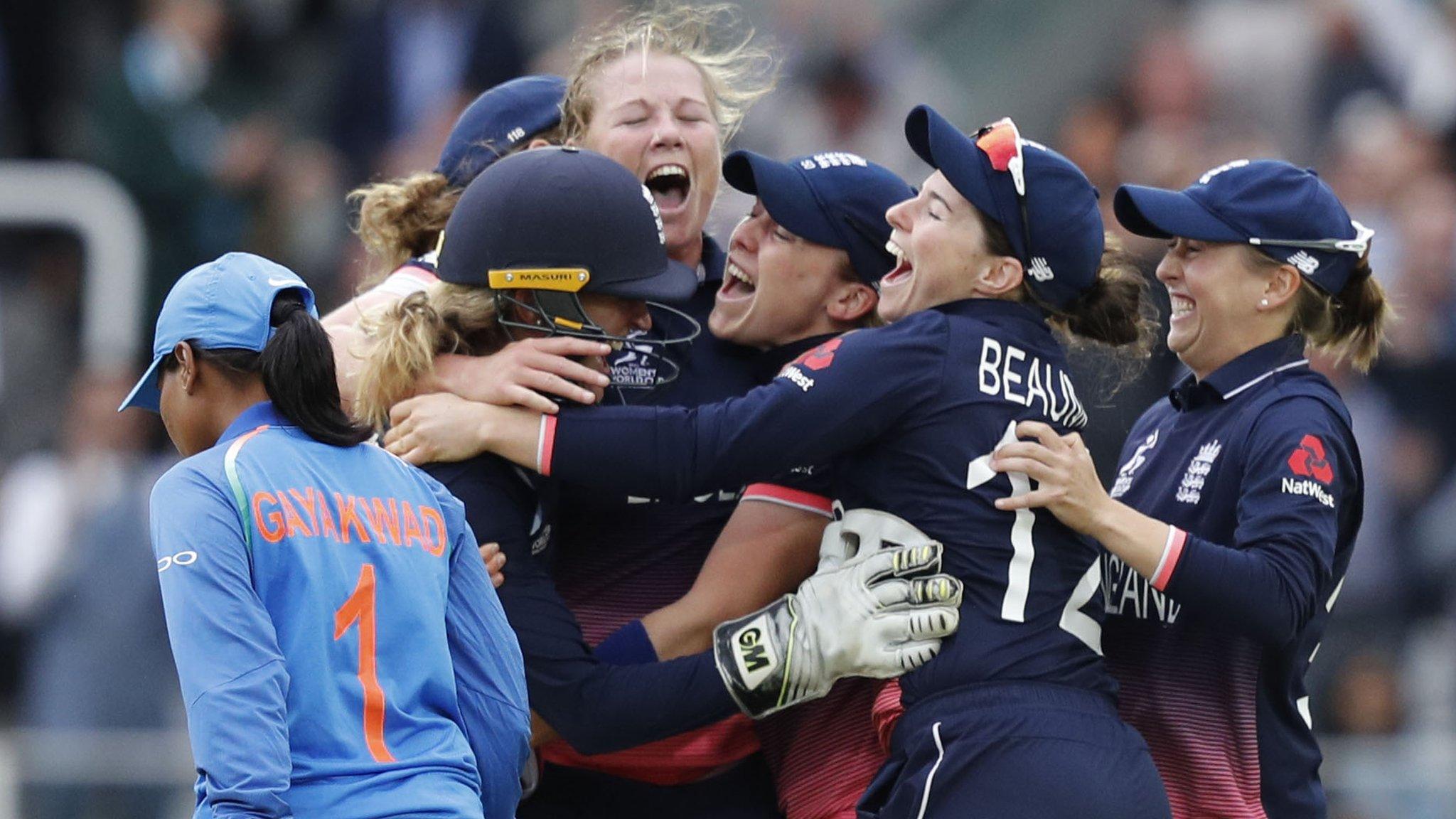
Going into the final over, India needed 11 runs with one wicket remaining. Shrubsole delivered the first ball of the 50th over to Rajeshwari Gayakwad, who attempted a wild swing but missed, sending the ball crashing into the stumps. Shrubsole finished with stunning figures of 6 wickets for 46 runs in 9.4 overs, sealing a heart-stopping nine-run victory for England and sparking wild celebrations on the hallowed turf of Lord's.
Post-Match Reactions and Global Legacy
The aftermath of the 2017 final was marked by emotional scenes on the field: elation for the English players and heartbreak for the Indian team, who stood in tears after coming so close to their maiden title. However, the true victory of the day belonged to the sport of women's cricket as a whole.
- Record-Breaking Audiences: The match drew a massive television audience, particularly in India and the United Kingdom, proving the commercial and cultural viability of the women's game.
- Infrastructure and Professionalism: The success of the 2017 tournament directly influenced domestic restructuring, leading to increased central contracts, higher match fees, and fully professional leagues in countries like England, Australia, and eventually India with the establishment of the Women's Premier League (WPL).
- Cultural Shift: Mithali Raj, Jhulan Goswami, Heather Knight, and Anya Shrubsole became household names, inspiring a new generation of girls to take up cricket worldwide.
Frequently Asked Questions
Who won the 2017 Women's Cricket World Cup?
England won the 2017 Women's Cricket World Cup by defeating India by nine runs in the final held at Lord's Cricket Ground in London on July 23, 2017. This victory marked England's fourth title in the tournament's history.
Who was named Player of the Match in the 2017 final?
English fast bowler Anya Shrubsole was named Player of the Match for her exceptional bowling performance. She took 6 wickets for 46 runs in 9.4 overs, including the decisive final wicket that clinched the victory for England.
How many runs did India need in the final over?
India needed 11 runs to win with one wicket remaining when the final over began. Anya Shrubsole bowled Rajeshwari Gayakwad on the first delivery of the 50th over to secure the win for England.
What was the highest score for India in the final?
Punam Raut was India's top scorer in the final, compiling 86 runs from 115 balls. Her disciplined innings formed the backbone of India's run chase before the late-innings collapse occurred.
Why is the 2017 Women's World Cup considered a turning point for the sport?
The tournament featured a sold-out final at Lord's, record-breaking global television viewership, and high-intensity competitive matches. It significantly raised the profile of women's cricket, prompting sports boards worldwide to increase investment, professionalize contracts, and expand domestic opportunities.
Conclusion and Next Actions
For sports historians, cricket enthusiasts, and analysts studying the evolution of modern sports marketing and athletic performance, the 2017 Women's World Cup Final remains a gold standard for drama and competitive excellence. To explore this historic event further, consider reviewing archival match broadcasts, reading autobiographies of key figures such as Mithali Raj and Heather Knight, or examining official ICC reports on the growth of women's cricket participation rates following the 2017 tournament.