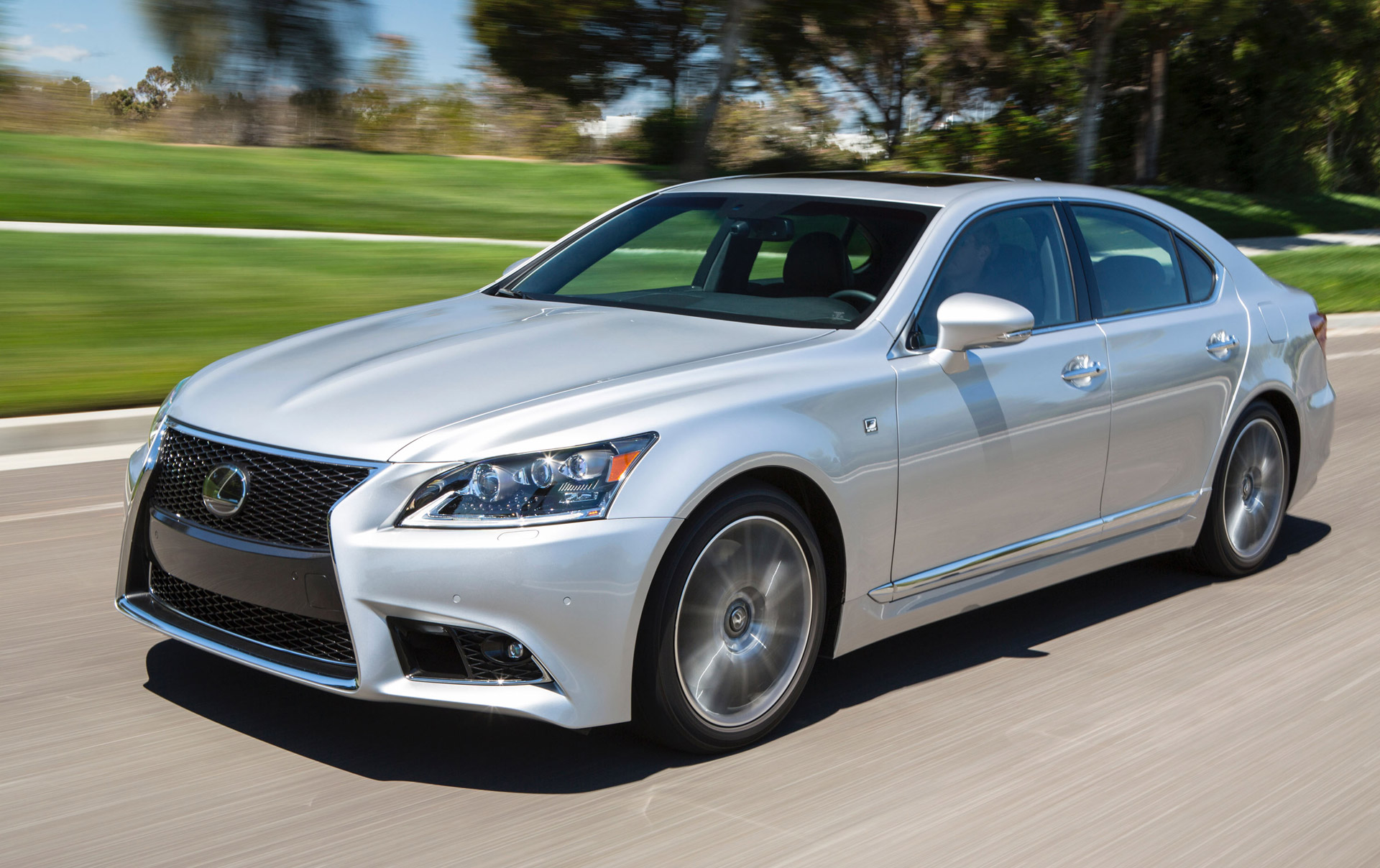
The 2013 Lexus LS 460 features a 4.6-liter V8 engine that produces 386 horsepower and 367 lb-ft of torque in the rear-wheel-drive (RWD) configuration. Models equipped with all-wheel drive (AWD) see a slight reduction in output, delivering 360 horsepower and 347 lb-ft of torque due to exhaust routing and mechanical differences.
The 2013 model year represented a pivotal moment for the Lexus flagship. While it was technically a mid-cycle refresh of the fourth-generation (XF40) platform, it introduced over 3,000 new parts, a significantly stiffened chassis, and the first-ever "F Sport" variant for the LS line. Even in 2026, the 2013 LS 460 remains a benchmark for naturally aspirated V8 smoothness and executive-level engineering. Understanding the nuances of its horsepower and how that power is delivered requires a deep dive into its mechanical architecture, the 1UR-FSE engine, and the drivetrain variations that defined this era of Japanese luxury.
The Heart of the LS: The 4.6L 1UR-FSE V8 Engine
At the core of the 2013 Lexus LS 460 is the 1UR-FSE, an all-aluminum, 32-valve DOHC engine that was a masterpiece of internal combustion engineering at its debut. This engine was designed to provide a "seamless" surge of power, focusing on vibration reduction and linear acceleration rather than the aggressive, peaky power delivery found in contemporary German rivals.
D4-S Dual Injection System
One of the primary reasons for the 386-horsepower output is the D4-S system. This technology utilizes both direct and port fuel injection. By using two injectors per cylinder, the engine can optimize the air-fuel mixture based on the load. At lower speeds or idle, port injection ensures a stable burn and reduced emissions. Under heavy acceleration or high RPM, the direct injectors take over (or work in tandem) to cool the intake charge, allowing for a higher compression ratio (11.8:1) without the risk of engine knock. This dual-path system is crucial for maintaining high horsepower across a wide power band.
VVT-iE (Variable Valve Timing with Intelligence by Electric motor)
While many engines of the era used hydraulic pressure to advance or retard valve timing, the 2013 LS 460 utilized an electric motor to control the intake camshaft timing. Known as VVT-iE, this system functions independently of engine oil pressure and temperature. It allows the engine to adjust valve timing instantly upon startup or during cold-weather operation, ensuring that all 386 horses are available more consistently than in engines relying on traditional hydraulic phasers.
Power Disparity: RWD vs. AWD Configurations
A common point of confusion for owners and buyers is the 26-horsepower gap between the rear-wheel-drive and all-wheel-drive versions. Mechanically, the engines are nearly identical, but the physical packaging of the AWD system necessitates changes that impact total output.
- Exhaust Manifold Constraints: The AWD system requires additional hardware, including a front differential and drive shafts, to be positioned near the front of the engine block. To accommodate these components, Lexus engineers had to redesign the exhaust manifolds. These AWD-specific headers are slightly more restrictive than the RWD version, leading to a decrease in peak horsepower from 386 to 360.
- Drivetrain Loss: Beyond the raw engine output, AWD models experience higher parasitic loss. Power must travel through a center Torsen limited-slip differential and additional half-shafts, which naturally absorbs more energy before reaching the wheels compared to the simpler RWD path.
- Torque Variations: The torque also drops from 367 lb-ft in the RWD model to 347 lb-ft in the AWD version. This change is felt most during low-speed merging, where the RWD model feels slightly more "effortless" in its acceleration.
Transmission and Power Delivery
Horsepower is only half of the story; how that power reaches the asphalt is managed by the AA80E 8-speed automatic transmission. When Lexus introduced this 8-speed unit, it was among the first in the world for a passenger car.
By 2013, the transmission software had been refined to prioritize "intelligent" shifting. The gear ratios are tightly spaced at the lower end to maximize the 386 hp for quick take-offs, while the seventh and eighth gears act as significant overdrives for fuel economy and silent highway cruising. In "Sport+" mode (available on F Sport and models with the Drive Mode Select system), the transmission sharpens its shift logic, holding gears longer to keep the V8 in the meat of its power band, which peaks at 6,400 RPM.
Performance Metrics and Real-World Speed
The 2013 Lexus LS 460 was never intended to be a track car, yet its 386 horsepower provides performance that remains respectable in the 2026 landscape.
| Specification | LS 460 (RWD) | LS 460 (AWD) | LS 460 F Sport (RWD) |
|---|---|---|---|
| Peak Horsepower | 386 hp @ 6,400 rpm | 360 hp @ 6,400 rpm | 386 hp @ 6,400 rpm |
| Peak Torque | 367 lb-ft @ 4,100 rpm | 347 lb-ft @ 4,100 rpm | 367 lb-ft @ 4,100 rpm |
| 0-60 MPH (approx.) | 5.4 seconds | 5.9 seconds | 5.4 seconds |
| Top Speed | 130 mph (Electronically Limited) | 130 mph (Limited) | 130 mph (Limited) |
| Curb Weight | ~4,233 lbs | ~4,651 lbs | ~4,354 lbs |
The 0-60 mph time of 5.4 seconds for the RWD model is achieved through a combination of the V8’s broad torque curve and the 8-speed's rapid-fire shifts. Even with a curb weight exceeding 4,200 pounds, the LS 460 masks its mass well during straight-line acceleration.
The F Sport Factor: Handling the Power
In 2013, Lexus sought to answer criticisms that the LS was "too soft" by introducing the LS 460 F Sport. It is important to note that the F Sport package did not increase the horsepower. The 386-hp rating remained the same as the standard RWD model. Instead, the F Sport focused on how the vehicle managed that power through corners and under braking.
Key additions to the F Sport included:
- Brembo Brakes: Six-piston calipers in the front to provide better heat dissipation and stopping power for the heavy V8 sedan.
- Torsen Limited-Slip Differential: Available on the RWD F Sport, this mechanically biased differential helps distribute the 367 lb-ft of torque evenly between the rear wheels, improving exit speeds from corners.
- Lowered Air Suspension: A specifically tuned sport air suspension reduced body roll, making the 386 hp feel more controlled and less "floaty" than the base model.
- Paddle Shifters: Allowed drivers to manually override the 8-speed transmission, featuring downshift rev-matching for a more engaging experience.
Historical Context: Competing in the 2013 Luxury Segment
To appreciate the 386 hp of the 2013 LS 460, one must look at the landscape of the early 2010s. This was the era where turbocharging began to dominate the German executive class.
The Mercedes-Benz S550 (W221) utilized a 4.6L twin-turbo V8 producing 429 hp and a massive 516 lb-ft of torque. Similarly, the BMW 750i (F01) leveraged a 4.4L twin-turbo V8. Compared to these rivals, the Lexus LS 460 appeared underpowered on paper, especially in terms of torque.
However, the Lexus philosophy prioritized reliability and linear delivery. While the turbocharged competitors offered more mid-range "punch," they also faced complexities with heat management and long-term turbo reliability. The LS 460's naturally aspirated 1UR-FSE became legendary for its ability to reach 200,000 or 300,000 miles with basic maintenance—a feat rarely matched by the high-strung European engines of the same period.
Long-Term Maintenance of the 386 HP V8
By 2026, many 2013 LS 460 units have entered the "collector" or "high-mileage daily" phase of their lives. Maintaining the peak horsepower of this engine requires attention to specific areas that can degrade over time.
Carbon Buildup
Although the D4-S system (dual injection) significantly reduces carbon buildup on intake valves compared to direct-injection-only engines, it is not entirely immune. High-mileage examples may benefit from an intake tract cleaning to ensure the airflow remains as efficient as it was in 2013.
Air Suspension Maintenance
While not directly related to engine horsepower, the air suspension components in the LS 460 often fail after 10–12 years. If the sensors or bags fail, the car may sit lower or "squat," which negatively impacts aerodynamics and the ability to put power down effectively. Many owners in 2026 opt to convert these to high-quality coilover systems to maintain a consistent ride height and handling profile.
The Exhaust Manifold Issue
On some early-to-mid XF40 models, the exhaust manifolds could develop hairline cracks. While less common on the 2013 refresh, an exhaust leak can cause the ECU to pull timing and reduce power output to protect the engine, effectively "neutering" the 386 hp delivery.
Why the 2013 LS 460 Horsepower Still Matters
In an era of 2026 where many luxury vehicles have transitioned to small-displacement turbocharged engines or full electrification, the 2013 LS 460 represents the "old guard" of luxury. Its 386 horsepower is delivered with a specific acoustic signature—a muted, sophisticated V8 growl—that modern four-cylinder hybrids cannot replicate.
The power is sufficient for any modern driving task, from high-speed interstate cruising to confident overtaking. More importantly, the LS 460 delivers this power with a level of NVH (Noise, Vibration, and Harshness) isolation that remains world-class. The engine is so balanced that at idle, it is often difficult to tell if it is running at all without looking at the tachometer.
Summary of Technical Specifications
| Feature | Detail |
|---|---|
| Engine Code | 1UR-FSE |
| Displacement | 4,608 cc (4.6 Liters) |
| Cylinder Arrangement | 90-degree V8 |
| Valvetrain | 32-Valve DOHC with VVT-iE (Intake) and VVT-i (Exhaust) |
| Fuel System | D4-S (Direct and Port Injection) |
| Bore x Stroke | 94.0 mm x 83.0 mm |
| Recommended Fuel | Premium Unleaded (91 Octane or higher) |
| Oil Capacity | ~9.1 Quarts (with filter) |
Frequently Asked Questions
1. Can I increase the horsepower of a 2013 LS 460? The 1UR-FSE engine is notoriously difficult to tune for significant power gains. Because Lexus optimized the intake and dual-injection systems so thoroughly, simple "bolt-ons" like cold air intakes or exhaust systems typically yield less than 10-15 hp. Forced induction (supercharging) was available via aftermarket kits in the past, but these are rare and require significant modifications to the ECU and cooling systems.
2. Does the 2013 LS 460 require premium fuel to reach 386 hp? Yes. To achieve the advertised 386 horsepower and 367 lb-ft of torque, the engine requires 91 octane or higher. Using lower-grade fuel will cause the knock sensors to detect pre-detonation, prompting the ECU to retard ignition timing. This results in a noticeable loss of power and reduced fuel efficiency.
3. Is there a difference in horsepower between the LS 460 and the LS 460L? No. The "L" designation stands for "Long Wheelbase," adding about 4.8 inches to the car's total length (primarily in the rear passenger area). While the LS 460L is slightly heavier, the engine output remains at 386 hp for RWD and 360 hp for AWD.
4. How does the LS 600h L horsepower compare to the LS 460? The 2013 LS 600h L (the hybrid flagship) uses a larger 5.0L V8 paired with an electric motor. Its total system output is 438 horsepower. However, due to the heavy battery packs and CVT transmission, the 0-60 mph times are very similar to the lighter, RWD LS 460.
5. Why is the 2013 model year preferred over the 2012? While the horsepower remained largely the same, the 2013 model benefited from a much more rigid body (achieved through laser screw welding and adhesive bonding). This allows the car to handle the 386 hp more effectively, with less chassis flex and improved steering response compared to the 2007-2012 versions.
Recommendations for Buyers and Owners
For those looking to experience the peak of 2013 Lexus performance in 2026, the RWD F Sport is the definitive choice. It provides the full 386-horsepower output and adds the mechanical limited-slip differential and upgraded braking system necessary to make that power useful in dynamic driving.
If you live in a region requiring AWD, be prepared for the slight 26-hp deficit. While the 360-hp AWD model is still plenty fast, the RWD model offers a more "pure" V8 experience with slightly better fuel economy and fewer long-term drivetrain maintenance concerns. Regardless of the trim, the 2013 LS 460 stands as one of the most reliable ways to enjoy a high-output V8 luxury sedan with a level of build quality that many argue has not been surpassed by later generations.