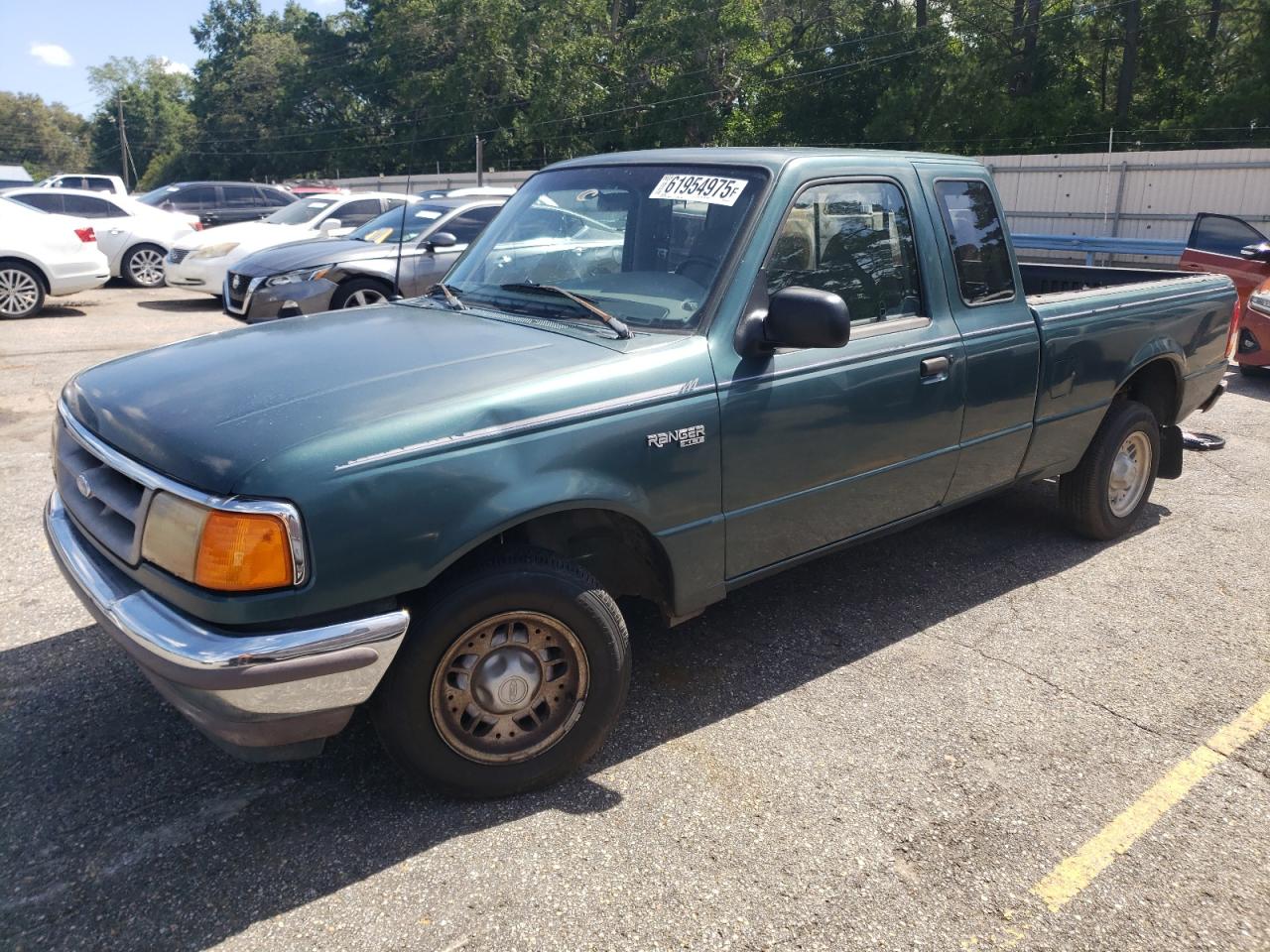
The 1995 Ford Ranger Super Cab remains a benchmark in the compact pickup segment, offering a balanced combination of utility, maneuverability, and mid-90s reliability. As a highlight of the second-generation Ranger, this specific model year introduced a significant interior redesign and mechanical refinements that solidified its reputation. Whether you are a collector or looking for a dependable workhorse, the 1995 Super Cab provides a versatile platform with three distinct engine options and the added interior storage of the extended cabin.
The Significance of the 1995 Model Year
The 1995 model year served as a pivotal moment for the Ford Ranger. While the exterior maintained the "smooth" styling introduced in 1993, the interior underwent a massive transformation. This was the year Ford moved away from the boxy, 1980s-style dashboard in favor of a modern, ergonomic layout that mirrored the design language of the Ford Explorer.
For the Super Cab specifically, 1995 was the year safety and comfort took a leap forward. It saw the introduction of a standard driver-side airbag across all trims, a feature that was not yet universal in the compact truck market. This change necessitated a completely new steering wheel and dashboard structure. Additionally, 1995 marked the transition in automatic transmissions from the older A4LD units to the more sophisticated, electronically controlled 4R44E and 4R55E series, providing better shift logic and durability.
Understanding the Super Cab Configuration
The "Super Cab" designation refers to Ford's extended cab chassis. In 1995, this configuration was built on a 125-inch wheelbase, which was significantly longer than the standard cab's 108-inch or 114-inch options. This extra length was dedicated entirely to the space behind the front seats.
Interior Space and Jump Seats
The primary draw of the Super Cab is the additional 17 inches of cabin length. While this space is often used for secure tool storage or groceries, the 1995 model frequently came equipped with dual side-facing jump seats. These seats fold down from the side panels. While they are not intended for long-distance travel for adults, they provide essential "pinch hit" seating for children or short trips. When folded up, the flat floor provides a weather-protected area for gear that you wouldn't want to leave in the truck bed.
Bed Length and Utility
Most 1995 Super Cabs were paired with a 6-foot cargo bed. Because of the extended wheelbase, the truck maintains a balanced profile, though it has a slightly larger turning radius than the regular cab models. For owners in 2026, this remains the "Goldilocks" configuration: small enough to park in a standard suburban garage, yet large enough to haul 4x8 sheets of plywood with the tailgate down.
Engine Options and Technical Specifications
Ford offered three primary engines for the 1995 Ranger Super Cab, each catering to different needs ranging from fuel economy to heavy-duty towing.
2.3L I4 "Lima" Engine
The base engine was the 2.3-liter OHC inline-four. Known for its legendary durability, this engine utilized a "distributorless" ignition system with two spark plugs per cylinder (8 plugs total) to improve combustion efficiency.
- Performance: Approximately 112 horsepower and 135 lb-ft of torque.
- Best For: Commuting and light delivery work where fuel economy is prioritized over acceleration.
3.0L "Vulcan" V6
The mid-range 3.0-liter V6 was an overhead-valve (OHV) design. It was often called the "Vulcan" engine and was praised for its simple, rugged construction.
- Performance: Approximately 145 horsepower and 165 lb-ft of torque.
- Best For: A general-purpose daily driver. It offers a noticeable torque increase over the four-cylinder without the fuel penalty of the larger 4.0L.
4.0L "Cologne" V6
The 4.0-liter V6 was the powerhouse of the 1995 lineup. This engine is highly sought after by enthusiasts and those who intend to use their Ranger for towing or off-roading.
- Performance: Approximately 160 horsepower and 225 lb-ft of torque.
- Best For: Towing trailers up to 5,000 lbs (when properly equipped) and 4x4 applications where low-end grunt is necessary.
| Feature | 2.3L I4 | 3.0L V6 | 4.0L V6 |
|---|---|---|---|
| Engine Type | Inline-4 (8-Plug) | Vulcan V6 (OHV) | Cologne V6 (OHV) |
| Horsepower | 112 hp | 145 hp | 160 hp |
| Torque | 135 lb-ft | 165 lb-ft | 225 lb-ft |
| Transmission Options | 5-speed Manual / 4-speed Auto | 5-speed Manual / 4-speed Auto | 5-speed Manual / 4-speed Auto |
| Drive Type | RWD | RWD / 4WD | RWD / 4WD |
| Recommended Use | Fuel Efficiency | Daily Versatility | Towing / Off-Road |
Drivetrain and Suspension Mechanics
The 1995 Ford Ranger Super Cab utilized two different front suspension setups depending on the drive configuration. Understanding these is vital for maintenance and handling expectations.
2WD: Twin I-Beam Suspension
The rear-wheel-drive models featured Ford’s famous Twin I-Beam front suspension. This design uses two long, independent arms that cross each other. It is incredibly robust and provides a "car-like" ride on the highway, but it is notorious for being difficult to align if the ride height is modified. Over time, the pivot bushings can wear out, leading to uneven tire wear.
4WD: Twin Traction Beam (TTB)
The four-wheel-drive Super Cabs used the Twin Traction Beam (TTB) setup. This was essentially a 4WD version of the Twin I-Beam, housing a differential within one of the beams. The 1995 4x4 models typically featured a "Shift-on-the-Fly" electronic transfer case or a manual floor-shifted lever. A common point of failure on the 1995 4x4 models is the automatic locking hubs, which many owners eventually replace with manual locking hubs for better reliability.
Common Issues and Troubleshooting for the 1995 Model
As these vehicles are now over three decades old, certain age-related issues have become "standard" for the 1995 Ranger. If you are inspecting one in 2026, pay close attention to the following areas.
1. Frame and Body Rust
The most significant threat to a 1995 Ranger is oxidation. The rear frame rails, specifically near the leaf spring shackles and hangers, are prone to severe rot. If the shackles rust through, the leaf spring can punch through the bed floor. Additionally, check the cab corners and the bottom of the doors, as these are common traps for moisture and road salt.
2. Automatic Transmission Wear
The 4R44E and 4R55E transmissions introduced in 1995 were a step up from their predecessors, but they are sensitive to heat. Common symptoms of failure include a "flashing" O/D Off light on the dashboard, delayed engagement into reverse, or slipping between second and third gear. Frequent fluid changes are the best preventative measure for these units.
3. The 3.0L Camshaft Synchronizer
Owners of the 3.0L V6 should be aware of the camshaft synchronizer. This component sits where a distributor used to be and drives the oil pump. If the bushings inside the synchronizer wear out, they often produce a high-pitched "chirping" sound like a cricket. If left unaddressed, the synchronizer can seize, leading to an immediate loss of oil pressure and engine failure.
4. Cooling System Degradation
The plastic tanks on the side of the original radiators are known to crack with age. Furthermore, the heater core on the 1995 Ranger is a common leak point. If you smell coolant inside the cab or notice a greasy film on the windshield when the defroster is on, the heater core likely needs replacement—a labor-intensive task that requires partial dashboard disassembly.
The 1995 Interior: A "Modern Classic"
The 1995 redesign brought several ergonomic improvements that make the truck much more livable by 2026 standards. The buttons for the radio and HVAC are large and tactile, designed to be used even while wearing work gloves.
The 1995 Super Cab also benefited from improved sound dampening compared to earlier models. While it doesn't match the silence of a 2020s-era vehicle, it is significantly quieter on the highway than the 1983-1992 generation. One specific detail for 1995 was the change to a new seat track design, which allowed for more fore-and-aft travel, making the Super Cab more comfortable for taller drivers.
Market Value and Ownership in 2026
In 2026, the 1995 Ford Ranger Super Cab has transitioned from a "used truck" to a "modern classic." Values have stabilized and, for well-preserved examples, are beginning to climb.
- Project Condition: Trucks with high mileage (250k+) or cosmetic issues can still be found for $1,500 to $3,000. These are usually 2WD models with the 2.3L engine.
- Driver Condition: Well-maintained 4.0L 4x4 Super Cabs with 150k miles typically command between $5,000 and $8,500.
- Collector Quality: Rare trims like the "Splash" or exceptionally low-mileage XLT models can exceed $12,000, as Gen X and Millennial collectors seek out the trucks of their youth.
Parts availability remains excellent. Because the Ranger was produced with minimal changes for so long, mechanical parts are readily available at any local auto parts store. However, interior trim pieces specific to the 1995-1997 dashboard are becoming harder to find in good condition, particularly the "radio bezel" which is prone to cracking.
Frequently Asked Questions
Is the 1995 Ford Ranger Super Cab fuel efficient?
The fuel efficiency depends heavily on the engine. The 2.3L 4-cylinder can achieve up to 22-24 MPG on the highway. However, the 4.0L V6 4x4 models typically see 15-18 MPG. By 2026 standards, none of these engines are considered particularly efficient, but they are comparable to other compact trucks of that era.
Can I fit a car seat in the back of a 1995 Super Cab?
It is not recommended. The jump seats in the 1995 Super Cab are side-facing, and modern car seat manufacturers explicitly state that their products should never be used on side-facing seats. Furthermore, the 1995 model lacks LATCH anchors. For child safety, a regular cab or a modern crew cab is a much safer choice.
What is the towing capacity of the 1995 Ranger Super Cab?
When equipped with the 4.0L V6 and the factory towing package, the 1995 Super Cab can tow up to 5,000 lbs. However, for the 2.3L I4, the limit is significantly lower, usually around 2,000 lbs. Always check your specific bumper or hitch rating, as many step-bumpers are only rated for 2,000 lbs.
Does the 1995 Ranger have OBD-II diagnostics?
1995 was a transition year for onboard diagnostics. Most 1995 Rangers use the older EEC-IV (OBD-I) system, which requires a specific Ford code reader or the "paperclip method" to read flashes on the dashboard. Some late-build 1995 models with the 2.3L engine may have an OBD-II port, but for the 3.0L and 4.0L, OBD-II didn't become standard until 1996.
How can I tell if my 1995 Ranger has a limited-slip differential?
Check the door jamb sticker under the "AXLE" code. A code consisting of a letter and a number (like "R7") usually indicates a limited-slip (Traction-Lok) differential, whereas a two-number code (like "87") indicates an open differential. Limited-slip is highly desirable for 2WD trucks used in snow or mud.
Final Recommendation for Buyers
If you are looking for a 1995 Ford Ranger Super Cab in 2026, your best value lies in the XLT trim with the 4.0L V6. This combination offers the best balance of interior comfort and usable power. Prioritize a rust-free frame above all else; engines and transmissions can be rebuilt, but a compromised frame is rarely worth the cost of repair on a compact truck. If you find an example with a documented history of transmission fluid changes and a clean cooling system, it is likely to remain a reliable companion for years to come.