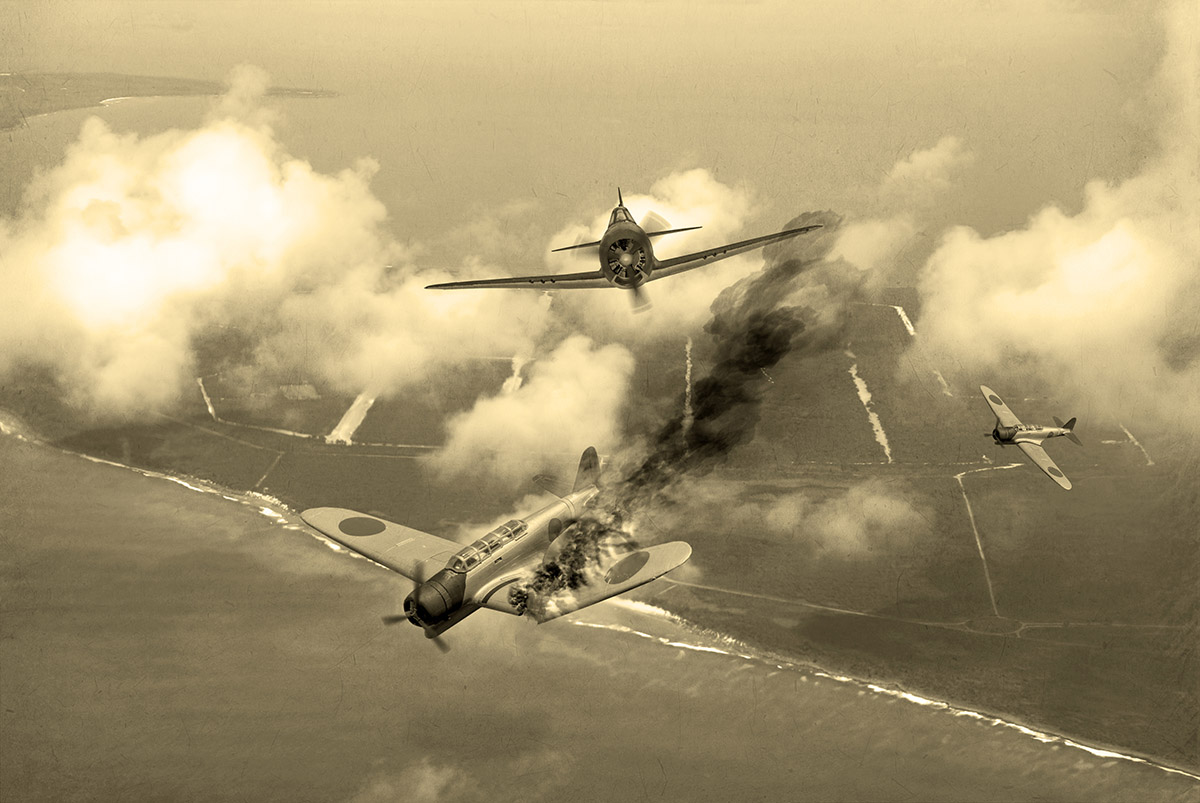
The ten most famous aircraft of the Second World War are defined by their profound impact on operational strategy, technological innovation, and the eventual outcome of global air supremacy. These legendary machines span multiple nations and roles, from agile dogfighters and heavy long-range bombers to versatile multi-role interceptors that shifted the balance of power between 1939 and 1945.
1. Supermarine Spitfire (United Kingdom)
The Supermarine Spitfire remains perhaps the most iconic fighter of the conflict. Designed by R.J. Mitchell, its elliptical wing design allowed for a thin profile that minimized drag, providing exceptional maneuverability. During the Battle of Britain, the Spitfire gained fame for its ability to engage German fighters, leaving the bulk of the "bomber interception" work to the more rugged Hawker Hurricane. Its continuous development—from the early Merlin-engine variants to the powerful Griffon-powered late-war models—ensured it remained relevant throughout the entirety of the war.
2. North American P-51 Mustang (United States)
Initially developed as a tactical reconnaissance and ground-attack aircraft, the P-51 Mustang transformed into the premier long-range escort fighter after being fitted with the Rolls-Royce Merlin engine. By 1944, the Mustang was the only Allied fighter capable of escorting heavy bombers all the way to Berlin and back, effectively neutralizing the Luftwaffe’s ability to defend the German heartland. Its laminar flow wing and high-speed performance made it one of the most efficient air-superiority platforms of the 1940s.
3. Messerschmitt Bf 109 (Germany)
As the backbone of the Luftwaffe, the Bf 109 was in service from the Spanish Civil War until the end of World War II. It was a compact, lightweight airframe built around a high-performance engine, emphasizing speed and rate of climb over maneuverability. While it suffered from a narrow-track landing gear that made ground handling difficult, its modular design allowed it to be mass-produced and adapted to various roles, including desert warfare and high-altitude interception.
4. Boeing B-17 Flying Fortress (United States)
The B-17 earned its reputation through sheer durability and the ability to absorb significant battle damage while remaining airborne. Designed as a strategic bomber, it bristled with defensive machine-gun turrets, leading to the "Flying Fortress" nickname. Its ability to fly in close formation allowed crews to create a concentrated wall of fire that deterred enemy interceptors during daylight raids over occupied Europe, setting the standard for heavy bombardment doctrine.
5. Mitsubishi A6M Zero (Japan)
At the onset of the Pacific War, the A6M Zero was arguably the most capable carrier-based fighter in the world. It featured extraordinary range, exceptional low-speed agility, and powerful cannon armament. However, the design sacrificed armor protection and self-sealing fuel tanks to achieve this weight reduction. As the war progressed and Allied pilots learned to utilize "boom and zoom" tactics to exploit the Zero’s structural fragility, its dominance waned against newer, heavily armored American designs.
6. Avro Lancaster (United Kingdom)
The Avro Lancaster was the definitive night bomber of the Royal Air Force. Distinguished by its massive bomb bay—which allowed it to carry "blockbuster" bombs and specialized munitions like the bouncing bomb used in the Dambusters raid—the Lancaster played a central role in the strategic bombing campaign against Germany. Its ease of maintenance and massive payload capacity made it the most successful heavy bomber in the RAF inventory.
7. Vought F4U Corsair (United States)
Recognizable by its distinctive inverted gull-wing design, the Corsair was a formidable carrier-based fighter. The gull-wing was necessary to provide ground clearance for its massive propeller while keeping the landing gear short and sturdy. Though initially rejected for carrier use due to visibility issues, it became a legend in the Pacific theater, particularly in the hands of Marine Corps pilots. Its sheer power and speed allowed it to dominate the skies over Okinawa and beyond.
8. Junkers Ju 87 Stuka (Germany)
The Stuka is the most recognizable symbol of the Blitzkrieg doctrine. As a dive-bomber, it used a siren—the "Jericho Trumpet"—to create a psychological weapon during attacks. It was highly effective in the early war years, providing precision tactical support for ground forces. However, it lacked the speed and defensive armament to survive in contested airspace where the enemy possessed modern fighters, leading to its eventual relegation to secondary theaters.
9. Republic P-47 Thunderbolt (United States)
Often called "The Jug" due to its massive, robust fuselage, the P-47 Thunderbolt was the heaviest single-seat fighter of the war. Equipped with a turbo-supercharged radial engine, it was an incredibly fast high-altitude interceptor, but it excelled even more as a ground-attack platform. Its ability to carry heavy payloads of rockets and bombs, combined with eight .50-caliber machine guns, allowed it to devastate German armored columns and transport networks.
10. de Havilland Mosquito (United Kingdom)
Often referred to as the "Wooden Wonder," the Mosquito was constructed primarily of balsa and plywood. This choice, necessitated by shortages of strategic metals, resulted in a remarkably light and fast airframe. Because it was faster than most contemporary German interceptors, it performed a variety of roles: high-speed bomber, night fighter, photo-reconnaissance, and precision intruder. It stands as a testament to innovative engineering under resource constraints.
Comparative Technical Summary
The following table highlights the distinct roles and strengths of these iconic machines.
| Aircraft | Primary Role | Key Characteristic | Notable Capability |
|---|---|---|---|
| Spitfire | Interceptor | Elliptical wings | Superior turn rate |
| P-51 Mustang | Escort Fighter | Long-range fuel tanks | High-altitude speed |
| Bf 109 | Fighter | Lightweight airframe | Rapid climb rate |
| B-17 | Heavy Bomber | Defensive armament | Extreme durability |
| A6M Zero | Carrier Fighter | Extreme agility | Long operational range |
| Lancaster | Night Bomber | Large payload capacity | Heavy ordinance carriage |
| F4U Corsair | Carrier Fighter | Inverted gull-wing | High speed and durability |
| Ju 87 Stuka | Dive Bomber | Precision accuracy | Tactical ground support |
| P-47 Thunderbolt | Fighter-Bomber | Heavy armor/engine | Ground attack versatility |
| Mosquito | Multi-role | Wooden construction | Unmatched speed |
Strategic Context and Operational Evolution
The evolution of these aircraft throughout the war was not merely a matter of engine upgrades. It represented a fundamental shift in military science. Early in the conflict, airpower was seen as a support tool for army and navy movements. By 1945, the ability to control the skies had become the primary prerequisite for any offensive maneuver.
The transition from the early "dogfighting" aircraft like the Spitfire and Bf 109 to the high-speed, long-range platforms like the P-51 Mustang and the F4U Corsair forced a redesign of global logistical chains. Aircraft required more advanced navigational tools, higher-octane fuels, and significantly more complex ground-crew support than they did at the start of the war in 1939.
Maintenance and Pilot Requirements
Operating these machines was a feat of engineering and physical endurance. Pilots in 1945 faced significantly different challenges than those in 1939. The introduction of pressurized cabins, complex hydraulic systems, and sophisticated radio equipment meant that the "pilot" was increasingly becoming a "system operator." Maintenance crews also faced the constant struggle of keeping high-performance engines running under harsh conditions—from the freezing air at 30,000 feet to the dust-choked airfields of North Africa or the high-humidity environments of the Pacific islands.
Frequently Asked Questions
Which WW2 plane was considered the most versatile? The de Havilland Mosquito is widely considered the most versatile due to its unique construction and speed. Its design allowed it to perform roles ranging from low-level precision bombing to high-altitude night fighting, all while flying faster than most interceptors of its era.
Why did the P-51 Mustang change the tide of the war? The P-51 Mustang provided the range necessary to protect Allied bombers deep into German territory. Before the Mustang, bomber formations were highly vulnerable to Luftwaffe attacks once they exceeded the range of escort fighters. The Mustang closed this gap, allowing for the systematic destruction of German industry.
What were the limitations of the Mitsubishi A6M Zero? While the Zero was highly maneuverable, its design sacrificed pilot safety. It lacked self-sealing fuel tanks and pilot armor. When Allied pilots adopted hit-and-run tactics, the Zero's structural weaknesses became its greatest liability, making it difficult to maintain air superiority in the later years of the war.
How did the B-17's design influence bomber tactics? The B-17 was designed for "combat box" formations. By flying in tight clusters, the defensive fire from multiple B-17s created a defensive field of fire that discouraged enemy fighter attacks. This allowed the U.S. Army Air Forces to pursue daylight precision bombing missions despite heavy opposition.
What led to the retirement of the Ju 87 Stuka? The Stuka was a specialized tool for the early Blitzkrieg years. As the Allied air forces gained technical parity and numerical superiority, the Stuka's low speed and lack of defensive weaponry made it "easy meat" for modern interceptors. It was eventually replaced by faster, more heavily armored ground-attack aircraft.
Recommendation for Further Study
If you are interested in exploring these aircraft further, look for archival flight manuals (Pilot’s Operating Handbooks) available through national aviation museums or historical institutes. These documents provide the most granular detail on how these machines were operated, the specific checklists used by crews, and the technical limitations of their onboard systems. Understanding the "Pilot's Notes" for a specific model will offer a far more authentic view of the war than general historical summaries.