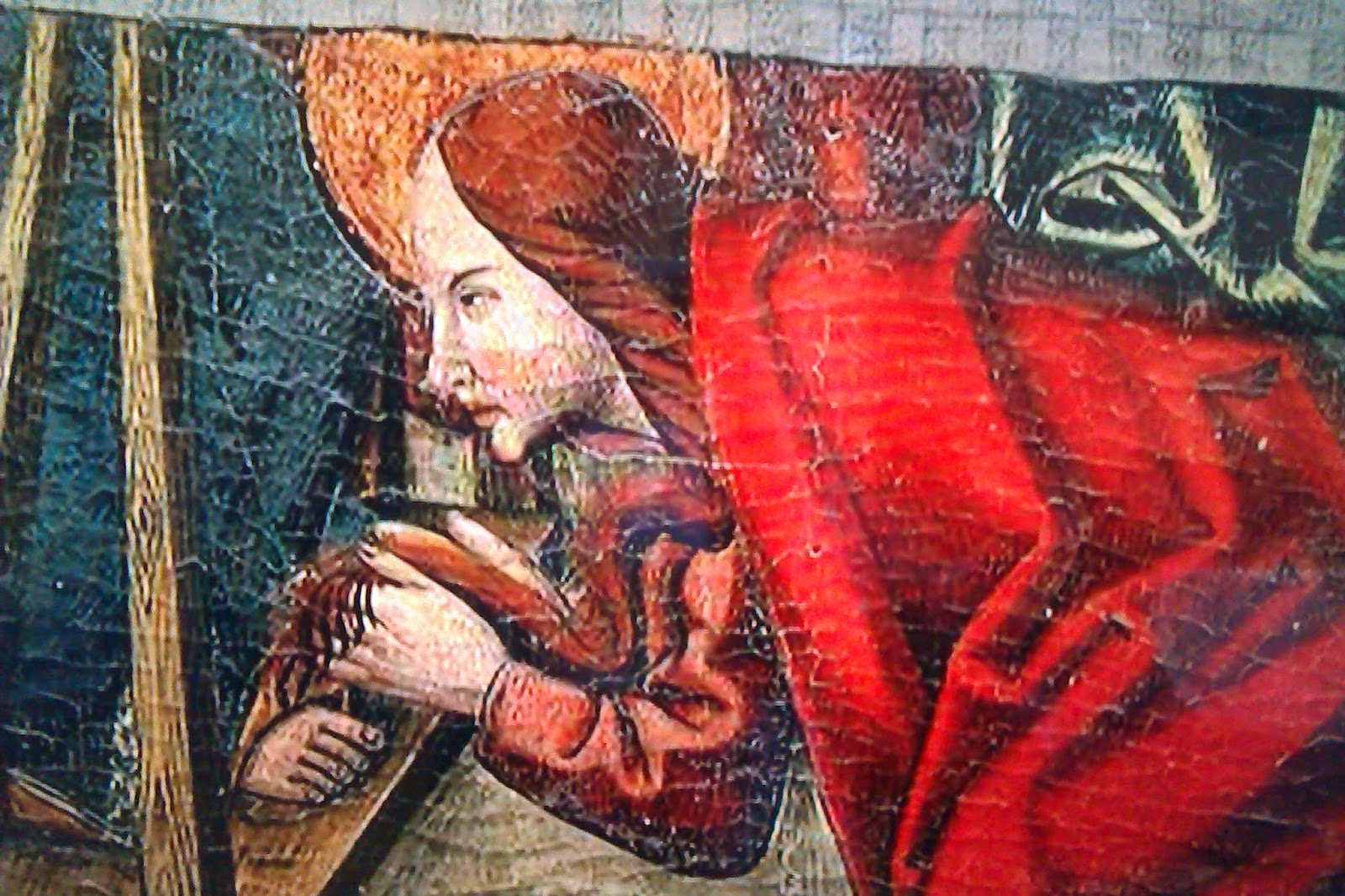
Throughout art history, red hair has served as a powerful visual signifier of passion, divinity, and social rebellion. While many famous artists like Vincent van Gogh and Albrecht Dürer actually possessed red hair, a vast ecosystem of myths—ranging from scientific extinction theories to links with volatile temperaments—continues to influence how we perceive these iconic creative figures today.
The fascination with red-haired artists and their subjects is more than a mere aesthetic preference; it is a crossroads where genetics, art history, and folklore meet. As of 2026, our understanding of the "ginger" legacy in art has evolved through genomic research and digital art restoration, allowing us to separate the biological reality of these individuals from the romanticized legends that have followed them for centuries.
The Genetic Reality of the MC1R Gene
Before examining specific artists, it is essential to establish the biological facts. Red hair is caused by mutations in the MC1R (melanocortin 1 receptor) gene on chromosome 16. It is a recessive trait, meaning both parents must carry the gene for a child to have a chance of being born with red hair.
The Extinction Myth
One of the most persistent myths—often resurfacing in headlines—is that redheads are going extinct. This claim suggests that because the gene is recessive and global populations are mixing, red hair will vanish by the end of the century.
The Fact: As of 2026, geneticists continue to confirm that this is a mathematical misunderstanding of recessive traits. While the number of people displaying red hair might fluctuate, the gene itself remains stable within the human population. A trait does not "die out" simply because it is recessive; it can remain hidden for generations only to reappear when two carriers produce an offspring.
Pain Tolerance and Health Facts
Another common myth involves redheads' unique physiological responses.
- Myth: Redheads have a "higher" pain tolerance.
- Fact: Research has shown that people with red hair are actually more sensitive to certain types of pain (like thermal pain) and often require about 20% more general anesthesia than people with other hair colors. However, they may have a higher tolerance for certain types of physical stinging or pressure. This biological nuance often fueled the historical myth that red-haired artists were "sturdier" or more "volatile" in their physical nature.
Iconic Artists with Red Hair: Historical Facts
While many artists have painted red-haired subjects, several of the most influential figures in the Western canon were redheads themselves. Their self-portraits provide a primary record of this trait, though we must account for artistic license and the pigments available at the time.
Vincent van Gogh: The Fiery Impressionist
Perhaps the most famous red-haired artist in history is Vincent van Gogh. His hair and beard are depicted in various shades of orange, ochre, and vermilion across his many self-portraits.
- The Fact: Van Gogh's red hair was a documented physical trait. In his self-portrait from 1887 (housed at the Art Institute of Chicago), the artist uses intense rhythmic brushstrokes of orange against a blue background. This was not just a stylistic choice; it was an application of color theory. By placing the orange of his hair against a complementary blue, he made the red appear more vibrant.
- The Myth: The "Mad Artist" myth often links his hair color to his mental health struggles, suggesting his "fiery" hair was an outward sign of an "unstable" mind. There is no medical or scientific evidence linking hair pigmentation to neurological or psychological health.
Albrecht Dürer: The Northern Renaissance Master
Albrecht Dürer, often called the "Leonardo of the North," was meticulously documented as having reddish-golden hair. His self-portraits are among the most famous in the world, particularly the Self-Portrait at Twenty-Eight (1500).
- The Fact: Dürer was deeply proud of his appearance. In his 1498 self-portrait, he depicts himself with long, carefully curled reddish-blonde locks. This was a statement of status; red-gold hair was often associated with nobility and the divine in 15th-century Germany.
- Technical Depth: Dürer used fine-tipped brushes to render individual strands of hair, showcasing the complexity of red pigmentation, which often involves a mix of pheomelanin (red/yellow) and eumelanin (brown/black).
Elizabeth Siddal: Artist and Pre-Raphaelite Icon
While frequently remembered as a muse, Elizabeth "Lizzie" Siddal was a significant artist and poet in her own right. Her hair was a vibrant, coppery red that became the hallmark of the Pre-Raphaelite aesthetic.
- The Fact: Siddal was one of the few women of her era to exhibit at the Pre-Raphaelite exhibition in London in 1857. Her own paintings often featured the same stylistic choices as her peers, but her red hair became a symbol for the entire movement.
- The Myth: The myth surrounding her is that her hair "continued to grow" in her coffin after her death—a legend propagated by her husband, Dante Gabriel Rossetti, who had her body exhumed to retrieve a book of poems. Biologically, hair does not grow after death; the skin retracts, making existing hair appear longer.
The Symbolism of Red Hair in Artistic Practice
Artists who lacked red hair themselves often became obsessed with it as a subject. This obsession birthed several myths regarding what red hair "means" in a painting.
The "Stunners" and the Pre-Raphaelite Brotherhood
The 19th-century Pre-Raphaelite Brotherhood (PRB) essentially "branded" red hair as the ultimate symbol of beauty. Before this period, red hair was often viewed with suspicion or associated with Judas Iscariot in religious art.
- From Villainy to Divinity: In Medieval art, red hair was frequently used to denote deceit. However, the PRB, led by Rossetti and Millais, flipped this narrative. They saw red hair as a link to a lost, medieval ideal of beauty.
- Pigment Usage: To achieve the "flame-like" quality of red hair, artists used Venetian Red, Indian Red, and later, Cadmium Orange. These pigments were expensive and difficult to stabilize, making the successful rendering of red hair a mark of technical mastery.
Red Hair and the "Femme Fatale"
In the late 19th and early 20th centuries, red hair became a shorthand for the femme fatale—a dangerous, seductive woman. This is a recurring theme in the works of Henri de Toulouse-Lautrec and Gustav Klimt.
| Artist | Documented Hair Color | Role of Red Hair in Work | Myth vs. Fact |
|---|---|---|---|
| Vincent van Gogh | Red/Ginger | Self-expression, color theory | Myth: Hair color linked to madness. Fact: Used for complementary contrast. |
| Albrecht Dürer | Reddish-Gold | Status, self-promotion | Myth: Depicted himself as Christ-like solely for ego. Fact: It was a common Renaissance study of "The Artist." |
| Elizabeth Siddal | Coppery Red | Muse and Painter | Myth: Hair grew after death. Fact: Skin retraction creates an illusion of growth. |
| Mary Cassatt | Reddish-Brown | Impressionist focus on domesticity | Myth: She was a "rebel" because of her hair. Fact: She was a pioneer of female Impressionism. |
| Dante G. Rossetti | Dark | Aesthetic obsession with redheads | Myth: He only painted redheads. Fact: He had several muses with varying hair colors. |
Scientific and Historical Misconceptions
Understanding the "artist with red hair" requires debunking several lingering misconceptions that still circulate in 2026.
The Temperament Myth
For centuries, the "fiery redhead" stereotype has suggested that people with red hair are predisposed to anger or passion. In the art world, this transformed into the idea that red-haired artists were naturally more "expressive" or "volatile" in their brushwork.
The Evidence: There is no psychological data to support a link between MC1R mutations and personality traits. The "volatility" of artists like Van Gogh was due to documented medical conditions and the social pressures of the time, not his hair color. The persistence of this myth is a classic example of confirmation bias, where people notice the anger of a redhead more than the anger of someone with brown hair because it fits the established narrative.
The Judas Connection
In religious art, particularly during the Middle Ages and the Renaissance, Judas Iscariot was almost always depicted with red hair. This was intended to make him stand out as the "other" or the betrayer.
- The Fact: This was a social construct used to marginalize specific groups. Interestingly, some artists with red hair, such as Dürer, worked to reclaim the color by depicting themselves or holy figures with reddish tones to signal rarity and divine uniqueness rather than treachery.
Technical Execution: How Artists Paint Red Hair
Capturing red hair on canvas is a specific technical challenge that has evolved with the chemistry of paint. A "fact" of art history is that the appearance of red hair in paintings is often more about the chemistry of the day than the actual hair color of the model.
- Underpainting: Traditional artists often start with a "verdaccio" (greenish) underlayer. Since green is the complement of red, this makes the final red layers pop with more intensity.
- Glazing: Artists like Titian (who gave his name to "Titian Red") used multiple translucent layers of oil paint to create depth. Red hair is rarely one solid color; it is a spectrum of gold, orange, brown, and even violet in the shadows.
- Modern Pigments: By 2026, synthetic pigments have allowed for even more lightfast (fade-resistant) reds. Historically, some red-haired paintings have "faded" because the organic pigments used (like carmine) were not light-stable, leading to the "myth" that some historical figures had lighter hair than they actually did.
Common Mistakes in Identifying Red-Haired Artists
When researching this topic, enthusiasts often encounter "false positives"—artists or figures labeled as redheads who were not.
- Conflating Muse and Artist: Many people assume Sandro Botticelli had red hair because his most famous subject, the Birth of Venus, features a redhead. In reality, Botticelli's own hair color is not definitively known to be red, and the model (Simonetta Vespucci) was likely the source of the trait.
- Oxidation of Pigments: Some paintings that appear to show red hair today originally showed brown or blonde hair. Over centuries, certain varnishes and pigments can shift toward a reddish or orange hue due to oxidation and environmental exposure. Expert conservation and "cleaning" often reveal the true intended color.
Frequently Asked Questions
Which famous artist was known for having a red beard?
Vincent van Gogh is the most prominent artist known for his vibrant red beard. He frequently mentioned his appearance in letters to his brother Theo and used his red hair as a focal point for his experiments with the "simultaneous contrast" of colors.
Is it true that red-haired artists are more creative?
There is no scientific evidence to suggest that hair color correlates with creativity levels. The association likely stems from the fact that red hair is rare (1-2% of the population), and rare traits are often associated with "exceptional" or "unique" individuals in cultural storytelling.
Why did the Pre-Raphaelites love red hair so much?
The Pre-Raphaelite Brotherhood sought to return to the detail and intense colors of Italian art before the time of Raphael. They found red hair to be visually striking and a way to challenge the "drab" Victorian standards of beauty. To them, red hair represented a connection to nature and a sense of "wild" beauty.
Did any Renaissance artists have red hair?
Albrecht Dürer is a primary example of a Renaissance artist with documented reddish-gold hair. Additionally, many of the Venetian masters, including Titian and Giorgione, are associated with the "Venetian Red" hair color, though it is more frequently seen in their subjects than confirmed in their own biographies.
How do I know if a historical artist actually had red hair or if it's just the paint?
Art historians use a combination of primary written accounts (letters, diaries, contemporary descriptions), genealogical records, and technical analysis of self-portraits. If multiple independent sources describe an artist as "fair" or "ginger," and their self-portraits consistently reflect those tones, it is accepted as a historical fact.
Summary of Findings and Next Actions
The intersection of red hair and art is a rich tapestry of biological fact and cultural fiction. While the MC1R gene ensures that red hair remains a permanent fixture of human diversity, the myths surrounding "fiery tempers" or "extinction" are largely unsupported by modern science. Artists like Van Gogh and Dürer utilized their unique appearance to push the boundaries of self-portraiture and color theory, leaving a legacy that remains vibrant in 2026.
Practical Recommendation: If you are interested in the technical side of how red hair is depicted, visit a local museum and look specifically at the shadows in a red-haired portrait. You will often find that the "fact" of the hair color is achieved through a "myth" of colors—using blues, greens, and purples to create the illusion of vibrant red. For those researching their own red-haired lineage, modern DNA testing can identify the specific variants of the MC1R gene you carry, providing a factual link to this storied history.