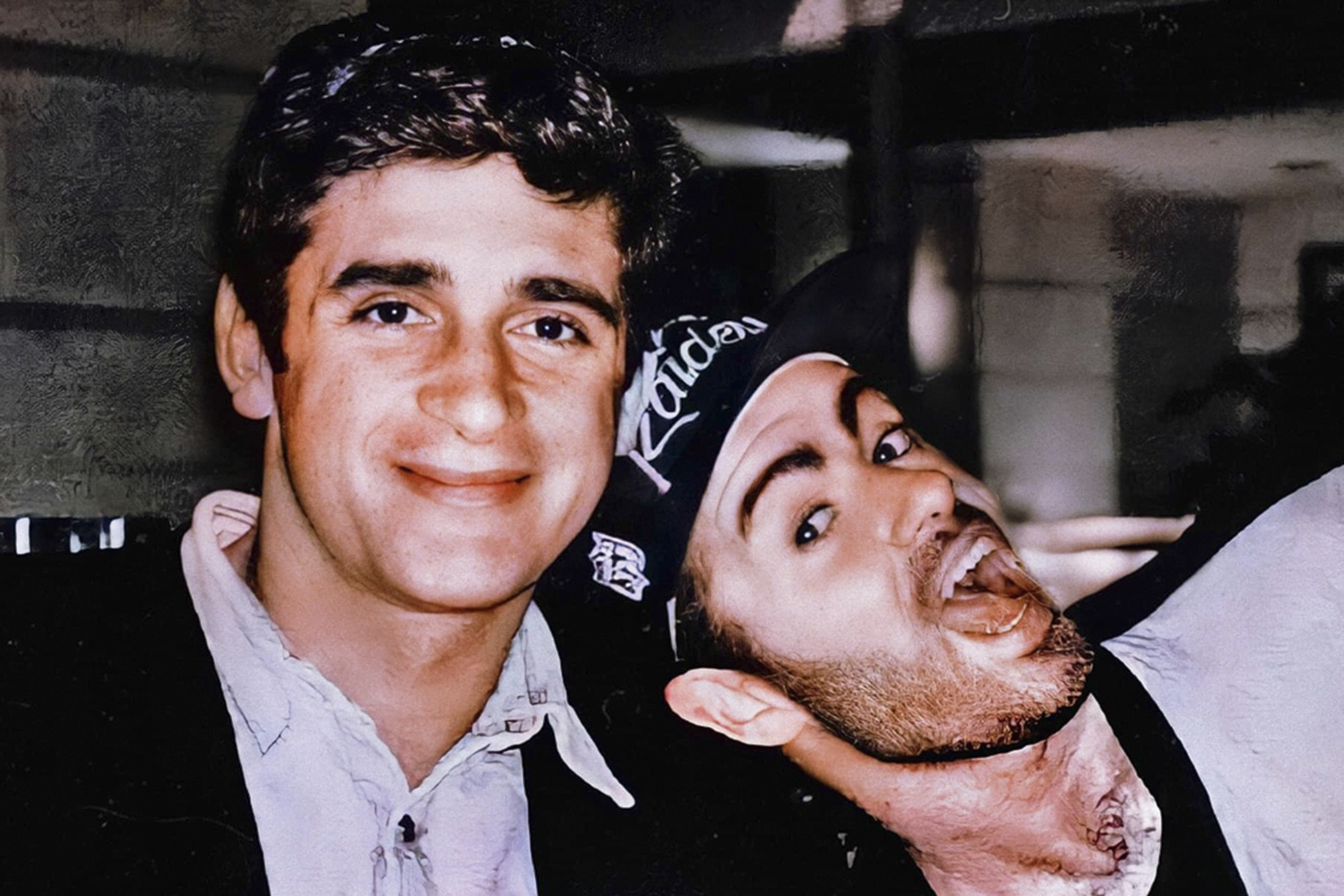
Anselmo Feleppa was a Brazilian dress designer and the pivotal first love of British pop icon George Michael. Meeting in 1991, their deep romantic bond was tragically cut short when Feleppa died from AIDS-related complications in 1993. Their relationship fundamentally transformed Michael’s personal identity, reshaped his artistic vision, and inspired his multi-platinum 1996 album Older and its timeless lead single, "Jesus to a Child."
The Meeting in Rio: How George Michael and Anselmo Feleppa Connected
In January 1991, George Michael was one of the biggest pop stars on the planet. Having achieved unprecedented global stardom with Wham! and his 1987 solo debut Faith, Michael was headlining the massive Rock in Rio II festival at the Maracanã Stadium in Rio de Janeiro, Brazil. Behind the scenes, however, Michael was grappling with the intense pressures of fame, feelings of isolation, and lingering internal struggles regarding his sexuality.
It was during this trip to Brazil that Michael met Anselmo Feleppa, a 34-year-old Brazilian fashion and dress designer. Spotting Feleppa among the crowd and backstage area, Michael was immediately captivated by his warm presence and gentle demeanour. Unlike many people in Michael’s orbit who saw him primarily as an international celebrity, Feleppa related to him as a person first.
- Rock in Rio II (Jan 1991)
- First Meeting in Rio
- Mutual Romantic Bond
- Private Coming Out
Their initial connection quickly developed into a deep romantic partnership. Michael often stated in later interviews and biographical documentaries—including his 2005 film A Different Story and the autobiographical Freedom project—that meeting Feleppa marked the first time he experienced true, reciprocal love. Prior to meeting Feleppa, Michael had lived a largely secretive private life, fearful that embracing his identity as a gay man might jeopardize his commercial career or bring unwanted distress to his family. Feleppa’s openness, warmth, and self-acceptance provided a safe sanctuary that enabled Michael to fully embrace his sexual identity in his personal life for the first time at age 27.
Love, Identity, and the Tragic HIV Diagnosis
The early months of the relationship were a period of intense happiness for George Michael. For the first time, he felt emotionally grounded and secure in a romantic relationship. He brought Feleppa into his inner circle, introducing him to close friends and family, and the couple spent time together living between England, Los Angeles, and Brazil.
However, this joyful chapter was abruptly overshadowed by health fears. In late 1991, roughly six months into their relationship, Feleppa fell ill with a persistent fever while staying at Michael's home in England. During Christmas of 1991, Feleppa underwent medical testing. In early 1992, the test results confirmed that Feleppa was HIV-positive.
- Late 1991: Initial Illness
- Early 1992: HIV Diagnosis
- March 1993: Feleppa Passes Away
The diagnosis arrived during the height of the global HIV/AIDS epidemic—a period marked not only by high mortality rates due to the absence of effective antiretroviral therapies, but also by intense societal stigma and media hostility toward the LGBTQ+ community. Michael was devastated by the news and spent the next year in constant anxiety, balancing his public obligations with caring for Feleppa. Because Michael was not publicly out as a gay man at the time, he felt forced to process his grief and terror largely in private, terrified that tabloid journalists would uncover Feleppa’s condition and expose their relationship.
Michael tested negative for HIV, but his focus remained entirely on supporting Feleppa through his declining health. Feleppa returned to Brazil to be near his family as his condition worsened. On March 26, 1993, Anselmo Feleppa suffered a fatal AIDS-related brain hemorrhage in Rio de Janeiro at the age of 36.
Grief, the Sony Legal Battle, and Creative Silence
Anselmo Feleppa’s death plunged George Michael into profound grief. The loss of his partner shattered Michael’s sense of security and initiated a dark period in his personal life. The tragedy was further compounded by the loss of Michael’s mother, Lesley Angold Panayiotou, who passed away from cancer four years later in 1997.
In the immediate aftermath of Feleppa’s death in 1993, Michael found himself completely unable to write music. The creative spark that had fueled hits like "Careless Whisper," "Freedom! '90," and "Faith" evaporated under the weight of bereavement.
- 1993: Feleppa's Death
- 1993–1994: Sony Music Lawsuit
- Late 1994: "Jesus to a Child" Written
This period of grief coincided with Michael’s famous high-profile legal battle against his record label, Sony Music Entertainment. In late 1992 and throughout 1993, Michael attempted to void his long-term recording contract with Sony, arguing that the contract constituted an unreasonable restraint of trade and that the label failed to properly support his artistic growth on his 1990 album Listen Without Prejudice Vol. 1.
While the legal battle was grounded in genuine contractual and creative disputes, Michael later acknowledged that much of his fierce fight against Sony was fueled by the emotional pain and frustration he felt during Feleppa’s illness and passing. Unable to control or cure Feleppa’s fatal condition, Michael directed his energy and anger toward his record company. Though Michael ultimately lost the court ruling in 1994, he was eventually released from the contract after Virgin Records and DreamWorks SKG bought out his contract for a reported $40 million.
The Musical Legacy: "Jesus to a Child" and Older
After nearly two years of creative paralysis following Feleppa’s passing, Michael experienced a sudden artistic breakthrough in late 1994. Sit down at his keyboard, the melodies and lyrics flowed naturally as he finally began to process his grief through song.
The first track to emerge from this period was "Jesus to a Child."
Analyzing "Jesus to a Child"
Released in January 1996 as the lead single for his upcoming album, "Jesus to a Child" marked a dramatic musical shift for George Michael. Moving away from the high-energy pop and soulful funk of his previous work, the song was built around a quiet, hypnotic bossa nova rhythm—a direct homage to Anselmo Feleppa’s Brazilian heritage.
"Jesus to a Child" Structural Breakdown:
- Bossa Nova Acoustic Guitar (Honoring Anselmo's Brazilian roots)
- Soft Orchestral Strings & Ambient Synthesizers
- Poetic, Eulogistic Lyrics ("Kindness in your eyes, I guess you heard me cry...")
- Vocal Performance (Subdued, intimate, and layered harmonies)
The track’s subtle acoustic guitars, warm string arrangements, and deeply melancholic lyrics reflected both the tragedy of loss and the profound gratitude Michael felt for having known Feleppa. Lines such as "Kindness in your eyes, I guess you heard me cry / You smiled at me like Jesus to a child" served as a tender eulogy. Although Michael had not yet formally come out to the public, the emotional sincerity of the song struck a chord worldwide, debuting at number one on the UK Singles Chart and becoming a global success.
The Older Album (1996)
When the full-length album Older was released in May 1996, it featured a formal dedication on the back cover sleeve: "For Anselmo."
Older is widely considered by music critics and fans to be George Michael’s artistic masterpiece. The album moves fluidly through themes of loss, bereavement, depression, and quiet recovery, drawing heavily from jazz, bossa nova, and ambient pop influences.
Beyond "Jesus to a Child," several other key tracks on Older directly reflect Feleppa’s influence and the shadow of his passing:
- "You Have Been Loved": Co-written with David Austin, this devastating acoustic ballad explores grief from the dual perspective of a romantic partner and a grieving mother, directly drawing on the emotional pain experienced by both Michael and Feleppa’s family.
- "Fastlove": A track that presents the contrasting side of grief—seeking temporary solace, distraction, and emotional numbness through nightlife and casual encounters while still mourning a lost love.
- "Spinning the Wheel": A track featuring tense, dark jazz arrangements that directly references the anxiety of the early 1990s AIDS crisis, describing the dangerous emotional game of living with health uncertainty.
The album achieved massive commercial and critical acclaim, spending 147 weeks on the UK Albums Chart and yielding six top-three singles—a record for a British artist at the time.
Key Milestones: Relationship, Loss, and Tribute Timeline
The relationship between Anselmo Feleppa and George Michael reshaped the course of Michael’s personal biography and musical discography.
| Year / Date | Event or Milestone | Significance & Historical Context |
|---|---|---|
| January 1991 | George Michael performs at Rock in Rio II; meets Anselmo Feleppa. | Marks the beginning of Michael’s first deeply serious romantic relationship and his personal acceptance of his identity. |
| Early 1992 | Feleppa tests positive for HIV after falling ill in England. | Initiates a painful period of secrecy and emotional strain as Michael cares for his partner amid social stigma. |
| March 26, 1993 | Anselmo Feleppa dies in Rio de Janeiro from an AIDS-related brain hemorrhage. | Devastates Michael, triggering a period of severe depression and a two-year period of musical writer's block. |
| 1993–1994 | Michael pursues high-profile legal battle against Sony Music Entertainment. | Fueled in part by Michael’s grief and frustration surrounding Feleppa’s death; results in his eventual move to Virgin/DreamWorks. |
| Late 1994 | Michael writes "Jesus to a Child" in a single afternoon. | Breaks his long period of writer's block; utilizes bossa nova rhythms to honor Feleppa’s Brazilian background. |
| January 1996 | "Jesus to a Child" is officially released. | Debuts at No. 1 in the UK and becomes a global hit, serving as a subtle tribute to Feleppa. |
| May 1996 | The album Older is released, explicitly dedicated "For Anselmo." | Cemented Michael’s transition into mature, jazz-infused pop and stands as his definitive creative tribute to his late partner. |
| 1998–2016 | Michael speaks openly about Feleppa following his public coming out. | Feleppa is consistently acknowledged by Michael as the love of his life in documentary projects and public interviews. |
Philanthropy, AIDS Activism, and Public Legacy
The loss of Anselmo Feleppa quietly transformed George Michael into one of the most generous benefactors of HIV/AIDS causes in the United Kingdom and internationally. While Michael often kept his charitable contributions private during his lifetime, subsequent disclosures following his death in December 2016 revealed the vast extent of his philanthropy.
Michael regularly donated royalties from specific songs—including his duet with Elton John on "Don't Let the Sun Go Down on Me" and tracks from the red-hot fundraising project Red Hot + Dance—to organizations such as the Terrence Higgins Trust, the UK's leading HIV and sexual health charity.
- Anselmo's Passing
- Deepened Social Awareness
- Millions Donated to HIV Charities
- Public Legacy
Following his public coming out in 1998, Michael spoke openly and frequently about Anselmo Feleppa in interviews. He consistently gave credit to Feleppa for teaching him how to love and for breaking down the fear he felt surrounding his own sexuality. In his 2005 documentary A Different Story, Michael reflected:
"He was the first person I ever loved unconditionally... It broke my heart to lose him, but meeting him was the best thing that ever happened to me."
In the 2017 documentary George Michael Freedom (later expanded into Freedom Uncut), which Michael co-directed shortly before his death, Feleppa’s memory forms the emotional center of the narrative. Michael framed his entire mid-90s artistic transformation around the joy of meeting Feleppa, the trauma of losing him, and the eventual catharsis achieved through creating Older.
Practical Listening and Media Guide
For music historians, LGBTQ+ history scholars, and listeners exploring this era of pop music, the story of Anselmo Feleppa and George Michael can be experienced through several specific recordings and films:
1. Key Tracks to Listen To
- "Jesus to a Child" (Older, 1996): Listen specifically for the bossa nova acoustic guitar patterns, atmospheric pads, and lyrical themes of spiritual connection after death.
- "You Have Been Loved" (Older, 1996): A quiet, deeply emotional ballad detailing the grief felt by loved ones left behind after a terminally ill partner passes away.
- "Star People '97" (Older, 1996): Shows how Michael balanced deep personal grief with commentary on fame, celebrity culture, and superficiality.
- "Desafinado" with Astrud Gilberto (1996): Featured on the Red Hot + Rio charity album, this duet highlights Michael’s embrace of Brazilian bossa nova music during the era he was memorializing Feleppa.
2. Documentaries to Watch
- George Michael: Freedom Uncut (2022): The definitive documentary narrated by George Michael himself, providing an unvarnished look at his relationship with Feleppa, the Sony lawsuit, and the creation of the Older album.
- A Different Story (2005): An insightful look at Michael’s career, featuring rare archival footage and interviews where he openly discusses Feleppa’s impact on his life.
Frequently Asked Questions
How long were George Michael and Anselmo Feleppa together?
George Michael and Anselmo Feleppa were together for approximately two years, from their first meeting at the Rock in Rio festival in January 1991 until Feleppa’s passing in March 1993. Although their time together was relatively short, Michael consistently described Feleppa as the first true love of his life and his most influential partner.
Which specific song did George Michael dedicate to Anselmo Feleppa?
George Michael wrote "Jesus to a Child" specifically in memory of Anselmo Feleppa. Additionally, his entire 1996 studio album Older carries a explicit dedication printed on the back cover that reads "For Anselmo."
How did Anselmo Feleppa die?
Anselmo Feleppa died on March 26, 1993, in Rio de Janeiro, Brazil, at age 36. His death was caused by a brain hemorrhage resulting from complications related to AIDS. He had been diagnosed as HIV-positive in early 1992.
Did George Michael's family know about his relationship with Anselmo Feleppa?
Yes. Although George Michael was not publicly out as a gay man to the media or the general public during Feleppa’s lifetime, he brought Feleppa into his private life and introduced him to his close friends and family members, including his mother, Lesley.
How did Anselmo Feleppa influence George Michael's coming out journey?
Anselmo Feleppa played a crucial role in helping George Michael accept his identity. Michael noted that loving Feleppa allowed him to overcome the internal shame and anxiety he had felt about being gay throughout his teens and twenties. Although Michael did not come out publicly until 1998, he credited Feleppa with giving him the pride and emotional maturity to live openly in his private life.
Conclusion
The relationship between Anselmo Feleppa and George Michael remains one of the most poignant and historically significant love stories in modern pop culture. Beyond the personal joy and profound grief it brought to Michael's life, their bond catalyzed an extraordinary period of musical maturity. Through tracks like "Jesus to a Child" and the album Older, Michael transformed his personal heartbreak into a timeless artistic masterpiece that continues to offer solace to millions of listeners worldwide. To fully appreciate George Michael's legacy, one must understand the man who inspired his greatest work: Anselmo Feleppa.