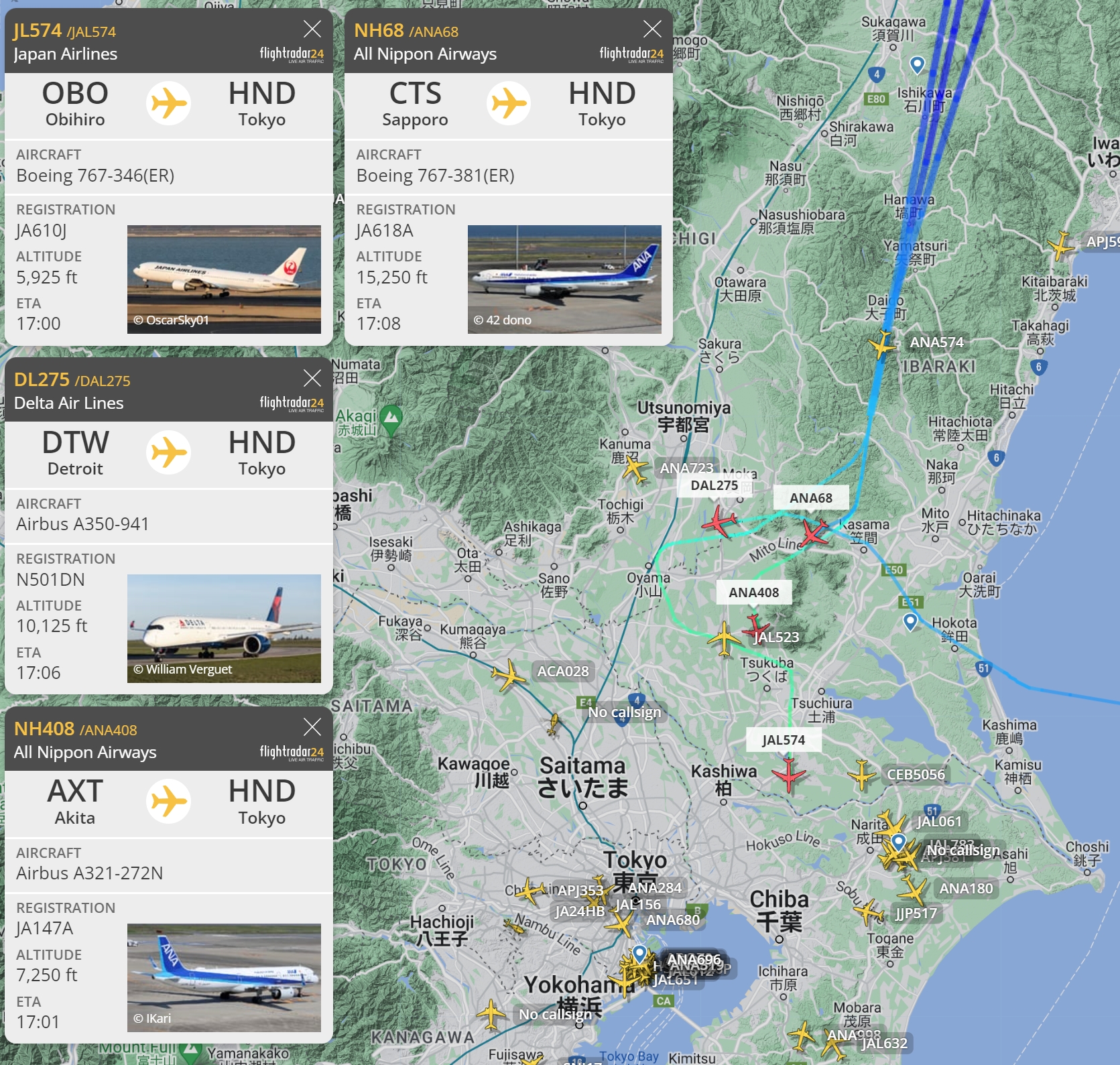
All Nippon Airways (ANA) and Delta Air Lines have never shared a formal strategic partnership or codeshare agreement. Instead, their relationship is characterized by decades of intense competition for Transpacific market share. While ANA is a cornerstone of the Star Alliance, Delta anchors the SkyTeam alliance, making them direct rivals in the aviation landscape between North America and Asia.
The history of ANA and Delta Air Lines is a complex narrative of missed opportunities, regulatory battles, and high-stakes corporate maneuvering. To understand why these two giants of the sky have remained competitors rather than collaborators, one must look at the evolution of the Japanese aviation market, the rise of global alliances, and the specific instances where their interests collided. As of 2026, their relationship remains defined by their respective roles in competing global alliances and their differing strategies for connecting the United States and Japan.
The Foundation of Non-Cooperation: Alliances and Joint Ventures
The most significant barrier to a partnership between ANA and Delta is their commitment to opposing global airline alliances. In the late 1990s and early 2000s, the aviation industry shifted toward a hub-and-spoke model supported by massive international networks. ANA was an early and vital member of the Star Alliance, joining in 1999. Delta Air Lines, conversely, was a founding member of the SkyTeam alliance in 2000.
Within these alliances, airlines often form even tighter bonds known as Joint Ventures (JV). These JVs allow airlines to share revenue, coordinate schedules, and co-manage pricing on specific routes, effectively acting as a single entity. ANA maintains a robust Joint Venture with United Airlines, which is Delta’s primary domestic rival in the United States. Because of the anti-trust immunity granted to the ANA-United JV, any formal partnership between ANA and Delta would be legally and strategically impossible without dismantling these existing foundations.
Delta, meanwhile, lacks a domestic Japanese partner. For years, Delta operated a "hub" at Tokyo’s Narita Airport (NRT), inherited from its 2008 merger with Northwest Airlines. This unique historical quirk meant Delta competed directly with ANA on Japanese soil, flying passengers from Tokyo to other Asian destinations like Singapore, Bangkok, and Manila. This "Fifth Freedom" flying further entrenched the rivalry, as Delta was essentially acting as a local Japanese carrier's competitor.
The Battle for Japan Airlines (2009–2010)
One of the most critical moments in the history of ANA and Delta’s relationship occurred when Japan Airlines (JAL), ANA’s primary domestic rival, faced bankruptcy in 2009. At the time, JAL was a member of the Oneworld alliance, partnered with American Airlines. Sensing a massive opportunity to dominate the Japanese market, Delta launched an aggressive campaign to lure JAL away from Oneworld and into SkyTeam.
Delta offered JAL a massive capital injection and promised more lucrative connections through its global network. Had Delta succeeded, it would have created a powerhouse partnership that would have significantly threatened ANA’s market position. ANA, while not directly involved in the bidding, was a silent beneficiary of the chaos, as it stayed stable while its rival struggled.
Ultimately, JAL chose to remain with American Airlines and Oneworld, citing the complexity of switching alliances and the existing regulatory approvals already in place. This failure forced Delta to rethink its entire Asia strategy, leading it to eventually pivot toward Seoul and its partnership with Korean Air, while ANA continued to solidify its dominance in Tokyo alongside United.
The Skymark Airlines Bankruptcy Conflict (2015)
The competition between ANA and Delta reached a fever pitch in 2015 during the bankruptcy proceedings of Skymark Airlines, Japan’s third-largest carrier. Skymark held valuable "slots" (permissions to take off and land) at Tokyo’s crowded Haneda Airport (HND), which is much closer to the city center than Narita.
Delta saw Skymark as its "last chance" to gain a foothold in the Japanese domestic market. Delta backed a restructuring plan for Skymark that would have seen the US carrier become a major stakeholder and partner. ANA, however, launched a counter-offensive. ANA argued that a Japanese airline should be rescued by a Japanese partner to ensure national interests and operational stability.
The creditors, including major aircraft leasing companies, eventually voted in favor of ANA’s rescue plan. ANA’s victory in the Skymark saga was a major blow to Delta’s ambitions in Japan. It prevented Delta from accessing domestic feed for its international flights and ensured that ANA remained the dominant player at Haneda Airport.
The Shift from Narita to Haneda: A Regulatory War
For decades, international flights to Tokyo were restricted primarily to Narita Airport, while Haneda was reserved for domestic travel. In the 2010s, the Japanese government began opening Haneda to more international service. This led to a fierce regulatory battle between 2014 and 2020, where ANA and Delta were on opposite sides of almost every policy debate.
As the "home" carrier, ANA was naturally granted a significant portion of the new Haneda slots. Delta, however, argued that the allocation was unfair and favored Japanese airlines and their US Joint Venture partners (United and American). Delta went as far as threatening to cancel its service to Japan entirely if it was not granted enough slots to make a hub operation viable.
The tension culminated in 2020, when Delta made the monumental decision to shut down its long-standing hub at Narita and move all its Tokyo operations to Haneda. While ANA continues to operate out of both airports, Delta’s consolidation at Haneda was a defensive move to protect its premium traffic from being eroded by ANA and United’s superior slot counts.
Technical Comparison: ANA vs. Delta (2026 Landscape)
The following table illustrates the current competitive landscape between the two carriers as of 2026, highlighting why a partnership remains non-existent.
| Feature | All Nippon Airways (ANA) | Delta Air Lines |
|---|---|---|
| Primary Global Alliance | Star Alliance | SkyTeam |
| Main Transpacific Partner | United Airlines (Joint Venture) | Korean Air (Joint Venture) |
| Tokyo Hub Strategy | Dual-hub (Haneda and Narita) | Focused Haneda presence |
| Asian Connection Hub | Tokyo (HND/NRT) | Seoul (ICN) via Korean Air |
| Relationship Status | Direct Competitor | Direct Competitor |
| Interline Agreement | Standard (Baggage/Ticketing) | Standard (Baggage/Ticketing) |
| Codeshare Status | None | None |
Why an ANA-Delta Partnership is Unlikely in the Future
The aviation industry in 2026 is defined by "metal neutrality" within Joint Ventures. This means ANA and United act as one company across the Pacific, as do Delta and Korean Air. For ANA to partner with Delta, it would require a seismic shift in the global alliance structure that has existed for over 25 years.
- Antitrust Barriers: Regulators in both the US and Japan would likely block any significant coordination between the two, as it would create a near-monopoly on several key routes between Tokyo and US hubs like Los Angeles or Seattle.
- Infrastructure Limitations: ANA has optimized its schedules to connect with United in San Francisco, Chicago, and Newark. Delta has optimized its Asia-bound traffic to flow through Seoul-Incheon (ICN) to leverage its JV with Korean Air.
- Corporate Culture: ANA’s service-oriented, premium-heavy "The Inspiration of Japan" brand aligns closely with United’s corporate-focused strategy. Delta’s push toward becoming a premium lifestyle brand focuses more on its own metal and its hub in Atlanta and Minneapolis.
The "Interline" Exception
It is important to note that while they do not have a strategic partnership, ANA and Delta do maintain a standard interline agreement. This is a basic industry-wide protocol that allows one airline to issue a ticket that includes a flight on another airline.
For example, if a traveler is flying from an obscure city in the US to an obscure city in Japan, they might buy a ticket where Delta flies the domestic US leg and ANA flies the domestic Japanese leg. However, these tickets are usually more expensive, do not allow for seamless frequent flyer mile accrual across programs, and do not include the "soft" benefits like lounge access or priority boarding that come with a true partnership.
Frequently Asked Questions
Can I use Delta SkyMiles to book flights on ANA?
No. Because Delta is part of SkyTeam and ANA is part of the Star Alliance, there is no reciprocal mileage agreement. To book an ANA flight with miles, you would typically need miles from a Star Alliance partner like United Airlines, Air Canada, or Lufthansa. Conversely, Delta SkyMiles can be used on partners like Korean Air, Virgin Atlantic, or Air France-KLM.
Did Delta and ANA ever have a codeshare agreement in the past?
No. There is no historical record of a marketing codeshare agreement between the two. Their relationship has been competitive since Delta (and its predecessor Northwest) began significant operations in Japan following the 1952 bilateral aviation agreement and the subsequent deregulation.
How does the Delta-Korean Air partnership affect ANA?
The Delta-Korean Air Joint Venture is the primary competitor to the ANA-United partnership. By routing passengers through Seoul (ICN), Delta is able to offer connections to dozens of cities in Asia that ANA also serves through Tokyo. This keeps pricing competitive for consumers but reinforces the "walled garden" of their respective alliance groups.
Why does Delta fly to Haneda if it doesn't partner with ANA?
Delta flies to Haneda because it is the preferred airport for high-value business travelers due to its proximity to central Tokyo. Even without a local partner like ANA or JAL, Delta can fill its planes with "point-to-point" traffic—passengers whose final destination is Tokyo, rather than those connecting to other parts of Asia.
Is there any scenario where ANA and Delta could work together?
In 2026, the only scenario for cooperation would be a massive industry consolidation or a complete collapse of the current alliance system. Occasionally, they may cooperate on a purely operational level during "Irregular Operations" (like a major storm or grounding), where one airline might pay the other to take its stranded passengers, but this is a standard industry practice, not a partnership.
Practical Recommendation for Travelers
When planning travel between the United States and Japan in 2026, you should treat ANA and Delta as entirely separate ecosystems. If you are loyal to Delta, your best path to Japan is via their direct flights to Haneda or through a connection in Seoul on Korean Air. If you prefer ANA’s service, you should focus on earning miles through United Airlines or other Star Alliance partners. Attempting to mix the two on a single itinerary usually results in higher costs and a lack of elite status recognition.