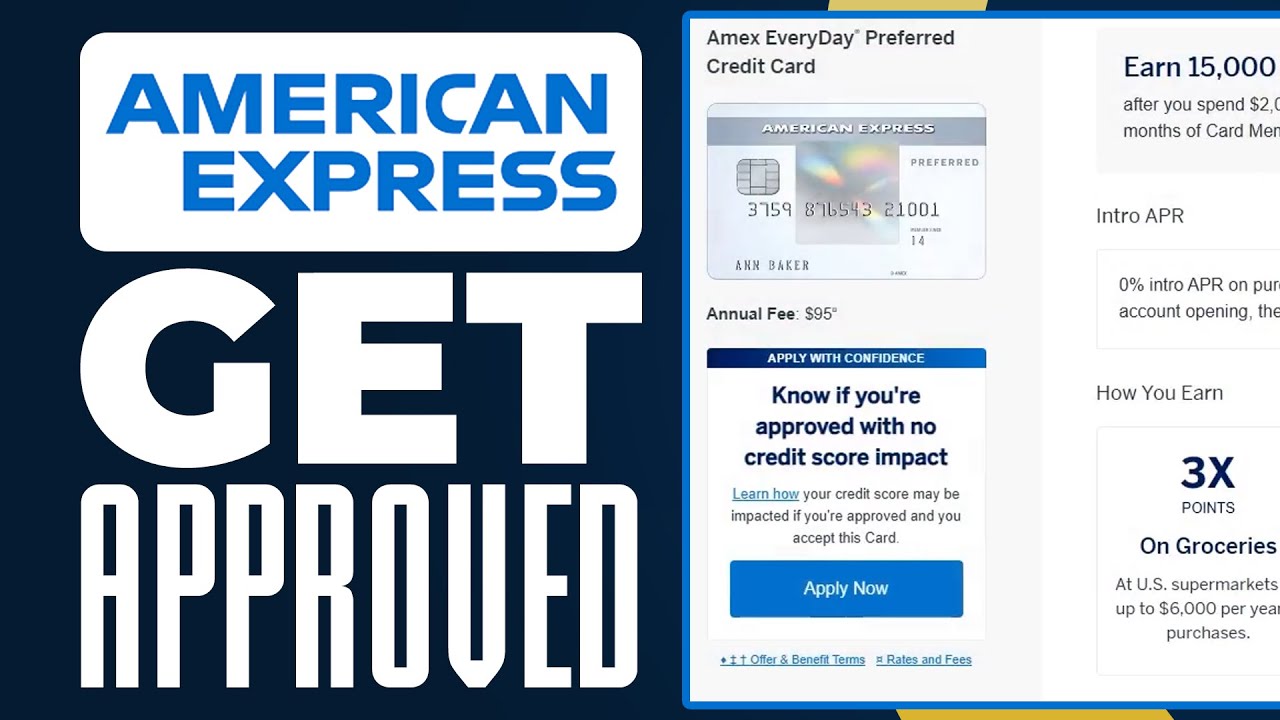
American Express card approval is determined by a combination of your FICO credit score, annual income, and internal "velocity" rules. While premium cards typically require a score of 700 or higher, Amex now offers an "Apply with Confidence" tool that allows most applicants to see if they are approved with a soft credit pull before committing to a hard inquiry.
The landscape of American Express (Amex) approvals has evolved significantly leading into 2026. What was once considered a prestigious, hard-to-reach ecosystem has become more accessible through advanced underwriting technology, yet it remains governed by strict internal policies. To navigate this process successfully, an applicant must understand not just the basic credit requirements, but also the specific algorithmic barriers Amex uses to manage its risk.
The Foundations of Amex Eligibility
At the most basic level, American Express evaluates three primary pillars: creditworthiness, capacity to pay, and relationship history. Unlike some lenders that focus solely on a three-digit score, Amex utilizes a proprietary scoring model that weighs various aspects of your financial profile.
Credit Score Requirements
For most American Express credit and "Pay Over Time" cards (formerly known as charge cards), a "Good" to "Excellent" credit score is necessary. As of 2026, the general benchmarks are:
- Premium Cards (The Platinum Card®, American Express® Gold Card): Typically require a FICO score of 700 to 740+.
- Everyday/Cash Back Cards (Blue Cash Everyday®, Amex EveryDay®): Often accessible with a FICO score in the 670 to 700 range.
- Starter/Student Cards: Occasionally available to those with scores in the mid-600s, provided other factors like income or student status are favorable.
Amex almost exclusively pulls your FICO Score 8 from Experian. While they may occasionally check TransUnion or Equifax, your Experian profile is the most critical component of your application.
Income and Debt-to-Income (DTI) Ratio
American Express is known for being relatively flexible with income, provided it is "stated and accessible." This means you can include personal income, as well as income from a spouse or partner if you have a reasonable expectation of access to it for debt repayment. However, they are sensitive to your Debt-to-Income ratio. If your existing monthly debt obligations (rent/mortgage, car loans, other credit cards) consume more than 40% of your gross monthly income, your chances of approval for a high-limit card diminish.
Understanding the "Apply with Confidence" Process
One of the most significant shifts in the Amex approval process is the "Apply with Confidence" feature. This feature has become the standard for new consumer card applications in 2026.
How the Soft Pull Works
When you submit an application, American Express performs a "soft" credit pull. This allows them to review your credit report without leaving a permanent mark (inquiry) that could lower your score. Within seconds, the system provides a decision. If you are declined, there is no impact on your credit score.
Transitioning to a Hard Inquiry
If you are approved and choose to accept the card, American Express will then perform a "hard" credit pull. This is the point at which the inquiry appears on your Experian report. This system is revolutionary because it removes the "gambling" aspect of credit applications. It is important to note, however, that if you are already an American Express cardholder, they often approve subsequent cards with only a soft pull, even after you accept the card.
Internal Velocity and "Once per Lifetime" Rules
Even with a perfect 850 credit score, you can be denied based on American Express’s internal "velocity" rules. These are automated safeguards designed to prevent "churning" (opening cards solely for bonuses) and to limit the bank's total exposure.
The 1-in-5 and 2-in-90 Rules
- 1-in-5 Rule: You can generally only be approved for one American Express credit card in a 5-day period.
- 2-in-90 Rule: You can generally only be approved for two American Express credit cards within a rolling 90-day window.
- Note on "Pay Over Time" Cards: These rules traditionally applied only to revolving credit cards (like the Blue Cash series). Cards like the Platinum and Gold often fall under different internal limits, but as of 2026, Amex has tightened the integration of these rules across their entire portfolio.
The Total Card Limit
Most users are limited to holding five American Express consumer or business credit cards at one time. Additionally, there is a separate limit for "Pay Over Time" cards, which is generally set at ten. If you are at these limits, you will be denied for a new card regardless of your credit score unless you close an existing account first.
The "Once per Lifetime" Bonus Policy
American Express is famous for its "once per lifetime" rule regarding welcome offers. If you have held a specific card version before, you are usually ineligible for the sign-up bonus on that same card again. In 2026, this has been expanded to "family" rules. For example, if you have or have had the Amex Platinum, you may be ineligible for a welcome bonus on the Amex Gold, as Amex views this as "downgrading" your bonus eligibility within that card family.
Comparison of Approval Difficulty by Card Tier
The following table outlines the typical requirements and features for the most popular American Express cards as of 2026.
| Card Name | Estimated FICO Requirement | Primary Bureau | Difficulty Level | Key Focus for Approval |
|---|---|---|---|---|
| The Platinum Card® | 720+ | Experian | High | High income and clean credit history. |
| American Express® Gold Card | 700+ | Experian | Moderate | Consistent spending and low DTI. |
| Blue Cash Preferred® | 690+ | Experian | Moderate | Good revolving credit utilization. |
| Blue Cash Everyday® | 670+ | Experian | Low | Low to moderate credit history. |
| Amex Green Card® | 690+ | Experian | Moderate | Mix of credit and travel spending history. |
The "Pop-Up Jail" Phenomenon
A unique aspect of the Amex approval process is the "Welcome Offer Eligibility" pop-up. This occurs when you are approved for the card itself, but the system determines you are not eligible for the introductory bonus.
Why Does it Happen?
Amex uses an algorithm to determine if a customer is "profitable." If the system detects that you frequently close cards after a year, have a history of low spending after meeting bonus requirements, or have too many existing Amex accounts, it may trigger the pop-up.
How to Resolve It
If you see this message during the application, your options are to:
- Cancel the application: No hard pull will occur.
- Proceed without the bonus: You get the card, but no welcome points/cash back. To "escape" pop-up jail, experts recommend increasing spending on your current Amex cards and waiting 3-6 months before applying again.
Reconsideration and Manual Review
If your application is not instantly approved or is denied, the process isn't necessarily over. You have the right to request a manual review through the Amex Reconsideration Line.
When to Call
You should call if you were denied for reasons that can be explained, such as:
- A recent spike in credit utilization that has since been paid down.
- Inaccurate information on your credit report.
- Identity verification issues.
- The "Total Card Limit" issue (offering to close an existing card to open the new one).
The reconsideration department has the authority to overturn an automated denial if the applicant can provide context that the algorithm missed. For instance, if your income recently increased but isn't reflected on older tax returns, a manual reviewer can take that into account.
The Risk of Financial Review (FR)
Even after approval, American Express reserves the right to conduct a "Financial Review." This is an intensive audit where Amex freezes your accounts and requests official documentation, such as IRS Form 4506-C, to verify your reported income.
Triggers for Financial Review
- Sudden large purchases: Spending significantly more than your usual pattern.
- Returned payments: A bounced check or failed ACH transfer is a major red flag.
- Rapidly increasing credit limits: Asking for multiple limit increases in a short window.
- High "Pay Over Time" balances: Carrying a large balance relative to your stated income.
Failing to provide the requested documents usually results in the immediate closure of all American Express accounts.
Frequently Asked Questions
Does American Express always do a hard pull?
For new customers, American Express will perform a hard pull only if you are approved and you choose to accept the card. For existing customers, Amex often approves new cards using a soft pull based on the data they already have from your account history, though this is not guaranteed.
Can I get approved for an Amex card with a 650 credit score?
While it is possible, especially for the Blue Cash Everyday® or student versions, it is difficult. You would likely need a very low debt-to-income ratio or a significant history with another banking institution. In 2026, Amex has become slightly more conservative with lower-tier scores due to global economic shifts.
How long should I wait between Amex applications?
To stay safe within the 2-in-90 rule, you should wait at least 90 days between credit card applications. However, if you are applying for a "Pay Over Time" card (like the Gold) and a credit card (like the Blue Cash), you can sometimes apply for both closer together, though it is generally wiser to wait 30 days to avoid triggering a fraud alert.
What is the easiest Amex card to get?
The Blue Cash Everyday® and the Amex Green Card® are generally considered the most accessible. The Green Card, being a "Pay Over Time" card, focuses more on your ability to pay your monthly balance rather than a long-term revolving credit limit, which can sometimes make the underwriting slightly more lenient for those with shorter credit histories.
Can I have two of the same American Express cards?
Generally, no. Amex typically limits you to one of each specific card product. If you want a second version, you would usually need to have a business version and a personal version of the same brand (e.g., The Business Platinum® and The Platinum Card®).
Final Recommendation for Applicants
Before applying for an American Express card in 2026, your first step should always be to use their official pre-approval or "Apply with Confidence" tool on the American Express website. This provides a risk-free look at your eligibility.
To maximize your chances, ensure your Experian credit report is "clean"—meaning no late payments in the last 24 months and a revolving credit utilization rate below 10%. If you are already a member, maintain high activity on your current cards for at least three months before seeking a new one. This builds "internal score" data, which Amex often values more than the external FICO score itself.