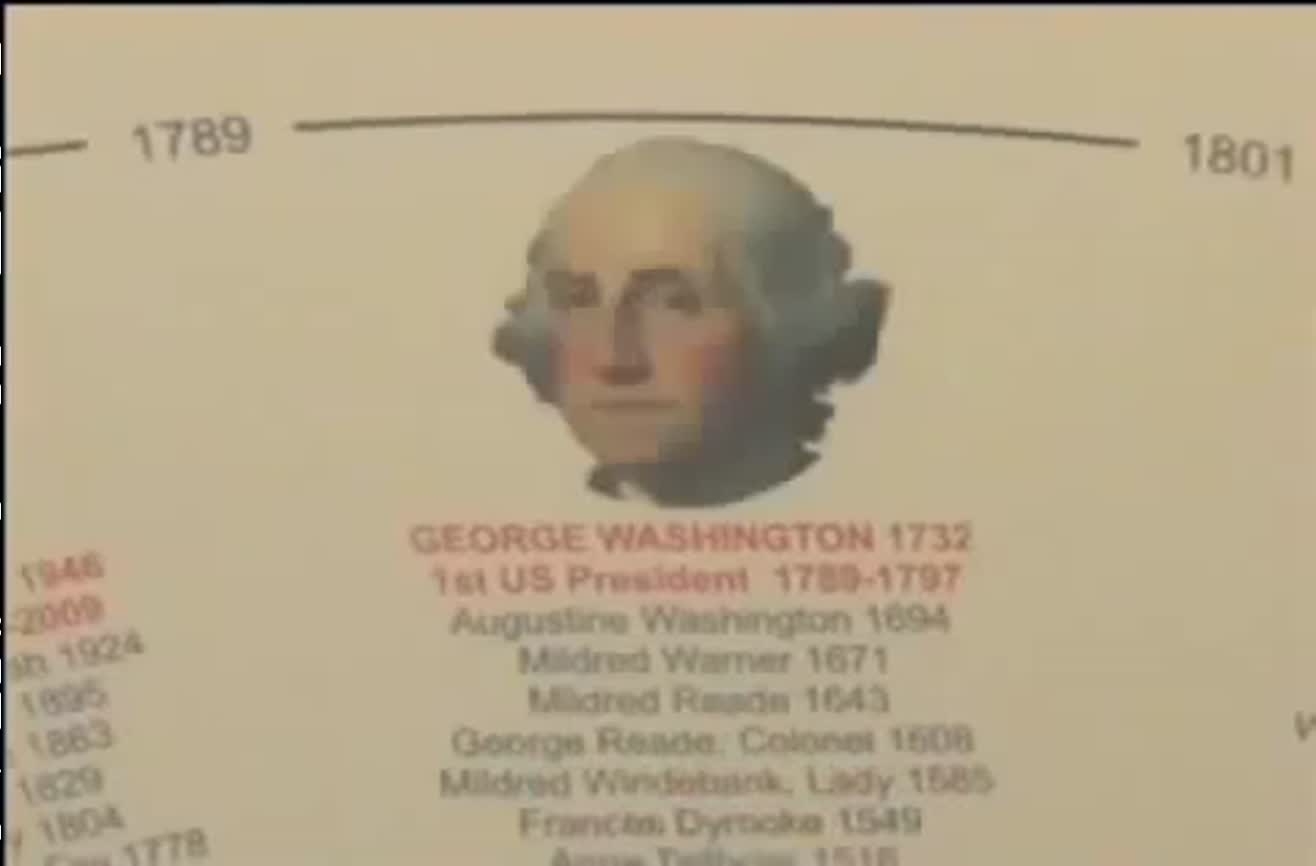
Extensive genealogical research reveals that 45 out of 46 U.S. presidents share a common ancestor in King John of England. This connection, largely facilitated by "gateway ancestors" who migrated to the American colonies, links the executive branch of the United States to the signer of the Magna Carta through centuries of documented lineage.
The concept that the leaders of a democratic republic share a common royal bloodline often strikes observers as a statistical anomaly or a hidden dynastic pattern. However, when viewed through the lens of genealogy and historical migration, the reality is grounded in the mathematics of ancestry and the social stratification of the 17th-century Atlantic world. As of 2026, genomic mapping and digitized parish records have only further solidified these links, confirming that the vast majority of American presidents are distant cousins.
The Genealogical Foundation: How All Roads Lead to King John
The most famous modern study on this subject was popularized by a 12-year-old researcher, BridgeAnne d’Avignon, who spent years tracing the lineages of U.S. presidents. Her findings, which have been peer-reviewed by professional genealogists from the New England Historic Genealogical Society (NEHGS), concluded that nearly every U.S. president—from George Washington to Joe Biden—descends from King John, who ruled England from 1199 to 1216.
King John, often remembered for his conflict with the barons that led to the signing of the Magna Carta, was a prolific ancestor. Like many medieval monarchs, his legitimate and illegitimate offspring married into the high nobility of Europe. Over the course of 800 years, these bloodlines branched out from the royal court into the landed gentry, and eventually, into the professional classes. By the time the American colonies were being settled in the 1600s, many individuals carrying this royal DNA were among the "Gateway Ancestors" who crossed the Atlantic.
The Mathematics of Pedigree Collapse
To understand how 45 presidents can be related to one man, one must understand pedigree collapse. Mathematically, every individual has two parents, four grandparents, and eight great-grandparents. If you trace this back 25 to 30 generations to the era of King John, the theoretical number of ancestors exceeds the total population of the Earth at that time. This paradox is resolved by the fact that ancestors occupy multiple spots on a family tree; people marry distant cousins, often unknowingly.
In the case of the U.S. presidents, most are of predominantly Western European, and specifically British, descent. Given that King John lived 800 years ago, a significant portion of the population with English roots is likely a descendant. The "presidential" connection is unique only because their lineages are well-documented enough to prove the link, whereas the average person may lack the paper trail to verify their own royal ancestry.
King John and the Magna Carta Legacy
King John "Lackland" is a pivotal figure in both biological and legal history. While he is often portrayed as a villain in the legends of Robin Hood, his involuntary contribution to constitutional law—the Magna Carta—formed the bedrock of the American legal system. The fact that the men who occupied the office of the President are his biological descendants creates a fascinating historical irony.
The Magna Carta established that the king was not above the law, a principle that the Founding Fathers, many of whom were descendants of the very barons who stood against John, enshrined in the U.S. Constitution. Therefore, the presidential link to King John is not just one of DNA, but one of a shared political evolution that transitioned from absolute monarchy to a balanced republic.
Gateway Ancestors: The Bridge Between Royalty and the White House
The primary reason so many presidents share this royal link is the presence of "Gateway Ancestors." These were early American colonists who had proven descents from royalty or the high nobility. In the 17th century, younger sons of the English gentry, who would not inherit the family estate due to primogeniture, often sought their fortunes in the New World.
These individuals brought with them a high level of literacy, social standing, and documented family trees. Because they were part of the colonial elite, their descendants were more likely to enter politics, law, and leadership roles.
Notable Gateway Ancestors for U.S. Presidents:
- Anne Marbury Hutchinson: A famous religious dissenter in the Massachusetts Bay Colony, she is an ancestor to several presidents, including Franklin D. Roosevelt and the Bush family. She descends from Edward I, a grandson of King John.
- Rev. Peter Bulkeley: A founder of Concord, Massachusetts, he provides a royal link for several New England-based presidents.
- Governor Alexander Spotswood: A colonial governor of Virginia who provided a link for Southern presidential lineages.
Profiles of Presidential Lineages
While the claim covers 45 presidents, the proximity of the relationship varies. Some presidents have a very direct and easily traceable line, while others require more complex genealogical navigation.
The Virginia Dynasty: Washington and Jefferson
George Washington’s lineage to King John is well-documented through his ancestor, Lawrence Washington, who was a member of the English gentry. Thomas Jefferson, despite his radical democratic views, was a descendant of the English nobility through his mother, Jane Randolph. The Randolph family was one of the "First Families of Virginia," with multiple lines leading back to the Plantagenet kings, including King John.
The Adams and Roosevelt Families
The Adams family (John and John Quincy) and the Roosevelts (Theodore and Franklin) represent the Northern "aristocracy." Their trees are filled with early Puritan settlers who held royal charters. Franklin D. Roosevelt, in particular, was related to a total of 11 other presidents by blood and 5 by marriage, illustrating how tightly knit these genealogical circles were.
Modern Presidents: Obama and the Bushes
One of the most publicized genealogical facts of the 21st century was the discovery that George W. Bush and Barack Obama are 10th cousins. They share a common ancestor in Samuel Hinkley of Cape Cod, who lived in the 17th century. Tracing the Hinkley and related lines further back leads directly to the same medieval English royal stock, specifically the lineage of King John.
The Recent Era: Biden and Trump
As of 2026, research continues into the most recent occupants of the Oval Office. President Joe Biden’s ancestry is largely Irish, but several of his maternal lines (the Finnegans and Blewitts) have been linked back to Anglo-Norman settlers in Ireland who were descendants of the original followers of King John during the 12th-century invasions of Ireland. Donald Trump’s maternal Scottish ancestry (the MacLeods) also connects to the Scottish and English royalty, as the Highland clans frequently intermarried with the nobility who shared common ancestors with the English crown.
The Exception: Martin Van Buren
For a long time, Martin Van Buren (the 8th President) was considered the sole exception to the "King John" rule. Van Buren was the first president born a U.S. citizen, and his primary language was Dutch. His ancestry was almost entirely Dutch, stemming from the New Netherland settlements.
Because his family tree did not pass through the English "Gateway Ancestors" typical of the other presidents, researchers initially found no link to King John. However, in more recent genealogical assessments, some researchers have argued that through distant maternal Dutch-noble lines, even Van Buren may have a tenuous link to the wider European royalty that intersects with the House of Plantagenet. Nevertheless, in the context of the "45 out of 46" statistic, Van Buren remains the primary outlier.
Comparison of Presidential Ancestry and Royal Links
| President | Common Royal Ancestor | Gateway Ancestor(s) | Primary Lineage Origin |
|---|---|---|---|
| George Washington | King John / Edward III | Lawrence Washington | England (Gentry) |
| Thomas Jefferson | King John / Edward I | Jane Randolph | England (Virginia Elite) |
| Franklin D. Roosevelt | King John | Anne Hutchinson | England / Netherlands |
| George W. Bush | King John | Henry Sherman | England (New England) |
| Barack Obama | King John | Edward FitzRandolph | England (via Kansas) |
| Joe Biden | King John | Anglo-Norman settlers | Ireland / England |
| Martin Van Buren | Uncertain / None | None (Dutch origin) | Netherlands |
Challenges in Verifying Ancient Lineages
While the claim that 45 presidents are related to King John is widely accepted by genealogical societies, it is important to distinguish between "proven" and "probable" lineages. Genealogy prior to the 1500s often relies on land records and heraldry rather than birth certificates.
- Non-Paternity Events (NPEs): Over 800 years, there is a statistical likelihood of "breaks" in the biological chain where the legal father is not the biological father. DNA testing on ancient remains is helping to verify these lines, but some uncertainty always remains.
- Documentation Gaps: The "Dark Ages" of genealogy (the period between the fall of Rome and the High Middle Ages) make it difficult to go much further back than the 11th century with absolute certainty. King John, however, sits safely within the well-documented era of English royalty.
- The "Royal" Label: Being a descendant of a king does not imply "royal blood" in a biological sense that differs from anyone else. It is a matter of documented heritage rather than genetic superiority.
Frequently Asked Questions
Is it a coincidence that so many presidents are related to King John?
It is partially a coincidence and partially a result of social structures. Because most U.S. presidents have British Isles heritage and come from families that were part of the colonial leadership class, they are statistically more likely to be descendants of the English gentry, who in turn were descendants of royalty.
Does this mean the U.S. is a "hidden monarchy"?
No. These relationships are extremely distant, usually in the range of 10th to 25th cousins. At such a distance, the amount of shared DNA is negligible. The connection is a genealogical curiosity rather than a functional political dynasty.
Who is the "Common Ancestor" for all 45 presidents?
While King John is the most cited common ancestor because he is the most recent one that nearly everyone shares, many of these presidents also share earlier ancestors like Charlemagne or William the Conqueror.
How did a 12-year-old girl discover this?
BridgeAnne d’Avignon used the "Burke’s Peerage" and the New England Historic Genealogical Society’s databases to cross-reference thousands of names. Her work was unique because she focused specifically on the "King John" link for every president simultaneously, whereas previous researchers had looked at presidents individually.
Why King John specifically and not a different King?
King John had several children, including his successor Henry III and several illegitimate children who married into various levels of the English nobility. His position in history—right at the start of the era where records became more permanent—makes him a "bottleneck" ancestor for the English-speaking world.
Practical Steps for Tracing Your Own Link
If you have English, Scottish, or Welsh ancestry that dates back to the colonial era, there is a high probability that you are also a distant cousin to the U.S. presidents and a descendant of King John.
- Identify Gateway Ancestors: Search your family tree for individuals who arrived in America before 1700. Cross-reference their names with "The Royal Descents of 900 Immigrants" by Gary Boyd Roberts.
- Use Digitized Records: Platforms like Ancestry.com and FamilySearch.org have digitized millions of parish records that can help bridge the gap between 1800 and 1600.
- DNA Testing: While autosomal DNA (like 23andMe) is only effective for the last 5-7 generations, Y-DNA and mtDNA tests can help verify deep ancestral haplogroups that align with known royal lineages.
- Consult Genealogical Societies: The Order of the Crown of Charlemagne or the Baronial Order of Magna Charta maintain extensive records of proven lineages for those seeking to verify a royal connection.
Understanding the presidential connection to King John provides a unique window into the interconnectedness of history. It reminds us that the leaders of the past and present are often part of a much larger, more complex human tapestry than their individual biographies suggest.