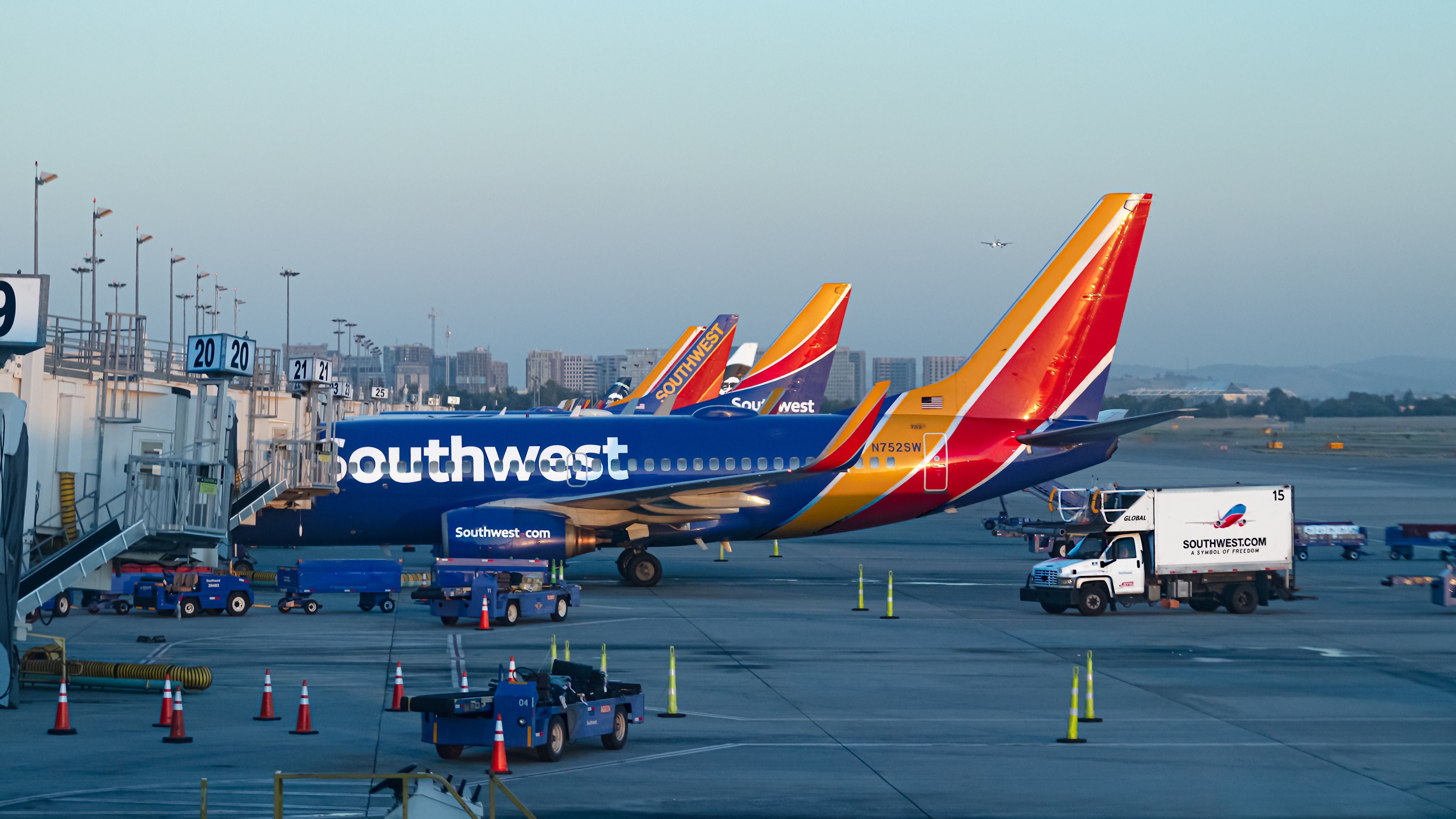
As of 2026, over 100 airlines worldwide operate the Boeing 737 MAX family, including major carriers like Southwest Airlines, United Airlines, Ryanair, American Airlines, and Alaska Airlines. These operators utilize the aircraft's advanced fuel efficiency and extended range to service a mix of high-frequency domestic routes and competitive international short-haul markets.
The Boeing 737 MAX has become one of the most scrutinized yet essential narrow-body aircraft in modern aviation. Following its global grounding and subsequent recertification, the aircraft has seen a massive resurgence in deliveries and order fulfillment. By 2026, the fleet has expanded to include four primary variants: the MAX 7, MAX 8 (including the 8-200), MAX 9, and the large-capacity MAX 10. Understanding which airlines operate these aircraft is vital for passengers who prioritize specific cabin experiences or wish to stay informed about the equipment used on their scheduled routes.
Major Operators in North America
North America remains the largest market for the Boeing 737 MAX. The region’s "Big Three" carriers, along with low-cost giants, have integrated the aircraft into the core of their fleet modernization strategies.
Southwest Airlines
Southwest Airlines is the world’s largest operator of the Boeing 737 MAX. Historically a loyal 737 customer, Southwest utilizes the MAX 8 to replace its aging 737-700 fleet. As of 2026, the airline has hundreds of MAX 8 aircraft in active service and is the primary launch customer for the smaller MAX 7 variant. Southwest leverages the MAX’s improved range to operate longer "long-thin" routes, such as those connecting the U.S. mainland to Hawaii, which were previously less economical with older generation aircraft.
United Airlines
United Airlines has one of the most diverse MAX fleets, operating the MAX 8, MAX 9, and the highly anticipated MAX 10. Under the "United Next" initiative, the carrier has transitioned away from smaller regional jets in favor of larger narrow-body aircraft like the MAX. United’s MAX fleet is often equipped with their "Signature Interior," which includes Bluetooth connectivity at every seat, larger overhead bins, and high-definition seatback entertainment—features that distinguish their MAX experience from some of their low-cost competitors.
American Airlines
American Airlines was the first U.S. carrier to return the 737 MAX to service in late 2020. Their fleet primarily consists of the MAX 8. Unlike United, American opted for a "high-density" cabin configuration without seatback screens, relying instead on high-speed Wi-Fi and streaming to personal devices. This configuration allows for operational flexibility across their vast domestic and Caribbean network.
Alaska Airlines
Alaska Airlines significantly increased its commitment to the 737 MAX following the retirement of its Airbus A320-family fleet (acquired through the Virgin America merger). Alaska operates the MAX 8, MAX 9, and MAX 10. Despite the 2024 operational challenges regarding the MAX 9 door plug incident, Alaska has maintained the MAX as its primary growth vehicle, praising the aircraft’s fuel efficiency on transcontinental routes from the Pacific Northwest.
European Operators and the "Gamechanger"
In Europe, the Boeing 737 MAX has enabled low-cost carriers (LCCs) to expand their footprints while significantly reducing carbon emissions per seat.
Ryanair Group
Ryanair, including its subsidiaries Buzz, Malta Air, and Ryanair UK, refers to its high-capacity MAX 8-200 variant as the "Gamechanger." This specific version features an extra pair of exit doors, allowing for 197 seats—eight more than a standard MAX 8. Ryanair utilizes this density to lower unit costs, passing the savings to passengers via lower fares. By 2026, Ryanair operates several hundred of these aircraft, making them the largest MAX operator in Europe.
TUI Group
TUI operates the MAX 8 across its various European branches, including TUI Airways (UK) and TUI fly (Germany/Netherlands/Belgium). For a leisure carrier, the MAX 8 is ideal for reaching distant holiday destinations like the Cape Verde Islands or the Canary Islands from Northern Europe without the need for a fuel stop.
Norwegian Air Shuttle
After a significant restructuring, Norwegian emerged with a simplified fleet focused on the 737-800 and the 737 MAX 8. The airline uses the MAX to bolster its presence in the Nordics, serving both domestic "commuter" routes and seasonal Mediterranean routes where the MAX’s performance in hot-and-high conditions is an advantage.
Growth in the Asia-Pacific and Middle East Regions
The Asia-Pacific region represents the fastest-growing market for narrow-body aircraft, with the 737 MAX playing a central role in both established and startup airlines.
Air India and Akasa Air
The Indian market has seen a massive influx of 737 MAX aircraft. Air India, under the ownership of the Tata Group, placed a historic order that included 190 MAX aircraft to revitalize its domestic and regional operations. Meanwhile, Akasa Air, a newer entrant, has built its entire business model around the MAX 8 and the high-capacity 8-200, aiming to capture the burgeoning middle-class travel segment in India.
Lion Air Group
Based in Indonesia, Lion Air was one of the earliest adopters of the MAX family. Despite the tragic events of 2018, the airline has continued to integrate the MAX 8 and MAX 9 into its massive regional network, which spans Indonesia, Malaysia (via Batik Air Malaysia), and Thailand. The aircraft is essential for connecting the diverse archipelago of Indonesia where airport infrastructure varies.
Flydubai
In the Middle East, Flydubai operates a large fleet of MAX 8 and MAX 9 aircraft. Operating out of Dubai International (DXB), the airline uses the MAX's extended range to reach destinations as far as Prague and Pattaya. Flydubai’s MAX aircraft are notable for featuring lie-flat beds in Business Class, proving that the narrow-body MAX can compete with wide-body comfort on medium-haul routes.
Latin American and African Operators
The 737 MAX has allowed Latin American carriers to bypass traditional hubs, connecting secondary cities directly to North American destinations.
- Copa Airlines (Panama): Known as the "Hub of the Americas," Copa uses the MAX 9 to fly from Panama City to deep South America and North America. Their MAX 9s feature the "Dreams" Business Class with lie-flat seats.
- GOL Linhas Aéreas (Brazil): GOL has shifted its focus to the MAX 8 to reduce operating costs and increase its range for non-stop flights from Brasília to Florida.
- Ethiopian Airlines: As the leading carrier in Africa, Ethiopian Airlines operates the MAX 8. Following extensive safety reviews and pilot training enhancements, the airline has successfully reintegrated the MAX into its pan-African network.
Comparison of Boeing 737 MAX Variants and Major Operators
The following table outlines the technical distinctions and the primary airlines currently operating each variant as of 2026.
| Variant | Typical Seating (2-class) | Maximum Range | Key Operators (2026) | Primary Use Case |
|---|---|---|---|---|
| 737 MAX 7 | 138 - 153 | 3,800 nmi | Southwest, Allegiant Air | Long-distance, low-demand routes; high-altitude airports. |
| 737 MAX 8 | 162 - 178 | 3,500 nmi | American, Southwest, Air India, Ethiopian | The versatile backbone of most narrow-body fleets. |
| 737 MAX 8-200 | 197 (High Density) | 3,500 nmi | Ryanair, Akasa Air, VietJet | Ultra-low-cost carrier (ULCC) high-frequency routes. |
| 737 MAX 9 | 178 - 193 | 3,250 nmi | United, Alaska, Copa, Flydubai | High-capacity domestic and medium-haul regional routes. |
| 737 MAX 10 | 188 - 204 | 3,100 nmi | United, Delta, Vietnam Airlines | High-density trunk routes; competition for the A321neo. |
Technical Evolution and Safety Systems
The Boeing 737 MAX represents a significant leap in technology from the 737 Next Generation (NG) series. The most notable change is the use of CFM International LEAP-1B engines. These engines feature larger fan diameters and advanced carbon-fiber blades, contributing to a 14% to 20% reduction in fuel consumption and CO2 emissions compared to previous models.
To accommodate these larger engines, Boeing had to mount them further forward and higher on the wing. This change in aerodynamics led to the development of the Maneuvering Characteristics Augmentation System (MCAS). Following the global grounding in 2019, MCAS underwent a complete redesign. In 2026, the system relies on dual Angle of Attack (AoA) sensors, includes "sanity checks" to prevent erroneous activation, and can be easily overridden by pilots using standard flight control inputs. These updates, mandated by the FAA and EASA, remain the standard for all aircraft in service.
Furthermore, the aircraft features the Boeing Sky Interior, which uses LED lighting to create a sense of spaciousness and includes sculpted sidewalls. The redesigned "Advanced Technology" winglets also improve lift-to-drag ratios, particularly during the climb phase of flight, further enhancing efficiency for the operators listed above.
Passenger Experience and How to Identify the MAX
For many travelers, knowing whether they are on a 737 MAX is a matter of interest or preference. While airlines are required to disclose the aircraft type during the booking process, tail-swaps can occur.
- Check the Safety Card: The most definitive way to identify the aircraft once onboard is to check the safety briefing card in the seatback pocket; it will clearly state "737 MAX" or a specific variant like "737-8" or "737-9."
- Examine the Winglets: The 737 MAX features distinct "split-scimitar" style winglets where the wingtip splits into two V-shaped components (one pointing up, one pointing down). While some older 737 NGs have been retrofitted with similar winglets, the MAX version is more aerodynamically integrated.
- Engine Exhaust: The rear of the engine nacelles on the 737 MAX has a "chevron" or sawtooth pattern. This design is intended to reduce engine noise, making the cabin significantly quieter than older narrow-body jets.
- Flight Deck Displays: The MAX features four large 15-inch high-resolution displays, similar to those found on the Boeing 787 Dreamliner, replacing the smaller, more numerous screens of the 737 NG.
Frequently Asked Questions
Which airline has the most Boeing 737 MAX aircraft?
As of 2026, Southwest Airlines holds the largest fleet of Boeing 737 MAX aircraft. They have committed to the MAX 8 and MAX 7 as the future of their point-to-point network in North America. Ryanair follows closely in Europe with its massive fleet of MAX 8-200 "Gamechangers."
Is the Boeing 737 MAX safe to fly in 2026?
Yes. Following the most rigorous recertification process in aviation history, the 737 MAX has logged millions of flight hours since returning to service in late 2020. Regulators worldwide, including the FAA, EASA, and CAAC, have cleared the aircraft for operation. The 2024 Alaska Airlines incident led to further secondary inspections and manufacturing quality oversight by Boeing and the FAA to ensure structural integrity across the fleet.
What is the difference between a 737-8 and a 737 MAX 8?
They are the same aircraft. Many airlines rebranded the aircraft in their booking systems following the grounding. You may see "737-8," "737-9," or "737-10" listed in flight schedules instead of the "MAX" branding. This nomenclature aligns with the traditional naming conventions used for the 737-800 or 737-900.
Does Delta Air Lines fly the 737 MAX?
Delta Air Lines was the last of the major U.S. carriers to order the 737 MAX. By 2026, Delta has begun taking deliveries of the 737 MAX 10, the largest variant in the family. They use these aircraft primarily on high-capacity domestic routes between their major hubs like Atlanta (ATL), Minneapolis (MSP), and Salt Lake City (SLC).
Which airlines use the 737 MAX for long-haul flights?
While the MAX is a narrow-body aircraft, its range allows for "long-haul" flights under eight hours. Copa Airlines uses it for 7-hour flights across the Americas, Icelandair uses it for transatlantic hops between Reykjavik and the U.S. East Coast, and Flydubai operates it on routes extending from the Middle East into Central Europe and Southeast Asia.
Practical Recommendation for Travelers
If you are planning to fly on a Boeing 737 MAX in 2026, it is advisable to check the specific airline's cabin configuration. Because the MAX is used by both ultra-low-cost carriers like Ryanair and full-service airlines like United, the experience varies significantly. For longer flights, look for airlines like United, Flydubai, or Copa, which often provide enhanced amenities such as seatback entertainment, power outlets, or lie-flat seats in premium cabins. If you are flying with a low-cost carrier, be prepared for higher-density seating and ensure you have downloaded entertainment to your own device.