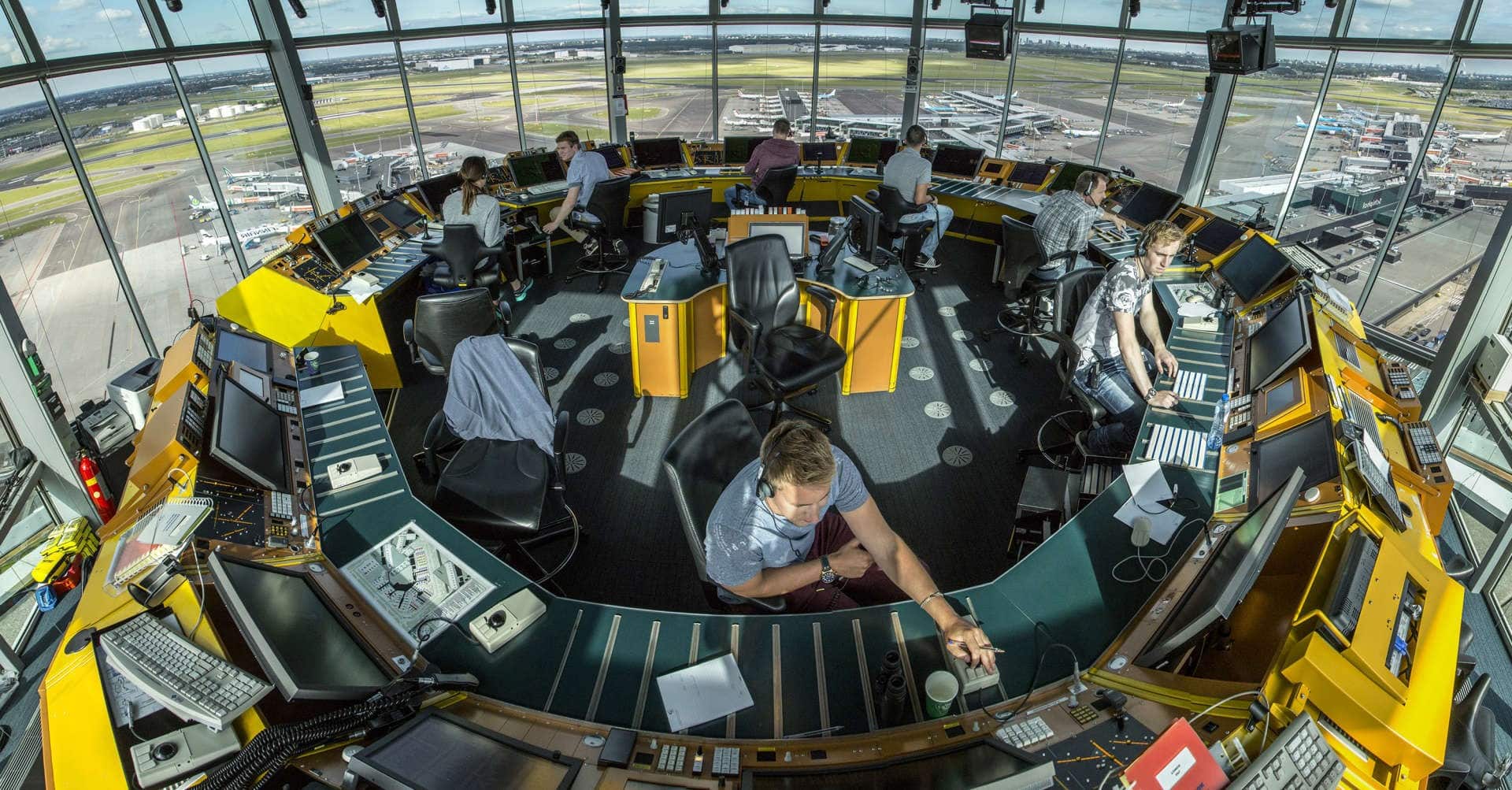
An air traffic controller walk out, or a coordinated industrial action by essential aviation personnel, results in immediate, cascading operational disruptions characterized by severe capacity restrictions, widespread flight cancellations, and significant safety-mitigation protocols. These events force the implementation of Ground Stop programs and drastically reduced flow-control rates, effectively paralyzing the National Airspace System (NAS) and international transit corridors.
The Anatomy of Air Traffic Control and System Dependency
Air Traffic Control (ATC) is a high-stakes, safety-critical function that serves as the backbone of the global aviation industry. Controllers are responsible for maintaining separation between aircraft, managing flow into and out of airports, and directing traffic through en route centers. Because this system is calibrated for continuous, 24/7 operation with precise staffing ratios, it possesses very little "slack."
When a significant portion of the workforce engages in a walk out, the fundamental mechanism of the airspace—separation—is compromised. Unlike many other sectors, ATC cannot be easily automated or managed by temporary, non-certified personnel due to the intense technical requirements and regulatory certifications mandated by civil aviation authorities. An absence of qualified staff necessitates a move from "normal" operation to "emergency" operation, where the only priority becomes the safe landing of airborne aircraft, with all subsequent departures suspended.
Operational Implications: The Immediate Aftermath
The operational impact of an ATC walk out follows a predictable but devastating pattern. The moment controllers are removed from their stations, the following cascade occurs:
- The Immediate Freeze: The primary action taken by remaining personnel and management is the implementation of an immediate Ground Stop (GS). This prohibits any departures from airports within the affected jurisdiction.
- Reduced Flow Control: En route centers, which manage aircraft currently in the air, must immediately increase separation requirements. Standard separation minimums are drastically expanded to reduce the workload per controller, which effectively halves or quarters the throughput of an airspace sector.
- Emergency Diversions: Airborne aircraft that cannot hold due to fuel limitations or weather must be diverted to secondary airports. This places an outsized, localized load on airports that may not have the infrastructure or staffing to accommodate long-haul or high-density traffic.
- Maintenance of Separation: The primary directive for remaining controllers shifts from "efficient flow" to "collision avoidance." This means speed restrictions, forced holding patterns, and altitude adjustments that prioritize safety over arrival schedules, resulting in massive systemic congestion.
The Regulatory and Legal Framework of Industrial Action
In most jurisdictions, air traffic controllers are classified as essential workers. In the United States, for instance, federal law—specifically Title 5 of the U.S. Code—prohibits federal employees from participating in strikes. Historically, the 1981 PATCO (Professional Air Traffic Controllers Organization) strike serves as the definitive reference point for the legal and operational consequences of such actions.
When a walk out occurs, the government authority (such as the Federal Aviation Administration in the U.S. or equivalent national providers elsewhere) is empowered to invoke emergency powers. These powers often include the decertification of the workforce, the mobilization of military air traffic controllers to assist in essential operations, and the permanent termination of employees who fail to report to their duty stations. The operational implication here is a transition from a civilian-led operation to an emergency, military-coordinated operation, which further reduces capacity because military protocols are not optimized for the high-volume throughput of civilian air travel.
Impact on Airlines and Global Supply Chains
The airlines themselves are the immediate victims of the resulting airspace congestion. Their operational models rely on "hub-and-spoke" systems, where a single delay in one region ripples through the entire network.
- Asset Misplacement: Aircraft, crew, and passengers become "out of position." When an aircraft is grounded at a non-hub location due to an ATC walk out, it creates a delay cycle that can take days or weeks to reset.
- Crew Duty Time Limits: Aviation regulations strictly govern the number of hours a pilot or flight attendant can remain on duty. When aircraft are trapped in holding patterns or delayed on the tarmac, crews frequently "time out," requiring the airline to source replacement crews who are also likely displaced.
- Financial Exposure: Airlines face compounding costs: fuel burn during holding patterns, passenger compensation for delays and cancellations, rebooking expenses, and significant revenue loss from grounded fleets.
Technical and Safety Mitigation Strategies
During a walk out, the remaining operational infrastructure must rely on reduced-capacity protocols. These are not intended to sustain business as usual but to prevent mid-air collisions.
| Mitigation Strategy | Operational Impact | Purpose |
|---|---|---|
| Ground Stop (GS) | High | Prevents further congestion by halting all departures. |
| Ground Delay Program (GDP) | Moderate | Manages the rate of flow into specific, congested airports. |
| Increased En Route Spacing | Critical | Mitigates the inability of fewer controllers to manage standard traffic density. |
| Sector Consolidation | Moderate | Merging multiple flight sectors into one to accommodate lower staffing levels. |
| Military Assistance | Low/Variable | Utilizes military personnel to manage only the most essential flight paths. |
Long-Term Systemic Risks and Recovery
The recovery period following an ATC walk out is significantly longer than the event itself. Even after staffing returns to nominal levels, the "system flush"—clearing the backlog of grounded aircraft and returning displaced crews to their origin points—can take upwards of 72 to 96 hours.
Furthermore, the loss of experienced personnel—even temporarily—creates a "proficiency gap." Controllers require constant, active oversight to maintain their ratings. An extended absence requires a period of retraining and certification validation before those controllers can safely resume duties at high-volume facilities. This means that the operational capacity of the airspace is not immediately restored to pre-walkout levels even after the personnel have returned to their posts.
Addressing Passenger and Logistics Uncertainty
For the traveling public and freight logistics providers, the implications center on total lack of predictability. The "First-In, First-Out" logic of aviation scheduling is superseded by the "Emergency Priority" logic of air traffic management.
- Communication Breakdowns: During a walk out, airport information systems are often overwhelmed. Standard flight-tracking data (like ADS-B information) may become misleading, as the live-time adjustments made by controllers to manage separation are not immediately reflected in consumer-facing apps.
- Infrastructure Strain: Airports suffer from terminal overcrowding. When departures are frozen, the capacity of security screening areas and departure lounges is exceeded, leading to safety concerns within the airport terminal itself.
- Logistics Bottlenecks: Air cargo operations, which often fly in the "dead" hours of the night to avoid peak passenger traffic, are often the first to be deprioritized by ATC. This results in significant delays for time-sensitive supply chains, particularly for medical supplies and perishables that rely on air transit.
Frequently Asked Questions
Why can’t other countries just take over the air traffic control duties? Airspace is sovereign. Each nation is responsible for the safety of the aircraft within its Flight Information Region (FIR). While international cooperation exists for hand-offs, no foreign authority has the legal standing or the specific technical data links to manage another nation’s internal airspace.
Does a walk out affect flights that are currently in the air? Yes. Aircraft already in the air are the highest priority. They are not forced to land instantly, but they are often diverted to the nearest suitable airport or placed in extended holding patterns until space is cleared for a safe arrival.
How does the military assist during an ATC walk out? Military controllers are trained in similar systems, but they lack the familiarity with high-density, civilian-specific terminal procedures. They are primarily used to keep basic corridors open for emergency, medical, and national security flights.
Can modern automation mitigate the impact of an ATC walk out? Current NextGen and SESAR (Single European Sky ATM Research) technologies provide tools for efficiency, but they do not replace human judgment. Automation requires human "management by exception." Without the human layer to oversee and override the system, the automation itself is often programmed to shut down or revert to a "safe/restricted" state.
How long does it take for air traffic to return to normal after a walk out ends? It is rarely an "on-off" switch. It usually involves a staggered return to service, starting with essential flights and gradually increasing capacity. Complete system normalization usually occurs over several days to allow for crew repositioning and equipment alignment.
Guidance for Operational Continuity
For organizations reliant on air logistics, the primary advice during an ATC walk out is to shift immediately to ground-based alternatives. Airspace capacity is a finite, volatile resource during these events; assuming that a flight will eventually be cleared is a high-risk strategy. Logistics providers should prioritize ground-based freight and maritime or rail alternatives immediately upon the declaration of a disruption.
For passengers, the best course of action is to avoid the airport environment entirely until the official status of the aviation authority confirms a return to normal flow. Following the instructions of the airline for automated rebooking, rather than attempting to queue at a service desk, is the most efficient way to manage personal travel disruptions.