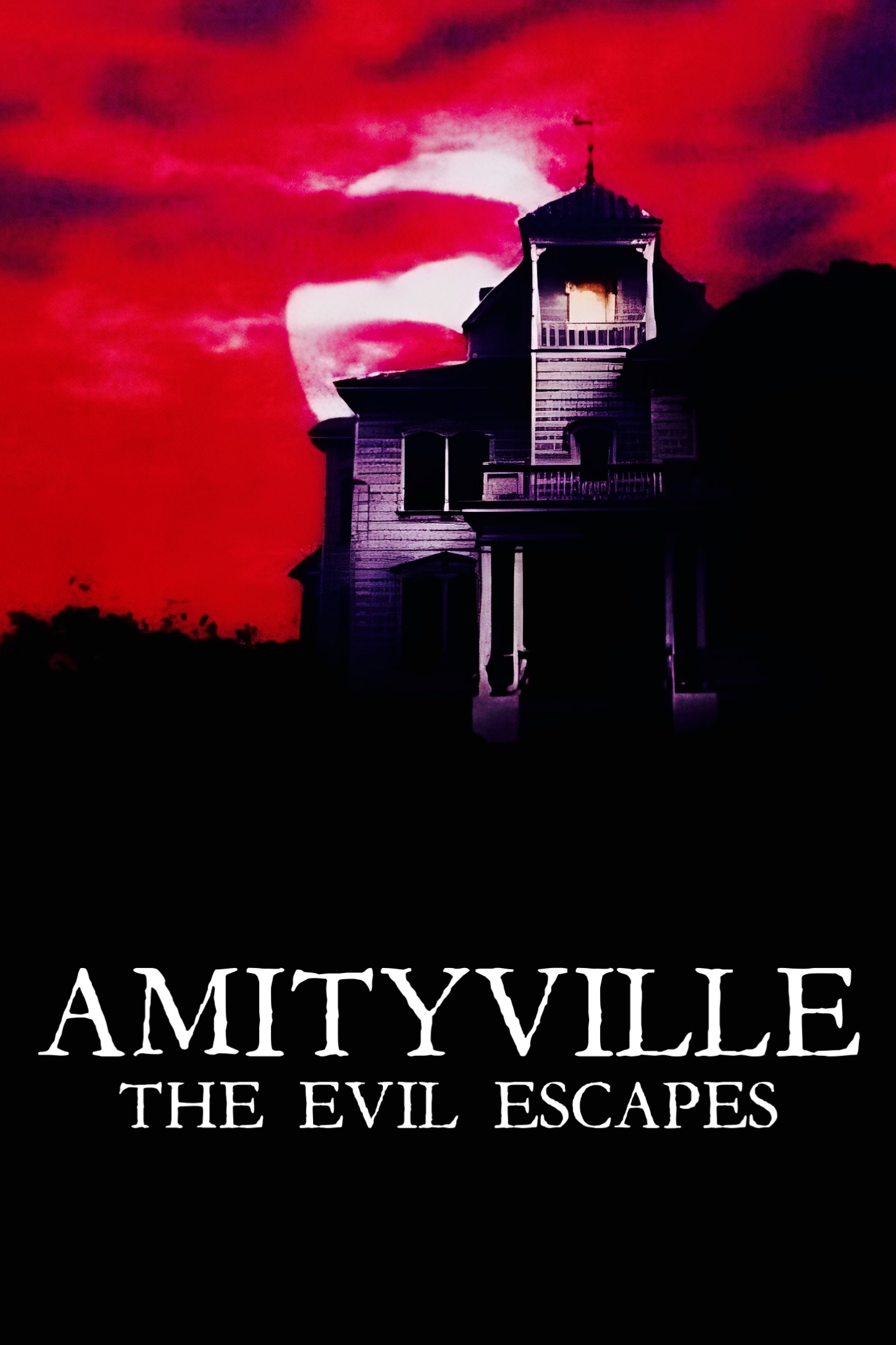
Amityville 4: The Evil Escapes is a 1989 supernatural horror film that serves as the fourth installment in the Amityville franchise. Originally produced as a television movie for NBC, it follows the demonic entity of the infamous Amityville house as it possesses a floor lamp and terrorizes a family in California.
The Amityville franchise is one of the longest-running and most prolific series in horror cinema history. While the original 1979 film and its immediate sequels focused heavily on the physical structure of the house at 112 Ocean Avenue, the fourth entry took a bold, albeit controversial, step by detaching the haunting from the location. As of 2026, Amityville 4: The Evil Escapes remains a fascinating study in 1980s television horror, known for its creative practical effects and its shift toward "possessed object" tropes.
The Evolution of the Amityville Franchise
To understand the significance of the fourth film, one must look at the state of the franchise in the late 1980s. After the commercial success of the original film and its prequel (Amityville II: The Possession), and the 3D experimentation of the third film (Amityville 3-D), the brand was at a crossroads. The legal rights to the "Amityville" name were becoming complex, leading to a split between films based on the "true" accounts and those exploring fictionalized supernatural elements.
Amityville 4: The Evil Escapes was based on the book of the same name by John G. Jones. Jones had positioned himself as a chronicler of the Lutz family's experiences after they fled the house. By moving the narrative to a television format, the producers were able to reach a broader audience, though this necessitated a tone that adhered to broadcast standards of the time. This resulted in a film that relied more on atmospheric dread and suspense than the gore seen in its predecessors.
The Return of Sandor Stern
A pivotal element of this production was the return of Sandor Stern. Stern was the screenwriter responsible for the 1979 original film, which remains the gold standard for the franchise. His involvement as both the writer and director of the fourth installment provided a sense of legitimacy and continuity that fans appreciated. Stern’s approach was to treat the supernatural entity as an adaptable force, suggesting that the "evil" was not merely a haunting but a sentient malevolence capable of migration.
Detailed Narrative Synopsis: The Curse Moves West
The film begins with a religious ritual at the abandoned Amityville house. A group of priests attempts to exorcise the lingering spirits, but the malevolence manages to find a vessel. It inhabits a grotesque, ornate floor lamp located in the house. During an estate sale shortly thereafter, the lamp is purchased by Helen Ramsey (played by Alice Hirson) as a joke gift for her sister in California.
The Arrival in California
The scene shifts to a coastal home in California, where Alice (Jane Wyatt) lives with her daughter, Nancy (Patty Duke), and Nancy's three children. The arrival of the lamp coincides with a series of increasingly bizarre and dangerous incidents. Unlike the previous films where the house itself was the antagonist, the horror in Amityville 4 is localized to the object.
The entity within the lamp begins to manipulate the household’s electricity and plumbing. One of the most famous sequences involves the youngest daughter, Jessica, who begins to believe the lamp is her deceased father. This psychological manipulation is a hallmark of the Amityville series, where the entity preys on the emotional vulnerabilities of the family members.
Escalation of Horror
As the film progresses, the manifestations become more physical. The family's pets exhibit erratic behavior, and the household appliances become lethal. A notable scene involves a plumber who suffers a horrific accident involving the garbage disposal—a sequence that pushed the boundaries of what was typically allowed on network television in 1989.
The climax involves the realization that the lamp is the source of the evil. The family must fight against the supernatural forces and the "possessed" patriarch figure to destroy the object before it can claim their lives. The resolution ties back to the religious themes established in the opening, emphasizing that while the object may be destroyed, the essence of the evil is difficult to truly extinguish.
Key Personnel: Cast and Crew Insights
The film benefited significantly from its veteran cast, which elevated the material above standard "movie of the week" fare.
- Patty Duke (Nancy Evans): An Academy Award winner, Duke brought a level of gravitas to the role of the protective mother. Her performance provides a grounded emotional center, making the outlandish premise of a "haunted lamp" feel more palpable.
- Jane Wyatt (Alice): Known for her role in Father Knows Best, Wyatt's presence added a layer of classic Hollywood prestige. Her character’s skepticism and eventual terror mirror the audience’s journey.
- Fredric Lehne (Father Kibbler): Lehne plays the young priest who realizes the danger the family is in. He serves as the bridge between the Amityville origins and the new haunting in California.
- Lou Hancock (Peggy): Hancock provides a memorable turn as the elderly woman who initially sells the lamp, setting the tragedy in motion.
The production design of the lamp itself is worth noting. The prop was designed to look both expensive and subtly repulsive, featuring organic, almost bone-like textures that hinted at its demonic possession even before the supernatural events began.
The "Evil Lamp" Phenomenon: Analyzing Horror Tropes
While critics at the time sometimes mocked the idea of a possessed floor lamp, Amityville 4: The Evil Escapes tapped into a long tradition of "haunted object" horror. This subgenre explores the idea that evil can be contained within the mundane items that fill our homes, making the familiar feel dangerous.
The Concept of the Vessel
In demonology and folklore, spirits are often said to inhabit objects when they lack a human host. By choosing a lamp, the film plays with light and shadow—essential elements of cinematography. The lamp doesn't just sit in the corner; it pulses, dims, and flares, acting as a visual representation of the demon’s heartbeat. This allowed the filmmakers to create tension without the need for high-budget CGI, relying instead on practical lighting effects and sound design.
Comparison to Other "Object Horror"
The late 80s and early 90s saw a surge in this trope. Films like The Mangler (a possessed laundry press) and Child's Play (a possessed doll) were contemporary to the later Amityville sequels. Amityville 4 was a pioneer in moving the franchise into this "anthology-style" direction, where subsequent films would feature a haunted clock, a haunted mirror, and even a haunted dollhouse.
Production History and TV Movie Constraints
Producing a horror film for NBC in 1989 meant working within strict "Standards and Practices" guidelines. This influenced the film in several ways:
- Pacing: The film was structured with commercial breaks in mind, leading to "mini-cliffhangers" every 12 to 15 minutes.
- Visual Language: Direct gore was minimized in favor of "implied" violence. For instance, the garbage disposal scene relies heavily on sound effects and the actors' reactions rather than showing the mechanics of the injury.
- Thematic Safety: The film emphasizes the power of faith and family unity, a common requirement for television movies aimed at a general audience.
Despite these constraints, Sandor Stern managed to maintain a gloomy, oppressive atmosphere. The cinematography by Nico Masterakis used wide angles and low lighting to make the sprawling California house feel as claustrophobic as the original Long Island home.
Technical Specifications and Comparative Analysis
When comparing Amityville 4 to its predecessors, it is clear that the shift to television changed the production's scale but not necessarily its impact.
| Feature | Amityville Horror (1979) | Amityville II (1982) | Amityville 3-D (1983) | Amityville 4 (1989) |
|---|---|---|---|---|
| Primary Setting | 112 Ocean Avenue | 112 Ocean Avenue | 112 Ocean Avenue | California Residence |
| Antagonist | The House/Demons | Demonic Possession | The "Well to Hell" | Possessed Lamp |
| Release Format | Theatrical | Theatrical | Theatrical (3D) | Television (NBC) |
| Director | Stuart Rosenberg | Damiano Damiani | Richard Fleischer | Sandor Stern |
| Rating | R | R | PG | TV-14 (Equivalent) |
As shown in the table, Amityville 4 was the first to break the geographic tether to the original house, a trend that would define the rest of the 1990s direct-to-video sequels.
Critical Analysis and Cultural Impact
Upon its initial broadcast, the film received mixed reviews. Some fans of the original felt that the "lamp" premise was a step down from the atmospheric horror of the first two films. However, in the decades since, its reputation has shifted. Many horror historians now view it as a creative way to keep the franchise alive without repeating the same "family moves into the house" plotline for a fourth time.
The film's legacy is most visible in the cult following it has garnered. It represents a specific era of television history where networks were willing to experiment with high-concept horror. For many who grew up in the 80s, Amityville 4 was an "entry-level" horror experience—scary enough to be memorable but accessible enough to be watched on network TV.
Modern Re-evaluation (2026 Perspective)
In 2026, the film is often discussed in the context of the "Amityville Multiverse." Because the name "Amityville" is in the public domain for titles, there are hundreds of low-budget films using the moniker. Amityville 4: The Evil Escapes stands out as one of the few "official" sequels that had the backing of a major network and featured high-caliber acting talent. It is frequently cited as the point where the franchise transitioned from "true-story" prestige horror to the supernatural object-of-the-week format.
Home Media and Collector Value
For those looking to watch the film today, its availability has been vastly improved by boutique labels. For years, it was only available on low-quality VHS rips or as part of budget DVD "multi-packs."
In recent years, companies like Scream Factory (a division of Shout! Factory) have released restored versions of the film on Blu-ray. these releases often include:
- High-definition transfers from the original film elements.
- Interviews with Sandor Stern and members of the cast.
- Audio commentaries that provide technical insights into the TV movie production process.
Collectors value these editions because they preserve a piece of television history that might otherwise have been lost to the "streaming void." The physical media market in 2026 continues to see high demand for 80s horror titles, with Amityville 4 holding a steady place among franchise completists.
Frequently Asked Questions
Is Amityville 4: The Evil Escapes based on a true story?
No. While the original 1979 film was marketed as being based on the real-life experiences of the Lutz family, Amityville 4 is purely fictional. It is based on a novel by John G. Jones, who wrote several "Amityville" books that moved far beyond the documented events of the 1970s.
Why is the ghost in a lamp?
The narrative justification is that the demonic entity from the original house needed a physical object to inhabit to "escape" the exorcism occurring at the beginning of the film. The lamp was simply the vessel available at the time. This allowed the story to move to a new location while maintaining a link to the original haunting.
Do I need to see the first three movies to understand this one?
Not necessarily. The film opens with a prologue that establishes the evil of the Amityville house. While knowledge of the first film adds context, Amityville 4 functions as a standalone supernatural thriller.
Is the "Amityville house" in the beginning the real house?
The house shown in the prologue is a filming location designed to look like the iconic 112 Ocean Avenue home, specifically featuring the famous "eye windows." It is not the actual house in Long Island, which has been extensively remodeled by various owners over the years to discourage tourists.
How does this film fit into the current Amityville timeline?
The Amityville timeline is notoriously fractured. Amityville 4 is considered part of the "original" sequence of films (1-8). The 2005 remake and the subsequent independent films exist in separate continuities.
Final Recommendation: Should You Watch It?
Amityville 4: The Evil Escapes is a must-watch for fans of 80s nostalgia and franchise completionists. While it lacks the raw terror of the 1979 original, it makes up for it with a quirky premise, solid performances from Patty Duke and Jane Wyatt, and the creative direction of Sandor Stern.
If you enjoy "haunted object" stories or are interested in how major horror franchises adapted to the constraints of 1980s television, this film provides a unique and entertaining experience. For the best viewing, seek out the remastered Blu-ray editions that highlight the surprisingly effective cinematography and practical effects.