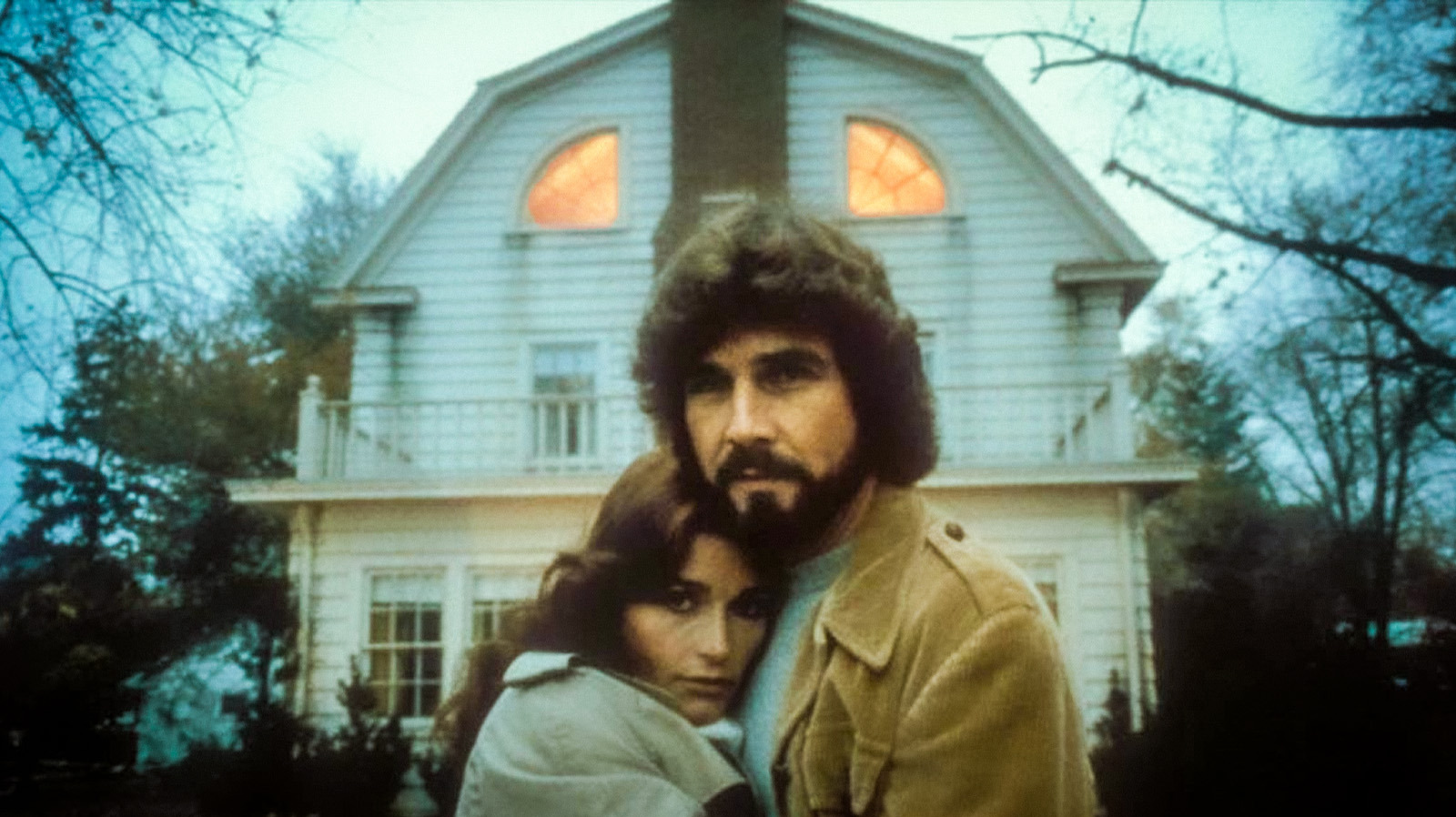
The "true story" behind The Amityville Horror is a complex tapestry of a verified mass murder and a supernatural narrative that has been widely debunked as a financial fabrication. While Ronald DeFeo Jr. did indeed murder six family members at 112 Ocean Avenue in 1974, the subsequent claims of demonic possession and paranormal activity by the Lutz family have been discredited by legal testimony, subsequent homeowners, and investigative researchers.
The Foundation of Reality: The DeFeo Family Murders
To understand the roots of the Amityville legend, one must first look at the undisputed historical facts of the tragedy that occurred at the property. On November 13, 1974, the quiet suburb of Amityville, Long Island, became the site of one of the most notorious mass murders in American history. Ronald "Butch" DeFeo Jr., then 23 years old, methodically executed his entire family as they slept.
The victims included his parents, Ronald DeFeo Sr. (43) and Louise DeFeo (42), and his four siblings: Dawn (18), Allison (13), Marc (12), and John Matthew (9). All six victims were found in their beds, lying face down, having been shot with a .35 caliber Marlin 336C rifle. The precision and clinical nature of the crime immediately raised questions that still linger in true crime circles in 2026.
During his trial, DeFeo’s defense attorney, William Weber, attempted to mount an insanity defense. DeFeo claimed he heard voices that commanded him to kill his family, alleging that the "house" or "entities" within it were responsible for his actions. However, the prosecution successfully argued that DeFeo was a drug user with a history of violent outbursts and that the murders were calculated. DeFeo was eventually convicted on six counts of second-degree murder and sentenced to six consecutive sentences of 25 years to life. He remained in custody until his death in March 2021.
The Lutz Family: 28 Days of Alleged Terror
The supernatural element of the Amityville story began on December 18, 1975, when George and Kathy Lutz moved into the house with their three children. Having purchased the Dutch Colonial for a significantly reduced price due to its dark history, the Lutzes claimed they were aware of the murders but felt they could make the house a home.
Their stay lasted only 28 days. Upon fleeing the house in January 1976, they reached out to writer Jay Anson and paranormal investigators, claiming they had been terrorized by malevolent forces. These claims formed the basis of Anson's 1977 book, The Amityville Horror, which was marketed as a "true story." The book detailed a litany of horrors:
- Jodie the Pig: A demonic entity with glowing red eyes that appeared to the youngest daughter.
- Green Slime: Oozing from walls and keyholes.
- The Red Room: A secret chamber in the basement that supposedly acted as a portal to hell.
- Physical Levitation: George Lutz claimed to see his wife levitating above their bed.
- Personality Changes: George alleged he became obsessed with the fireplace and grew increasingly aggressive, mirroring the behavior of Ronald DeFeo Jr.
Fact-Checking the Supernatural Claims
When the book became a global bestseller and a 1979 film adaptation followed, independent investigators began to scrutinize the Lutzes' narrative. The discrepancies between the "true story" marketing and the physical evidence are substantial.
The Swarm of Flies
The book claims a room was infested with hundreds of houseflies in the dead of winter. However, entomologists and local weather records from late 1975 show that the temperatures in Amityville were far too low for such an infestation to occur naturally. Furthermore, neighbors reported seeing no such activity, and no physical remains of insects were found by subsequent investigators.
The Damaged Locks and Doors
The Lutzes claimed that demonic forces ripped doors off their hinges and damaged heavy locks. When the next owners, Jim and Barbara Cromarty, moved in, they found that the original hardware—including the locks and hinges described in the book—were completely intact and showed no signs of repair or trauma. This suggests the physical destruction described in the narrative was entirely fictionalized.
The "Red Room"
In the book, the Red Room is a terrifying, hidden space that smelled of sulfur. In reality, the "Red Room" was a small, 4'x5' storage closet located under the basement stairs. It had been used by the DeFeo family to store toys and miscellaneous items. There is no evidence of it being a "portal" or anything other than a standard architectural feature of a 1920s-era home.
The "Cloven Hoof" Prints in Snow
A famous scene in the book describes George Lutz finding large, cloven hoof prints in the snow outside the house. Meteorological records for the nights in question indicate there was no snowfall in Amityville during the period the Lutzes lived there. Without snow, the physical evidence of the tracks could not have existed.
The "Bottles of Wine" Hoax Admission
The most significant blow to the credibility of the Amityville haunting came from William Weber, Ronald DeFeo Jr.’s own defense attorney. In a 1979 interview with Associated Press and later in People magazine, Weber admitted that he, George Lutz, and Kathy Lutz had "created this horror story over many bottles of wine."
The motive for the fabrication was two-fold. For Weber, a sensational haunting story could potentially support a new trial for Ronald DeFeo Jr. by arguing that "external forces" or "demonic influence" influenced his client's mental state. For the Lutzes, who were reportedly struggling with the mortgage on the large property, a sensational book deal offered a way out of financial ruin.
Weber famously stated, "We were taking real-life incidents and evolving them... we were making a commercial venture." While the Lutzes maintained the "essence" of their story was true until their deaths (Kathy in 2004, George in 2006), the legal and logical inconsistencies have led the vast majority of researchers to classify the haunting as a hoax.
The Role of Ed and Lorraine Warren
The inclusion of Ed and Lorraine Warren, the famous demonologists, added a layer of perceived "expert" verification to the story in the late 1970s. The Warrens claimed to have captured a photograph of a "ghost boy" on the staircase, whom they identified as the youngest DeFeo child.
However, skeptics and researchers like Stephen Kaplan and Rick Moran have pointed out significant flaws in the Warrens' investigation. The "ghost boy" in the photo has been widely identified by other researchers as Paul Bartz, an investigator who was working with the Warrens that night. Furthermore, the Warrens had a professional interest in the case, as it significantly boosted their own fame and the marketability of their "occult" lectures.
Comparison of Claims vs. Verified Reality
The following table summarizes the primary claims made in the "true story" accounts versus the facts established by historical records and physical inspections.
| Claim Category | Supernatural Account (Lutz/Anson) | Verified Historical Fact |
|---|---|---|
| Mass Murder | Ronald DeFeo Jr. killed family due to voices. | DeFeo killed family; motive cited as drug-related/personal. |
| Physical Damage | Doors ripped from hinges; locks smashed. | Original hardware remained intact and undamaged. |
| Weather Events | Cloven prints in deep snow. | Weather records show no snow during the timeframe. |
| The "Red Room" | A hidden portal to a demonic dimension. | A standard 4x5 storage closet under the stairs. |
| The Priest | Father "Mancuso" suffered stigmata and blisters. | Father Pecoraro (real name) stated he never saw anything paranormal. |
| Subsequent Owners | The house remained cursed and active. | Multiple owners since 1976 have reported zero activity. |
The Impact on the Real Property at 112 Ocean Avenue
One of the most compelling arguments against a persistent haunting is the experience of the families who lived in the house after the Lutzes. The Cromarty family, who moved in shortly after the Lutzes fled, lived there for ten years without experiencing a single supernatural event. They eventually sued the Lutzes and Jay Anson for "false representation" and harassment, as the fame of the book brought thousands of unwanted tourists to their front lawn.
To discourage "ghost hunters" and tourists, the house has undergone several changes over the decades:
- The Windows: The famous "eye-like" quarter-moon windows in the attic were replaced with standard square windows.
- The Address: The address was officially changed from 112 Ocean Avenue to 108 Ocean Avenue to confuse map-seekers and provide privacy for the owners.
- The Exterior: The house has been repainted and renovated multiple times, stripping away the aesthetic associated with the 1979 film.
As of 2026, the house remains a private residence. It has sold multiple times on the open market, often for prices consistent with other luxury waterfront properties in Amityville. None of the post-1976 residents have reported paranormal phenomena, reinforcing the theory that the "horror" was a product of the Lutzes' imagination and marketing strategy.
Frequently Asked Questions
Did Ronald DeFeo Jr. have an accomplice?
While there have been theories that Ronald DeFeo Jr. could not have killed six people alone without some waking up, forensic evidence and his own confession (one of many) suggest he acted alone. No evidence of a second shooter or a supernatural "accomplice" was ever found by the Suffolk County Police.
Does anyone currently live in the Amityville house?
Yes, the house at 108 Ocean Avenue (formerly 112) is a private residence. It is not a museum, and it is not open to the public. The owners typically maintain a high level of privacy to avoid the attention of enthusiasts.
Why did the priest in the story claim he was attacked?
In the book, "Father Mancuso" is struck by an invisible force and warned to "get out." The real priest, Father Ralph Pecoraro, later testified in a deposition that while he did visit the house to bless it, the dramatic supernatural events described in the book—including the blisters and the "get out" voice—did not happen to him.
Was the house built on an ancient Indian burial ground?
This is a common trope in horror fiction used in the book to explain the haunting. However, local historical societies and members of the Shinnecock Indian Nation have confirmed there is no evidence that the property was ever a burial ground or a site of indigenous relocation.
Is the Amityville Horror a hoax?
Based on the admission of the DeFeo defense attorney, the lack of corroborating evidence for physical claims (like the snow or damaged locks), and the testimony of all subsequent owners, the haunting is widely considered a hoax. The murders, however, remain a tragic and factual part of Long Island's history.
Practical Recommendation for Researchers
If you are investigating the Amityville story for historical or educational purposes, it is vital to separate the 1974 DeFeo Murder Case from the 1977 Lutz Haunting Narrative.
For the most accurate information regarding the murders, consult the official court records of the State of New York and the Suffolk County Police archives. For the haunting claims, the most reliable "fact check" remains the research conducted by the late Stephen Kaplan, author of The Amityville Horror Conspiracy, which meticulously dismantles the timeline and physical claims of the Lutz family. Avoid relying on film adaptations or "reimagined" documentaries, as these prioritize entertainment value over historical accuracy.