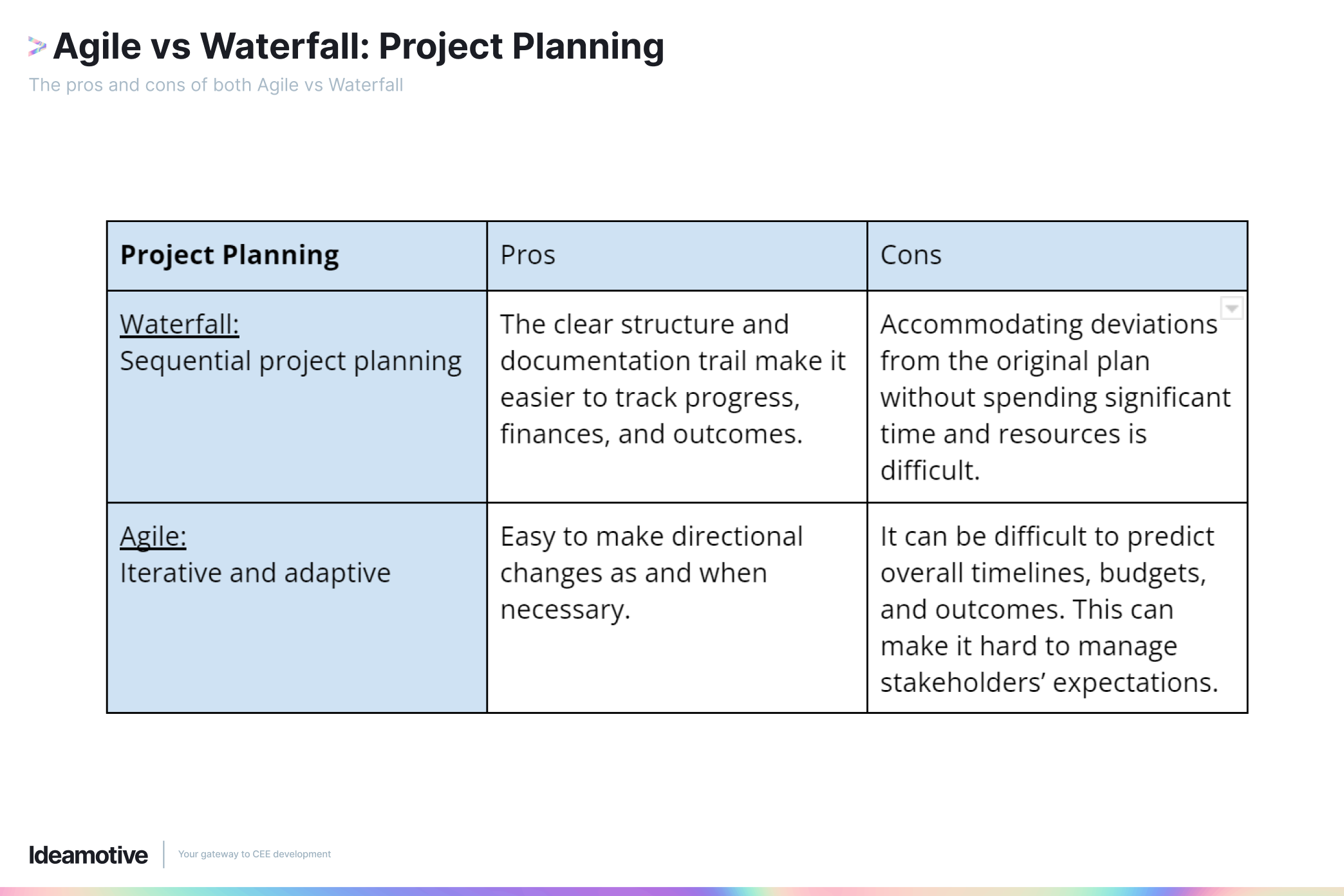
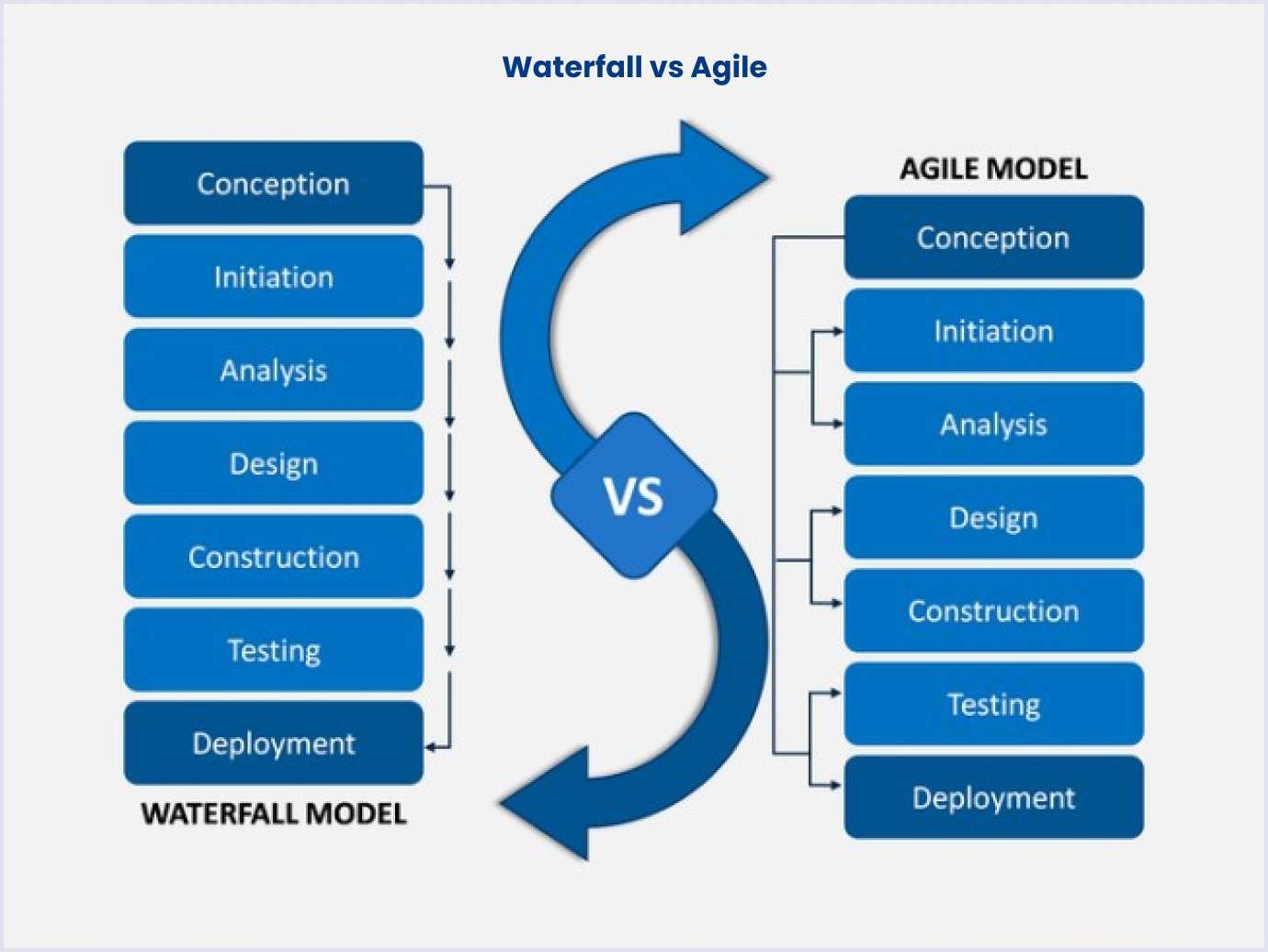
Choosing between Agile and Waterfall requires balancing project predictability against the need for flexibility. Waterfall utilizes a linear, sequential structure ideal for projects with fixed requirements and strictly regulated environments. Conversely, Agile employs an iterative framework designed for rapid adaptation and frequent stakeholder feedback, prioritizing functional delivery over exhaustive upfront documentation and rigid planning.
The Structural Foundation of the Waterfall Methodology
The Waterfall methodology, often referred to as the Linear Sequential Life Cycle Model, is the most traditional approach to project management. Its structure is predicated on the idea that project phases should flow downward, much like a physical waterfall, where one stage must be completed and verified before the next begins. This model originated in the manufacturing and construction industries, where changes after a phase is completed are prohibitively expensive or physically impossible.
The Six Phases of Waterfall
In a standard Waterfall environment, a project typically moves through six distinct stages:
- Requirements Analysis: All possible requirements of the system to be developed are captured in this phase and documented in a product requirement document.
- System Design: The requirements from the first phase are studied, and the system design is prepared. This design helps in specifying hardware and system requirements and helps in defining the overall system architecture.
- Implementation: With inputs from the system design, the system is first developed in small programs called units, which are integrated into the next phase.
- Integration and Testing: All the units developed in the implementation phase are integrated into a system after testing of each unit. Post integration, the entire system is tested for any faults and failures.
- Deployment of System: Once the functional and non-functional testing is done; the product is deployed in the customer environment or released into the market.
- Maintenance: There are some issues which come up in the client environment. To fix those issues, patches are released. Also, to enhance the product, some better versions are released.
Logical Rigidity and Documentation
The hallmark of Waterfall structure is its heavy emphasis on documentation. Because the development team often does not see the end product until the very final stages, the "paper trail" serves as the single source of truth. This structure provides a clear roadmap and a definitive end date, making it easier for stakeholders to estimate budgets and timelines. However, this rigidity means that if a foundational error is discovered during the testing phase, the project often requires a complete restart from the requirements phase, leading to significant delays and cost overruns.
The Iterative Structure of Agile Methodologies
Agile is not a single methodology but an umbrella term for several iterative development frameworks, such as Scrum, Kanban, and Extreme Programming (XP). Developed primarily for software development through the Agile Manifesto, the structure is designed to accommodate change even late in the development cycle.
Sprints and Incremental Development
The fundamental unit of Agile structure is the "Sprint" or iteration. Rather than spending months on a massive requirements document, the project is broken down into small, manageable chunks called "User Stories." These stories are prioritized in a "Product Backlog."
A typical Agile structure includes:
- The Product Owner: Represents the stakeholders and defines the "what" and the "why."
- The Scrum Master/Facilitator: Ensures the team follows the process and removes blockers.
- The Development Team: Cross-functional members who execute the work.
Each iteration (usually 1 to 4 weeks) goes through a complete mini-lifecycle: planning, design, coding, testing, and a retrospective review. At the end of every iteration, the team produces a "Potentially Shippable Product Increment." This ensures that value is delivered to the client early and often, rather than waiting for a "big bang" release at the end of the project timeline.
Continuous Feedback Loops
Unlike Waterfall, where stakeholder interaction is concentrated at the beginning and end, Agile mandates continuous collaboration. The "Daily Stand-up" is a structural component where the team synchronizes activities and identifies impediments. This high-frequency communication creates a transparent environment where risks are identified in real-time rather than being buried in a status report.
Comparing Project Outcomes: Predictability vs. Value
The outcomes of these methodologies differ significantly in terms of budget adherence, time-to-market, and product-market fit. In 2026, data from the Project Management Institute (PMI) suggests that while Waterfall remains relevant for infrastructure, Agile dominates the digital product landscape due to the speed of technological shifts.
Outcome 1: Budget and Schedule
Waterfall offers high predictability for budgets and schedules—provided the requirements do not change. Because the scope is fixed at the start, organizations can allocate capital with confidence. However, if the market shifts or a technical hurdle arises, the "fixed" nature of Waterfall often leads to "death marches" where teams struggle to meet unrealistic deadlines with obsolete requirements.
Agile outcomes regarding budget are often more fluid. While the "Time and Materials" cost might fluctuate, Agile provides a better return on investment (ROI) because it allows the business to stop development as soon as the most valuable features are delivered. This prevents spending money on "gold-plating" or features that users do not actually need.
Outcome 2: Quality and Testing
In Waterfall, testing is a discrete phase that happens late in the cycle. This creates a high risk of "technical debt" or architectural flaws being discovered too late to fix easily. The outcome is often a stable but potentially outdated product.
Agile integrates testing throughout the entire lifecycle. By testing every increment, the outcome is a highly resilient product that has been "battle-tested" throughout its development. However, without disciplined management, Agile projects can suffer from "Scope Creep," where the product never feels "finished" because new ideas are constantly being added to the backlog.
Outcome 3: Stakeholder Satisfaction
Waterfall stakeholders often experience "the gap." They see a vision at the start and the reality months later, which may not align with their current needs. Agile stakeholders remain engaged; their satisfaction is generally higher because they see progress every two weeks and can pivot the direction of the project based on real-world usage.
Technical Comparison of Methodologies
The following table summarizes the structural and outcome-based differences between Agile and Waterfall methodologies as they stand in the 2026 professional landscape.
| Feature | Waterfall Methodology | Agile Methodology |
|---|---|---|
| Structural Logic | Linear and Sequential | Iterative and Incremental |
| Requirement Definition | Fixed at the start (Upfront) | Evolving (Backlog-driven) |
| Stakeholder Involvement | High at start/end; Low during dev | Continuous throughout the project |
| Change Management | Formal Change Request (Rigid) | Flexible; embraced in each sprint |
| Primary Outcome Goal | Predictability and Discipline | Speed-to-market and Flexibility |
| Testing Frequency | Once, at the end of development | Continuous, during every iteration |
| Risk Profile | High risk of total project failure | Lower risk of failure; high visibility |
| Best Used For | Construction, Manufacturing, Regulatory | Software, UX Design, Marketing |
Industry-Specific Applications and the Hybrid Approach
As we move through 2026, the binary choice between "Agile" or "Waterfall" is increasingly seen as a false dichotomy. Many organizations have adopted "Hybrid" models to capture the benefits of both.
When Waterfall is Non-Negotiable
In sectors like aerospace, civil engineering, and pharmaceuticals, Waterfall remains the gold standard. When building a bridge or developing a life-saving drug, you cannot "iterate" on the foundation or the chemical composition once the build has started. The structural integrity depends on the completion of the previous phase. In these environments, the outcome of a Waterfall process is a verified, compliant, and safe product that meets rigorous regulatory standards.
When Agile is Essential
For startups and software-as-a-service (SaaS) companies, Waterfall is often a recipe for obsolescence. The ability to launch a Minimum Viable Product (MVP) and use real user data to guide the next iteration is the only way to survive in high-velocity markets. The outcome here is "Product-Market Fit," a state where the product evolves in direct response to consumer behavior.
The Rise of "Agile-Waterfall Hybrid"
The hybrid structure often uses Waterfall for the high-level planning and hardware components, while utilizing Agile for the software and user interface layers. For example, a car manufacturer may use Waterfall for the chassis design (which requires long lead times for tooling) and Agile for the infotainment system software. This creates a "Gated Agile" outcome where major milestones are fixed, but the internal development remains flexible.
Critical Risks and Troubleshooting
Neither methodology is a silver bullet. Understanding the failure modes is essential for project success.
Common Waterfall Pitfalls
- Analysis Paralysis: Spending too long in the requirements phase can lead to a project being obsolete before a single line of code is written.
- The Testing Bottleneck: If development takes longer than expected, the testing phase is often squeezed to meet the deadline, resulting in poor quality.
- Disconnected Teams: Siloed departments (Designers vs. Developers vs. QA) often result in "tossing the project over the wall," leading to communication breakdowns.
Common Agile Pitfalls
- Lack of Documentation: Teams sometimes interpret "Working software over comprehensive documentation" as "No documentation at all," leading to maintenance nightmares.
- Meeting Fatigue: The various "ceremonies" (stand-ups, reviews, retrospectives, grooming) can consume significant time if not strictly facilitated.
- Infinite Timelines: Without a clear definition of "Done," Agile projects can spiral into endless iterations without ever reaching a definitive release.
Frequently Asked Questions
Which methodology is better for a small team?
Agile is generally better for small, cross-functional teams. Its structure minimizes the bureaucratic overhead of heavy documentation and allows a small group of people to pivot quickly as they discover new project constraints. Small teams often find the "Scrum" framework provides enough structure to stay organized without the rigidity of a Waterfall plan.
Can Waterfall and Agile be used on the same project?
Yes, this is known as a Hybrid approach. It is common in large-scale enterprise projects where the hardware or infrastructure follows a Waterfall path (due to physical constraints), while the software or service layer follows an Agile path to allow for user-centric updates. This requires a strong integration layer and clear communication between the different sub-teams.
Does Agile cost more than Waterfall?
Not necessarily. While Agile may appear more expensive because it doesn't have a "fixed" end-price, it often saves money by preventing the development of unused features. Statistics suggest that in Waterfall projects, a significant percentage of features are rarely or never used. Agile allows the project to be cancelled or redirected as soon as the ROI diminishes, potentially saving the organization millions in wasted effort.
Is Waterfall still relevant in 2026?
Absolutely. Waterfall is essential for projects with high-risk profiles where safety and regulatory compliance are paramount. It is also the preferred method for projects with a very well-defined scope that is unlikely to change, such as migrating a database to a new server or executing a routine maintenance update on established infrastructure.
How do you choose between them for a new project?
Evaluate the project's "Clarity of Requirements." If the requirements are 100% clear and the technology is proven, Waterfall is efficient. If the requirements are "fuzzy," the market is volatile, or the technology is new, Agile is the safer choice. Additionally, consider the client's involvement level; if the client wants to be hands-off, Waterfall is better; if they want to be involved in every step, choose Agile.
Practical Recommendations for Project Selection
To achieve the best outcome for your project in 2026, begin by conducting a complexity and uncertainty assessment. If the project involves high uncertainty regarding user needs or technical implementation, implement a Scrum-based Agile framework. This will allow you to de-risk the project through early increments.
However, if you are operating in a highly regulated environment with fixed-price contracts and non-negotiable deadlines, utilize a Waterfall structure. Ensure that you invest heavily in the initial requirements phase to prevent late-stage changes. For most modern organizations, the ideal path is a customized hybrid model that applies Waterfall's discipline to budgeting and procurement while using Agile's flexibility for execution and delivery.