Agile product portfolio management in practice is the ongoing process of aligning a company's product investments with its strategic goals using lean-agile principles. It replaces traditional annual planning with continuous prioritization, decentralized decision-making, and value-stream funding to ensure the organization delivers maximum customer value with minimal waste.
While many organizations have successfully adopted Agile at the team level (using Scrum or Kanban), they often struggle to bridge the gap between high-level business strategy and daily execution. Agile Product Portfolio Management (APPM) serves as this bridge. In 2026, the complexity of global markets and the speed of technological evolution require a portfolio that is not a static list of projects, but a dynamic, living ecosystem of products.
The Shift from Project-Centric to Product-Centric Portfolios
Traditional portfolio management focuses on "projects"—temporary endeavors with fixed start and end dates, rigid scopes, and siloed budgets. This model often fails in modern software and service environments because it prioritizes output (completing the project) over outcomes (solving customer problems).
In practice, Agile portfolio management shifts the focus to products and value streams. A value stream represents the end-to-end steps required to deliver value to a customer. By funding these streams rather than individual projects, organizations can maintain stable, high-performing teams that gain deep domain expertise.
Why the Traditional Model Fails in 2026
Traditional "waterfall" portfolio management usually involves an annual budgeting cycle where leaders guess what will be valuable twelve months in advance. By the time the third quarter rolls around, the market has shifted, but teams are locked into obsolete requirements. APPM solves this by treating every product investment as a hypothesis that must be validated through iterative delivery.
Core Pillars of Agile Product Portfolio Management
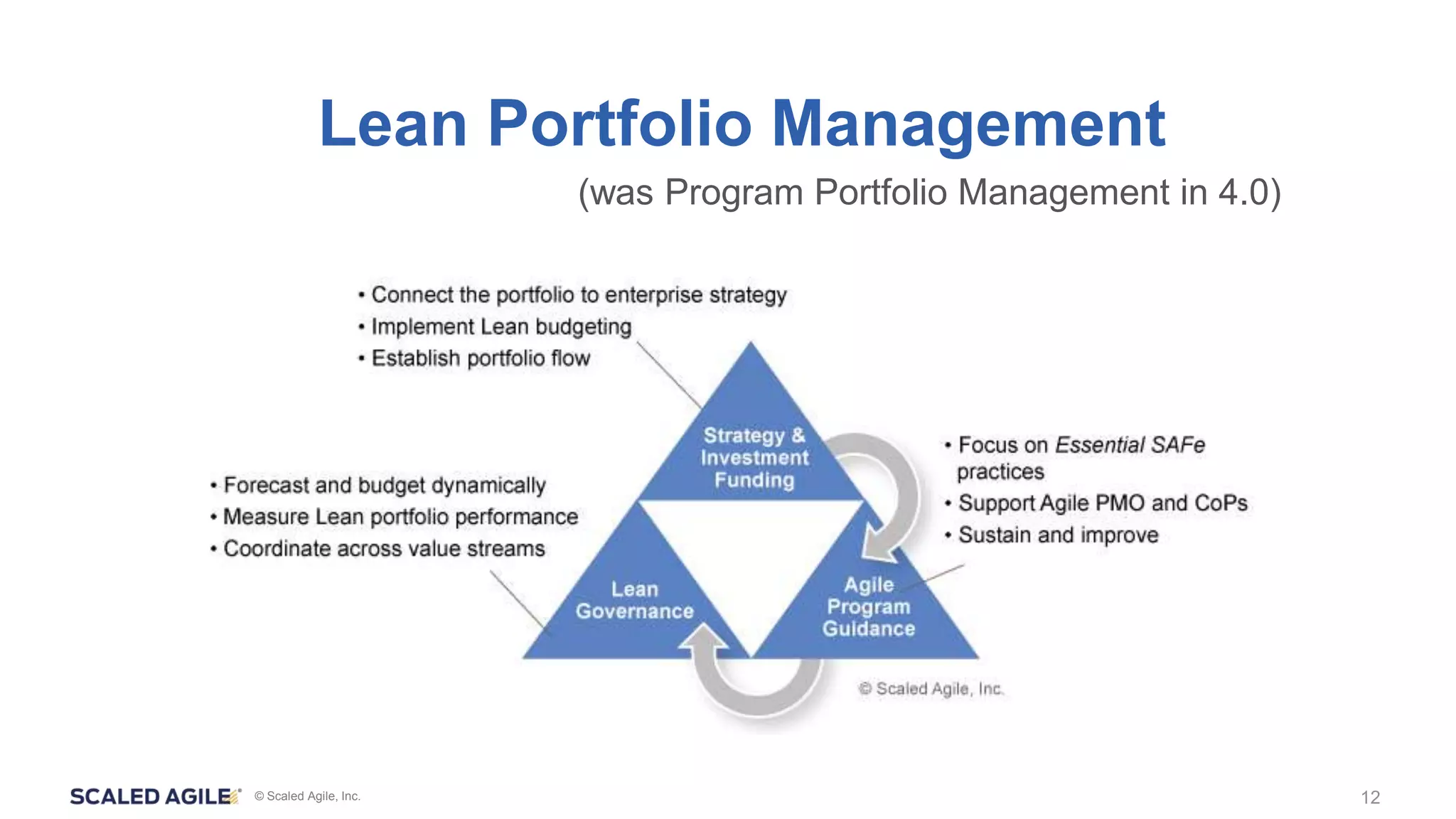
To implement APPM effectively, organizations must master three functional areas: Strategy and Investment Funding, Agile Portfolio Operations, and Lean Governance.
1. Strategy and Investment Funding
The primary goal here is to ensure the portfolio is doing the "right work." This involves:
- Connecting the Portfolio to Enterprise Strategy: Every product must have a clear line of sight to the company’s North Star. In 2026, this is frequently managed through Objectives and Key Results (OKRs), which provide measurable, time-bound targets.
- Establishing Portfolio Context: Understanding the internal and external factors—market trends, competitor moves, and technical debt—that influence what should be built.
- Lean Budgeting: Instead of allocating money to a 12-month project, leadership allocates budgets to value streams. This allows teams to pivot their focus without needing to "re-request" funds, as long as they stay within the strategic guardrails.
2. Agile Portfolio Operations
This pillar focuses on "doing the work right" and supporting decentralized execution.
- Coordinating Value Streams: Many products are interdependent. Operations teams ensure that these dependencies are managed without creating bottlenecks.
- Supporting Program Execution: This involves fostering a culture of continuous improvement and helping teams adopt the right tools for transparency.
3. Lean Governance
Governance in an Agile world is about oversight without interference. It includes:
- Forecasting and Reporting: Moving away from "percent complete" metrics toward "value delivered" and "lead time."
- Compliance and Audit: Ensuring that the portfolio meets regulatory requirements through automated testing and continuous compliance rather than massive end-of-year audits.
Implementing Lean Budgets and Guardrails
One of the most difficult transitions in APPM is the move to Lean Budgets. In practice, this means the Portfolio Management Office (PMO) no longer manages every penny. Instead, they define Guardrails that provide teams with autonomy while maintaining financial control.
Common Guardrails in Practice
- Investment Horizons: Allocating specific percentages of the budget to different stages of product maturity (e.g., 70% to core products, 20% to emerging opportunities, and 10% to long-shot innovations).
- Capacity Allocation: Deciding how much time teams should spend on new features versus maintenance, architectural runway (technical infrastructure), and debt reduction.
- Continuous Business Owner Engagement: Ensuring that the people who hold the budget are actively involved in the prioritization process rather than just reviewing reports.
Prioritization Using Weighted Shortest Job First (WSJF)
In a traditional portfolio, the "loudest voice in the room" often determines what gets built. Agile portfolios use data-driven models like Weighted Shortest Job First (WSJF) to sequence work based on economic value.
WSJF is calculated by dividing the Cost of Delay by the Job Size (Duration).
- Cost of Delay (CoD): This includes user-business value, time criticality, and risk reduction/opportunity enablement.
- Job Size: A proxy for how much effort or time the task will take.
By prioritizing items with the highest WSJF score, organizations ensure they are delivering the most value in the shortest time possible. This prevents "pet projects" from clogging the pipeline and ensures that high-value, quick-win items are moved to the front of the queue.
The Portfolio Kanban: Visualizing Strategic Flow
A Portfolio Kanban system is essential for managing the flow of "Epics" (large-scale initiatives). It provides total visibility into the status of every major strategic investment.
Stages of the Portfolio Kanban
- Funnel: The intake area for all new ideas. There is no filter here; anyone can submit a concept.
- Reviewing: Initiatives are vetted for strategic alignment. Teams create a "lean business case" to estimate value and effort.
- Analyzing: High-potential epics undergo a more rigorous analysis. This includes identifying a Minimum Viable Product (MVP) and defining success metrics.
- Portfolio Backlog: Approved epics wait here until a value stream has the capacity to pull them into implementation.
- Implementing: The epic is being actively developed by the teams.
- Done: The epic has met its success criteria, and the value is being realized by the customer.
| Feature | Traditional Portfolio Management | Agile Product Portfolio Management |
|---|---|---|
| Funding Model | Project-based (Fixed cost/scope) | Value Stream-based (Lean Budgets) |
| Planning Cycle | Annual / Semi-annual | Continuous / Rolling Wave |
| Decision Making | Centralized (Top-down) | Decentralized (Local Autonomy) |
| Success Metric | On time, on budget, on scope | Customer value, lead time, OKRs |
| Risk Management | Upfront planning and mitigation | Fast feedback loops and MVPs |
| Visibility | Status reports (often "Green" until late) | Portfolio Kanban (Real-time flow) |
Measuring Success: Value-Based Metrics
To manage a portfolio effectively in 2026, leaders must move beyond the "Iron Triangle" of cost, time, and scope. Instead, they should focus on Value Stream Metrics.
Key Performance Indicators (KPIs) for APPM
- Flow Velocity: The number of items (Epics or features) completed in a specific timeframe.
- Flow Efficiency: The ratio of active work time to total lead time. Low efficiency usually indicates significant bottlenecks or "wait states."
- Net Promoter Score (NPS) / Customer Satisfaction: Direct feedback on whether the products are solving the intended problems.
- Innovation Accounting: Measuring the progress of new products that do not yet have significant revenue, focusing on user engagement and learning milestones.
- Employee Engagement: High-performing portfolios require motivated teams. Measuring burnout and engagement is a leading indicator of future delivery capacity.
Practical Challenges in Agile Portfolio Adoption
Transitioning to APPM is as much a cultural shift as a technical one. Organizations frequently encounter several hurdles during implementation.
The "Agile-in-Name-Only" Trap
Some organizations rename their "Project Managers" to "Product Owners" but keep the same rigid annual budgeting and top-down command structure. Without shifting the funding model and decentralizing decision-making, the benefits of Agile remain out of reach.
Overcoming "The Middle Management Squeeze"
Middle managers often feel threatened by decentralized decision-making. In practice, their role must evolve from "task masters" to "orchestrators of value." They should focus on removing impediments and ensuring teams have the resources they need rather than managing daily activities.
Managing Dependencies in Large Organizations
When one product requires a feature from another product to be successful, it creates a dependency. Agile portfolios handle this through Big Room Planning or "Sync" meetings, where representatives from different value streams align their roadmaps to ensure no one is blocked.
Roles in Agile Portfolio Management
While specific titles vary, the following roles are essential for practicing APPM:
- Epic Owners: Responsible for guiding an Epic from the Funnel through the Kanban process. They are the "mini-CEOs" for a specific strategic initiative.
- Enterprise Architects: Ensure that the technical infrastructure (the "Architectural Runway") supports the business's future needs.
- Portfolio Management Office (PMO) / Lean Agile Center of Excellence (LACE): Facilitates the Kanban process, manages the budget guardrails, and coaches the organization on Lean-Agile practices.
Practical Steps for Implementation
- Identify Value Streams: Map out how value currently flows through your organization to the customer.
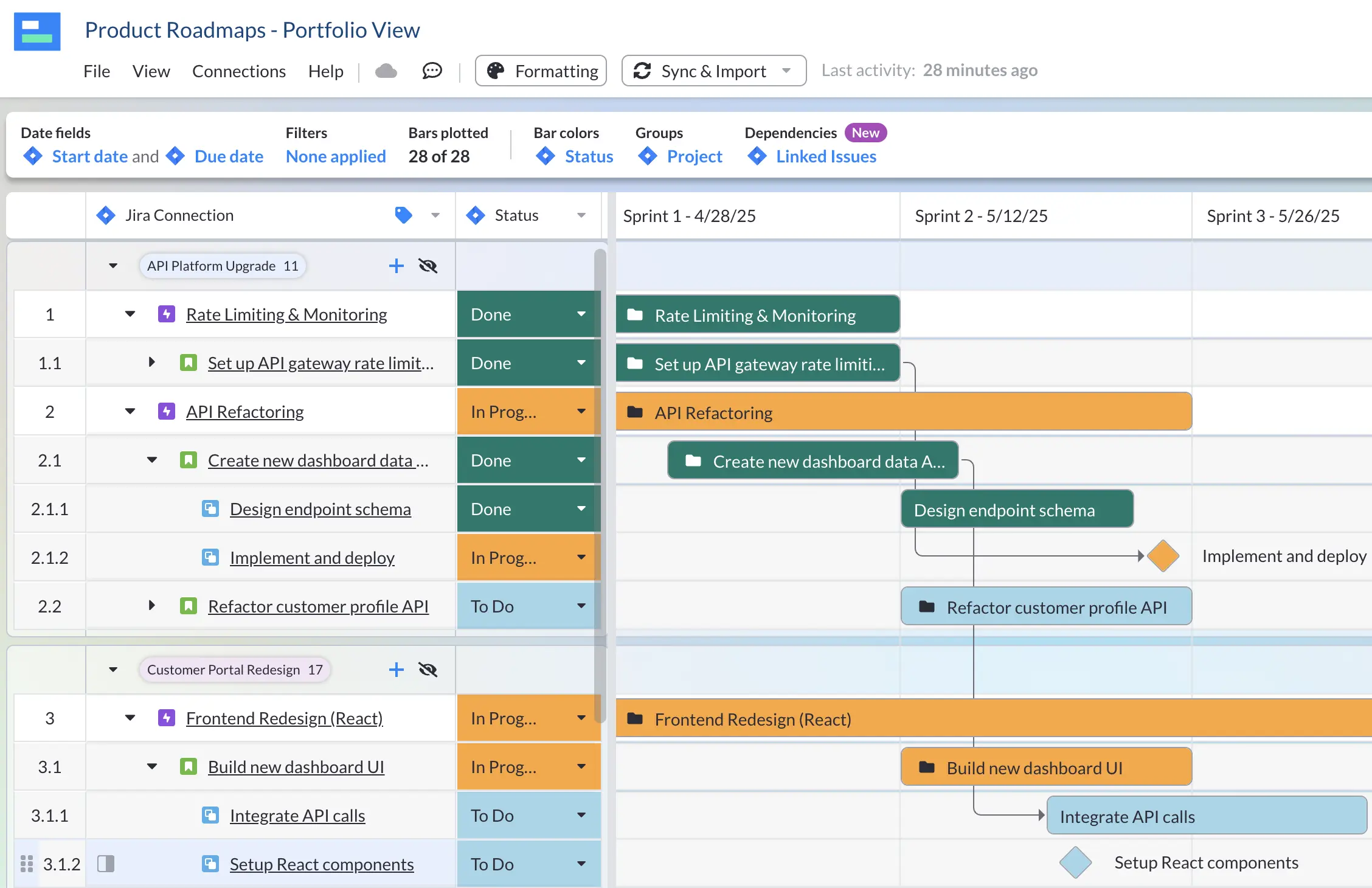
- Establish a Portfolio Kanban: Start visualizing all high-level initiatives in a single place to identify work-in-process (WIP) limits and bottlenecks.
- Introduce Lean Budgeting: Begin with a hybrid approach—perhaps funding one or two value streams using the new model while keeping others on the traditional cycle to prove the concept.
- Define OKRs: Move away from task-based roadmaps to outcome-based goals.
- Conduct Participatory Budgeting: Involve stakeholders from across the organization in the decision-making process for how to allocate funds across the portfolio.
Frequently Asked Questions
How does Agile Portfolio Management handle regulatory compliance?
In practice, compliance is integrated into the "Definition of Done" for every epic. Instead of a separate phase at the end of the year, automated compliance checks and continuous auditing ensure that every increment of the product meets legal and safety standards. This reduces the risk of massive rework late in the cycle.
Can APPM work with physical hardware products?
Yes. While hardware has different lead times and manufacturing constraints, the principles of Lean-Agile remain the same. Hardware portfolios use "Set-Based Design" and digital twins to enable more frequent feedback cycles, allowing them to benefit from the same iterative prioritization as software teams.
What is the role of AI in Agile Portfolio Management in 2026?
By 2026, AI is heavily utilized for predictive analytics and resource optimization. AI tools can analyze historical flow metrics to provide more accurate forecasts for Epic completion dates and identify hidden dependencies or risks in the portfolio backlog that a human might miss.
How often should a portfolio be re-prioritized?
While the overarching strategy may be set annually, the Portfolio Backlog should be reviewed and re-prioritized at least once a month. Major "Pivot or Persevere" decisions typically occur quarterly during strategic review sessions.
Is the PMO still necessary in Agile Product Portfolio Management?
The PMO evolves into a Lean PMO or a LACE. Its role shifts from controlling and auditing to facilitating, coaching, and ensuring that the strategic guardrails are being followed. They become the "engine room" that keeps the portfolio moving smoothly.
Moving Toward a Dynamic Strategy
The ultimate goal of agile product portfolio management in practice is to build an organization that can sense and respond to change. By moving away from rigid annual plans and embracing continuous value delivery, companies can ensure their investments are always aligned with the highest-impact opportunities.
If you are just beginning this journey, focus first on visibility. Once the entire portfolio is visible in a Kanban system, the inefficiencies and misalignments will become obvious, providing the necessary data to drive deeper cultural and structural changes.