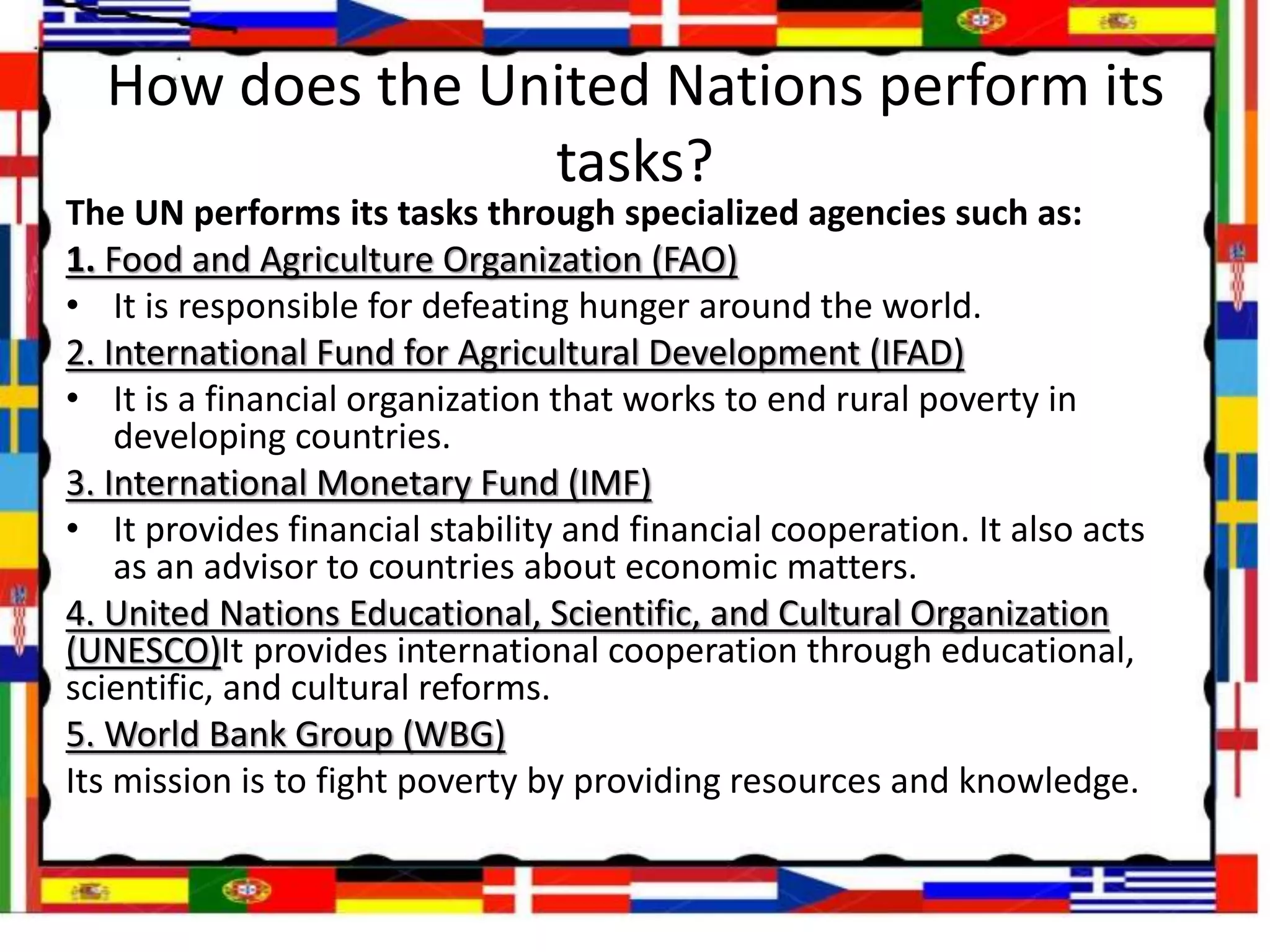
The agencies of the United Nations, officially known as Specialized Agencies, are autonomous organizations working in partnership with the United Nations through negotiated agreements. While they coordinate their efforts under the UN system to address specific global challenges such as health, aviation, telecommunications, and labor standards, they maintain their own budgets, independent governing bodies, and specialized personnel to execute their distinct mandates.
The Foundation of the UN System
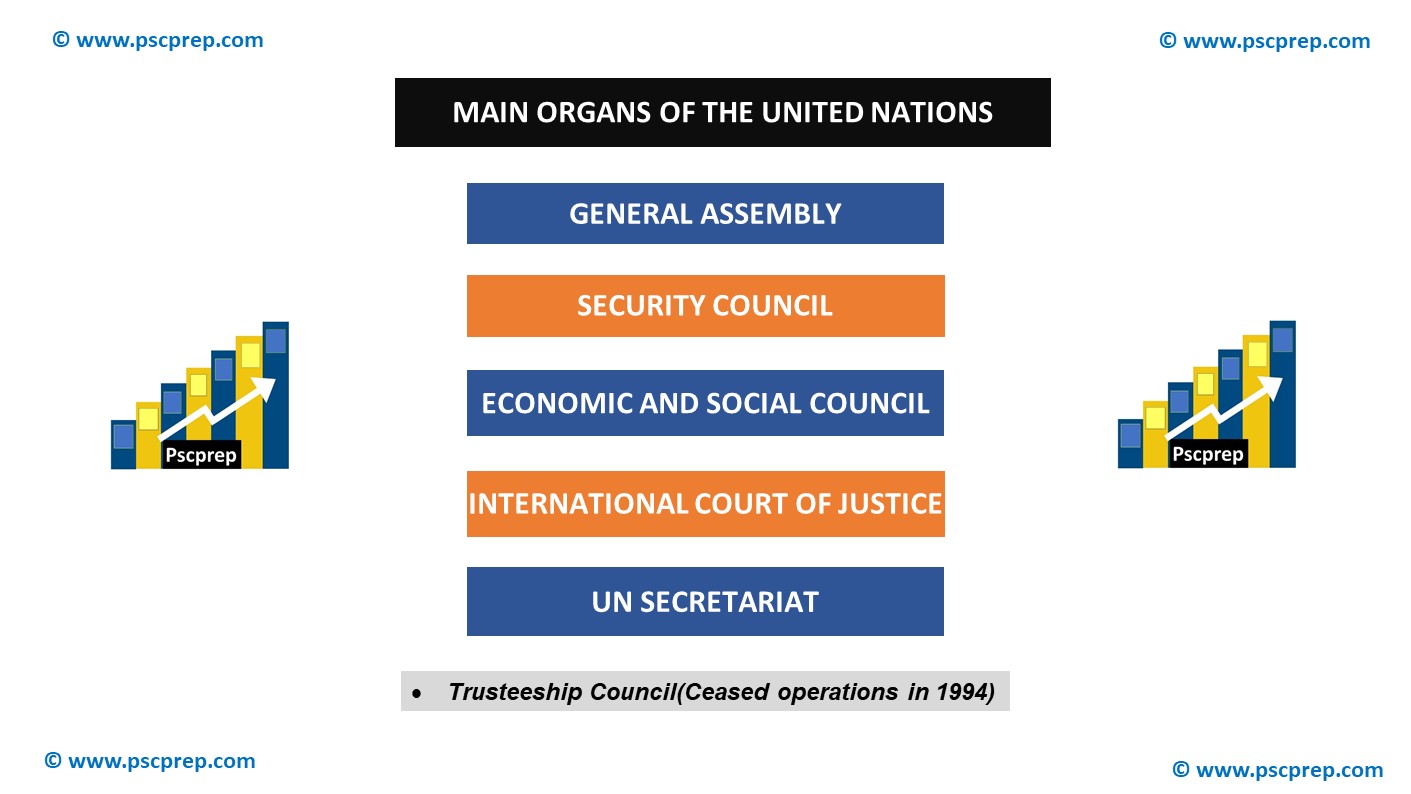
To understand the specialized agencies, one must first distinguish them from the principal organs of the United Nations, such as the General Assembly or the Security Council. While the principal organs provide the political framework and broad policy direction for international cooperation, the specialized agencies serve as the operational engines. These organizations were established through individual intergovernmental agreements and possess their own legal identities.
Each agency is responsible for a specific sector of international concern. They operate by setting global standards, facilitating international agreements, and providing technical assistance to member states. This structure ensures that highly technical issues—such as the regulation of radio frequencies or the establishment of maritime safety protocols—are handled by experts in those fields rather than being subsumed into the general political debates of the UN General Assembly.
Categorizing the Specialized Agencies
The specialized agencies are part of the broader "UN System," which also includes funds, programs, and other related entities. The primary defining characteristic of a specialized agency is its status as an independent organization that has entered into a formal relationship with the UN via Article 57 and 63 of the UN Charter.
Technical and Standard-Setting Agencies
Many agencies focus on infrastructure and the standardization of systems that allow the global economy to function. For example, the International Telecommunication Union (ITU) manages the global radio-frequency spectrum and satellite orbits, ensuring that communication technologies function across borders without interference. Similarly, the International Civil Aviation Organization (ICAO) creates the standards and recommended practices that govern international air navigation, ensuring safety and efficiency for the global aviation industry.
Socio-Economic Development Agencies
A significant portion of the UN’s work involves fostering economic growth and social stability. Agencies like the Food and Agriculture Organization (FAO) focus on modernizing and improving agriculture, forestry, and fisheries practices to ensure food security. The International Fund for Agricultural Development (IFAD) complements this by providing financing for agricultural projects in developing countries, specifically targeting rural populations who are often excluded from mainstream financial systems.
Global Health and Labor Standards
Some of the most prominent agencies operate in sectors directly affecting the quality of human life. The World Health Organization (WHO) is the directing and coordinating authority on international health work, leading global efforts to control disease outbreaks and strengthen health systems. Parallel to this, the International Labour Organization (ILO) is unique among UN agencies because of its tripartite structure, which includes representatives from governments, employers, and workers, allowing it to set international labor standards and promote decent work globally.
Comparison of UN Specialized Agencies by Mandate
| Agency | Acronym | Primary Focus | Key Function |
|---|---|---|---|
| World Health Organization | WHO | Global Public Health | Outbreak response and health policy |
| International Labour Organization | ILO | Labor Rights | Setting international labor standards |
| International Civil Aviation Organization | ICAO | Aviation Safety | Standardizing air navigation rules |
| Food and Agriculture Organization | FAO | Food Security | Sustainable agriculture and nutrition |
| International Telecommunication Union | ITU | Communications | Managing radio spectrums/orbits |
| World Intellectual Property Organization | WIPO | Innovation | Protecting global IP rights |
Operational Independence and Governance
The independence of these agencies is not merely symbolic; it has practical implications for how they operate and manage their resources. Each agency has its own constitution or founding treaty, which dictates how member states participate, how budgets are approved, and how the agency’s leadership is selected.
Unlike the UN Secretariat, which is led by the Secretary-General, each specialized agency is led by a Director-General or an equivalent head of agency, elected by the organization's respective governing board. This decentralized structure allows agencies to remain agile and focused on their specific technical niches. For instance, the World Intellectual Property Organization (WIPO) functions effectively as a global forum for intellectual property services, policy, and information, operating in a manner that requires high levels of legal and technical expertise distinct from the peacekeeping or human rights activities of the main UN bodies.
Funding Mechanisms
Funding for these agencies is distinct from the regular UN budget. While they receive contributions from the UN system in some capacities, the majority of their financial support comes from two primary sources:
- Assessed Contributions: Mandatory dues paid by member states based on a scale of assessments, usually related to the country’s economic size.
- Voluntary Contributions: Funds provided by member states, private foundations, or other entities for specific projects or emergency responses.
This dual-funding model provides both stability—through assessed contributions—and flexibility—through voluntary funding—allowing agencies to scale their operations in response to sudden global crises, such as natural disasters or pandemics.
Prerequisites for Engagement
For governments and organizations looking to engage with these agencies, the process typically begins with understanding the specific mandates of the agency in question. Because these agencies are intergovernmental, primary engagement is handled through permanent missions to the UN or specific ministries (e.g., ministries of health for WHO, or ministries of labor for ILO).
However, many agencies also offer mechanisms for non-governmental organizations (NGOs) and private sector entities to participate. These often include:
- Consultative Status: Allowing qualified NGOs to attend meetings and provide input on policy discussions.
- Public-Private Partnerships: Collaborative efforts where private sector expertise or technology is utilized to advance the agency’s goals.
- Technical Expert Groups: Open calls for experts to contribute to standard-setting processes or research initiatives.
Common Misconceptions
A frequent point of confusion is the distinction between a "Specialized Agency" and a "UN Program or Fund." Entities like UNICEF (United Nations Children's Fund) or the WFP (World Food Programme) are technically UN programs, not specialized agencies. They were established by the UN General Assembly rather than through separate intergovernmental treaties. While they coordinate closely with the specialized agencies, they are structurally different, relying more heavily on voluntary funding and reporting directly to the General Assembly.
Understanding these distinctions is vital for researchers and policy professionals who need to identify the correct body to approach for partnerships, funding, or policy advocacy. Misidentifying the agency can lead to significant delays in communication or project alignment.
Challenges in Inter-Agency Coordination
Despite their independent status, the agencies are tasked with working together under the UN Chief Executives Board for Coordination (CEB). This board is chaired by the UN Secretary-General and includes the heads of all specialized agencies. The objective is to harmonize policies and ensure that the efforts of one agency do not conflict with or duplicate those of another.
However, the sheer breadth of the UN system means that overlap is inevitable. For example, issues surrounding climate change involve the FAO (agriculture), the WHO (health impacts), the ICAO (aviation emissions), and the ITU (climate monitoring technology). Managing this intersection requires constant diplomatic and administrative negotiation to ensure that resources are maximized and that international policies are coherent.
Next Actions for Engagement
To effectively engage with the specialized agencies of the United Nations, follow these steps:
- Identify the Mandate: Use the official United Nations website to map your specific area of interest to the appropriate agency.
- Review Governing Documents: Familiarize yourself with the agency's constitution or foundational statutes to understand how decisions are made.
- Check Accreditation Requirements: If you are representing an organization, check the agency’s portal for "Consultative Status" or "Partnership" requirements.
- Monitor Official Announcements: Follow the agency’s official newsroom or mailing lists to stay informed about upcoming conferences, calls for papers, or funding deadlines for the 2026 operational year.
By approaching these entities with an understanding of their autonomous structure and specific technical mandates, stakeholders can navigate the UN system more effectively and contribute to the global initiatives these organizations lead.
Frequently Asked Questions
Are specialized agencies subject to the UN Secretary-General? No, they are independent. While they coordinate with the UN through the Chief Executives Board, they possess their own governance, budgets, and executive heads who answer to their respective member-state bodies, not the UN Secretary-General directly.
How is a specialized agency different from a UN program? A specialized agency is created by its own international treaty and possesses its own legal personality, whereas a program is a subsidiary organ created by the UN General Assembly. Agencies have higher levels of operational and budgetary autonomy.
Can a private individual work for a specialized agency? Yes. Specialized agencies hire international civil servants through competitive recruitment processes. Vacancies are usually posted on the agency's official career portal, and candidates must meet specific technical qualifications relevant to the agency's mission.
Do these agencies have offices in every country? Not necessarily. While many have headquarters (e.g., WHO in Geneva) and regional or country-level offices, their physical presence is determined by the specific needs of their mandate and the agreements they have with host nations.
How do I find data or reports from a specific agency? Each agency maintains its own digital library or repository. You can typically find these under the "Publications" or "Data" sections of their respective official websites. These portals are the primary source for technical reports, statistical yearbooks, and policy guidelines.
Is it possible to receive funding from a UN specialized agency? Funding is generally provided to member state governments for national development or to partner organizations through competitive grant processes. It is rare for a UN agency to provide direct funding to individuals; however, they may offer scholarships or fellowships for research in specific technical fields.