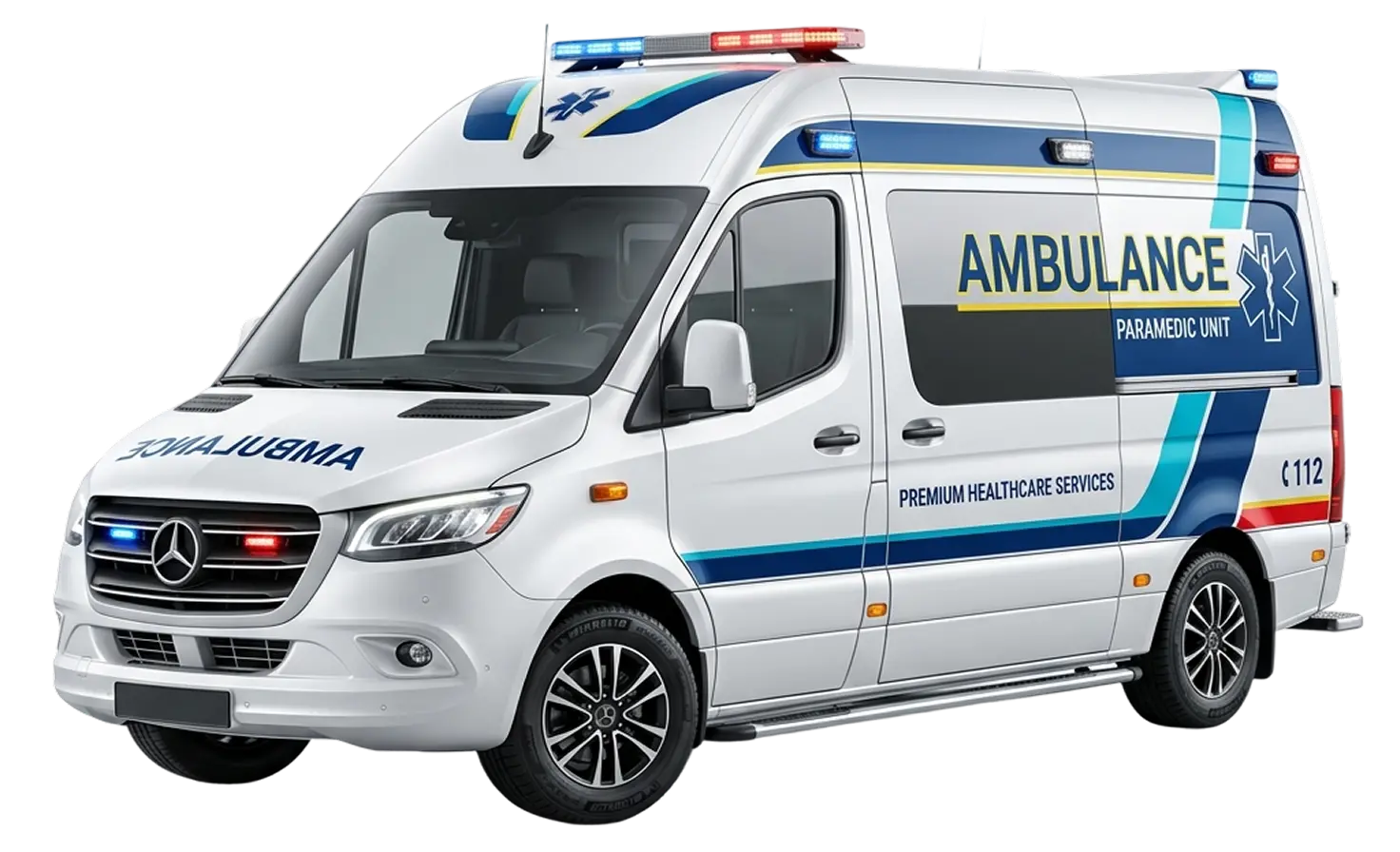
AC ambulance services in Bangladesh provide temperature-controlled emergency medical transportation essential for patient stability during transit. These services utilize specialized vehicles equipped with air conditioning, medical oxygen, and basic life support tools to mitigate the risks of heatstroke and physical exhaustion, which are prevalent in the country’s humid, tropical climate.
The landscape of emergency medical services (EMS) in Bangladesh has undergone significant transformation by 2026. As urbanization intensifies and the healthcare sector expands, the demand for reliable, climate-controlled transport has moved from being a luxury to a clinical necessity. For patients suffering from cardiac distress, respiratory issues, or post-operative vulnerability, a standard non-AC vehicle is often inadequate and potentially dangerous given the country's average high temperatures.
The Critical Importance of Air Conditioning in Medical Transport
In Bangladesh, where summer temperatures frequently exceed 35°C with high humidity, the internal environment of a vehicle can quickly become hazardous for a person in a compromised physiological state. AC ambulance services are not merely about comfort; they are about clinical stability. High ambient temperatures can lead to vasodilation, increased heart rate, and dehydration—factors that can exacerbate critical conditions like myocardial infarction or heat exhaustion.
Furthermore, many life-saving medications and sensitive medical equipment carried within an ambulance require a stable, cool environment to remain effective. Portable ventilators, cardiac monitors, and certain intravenous fluids can malfunction or degrade if exposed to the extreme heat found inside a non-AC van stuck in Dhaka’s notorious traffic. By maintaining a constant temperature between 18°C and 22°C, AC ambulances ensure that both the patient and the medical interventions remain within safe operating parameters.
Classification of Ambulance Services in Bangladesh
To choose the right service, it is essential to understand that not all AC ambulances are equipped equally. By 2026, the Directorate General of Health Services (DGHS) and private providers have categorized these vehicles based on their internal capabilities.
1. Basic AC Ambulance
These are the most common vehicles used for inter-city and intra-city transfers. Typically based on the Toyota Hiace or similar microbus models, they feature a modified interior with a foldable stretcher, a bench for attendants, and a dedicated AC unit for the patient cabin.
- Primary Use: Transferring stable patients between hospitals or from home to a diagnostic center.
- Equipment: Medical oxygen cylinder, first-aid kit, and basic suction machine.
2. ICU and CCU Ambulances (High-Dependency)
These are mobile intensive care units. Unlike basic AC ambulances, these vehicles are often purpose-built or extensively modified to house heavy life-support machinery. They are staffed by a doctor and a trained nurse or paramedic.
- Primary Use: Transporting critically ill patients, those on ventilators, or those with unstable cardiac rhythms.
- Equipment: Mechanical ventilators, multi-channel monitors, defibrillators, infusion pumps, and emergency drug kits.
3. NICU and PICU Ambulances
Specialized for neonates (newborns) and pediatric patients, these AC ambulances prioritize extreme temperature precision and vibration control.
- Primary Use: Transferring premature infants or critically ill children to specialized hospitals like Dhaka Shishu Hospital or private pediatric centers.
- Equipment: Transport incubators, neonatal ventilators, and specialized small-scale monitoring sensors.
4. Freezing Ambulances
While not for the living, these are a vital part of the AC ambulance niche. They are equipped with refrigeration units designed to keep a body at sub-zero temperatures.
- Primary Use: Long-distance transport of deceased individuals for burial in ancestral villages.
- Equipment: Stainless steel refrigerated coffins or specialized cooling chambers.
Technical Specifications of a Standard AC Ambulance
When hiring an AC ambulance in 2026, it is important to verify the technical layout to ensure it meets the patient's needs. A standard high-quality unit should include:
- Dual-Zone Climate Control: The driver’s cabin and the patient’s cabin should have independent controls to ensure the rear remains at the desired medical temperature regardless of the front-seat settings.
- Oxygen Manifold System: Modern units should have at least two large oxygen cylinders (48 cubic feet or larger) with high-quality flowmeters and humidifiers.
- Suspension Modification: Since many ambulances are modified commercial vans, premium services often upgrade the suspension (gas-charged shocks) to reduce the impact of road bumps on the patient.
- Inverter and Power Backup: To run medical equipment like nebulizers or monitors without draining the vehicle’s primary battery, a dedicated power inverter or secondary battery system is mandatory.
- Communication Tools: Integrated GPS for real-time tracking and a radio or mobile communication link to the dispatch center.
Cost Analysis: AC Ambulance Fares in 2026
Pricing for AC ambulance services in Bangladesh is influenced by distance, fuel prices (Octane/CNG), the level of medical support required, and bridge tolls. Generally, there is a base fare plus a per-kilometer charge for long-distance travel.
| Service Type | Inside Dhaka City (Flat Rate) | Outside Dhaka (Per KM/Base) | Additional Costs |
|---|---|---|---|
| Basic AC Ambulance | BDT 3,000 – 5,000 | BDT 150 – 200 per km | Bridge tolls, waiting charges |
| ICU AC Ambulance | BDT 10,000 – 15,000 | BDT 25,000 – 40,000+ (Fixed) | Doctor & Nurse fees (approx. BDT 5,000) |
| Freezing Ambulance | BDT 5,000 – 7,000 | BDT 12,000 – 25,000 (Zonal) | Disinfection fees |
| NICU Ambulance | BDT 12,000 – 18,000 | Case-by-case basis | Specialized technician fee |
Note: Prices are estimates for 2026 and may fluctuate based on current energy costs and inflation.
Understanding "Waiting Charges"
In Bangladesh, a common point of confusion is the waiting charge. If an ambulance is hired to take a patient to a hospital and wait to bring them back (or wait for admission procedures), providers typically charge BDT 500 to BDT 1,000 per hour after the first hour of waiting. For long-distance inter-district trips, the "return fare" is usually included in the initial quote, even if the ambulance returns empty.
Logistics and the Challenges of Patient Transfer
The efficiency of an AC ambulance service in Bangladesh is often hampered by factors beyond the provider’s control. Understanding these logistics helps in better planning.
The Traffic Factor
Dhaka’s traffic is a major hurdle. Even with sirens and emergency lights, an ambulance may find it difficult to navigate congested arteries like the Airport Road or the Moghbazar flyover. High-end AC ambulance providers now use real-time traffic data to suggest alternative routes, but family members should always factor in extra time.
Inter-District Travel
When moving a patient from a peripheral district (like Sylhet, Bogra, or Barisal) to Dhaka, the AC system must be robust enough to run continuously for 6 to 10 hours. It is vital to ask the provider if they have a backup power source for the AC and if the vehicle has been recently serviced for long-haul journeys. Highway safety is another concern; hence, choosing a service with a two-driver system for very long distances is recommended.
Road Conditions
While the national highways have improved significantly by 2026, rural roads can still be jarring. The cooling system in the ambulance must be vibration-resistant. Families should ensure the patient is properly secured with the multi-point harness systems that are now standard in reputable AC ambulance fleets.
How to Verify and Choose a Reliable Provider
With hundreds of private operators, the quality of AC ambulance services can vary. Use the following checklist to verify a provider before booking:
- Registration and Licensing: Ensure the vehicle has an "Ambulance" registration from the BRTA (Bangladesh Road Transport Authority). This allows it to use sirens and move during restricted hours or lockdowns.
- AC Functionality Check: Before the patient is loaded, ask the driver to turn on the AC to its maximum setting. If the cabin doesn’t cool down within 3–5 minutes, the compressor may be weak.
- Oxygen Supply: Check the pressure gauge on the oxygen cylinder. It should show a full or near-full tank. Ask for a spare cylinder if the journey is longer than 3 hours.
- Staff Credentials: If you are hiring an ICU ambulance, ask for the name and BMDC (Bangladesh Medical & Dental Council) registration number of the doctor on board.
- Cleanliness and Hygiene: Look for signs of sterilization. In 2026, standard protocols require the ambulance to be disinfected after every patient transfer, especially in a post-pandemic healthcare environment.
The Role of Technology in 2026 EMS
Technology has significantly streamlined the booking process for AC ambulances in Bangladesh.
- App-Based Booking: Several platforms now act as aggregators, similar to ride-sharing apps, allowing users to see the nearest available AC ambulance, read reviews, and see a transparent price estimate.
- Telemedicine Integration: Some premium AC ambulance services now offer a video link between the ambulance and the receiving hospital’s emergency department. This allows ER doctors to monitor the patient’s vitals and provide guidance to the paramedics in transit.
- GPS Tracking: Families can now receive a tracking link to their smartphones, allowing them to monitor the ambulance’s location and estimated time of arrival (ETA) at the destination.
Common Mistakes to Avoid
- Prioritizing Price Over Equipment: Choosing the cheapest AC ambulance might mean getting a vehicle with a failing cooling system or an empty oxygen tank. Always verify the equipment list.
- Incomplete Information: When booking, people often fail to mention the patient’s weight or specific needs (e.g., if the patient is on a portable ventilator). This can lead to a vehicle arriving that isn't suited for the equipment.
- Forgetting Tolls and Extras: Always clarify if the quoted price includes the "Mayor Hanif Flyover" toll, "Padma Bridge" toll, or other highway charges to avoid disputes mid-journey.
Frequently Asked Questions
Does 999 provide AC ambulance services?
The National Emergency Service (999) can coordinate with both government and private ambulance providers. While many government-allocated ambulances are now AC-equipped, availability depends on the current demand and location. They will often connect you with the nearest private AC service if a government vehicle is unavailable.
Can I hire an AC ambulance for a COVID-19 or infectious disease patient?
Yes, but you must inform the provider beforehand. Specialized AC ambulances with HEPA filtration or specific isolation protocols are used for infectious diseases to prevent the virus from circulating through the AC system. These services usually carry a higher "disinfection fee."
Is the oxygen included in the base fare?
For basic AC ambulances, one cylinder of oxygen is typically included in the fare for a standard duration (1-2 hours). For long-distance travel or high-flow oxygen requirements, there may be an additional charge per cylinder used.
How many people can accompany the patient in an AC ambulance?
Typically, most AC ambulances (Hiace models) allow two attendants to sit in the back with the patient. One more person might be allowed in the front seat with the driver, depending on the provider's policy and the amount of medical equipment on board.
What should I do if the AC fails during transit?
Reputable services have a protocol for vehicle failure. They should either provide a backup vehicle or have manual ventilation options (opening windows/using portable fans) while navigating to the nearest safe location. Always check the AC's performance before the journey begins.
Final Recommendation
When facing a medical emergency in Bangladesh, time and stability are of the essence. For any transfer longer than 30 minutes, or for any patient with a compromised respiratory or cardiovascular system, an AC ambulance is the recommended choice over a non-AC variant. To ensure the best outcome, always book through an established provider with a verifiable track record, confirm the presence of a full oxygen supply, and use digital platforms to ensure price transparency and real-time tracking.