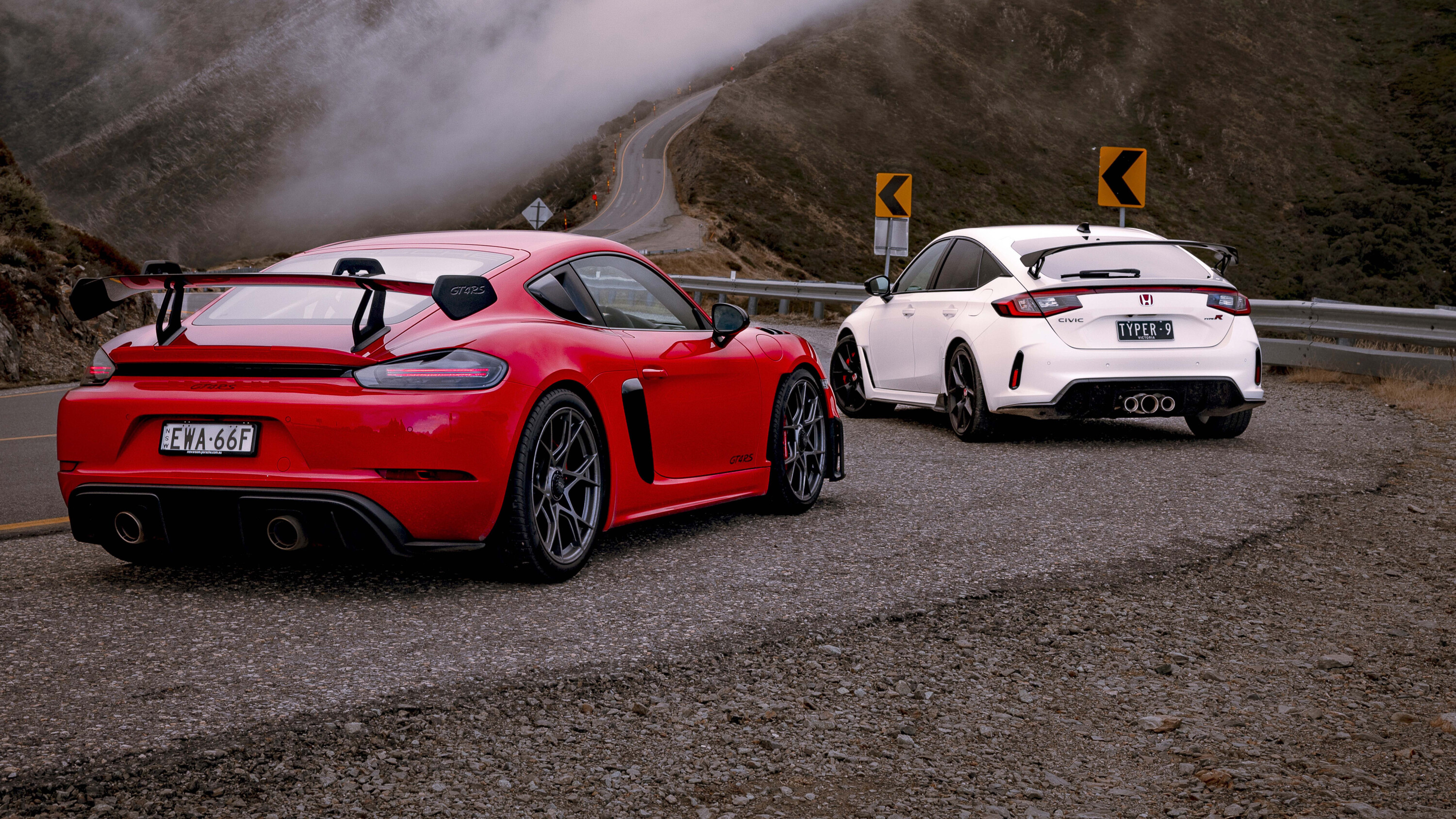
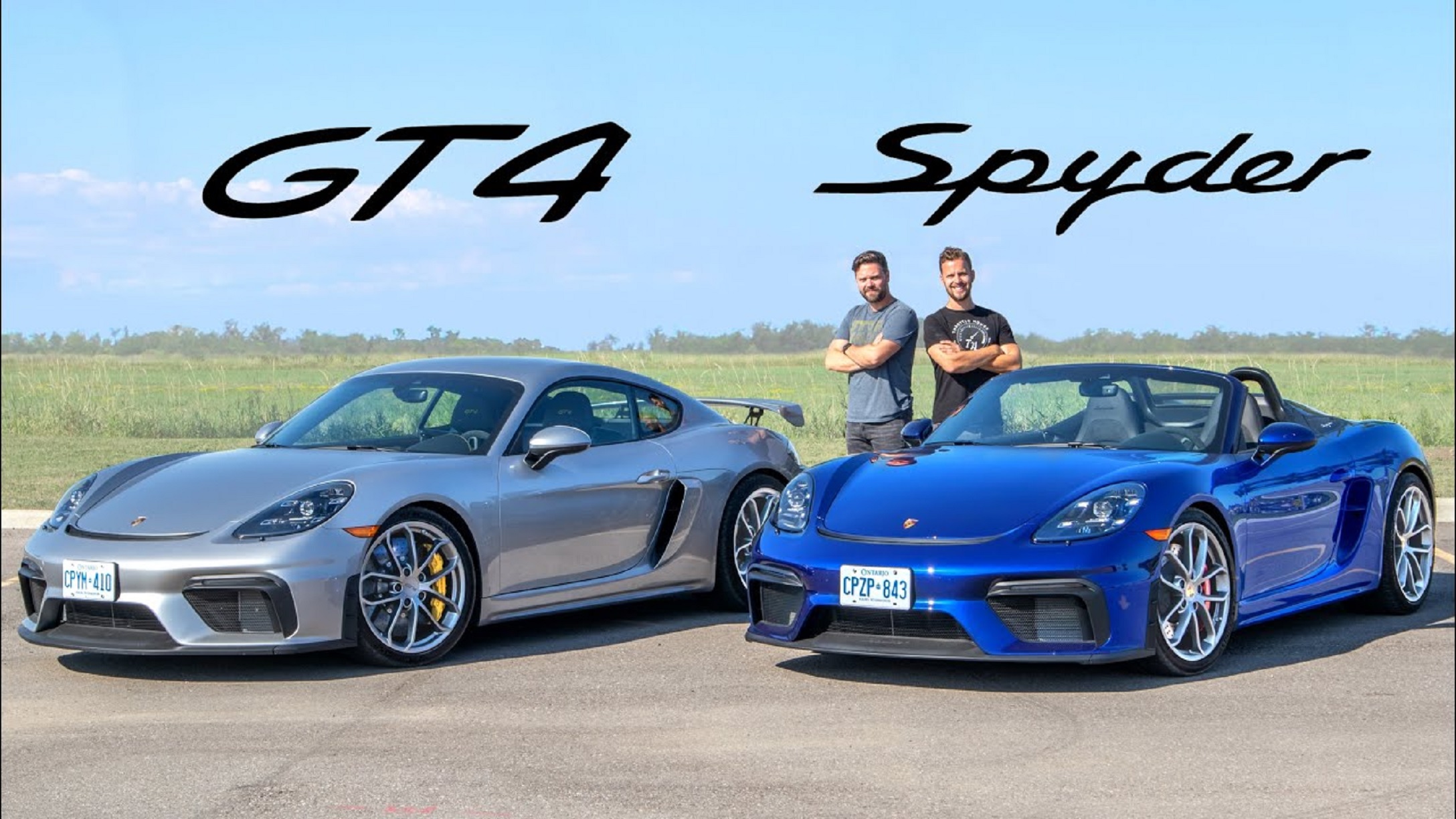
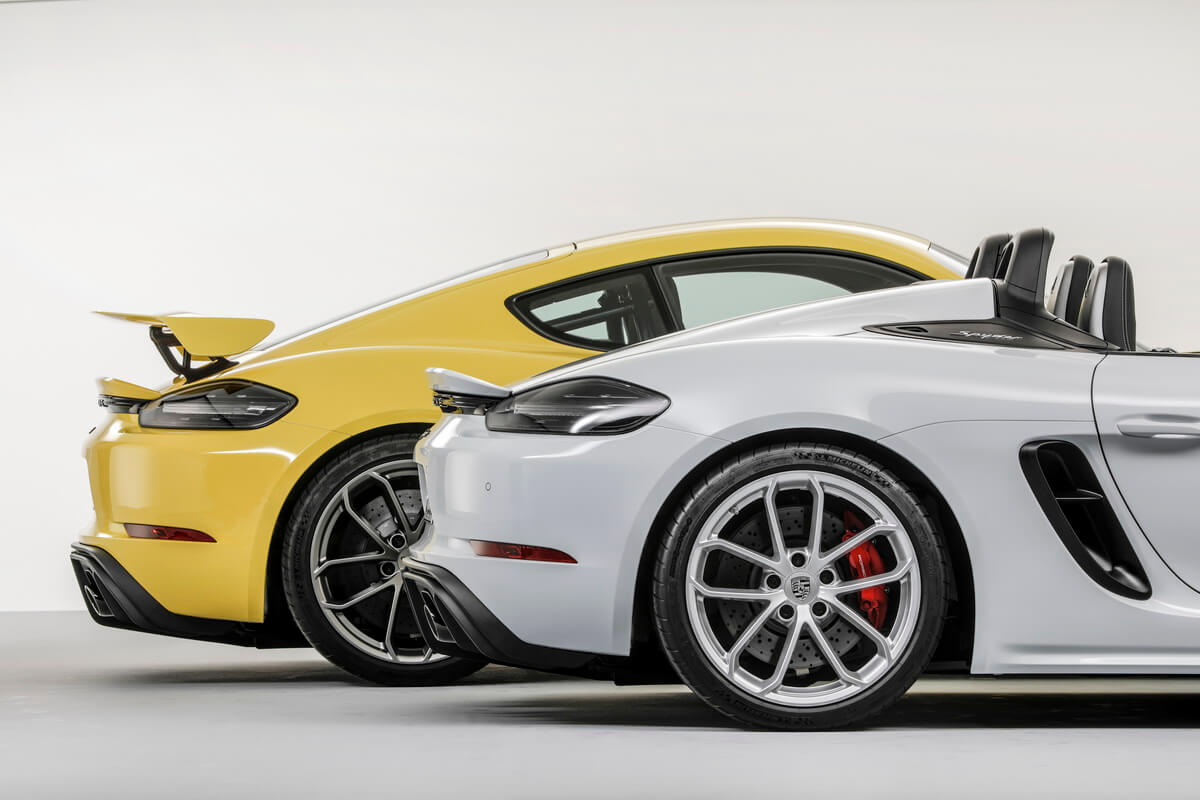
Choosing between the Porsche 981 Cayman GT4 and the 718 Cayman GT4 depends on whether you prioritize emotional engagement and raw sound or outright performance and modern refinement. The 981 GT4 is celebrated for its organic exhaust note and "analog" feel, while the 718 GT4 offers a more sophisticated chassis, a higher-revving 4.0L engine, and the option of a lightning-fast PDK transmission.
The Porsche Cayman GT4 has long occupied a unique space in the automotive world. Positioned as the "giant killer," it took the mid-engine balance of the Cayman platform and infused it with the DNA of the 911 GT3. As we look at these vehicles in 2026, both generations have solidified their status as modern classics. However, the differences between the original 981 (2015–2016) and the successor 718 (2019–2023) are more than skin deep. This guide analyzes the technical specifications, driving dynamics, and ownership considerations to help you decide which GT4 deserves a spot in your garage.
The Evolution of the Mid-Engine Icon
When the 981 GT4 was first released, it was a "forbidden fruit" moment for Porsche fans. For years, Porsche had carefully guarded the 911’s hierarchy, ensuring no Cayman would ever surpass the flagship on the track. The 981 GT4 broke that glass ceiling by borrowing the front suspension from the 991.1 GT3 and the 3.8-liter engine from the Carrera S.
By the time the 718 GT4 arrived, the mission had changed. It was no longer a one-off experiment but a dedicated member of the GT family. While the 718 generation of the standard Cayman switched to turbocharged four-cylinder engines, Porsche understood that the GT4 required a naturally aspirated flat-six. This led to the development of a new 4.0-liter engine, a more aggressive aerodynamic package, and a chassis tuned for even higher levels of precision. In 2026, with the automotive landscape shifting rapidly toward hybridization and electrification, these two internal combustion masterpieces represent the pinnacle of the mid-engine driving experience.
Engine and Performance: 3.8L vs. 4.0L
The heart of any GT Porsche is its engine, and here we find the most significant philosophical divide.
The 981 GT4: The 911-Derived Heart
The 981 GT4 utilizes a 3.8-liter naturally aspirated flat-six (the 9A1 engine) producing 385 horsepower and 309 lb-ft of torque. Because this engine was originally designed for the 911, it had to be rotated 180 degrees to fit in the Cayman's mid-engine layout. It is widely praised for its mid-range punch and an exhaust note that many enthusiasts consider superior to the newer model. It feels raw and mechanical, with a power delivery that is rewarding but starts to taper off slightly as you approach the 7,600 RPM redline.
The 718 GT4: A Bespoke Powerplant
The 718 GT4 features a 4.0-liter flat-six (the 9A2EVO). Contrary to popular belief, this is not a de-stroked GT3 engine; rather, it is a naturally aspirated version of the turbocharged engine found in the 992-generation Carrera. It produces 414 horsepower and 309 lb-ft of torque (310 lb-ft with PDK). The 718’s engine revs higher, with an 8,000 RPM redline, and feels more linear in its power delivery. While it lacks the raw, high-pitched scream of the 981 at lower speeds due to stricter emissions hardware, it provides a more modern, efficient, and ultimately faster experience.
Transmission Options: The Purist vs. The Professional
For many years, the GT4 was a "manual only" affair, which helped cement its reputation as a purist’s tool.
- 981 GT4: Available exclusively with a 6-speed manual transmission. The shifter is often cited as one of the best in Porsche history—short, precise, and incredibly tactile. However, it is famous for its "long gearing." Second gear can reach nearly 80 mph, which some drivers find frustrating on tight canyon roads where you rarely get to use the engine's full range.
- 718 GT4: Launched initially with a 6-speed manual, Porsche later introduced a 7-speed PDK (Porsche Doppelkupplung) option. The PDK is a game-changer for those focused on lap times, offering shifts that are faster than any human could achieve. Even the manual in the 718 feels slightly more refined, though the long gearing issue remains largely unchanged from the 981 generation.
Driving Dynamics and Chassis Engineering
While both cars share a similar mid-engine layout, the 718 GT4 benefited from four years of additional development in suspension and aerodynamics.
Aerodynamics and Downforce
One of the most significant upgrades in the 718 GT4 is its aerodynamic efficiency. It features a functional rear diffuser that accounts for a large portion of its downforce without increasing drag. In fact, the 718 GT4 produces 50% more downforce than the 981 GT4. At high speeds on a circuit like the Nürburgring, the 718 feels significantly more planted and stable, particularly in high-speed sweepers.
Suspension and Steering
Both cars utilize a McPherson strut front and rear suspension setup, heavily influenced by the 911 GT3. However, the 718 GT4 received revised damping and improved rear toe links, which help mitigate some of the "nervousness" the 981 can exhibit under heavy braking on uneven surfaces. The electric power steering in the 718 is also a step forward; it is slightly more precise and communicative, though the 981’s steering is by no means a weak point.
Comparative Specifications
The following table highlights the core technical differences between the two generations.
| Feature | Porsche 981 GT4 (2015-2016) | Porsche 718 GT4 (2019-2023) |
|---|---|---|
| Engine | 3.8L Flat-6 (9A1) | 4.0L Flat-6 (9A2EVO) |
| Horsepower | 385 hp @ 7,400 rpm | 414 hp @ 7,600 rpm |
| Torque | 309 lb-ft @ 4,750 rpm | 309 lb-ft (Manual) / 310 lb-ft (PDK) |
| Redline | 7,600 RPM | 8,000 RPM |
| 0-60 MPH | 4.2 Seconds | 4.2s (Manual) / 3.7s (PDK) |
| Top Speed | 183 MPH | 189 MPH |
| Transmission | 6-Speed Manual Only | 6-Speed Manual / 7-Speed PDK |
| Brakes | 380mm (Steel) / Optional PCCB | 380mm (Steel) / Optional PCCB |
| Curb Weight | ~2,955 lbs | ~3,130 lbs |
Sound and Soul: The GPF Factor
In the enthusiast community, "sound" is often the deciding factor between these two cars. The 981 GT4 was built before the widespread implementation of Gasoline Particulate Filters (GPF). Consequently, it has a louder, more aggressive, and more "natural" flat-six howl. From 4,000 RPM upward, the 981 fills the cabin with a mechanical symphony that many feel the 718 cannot match.
The 718 GT4, particularly in European markets, was fitted with GPFs to meet stringent emissions standards. Even in North America, where the filters are unmonitored or replaced with "inert" canisters, the exhaust manifold and piping design are more restrictive. While the 718 still sounds excellent above 6,000 RPM, it is noticeably quieter and more "muffled" in the lower rev range compared to the 981. Many 718 owners in 2026 have turned to aftermarket exhaust solutions to regain that lost character.
Interior, Technology, and Daily Usability
As a 2026 buyer, technology and interior comfort may play a role in your decision, especially if the GT4 will see street use.
- Technology: The 718 GT4 is the clear winner here. It features Porsche Communication Management (PCM) 4.0, which supports Apple CarPlay (and in later models, Android Auto via workarounds). The infotainment screen is more responsive and higher resolution than the aging PCM 3.1 found in the 981.
- Interior Quality: The layouts are nearly identical, featuring the classic three-gauge instrument cluster (with the center tachometer) and the rising center console. Both offer the exceptional Full Bucket Seats (often called "918 seats"), which are highly recommended for the full GT experience.
- Practicality: Since both are Caymans, you get two trunks (the "frunk" and the rear hatch). They are surprisingly capable weekend tourers. However, the 718’s improved sound insulation makes it a slightly more tolerable companion for long highway stints.
Maintenance and Ownership Costs in 2026
Both the 981 and 718 GT4 have proven to be remarkably reliable, especially given their performance capabilities. However, as these cars age, certain maintenance items become relevant.
- Brakes: Both generations came standard with massive steel brakes, with Porsche Ceramic Composite Brakes (PCCB) as an option. In 2026, if you are looking at a high-mileage car, check the condition of the rotors. PCCB replacement is extremely expensive (often exceeding $20,000 for a full set), leading many track enthusiasts to swap them for steel.
- Transmission Health: Early 981 GT4s had a minor recall regarding third gear failures in the manual gearbox. Most cars have had this fixed under warranty, but it is worth verifying in the service history.
- Engine Mounts: Both cars use dynamic transmission/engine mounts. These are wear items that can eventually leak or fail, resulting in a dashboard warning light.
- Tires: These cars were designed for Michelin Pilot Sport Cup 2 tires. These are "track-day" tires that perform poorly in cold or wet conditions and have a short lifespan (often less than 10,000 miles).
Market Value and Investment Potential
In 2026, the market has settled into a clear pattern. The 981 GT4 is viewed as the "analog legend." Because it was the first of its kind and has a more evocative sound, its depreciation has largely leveled off, and pristine examples are beginning to appreciate. It is a favorite among collectors who value engagement over lap times.
The 718 GT4 holds its value well due to its superior performance and the availability of the PDK, which appeals to a broader audience. However, because more 718s were produced over a longer period, they are generally easier to find on the used market. The 718 GT4 RS (the 493 hp monster) sits in a much higher price bracket and has made the standard 718 GT4 feel like a relative bargain for those who want a focused track car without the "RS" price tag.
Frequently Asked Questions
Is the 718 GT4 faster than the 981 GT4?
Yes. On the Nürburgring Nordschleife, the 718 GT4 is approximately 12 seconds faster than the 981 GT4. This is due to the increased horsepower, more sophisticated aerodynamics, and improved suspension tuning that allows for higher cornering speeds.
Can you fix the "long gearing" in these cars?
Yes, but it is expensive. Several aftermarket companies offer shorter gear sets or a shorter final drive ratio for the 6-speed manual. This significantly improves acceleration and "fun factor" on the street but usually costs between $5,000 and $10,000 including labor.
Does the 718 GT4 sound significantly worse than the 981?
"Worse" is subjective, but it is definitely quieter. The 981 has a raw, mechanical bark that is present across the entire rev range. The 718 is more subdued at low RPMs but develops a sharp, racing-inspired tone as it nears its 8,000 RPM redline.
Which car is better for track use?
The 718 GT4 is the superior track tool. Its increased downforce makes it more stable at high speeds, and the availability of the PDK transmission allows drivers to focus entirely on their line and braking points. However, for a casual track day enthusiast who prioritizes "feel," the 981 is still an incredible experience.
Is the 981 GT4 more reliable because it's simpler?
Not necessarily. Both cars use robust naturally aspirated engines. The 981's 3.8L engine is a proven unit from the 911 Carrera S, while the 718's 4.0L is a modern design with high-quality components. Both are considered some of the most reliable sports cars in their respective eras.
Final Recommendation: Which One Should You Buy?
The choice between the 981 and 718 GT4 is ultimately a choice between character and capability.
Buy the 981 GT4 if: You want a car that makes you smile every time you start it. You value the "old school" Porsche sound, you only want a manual transmission, and you plan to use the car primarily for spirited weekend drives where the emotional connection to the machine is more important than a tenth of a second on a lap timer.
Buy the 718 GT4 if: You want the most refined mid-engine experience Porsche offers (short of the RS). You plan on attending frequent track days, you prefer having modern technology like Apple CarPlay, or you want the incredible performance of the PDK transmission. The 718 is the objectively better "performance machine," offering a level of precision that the 981 can't quite match.
In 2026, regardless of which model you choose, you are securing a piece of automotive history—a naturally aspirated, mid-engine Porsche GT car that represents a formula we may never see again.