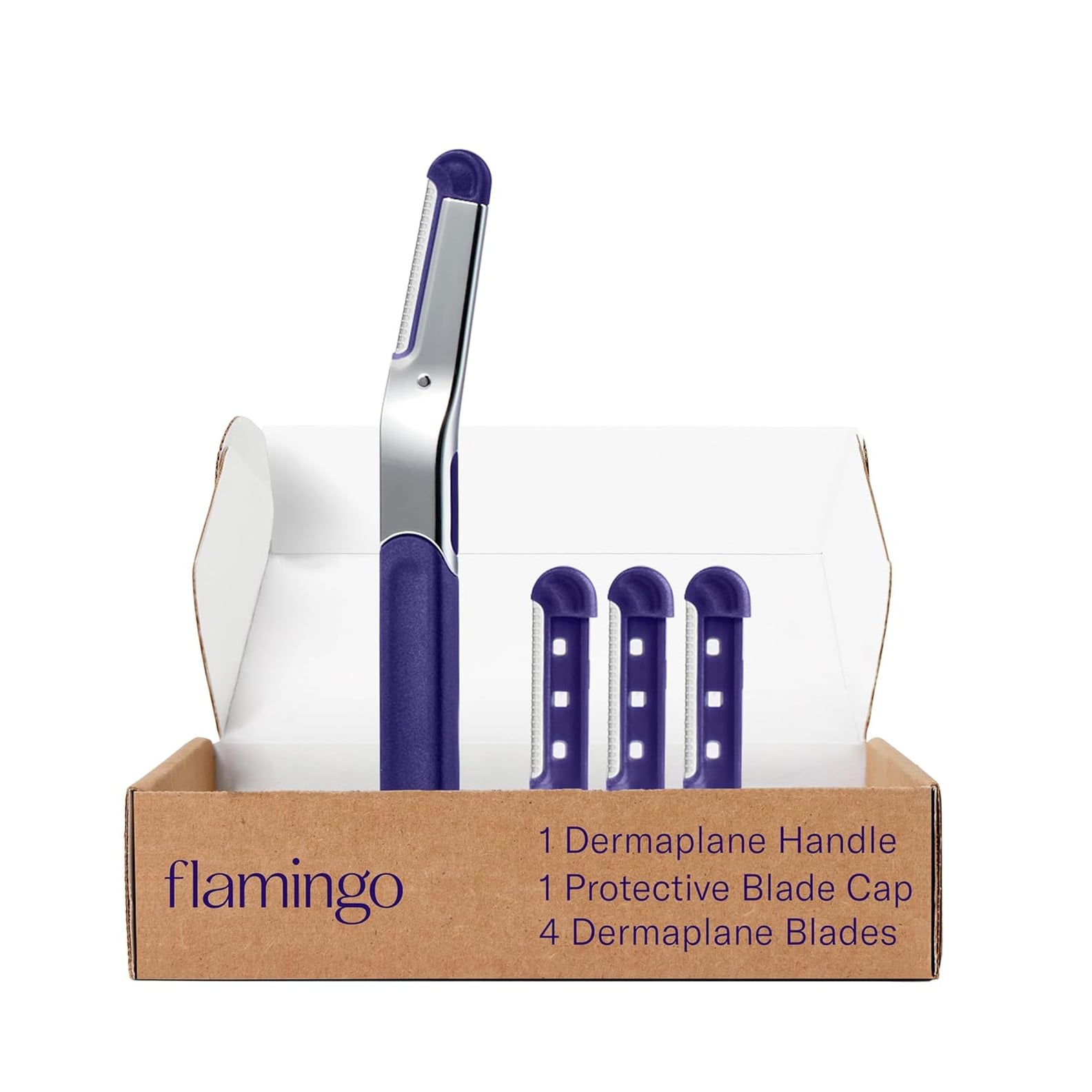
Dermaplaning at home removes built-up dead skin cells and fine vellus hair using a specialized, angled blade edge. Selecting the ideal tool requires evaluating blade sharpness, safety guards, handle ergonomics, and choosing between manual razors and sonic powered devices. High-quality stainless steel manual blades and calibrated sonic exfoliators provide the safest, most effective physical exfoliation for smooth makeup application and enhanced product absorption.
Understanding Dermaplaning: Benefits, Safety, and Biomechanics
Dermaplaning is a precise form of manual exfoliation, historically performed exclusively in clinical dermatological settings and medical spas. The procedure involves holding a sterile blade at a strict 45-degree angle against dry, taut skin and using short, light strokes to gently scrape away the outermost layer of the epidermis—specifically the stratum corneum—along with fine vellus hair (commonly referred to as peach fuzz).
Removing this dead cell barrier immediately smooths the surface texture of the skin. As a result, skincare formulations like serums, hydrators, and active botanicals penetrate more efficiently without being obstructed by surface debris or trapped in hair follicles. Additionally, cosmetics lay smoothly against the skin without clinging to dry patches or fine hairs.
- Blade Position: ~45° Angle to Skin
- Stroke Style: Short, feather-light strokes
- Skin Tension: Pull skin taut with non-dominant hand
Despite its benefits, at-home dermaplaning requires careful execution. Using improper angles, applying excessive downward pressure, or operating over compromised skin can result in epidermal micro-tears, severe razor burn, or localized infections.
Important Dermatological Notice: Dermaplaning should never be performed on skin with active inflammatory acne, active rosacea flare-ups, open eczema lesions, active cold sores, or severe sunburn. Gliding a sharp blade over active pustules can pop lesions, spread bacteria across the face, and cause post-inflammatory hyperpigmentation or scarring.
Key Buying Criteria: How to Evaluate Dermaplaning Tools
Choosing between at-home dermaplaning options requires understanding several distinct design features:
1. Manual vs. Powered (Sonic) Technology
- Manual Tools: Rely entirely on manual control, angle, and stroke pressure. They range from inexpensive single-use razors to reusable surgical-grade steel handles with replaceable heads. Manual blades offer tactile feedback, giving experienced users precise control over edge tension.
- Sonic/Powered Devices: Utilize subtle high-frequency sonic vibrations alongside specialized blades. The rapid micro-vibrations help nudge away dead surface skin cells, allowing the blade to glide smoothly across uneven contours with minimal tugging.
2. Blade Safety Micro-Guards
- Guarded Blades: Feature tiny perpendicular ridge patterns along the edge of the blade. These micro-guards create a safety cushion between the sharp metal and the epidermis, reducing the risk of accidental nicks and cuts. They are ideal for beginners or those with sensitive skin.
- Unguarded Blades: Offer an exposed surgical or stainless steel edge without micro-guards. While they deliver a closer exfoliation and more thorough hair removal, they demand precise handling and a steady angle to avoid cuts.
3. Sustainability and Material Build
- Single-Use Disposables: Constructed primarily from plastic. While convenient and travel-friendly, they generate plastic waste and feature lower-grade steel edges that dull rapidly.
- Reusable Metal Handles with Replacement Heads: Made from solid stainless steel, aluminum, or durable molded materials. They provide better ergonomic weight and balance, yielding greater control while reducing long-term environmental waste.
Detailed Evaluation of 7 Top Dermaplaning Tools
Below is a detailed analysis of seven leading at-home dermaplaning tools, evaluated on build quality, blade engineering, safety profiles, and overall performance.
1. Dermaflash Luxe+ Sonic Dermaplaning Device
| Attribute | Details |
|---|---|
| Category | Premium Electric / Sonic |
| Blade Type | Proprietary Microfine Edge (Single-Use Safety Edges) |
| Power | Rechargeable Lithium-ion |
The Dermaflash Luxe+ represents the top tier of at-home electric dermaplaning technology. Combining sonic vibration with single-use proprietary blade edges, this device is engineered to mimic professional spa treatments while prioritizing safety for home users.
Key Characteristics & Performance
- Sonic Micro-Vibrations: Operates with two distinct speed settings, vibrating at thousands of cycles per minute to clear away dead skin cells and vellus hair with minimal friction.
- Safety Engineering: The single-use blade edges feature fine micro-guards integrated directly into the housing. The device prevents blade reuse by employing a single-click ejection and loading system, ensuring hygienic operation.
- Ergonomics: Designed with an intuitive, contoured handle that naturally aligns the blade at the proper 45-degree angle when laid flat against the face.
Pros & Cons
- Pros: Highly effective; built-in sonic technology reduces skin pulling; ergonomic design aids correct blade alignment; gentle on sensitive skin.
- Cons: High initial investment; requires purchasing proprietary replacement blades.
2. Tweezerman Facial Dermaplaner
| Attribute | Details |
|---|---|
| Category | Mid-Range Manual Reusable |
| Blade Type | Replaceable Stainless Steel Blades (Guarded) |
| Power | Manual |
Known for high-precision grooming tools, Tweezerman offers a durable manual dermaplaner. Designed for long-term use, it features a solid handle and clear safety mechanisms.
Key Characteristics & Performance
- Build & Weight: Features a weighted metal handle that offers solid control, allowing gravity and light pressure to guide each stroke without pressing hard into the skin.
- Blade Construction: Uses replaceable stainless steel blades equipped with micro-guards along the cutting edge to reduce the risk of accidental scrapes.
- Maintenance: Blades snap securely into the metal head and can be easily swapped out after three to four uses to maintain optimal sharpness.
Pros & Cons
- Pros: Durable metal handle; excellent weight balance; cost-effective over time compared to electric devices; high-quality steel edges.
- Cons: Micro-guards may require multiple passes over dense vellus hair; replacement blades must be purchased specifically for this model.
3. StackedSkincare Dermaplaning Tool
| Attribute | Details |
|---|---|
| Category | Professional-Grade Reusable Manual |
| Blade Type | Replaceable Surgical Steel Edge (Micro-Guarded) |
| Power | Manual |
Developed by an aesthetician, the StackedSkincare Dermaplaning Tool bridges the gap between consumer razors and professional clinical instruments. It emphasizes precision and control for at-home skin prep.
Key Characteristics & Performance
- Surgical Steel Blades: Uses sharp, surgical-grade stainless steel blades equipped with safety micro-guards, delivering a close exfoliation while minimizing irritation.
- Aluminum Handle: Built with a lightweight yet sturdy aesthetician-style aluminum handle that provides fine tactile feedback during use.
- Design Focus: Formulated specifically to clear dry skin patches to improve the absorption of active skincare ingredients, such as serums and peel solutions.
Pros & Cons
- Pros: High-grade surgical steel blades; precise, ergonomic aluminum handle; designed with professional aesthetician principles.
- Cons: Higher initial price point for a manual tool; replacement blade cartridges add ongoing cost.
4. Schick Hydro Silk Touch-Up Razors
| Attribute | Details |
|---|---|
| Category | Budget Single-Use Disposable |
| Blade Type | Stainless Steel with Fine Micro-Guards |
| Power | Manual |
The Schick Hydro Silk Touch-Up is one of the most widely accessible and affordable dermaplaning tools available. It serves as an easy entry point for beginners learning proper skin-tensing techniques.
Key Characteristics & Performance
- Accessibility & Convenience: Sold in multi-packs containing disposable plastic handles, each with a protective safety cap.
- Micro-Guard Mesh: Features fine micro-guards over stainless steel blades designed to prevent nicks, making it suitable for maneuvering around sensitive areas like the brow bone and upper lip.
- Precision Precision Cap: Includes an attachable precision cap that shortens the exposed blade surface for detailed grooming around eyebrows.
Pros & Cons
- Pros: Very affordable; widely available; includes a precision cover for detailed eyebrow shaping; great for beginners.
- Cons: Plastic design creates waste; lower-grade steel blades dull quickly, often requiring disposal after 1–2 uses.
5. Kitsch Stainless Steel Dermaplaning Razors
| Attribute | Details |
|---|---|
| Category | Eco-Conscious Disposable/Semi-Reusable |
| Blade Type | High-Quality Stainless Steel with Guards |
| Power | Manual |
Kitsch provides a popular alternative in the manual dermaplaner category, using recycled materials for its handles while focusing on stylish, minimalist design.
Key Characteristics & Performance
- Material Composition: Handles are made with environmentally conscious materials, such as recycled plastic or plant-based composites, paired with sharp stainless steel blades.
- Blade Guard Geometry: Designed with spaced safety guards that prevent skin catching while cleanly removing fine face hair and flaky patches.
- Packaging: Packaged in multi-packs, offering an affordable option for users who prioritize routine hygienic blade replacement.
Pros & Cons
- Pros: Eco-conscious handle materials; attractive aesthetic design; smooth glide across flat areas like cheeks and forehead.
- Cons: Handle flexes slightly more than solid metal options; blades dull relatively quickly on thicker hair.
6. Versed Instant Resurface Dermaplaning Tool
| Attribute | Details |
|---|---|
| Category | Sustainable Reusable Manual |
| Blade Type | Replaceable Stainless Steel Blades |
| Power | Manual |
The Versed Instant Resurface Tool focuses on sustainability and simplicity. Built with a reusable aluminum handle, it is designed to minimize single-use plastic waste in skincare routines.
Key Characteristics & Performance
- Sustainable Construction: Features an anodized aluminum handle designed for long-term use, accommodating small single-use blade cartridges.
- Safety Profile: Uses guarded stainless steel blades engineered for gentle skin exfoliation, minimizing the risk of irritation for sensitive skin types.
- Compact Slip-Free Grip: The textured body offers a secure, slip-free grip when maneuvering around the contours of the face with wet hands.
Pros & Cons
- Pros: Environmentally friendly design; durable metal construction; textured grip enhances stability and safety.
- Cons: Compact blade surface requires more passes across larger facial zones; replacement blades can be difficult to find in local retail stores.
7. Japonesque Dermaplaning Facial Razors
| Attribute | Details |
|---|---|
| Category | Precision Manual Disposable |
| Blade Type | Ultra-Fine Stainless Steel with Micro-Safety Mesh |
| Power | Manual |
Drawing on Japanese beauty tool traditions, Japonesque offers precision-focused manual razors designed to remove fine vellus hair while sweeping away dead epidermal cells.
Key Characteristics & Performance
- Precision Micro-Mesh: Employs narrow blade edges wrapped in a protective mesh guard to prevent skin abrasion while providing smooth hair removal.
- Folding Design Options: Available in folded and fixed designs, making them compact and easy to store for travel.
- Control Handle: Features a narrow, lightweight handle engineered for precise control around tighter facial contours, such as the chin, upper lip, and jawline.
Pros & Cons
- Pros: Excellent precision around delicate contours; protective mesh reduces razor burn; compact design options.
- Cons: Handle feels light in hand, requiring steady manual control; blades wear out fast on coarse facial hair.
Technical Comparison Matrix
The table below summarizes the key technical specifications, safety features, and target uses for all 7 tools:
| Tool Name | Tool Type | Primary Material | Safety Guard Present? | Best For | Price Tier |
|---|---|---|---|---|---|
| Dermaflash Luxe+ | Electric / Sonic | Medical-Grade Polymer / Steel Edges | Yes (Proprietary Shell) | Anti-Aging & Sensitive Exfoliation | Premium ($$$$) |
| Tweezerman Facial Dermaplaner | Manual Reusable | Stainless Steel Handle & Blades | Yes (Micro-Guarded) | Durable Value & Everyday Maintenance | Mid-Range ($$) |
| StackedSkincare Tool | Manual Reusable | Aluminum Handle / Surgical Steel | Yes (Micro-Guarded) | Target Skincare Prep & Absorption | High-Mid ($$$) |
| Schick Hydro Silk Touch-Up | Manual Disposable | Lightweight Plastic & Steel | Yes (Fine Wire Guard) | Beginners & Budget Maintenance | Budget ($) |
| Kitsch Stainless Steel Razors | Manual Semi-Reusable | Recycled Plastic & Steel | Yes (Micro-Mesh Guard) | Eco-Minded Beginners | Budget ($) |
| Versed Instant Resurface | Manual Reusable | Anodized Aluminum & Steel | Yes (Micro-Guarded) | Low-Waste Routine Seekers | Mid-Range ($$) |
| Japonesque Facial Razors | Manual Disposable | Molded Resin & Stainless Steel | Yes (Precision Mesh) | Detailed Work & Travel | Budget ($) |
Step-by-Step Guide: How to Dermaplane Safely at Home
To achieve smooth results and avoid razor burn, micro-cuts, or post-treatment breakouts, follow this standard dermatological preparation and execution protocol.
- Double-Cleanse & Dry Completely (Skin MUST be dry)
- Hold Skin Taut with Non-Dominant Hand
- Position Blade at 45° Angle to Skin Surface
- Use Short, Feather-Light Downward Strokes
- Sanitize Blade & Apply Gentle Hydrating Serum/Moisturizer
Step 1: Deep Cleansing and Complete Drying
Cleanse your skin thoroughly to remove oil, makeup, sunscreen, and surface impurities. Use a gentle, sulfate-free cleanser, followed by a light double cleanse if wearing cosmetics.
- Critical Requirement: Pat your skin completely dry with a clean towel. Never dermaplane on wet or damp skin when using standard dry-dermaplaning methods, as moisture can cause manual blades to skip, catch, and cut the tissue.
Step 2: Skin Tensing Technique
Hold your dermaplaning tool in your dominant hand. Use your non-dominant hand to pull the skin taut in the area you are treating. Pulling the skin flat creates a firm surface, reducing wrinkles or folds that could catch on the blade edge.
Step 3: Blade Angle and Feathered Strokes
Place the blade edge against the skin and tilt it to approximately a 45-degree angle.
- Do not hold the blade perpendicular (90 degrees), as this scrapes the skin aggressively.
- Do not lay the blade completely flat (0 degrees), as this simply glides over hair without exfoliating.
- Using light pressure, make short, downward feathered strokes in the direction of hair growth or slightly across it. Work in small zones: cheeks, jawline, chin, upper lip, and forehead. Avoid the delicate eye socket areas and eyelids entirely.
Step 4: Blade Cleaning and Sanitization
Wipe the blade on a dry, clean tissue between passes to remove accumulated dead cells and hair. If using a reusable tool, sanitize the head with 70% isopropyl alcohol before and after each session.
Step 5: Post-Treatment Care and Recovery
After finishing, rinse your face with cool water and gently pat dry. The newly exposed layer of skin requires immediate hydration and protection:
- Apply: Hyaluronic acid serums, ceramides, squalane, or gentle, non-comedogenic moisturizers.
- Avoid: Active chemical exfoliants (AHAs like glycolic or lactic acid; BHAs like salicylic acid), retinoids, L-ascorbic acid (Vitamin C), and physical face scrubs for at least 48 to 72 hours post-treatment.
- Sun Protection: Apply a broad-spectrum SPF 30+ mineral or chemical sunscreen daily. Freshly exfoliated skin is particularly susceptible to UV damage and hyperpigmentation.
Common Mistakes and Troubleshooting
| Common Issue | Root Cause | Preventive Solution |
|---|---|---|
| Razor Burn / Stinging | Pressing too hard or dragging blade over damp skin | Use zero downward pressure; ensure skin is completely dry and held taut. |
| Micro-Cuts or Scratches | Holding blade at steep angle (~90°) or moving horizontally | Maintain a strict 45° angle; never drag the blade sideways across the skin. |
| Post-Care Breakouts | Dermaplaning over active acne, or using dirty blades | Avoid areas with active pimples; sanitize blades with 70% isopropyl alcohol before use. |
| Flaking Skin Post-Treatment | Over-exfoliating or applying strong actives immediately after | Limit dermaplaning to once every 2–4 weeks; pause retinoids and acids for 3 days after. |
Frequently Asked Questions
Will dermaplaning make my facial hair grow back thicker or darker?
No. Dermaplaning shears off vellus hair at the surface of the skin. It does not alter the underlying hair follicle, growth rate, color, or thickness, which are genetically and hormonally regulated. As the hair grows back, the blunt-cut end may feel temporarily stubbly to the touch, but the structure of the hair remains unchanged.
How often should I use a dermaplaning tool at home?
For most skin types, dermaplaning should be performed once every 2 to 4 weeks. This schedule aligns with the skin's natural 28-day cellular turnover cycle. Dermaplaning too frequently can compromise the skin barrier, leading to redness, sensitivity, and moisture loss.
Can people with active acne or sensitive skin dermaplane?
If you have active inflammatory acne (pustules, papules, or cysts), you should avoid dermaplaning until lesions clear. Tracing a blade over active spots can cut off blemishes, spread acne-causing bacteria, and lead to scarring. Those with sensitive skin or mild rosacea can use tools with integrated safety guards (or sonic options), but should proceed gently and perform a small patch test first.
How many times can I reuse a manual dermaplaning blade?
Single-use disposable razors should ideally be discarded after 1 to 2 uses, as thin steel edges dull rapidly. Reusable tools with replaceable surgical-grade blades can typically be used 3 to 4 times, provided they are thoroughly disinfected with isopropyl alcohol after each session. Discard any blade immediately if you feel it tugging, dragging, or catching on the skin.
What is the difference between dermaplaning and microdermabrasion?
Dermaplaning uses a sharp physical blade angled against dry skin to remove dead skin cells and vellus hair. Microdermabrasion uses an abrasive tip (such as diamond or aluminum oxide crystals) paired with vacuum suction to loosen and remove dead cells. While both offer deep physical exfoliation, dermaplaning uniquely removes fine facial hair along with dead skin.
Final Guidance: Selecting the Right Tool for Your Routine
- For Beginners Seeking Low Risk: Choose disposable razors with fine micro-guards like the Schick Hydro Silk Touch-Up or Japonesque Razors. They offer controlled learning curves at an affordable price.
- For High Performance and Anti-Aging Benefits: Consider the Dermaflash Luxe+. Its sonic micro-vibrations and protective blade cartridges provide spa-like results with built-in safety features.
- For Sustainable, High-Precision Manual Exfoliation: Choose solid metal reusable handles paired with surgical steel blades, such as the StackedSkincare Dermaplaning Tool or Tweezerman Facial Dermaplaner. They offer long-term durability, reduced plastic waste, and precise control over edge tension.