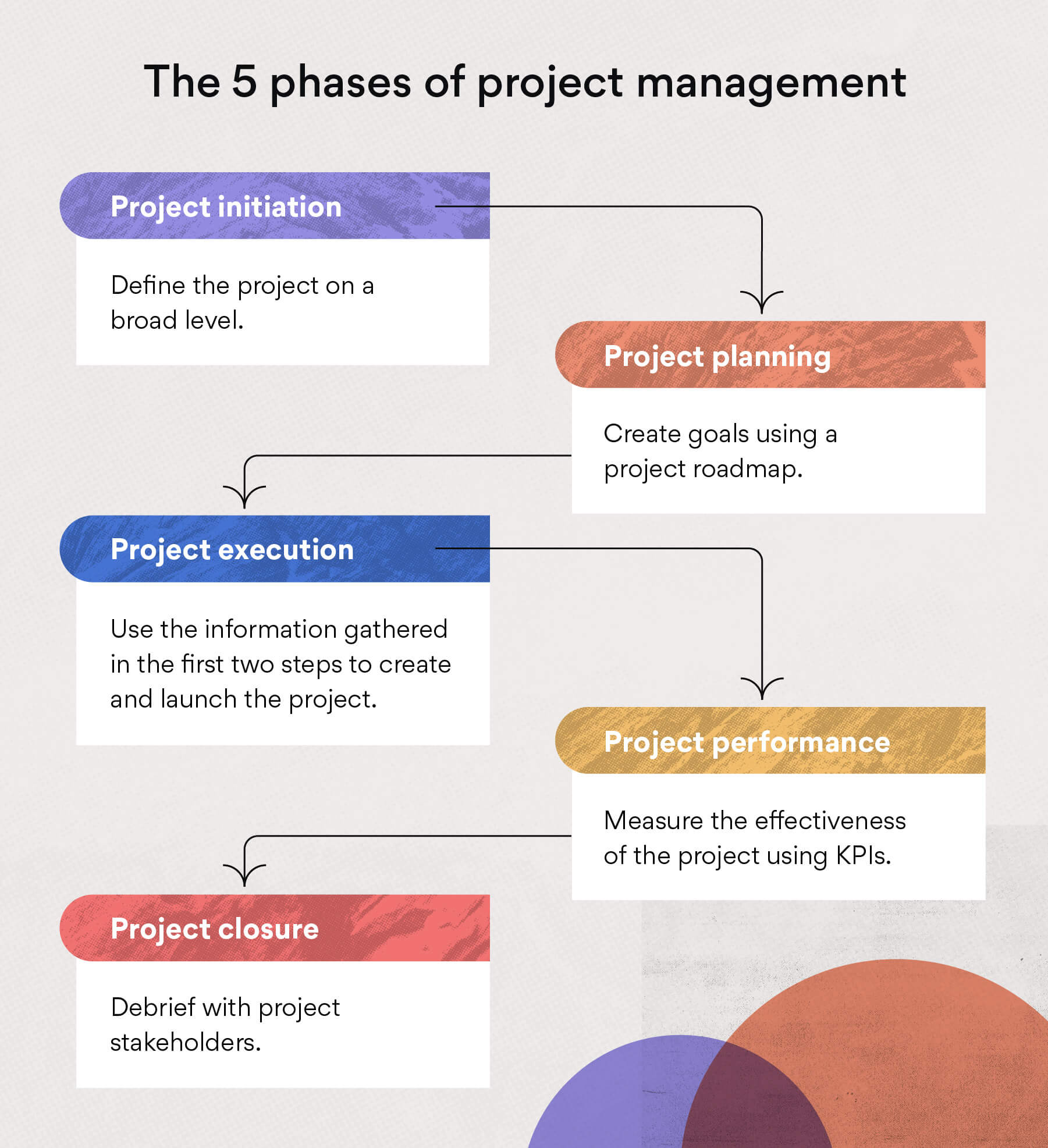
The 5 project management process groups—Initiating, Planning, Executing, Monitoring and Controlling, and Closing—form the structural foundation of professional project management. Defined by the Project Management Institute (PMI), these groups represent the chronological and logical stages required to move a project from a conceptual idea to a finalized, delivered result.
Project management is not a singular action but a series of interrelated activities designed to achieve a specific objective. As of 2026, despite the widespread adoption of various methodologies like Agile, Scrum, and Lean, the 5 project management process groups remain the gold standard for organizing complex work. These groups, often confused with "project phases," are actually sets of processes that can occur within a single phase or across the entire project lifecycle.
Understanding these groups is essential for any professional seeking PMP (Project Management Professional) certification or anyone tasked with delivering organizational value through structured initiatives. By following this framework, project managers ensure that resources are used efficiently, risks are mitigated, and stakeholders remain aligned with the project’s goals.
The Evolution of Process Groups in 2026
While the Project Management Body of Knowledge (PMBOK) has evolved to emphasize principles and performance domains, the 5 process groups continue to serve as the functional "how-to" for execution. In 2026, the integration of artificial intelligence and automated tracking has made these processes more data-driven, yet the core human responsibility of managing these groups remains unchanged.
The following sections provide an in-depth analysis of each process group, their objectives, key outputs, and the strategic value they provide to an organization.
1. The Initiating Process Group
The Initiating Process Group consists of those processes performed to define a new project or a new phase of an existing project by obtaining authorization to start. This is the "vision" stage where the project's feasibility is tested and its high-level boundaries are set.
Defining the Project Charter
The primary output of the Initiating group is the Project Charter. This document formally authorizes the existence of the project and provides the project manager with the authority to apply organizational resources to project activities. Without a signed charter, a project lacks the legal and administrative standing to proceed, leading to "shadow projects" that often drain resources without official oversight.
In the charter, the project manager identifies:
- The business case (why are we doing this?).
- High-level requirements and measurable objectives.
- The assigned project manager and their level of authority.
- A preliminary budget and milestone schedule.
Stakeholder Identification
Simultaneously, the project manager must identify everyone who might be affected by the project or who can influence its outcome. This results in the Stakeholder Register. In 2026, stakeholder management has become increasingly complex due to globalized remote workforces and heightened environmental, social, and governance (ESG) requirements. Failure to identify a key stakeholder during the initiating phase is a leading cause of scope creep and late-stage project failure.
2. The Planning Process Group
The Planning Process Group is the most intensive stage of the project lifecycle. It involves establishing the total scope of the effort, defining and refining objectives, and developing the course of action required to attain those objectives.
Developing the Project Management Plan
The centerpiece of this group is the Project Management Plan. This is not a single document but a collection of subsidiary plans that address every facet of the project, including scope, schedule, cost, quality, resource, communications, risk, procurement, and stakeholder engagement.
The Critical Role of Scope and WBS
A major component of planning is the creation of the Work Breakdown Structure (WBS). The WBS is a hierarchical decomposition of the total scope of work to be carried out by the project team. By breaking a project down into manageable work packages, the project manager can more accurately estimate costs and durations.
Risk Management Planning
In the current professional landscape, risk management is no longer optional. Planning involves identifying potential threats and opportunities, performing qualitative and quantitative analysis, and developing risk response plans. This proactive approach allows teams to handle disruptions—whether they are supply chain issues or technological shifts—without derailing the entire project.
3. The Executing Process Group
The Executing Process Group is where the actual work of the project takes place. It consists of those processes performed to complete the work defined in the project management plan to satisfy the project requirements.
Managing Resources and People
Execution is primarily about people and resource management. The project manager must acquire, develop, and manage the project team. This involves fostering collaboration, resolving conflicts, and ensuring that every team member has the tools they need to succeed. In 2026, this often includes managing a mix of human talent and automated AI agents or specialized software bots.
Quality Assurance
While work is being performed, the project manager must also manage quality. This ensures that the processes being used are effective and that the project outputs meet the specified standards. Executing also involves implementing approved changes and improvements that have resulted from the monitoring and controlling processes.
Communications in Action
The majority of a project manager's time during execution is spent on Communication. This involves distributing information to stakeholders as outlined in the communications plan, managing expectations, and ensuring that the project "narrative" remains accurate across the organization.
4. The Monitoring and Controlling Process Group
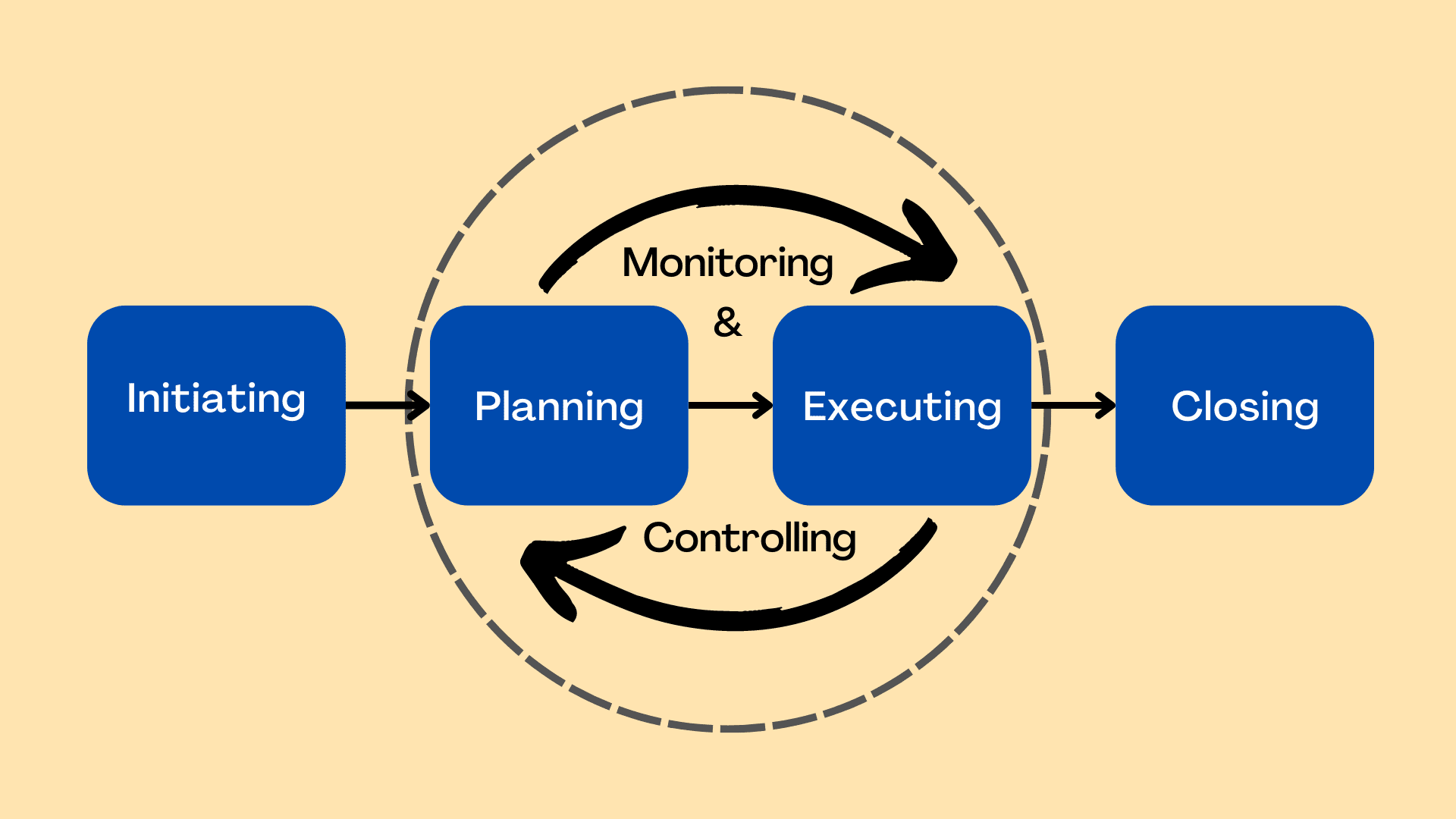
The Monitoring and Controlling Process Group consists of those processes required to track, review, and regulate the progress and performance of the project. This group is unique because it runs concurrently with all other process groups, particularly Planning and Executing.
Variance Analysis and Change Control
The primary goal here is to identify any areas in which the project is deviating from the plan so that corrective action can be taken. This is often done through Variance Analysis, comparing actual performance against the "baselines" established during planning (Scope, Schedule, and Cost baselines).
If a deviation is found, the Integrated Change Control process is triggered. No project of significant size remains static; changes are inevitable. However, these changes must be formally requested, reviewed by a Change Control Board (CCB), and approved before being implemented. This prevents "scope creep," where the project grows beyond its original intent without additional budget or time.
Key Performance Indicators (KPIs)
Modern project management relies heavily on data. Monitoring involves tracking KPIs such as:
- Schedule Variance (SV): Are we ahead of or behind schedule?
- Cost Variance (CV): Are we under or over budget?
- Quality Metrics: Does the deliverable meet the predefined "Definition of Done"?
5. The Closing Process Group
The Closing Process Group consists of those processes performed to formally complete or close the project, phase, or contract. This is often the most neglected phase, yet it is vital for organizational maturity and legal protection.
Final Product Delivery and Transition
The most obvious task is the formal handover of the final product, service, or result to the customer or the operational team. This includes obtaining formal acceptance from the sponsor, which legally signifies that the project has met its requirements.
Administrative Closure and Lessons Learned
Closing also involves:
- Archiving project records for future reference.
- Releasing project resources (returning staff to their functional departments).
- Closing out procurements and finalizing vendor contracts.
- Conducting the Lessons Learned meeting.
The lessons learned document is a critical asset for the organization. It captures what went well and what didn't, providing a roadmap for future project managers to avoid the same pitfalls and replicate successes.
Summary Comparison of Process Groups
The following table summarizes the primary characteristics of the 5 process groups to help distinguish their unique roles within the project lifecycle.
| Process Group | Primary Purpose | Key Output(s) | Main Activities |
|---|---|---|---|
| Initiating | Define and authorize the project. | Project Charter, Stakeholder Register. | Setting goals, identifying key stakeholders, securing high-level approval. |
| Planning | Define scope and develop the roadmap. | Project Management Plan, WBS, Schedule, Budget. | Estimating resources, identifying risks, creating the work decomposition. |
| Executing | Complete the project work. | Project Deliverables, Work Performance Data. | Managing teams, implementing the plan, ensuring quality standards. |
| Monitoring & Controlling | Track progress and manage changes. | Change Requests, Approved Changes, Status Reports. | Comparing actuals to baselines, managing change control, quality inspections. |
| Closing | Formally end the project or phase. | Final Product, Lessons Learned, Archived Records. | Gaining formal acceptance, releasing resources, administrative wrap-up. |
The Interplay Between Process Groups and Knowledge Areas
It is a common misconception that the 5 process groups are strictly linear. In reality, they are iterative. For example, during the Executing phase, a team might discover a risk that was not identified during Planning. This requires the team to return to the Planning group to update the risk response plan before continuing with execution.
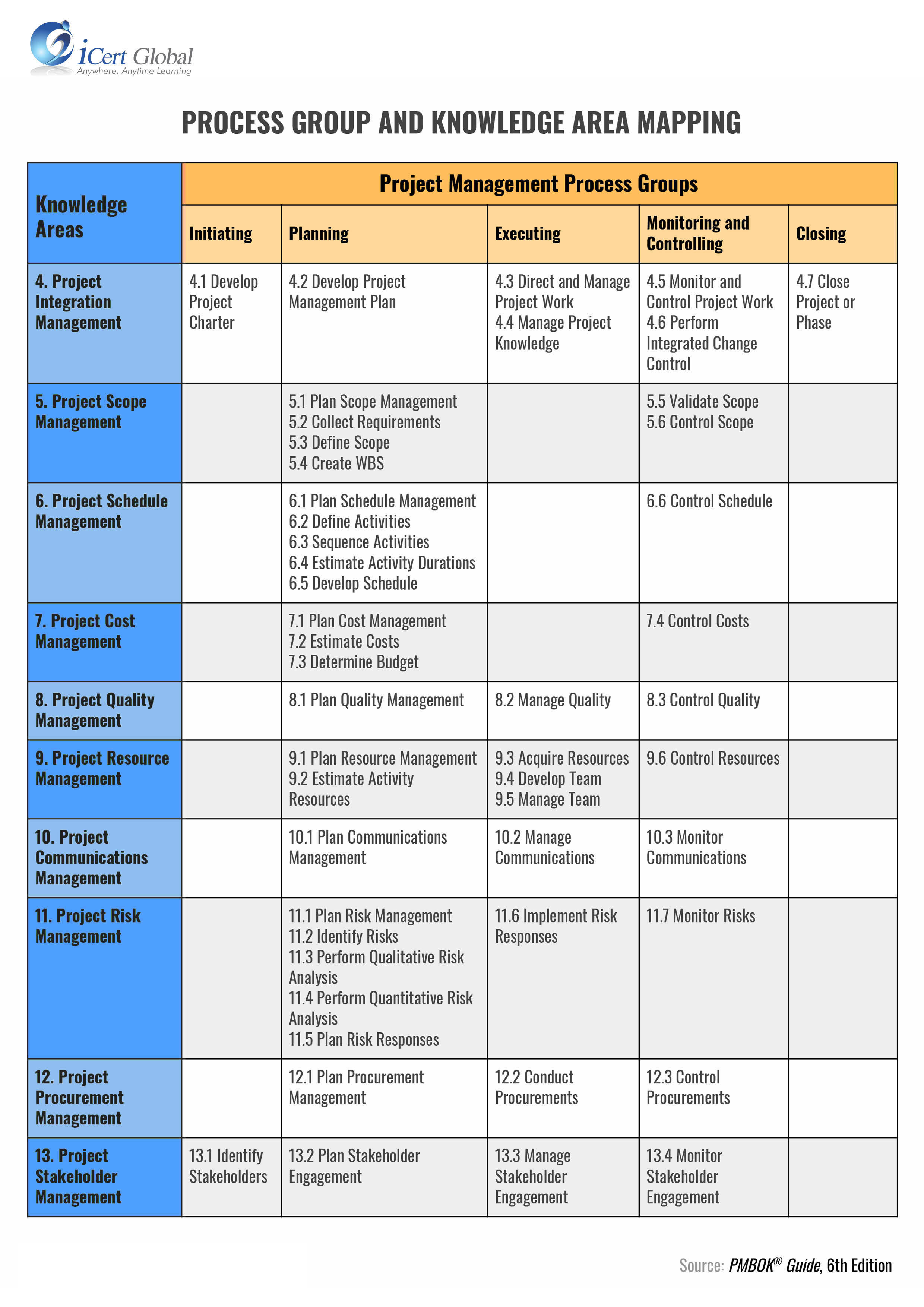
Furthermore, these groups interact with the 10 Knowledge Areas of project management:
- Integration: Coordination of all project elements.
- Scope: Defining what is and isn't included.
- Schedule: Managing the timeline.
- Cost: Managing the budget.
- Quality: Ensuring standards are met.
- Resources: Managing physical and human assets.
- Communications: Managing the flow of information.
- Risk: Identifying and mitigating uncertainty.
- Procurement: Managing external vendors and contracts.
- Stakeholders: Managing the people involved or affected.
Each process group contains specific processes that fall into these knowledge areas. For instance, "Estimate Costs" is a process that occurs within the Planning group and falls under the Cost knowledge area.
Adapting Process Groups to Modern Methodologies
In 2026, the application of these groups varies depending on the project's development approach:
- Predictive (Waterfall): The groups follow a mostly linear path. Planning is completed upfront, followed by a large execution phase.
- Adaptive (Agile): The process groups are repeated frequently within short "sprints" or iterations. A mini-version of initiating, planning, executing, monitoring, and closing happens every two to four weeks.
- Hybrid: Many organizations use a waterfall approach for high-level planning and budgeting (Initiating/Planning) while using Agile for the actual development (Executing/Monitoring).
Regardless of the methodology, the fundamental logic of these 5 groups remains necessary for governance and accountability.
Frequently Asked Questions
Are project phases and process groups the same thing?
No. Project phases (such as Design, Build, Test) are divisions within a project lifecycle. The 5 process groups are sets of activities that can occur within each phase. For example, you will go through a "Planning" and "Executing" process during the "Design" phase, and then again during the "Build" phase.
Can you skip the Initiating group if the project is small?
Skipping the Initiating group is a major mistake. Even for small projects, you need a clear definition of success and stakeholder alignment. Without a basic charter or "terms of reference," small projects often suffer from "mission creep" and lack the necessary support from leadership when problems arise.
Which process group takes the most time and resources?
The Executing Process Group typically consumes the largest portion of the project's budget and time, as this is when the actual deliverables are created. However, the Planning Process Group is often considered the most critical; for every hour spent in effective planning, multiple hours of wasted effort in execution are usually avoided.
How do the process groups handle project failure?
If a project is cancelled before completion, it should still enter the Closing Process Group. This ensures that the reasons for failure are documented in the lessons learned, resources are properly reassigned, and any work completed to date is archived or salvaged. Formal closure provides "post-mortem" data that is invaluable for organizational health.
Is the Monitoring and Controlling group only for the project manager?
While the project manager is responsible for the overall monitoring and controlling processes, the entire team participates. Technical leads may monitor quality metrics, while financial controllers monitor budget burn rates. In 2026, many of these "controlling" tasks are assisted by automated dashboards that provide real-time status updates to all stakeholders.
Practical Recommendation
To successfully implement the 5 project management process groups, start by establishing a standardized Project Charter template for all new initiatives. This forces your organization to prioritize the Initiating phase and ensures that no work begins without a clear business case and authorized leadership. Once the project is authorized, invest heavily in the Planning phase by involving the people who will actually perform the work; their input is essential for creating a realistic and achievable Work Breakdown Structure. Finally, never treat Closing as a mere formality. The institutional knowledge gained from a rigorous lessons-learned process is often more valuable to an organization than the project deliverable itself.