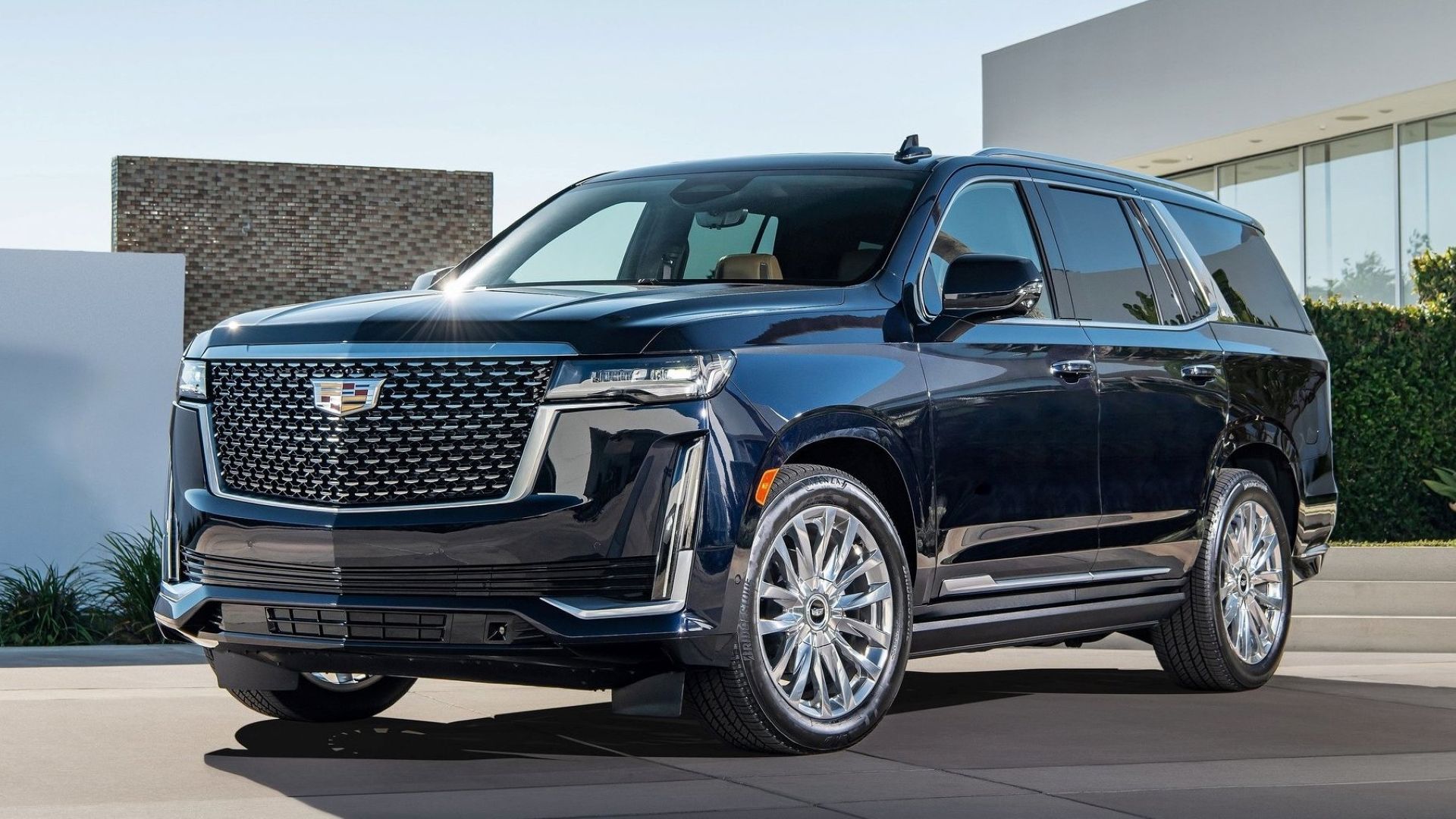
The 2025 4x4 SUV market is defined by a strategic convergence of rugged heritage design and advanced hybridization. As we look back from 2026, the prior year focused on a "back-to-basics" aesthetic powered by sophisticated turbocharged and electrified drivetrains, prioritizing high-torque low-end performance and improved fuel efficiency for off-road enthusiasts.
The 4x4 SUV segment underwent a significant transformation throughout 2025. For decades, the market was split between luxury highway cruisers and niche, utilitarian "rock crawlers." However, the 2025 landscape saw these two worlds merge. Manufacturers responded to a consumer base that demands the capability to traverse technical terrain without sacrificing the refined road manners or the technology suites expected in modern vehicles. This snapshot analyzes the pivotal shifts in engineering, the resurgence of iconic nameplates, and the technical specifications that defined the 4x4 year.
The Return of the Lightweight Heavyweights
One of the most notable trends in 2025 was the industry-wide pivot toward mid-size, highly capable 4x4s that occupy a smaller footprint than the massive full-size SUVs of the early 2020s. Leading this charge was the full market availability of the Toyota Land Cruiser (250 Series). By 2025, the Land Cruiser had firmly re-established itself as a mid-size powerhouse, abandoning its previous luxury-behemoth persona for a more focused, utilitarian approach.
This shift was not just cosmetic. The adoption of the TNGA-F global body-on-frame platform allowed for shared engineering across the Toyota and Lexus lineups, bringing high-end structural rigidity to more accessible price points. This platform also underpinned the 2025 Toyota 4Runner, which saw its first total redesign in over fifteen years. The introduction of the i-FORCE MAX hybrid powertrain across these models signaled a major change: the death of the naturally aspirated V6 and V8 in favor of high-torque, small-displacement turbocharged hybrids.
Technical Evolution: Hybridization as an Off-Road Asset
In 2025, hybridization ceased to be a "green" compromise and became a performance requirement for serious 4x4s. Off-road driving requires significant low-end torque for crawling over obstacles at low speeds. Electric motors provide maximum torque at zero RPM, making them the perfect companion for traditional internal combustion engines (ICE) in technical environments.
The Rise of the PHEV 4x4
The Jeep Wrangler 4xe continued its dominance as the best-selling plug-in hybrid in North America through 2025. Its success forced competitors to accelerate their own electrified programs. The advantage of these systems is the ability to run in near-silent electric mode while on the trail, which improves the outdoor experience and provides precise throttle control that traditional torque converters sometimes struggle to match.
Integrated Power Solutions
Beyond propulsion, the 2025 4x4 market emphasized "off-the-grid" utility. Vehicles like the Ford Bronco and the Rivian R1S expanded their integrated power export capabilities. Owners in 2025 utilized their vehicle batteries to power campsites, tools, and emergency equipment, effectively turning the 4x4 into a mobile power station.
The Luxury 4x4 Tier: Beyond the Pavement
The luxury segment in 2025 proved that high-end materials and extreme off-road capability are not mutually exclusive. The Land Rover Defender expanded its lineup further in 2025, offering more bespoke "Outbound" editions that prioritized cargo space and rugged durability over third-row seating.
Meanwhile, the Mercedes-Benz G-Class underwent one of its most significant updates in 2025. While the iconic boxy silhouette remained, the introduction of the G580 with EQ Technology (the fully electric G-Wagon) changed the perception of what a luxury EV could do. With four individual motors—one at each wheel—the vehicle introduced "G-Turn" capabilities, allowing it to pivot 360 degrees on its own axis, a feat impossible for mechanical 4x4 systems.
Comparative Specifications of Leading 2025 4x4 SUVs
To understand the 2025 market, one must look at the mechanical benchmarks. The following table compares the flagship configurations of the most influential 4x4 models available during the 2025 calendar year.
| Model | Powertrain Type | Horsepower | Torque (lb-ft) | Max Ground Clearance | Transfer Case |
|---|---|---|---|---|---|
| Toyota Land Cruiser (250) | 2.4L Turbo Hybrid | 326 | 465 | 8.7 Inches | Full-time 4WD w/ Locking Center Diff |
| Ford Bronco Raptor | 3.0L V6 Twin-Turbo | 418 | 440 | 13.1 Inches | 4x4 with 4A Mode & Front/Rear Locks |
| Jeep Wrangler Rubicon 392 | 6.4L V8 | 470 | 470 | 12.9 Inches | Part-time Rock-Trac® 4WD |
| Ineos Grenadier | 3.0L I6 Turbo (BMW) | 282 | 332 | 10.4 Inches | Permanent 4WD with Tremec Transfer Case |
| Land Rover Defender 110 | 3.0L I6 MHEV | 395 | 406 | 11.5 Inches | Twin-speed Transfer Box |
| Rivian R1S (Dual-Motor) | Dual-Motor EV | 533 | 610 | 14.9 Inches | Independent Motor Control (AWD) |
The "New Heritage" Design Movement
A defining visual characteristic of the 2025 4x4 market was "New Heritage." Manufacturers moved away from the rounded, aerodynamic "jellybean" shapes of the 2010s. Instead, 2025 was the year of the right angle.
- Boxy Silhouettes: Every major release, from the Hyundai Santa Fe (which adopted a radically square look to mimic 4x4 aesthetics) to the Lexus GX 550, embraced flat surfaces and vertical pillars.
- Modular Customization: Following the success of the Ford Bronco's modular parts, the 2025 market saw an explosion in factory-backed accessories. Consumers in 2025 rarely bought a "stock" vehicle; they purchased platforms designed for winches, roof racks, and snorkel intakes.
- Tactile Interiors: While screens grew larger, 2025 saw a return to physical buttons for critical off-road functions. Locking differentials, sway-bar disconnects, and drive-mode selectors remained physical to ensure ease of use while wearing gloves or driving on bumpy terrain.
Segment Challenges: Pricing and Weight
Despite the technical triumphs, the 2025 4x4 market faced two significant headwinds: affordability and curb weight.
The average transaction price for a highly capable 4x4 SUV climbed steadily through 2025. While "base" models existed, the high-demand trims (like the Toyota Trailhunter or Ford Sasquatch packages) often pushed mid-size SUVs into the $60,000 to $75,000 range. This created a thriving secondary market for older, simpler 4x4s, but also pushed manufacturers to offer more "lifestyle" trims that looked rugged but lacked expensive mechanical lockers to keep costs down.
Weight also became a technical hurdle. The addition of battery packs for hybrids and EVs, combined with the heavy-duty steel frames required for off-roading, resulted in many 2025 SUVs exceeding 5,500 lbs. This weight impacts "floatation" on soft surfaces like sand and mud, requiring manufacturers to develop more sophisticated tire compounds and air suspension systems to compensate.
Reliability and Long-Term Durability Concerns
As the 2025 models integrated more sensors, cameras, and hybrid cooling loops, a segment of the 4x4 community expressed concern regarding long-term trail reliability. In response, brands like Ineos marketed the Grenadier as a mechanical antidote to the "computerized" SUV. By using a heavy-duty beam axle and a focus on mechanical linkages, Ineos captured a specific subset of the market that prioritized field-repairability—a value that became increasingly rare in the 2025 snapshot.
Conversely, brands like Rivian and Tesla (with the Cybertruck) argued that software-defined 4x4 systems are superior. In 2025, software updates could actually improve a vehicle's traction control algorithms or battery management overnight, a concept that was still being debated by traditionalists as the year concluded.
Safety and Driver Assistance on the Trail
By 2025, Advanced Driver Assistance Systems (ADAS) were no longer just for the highway. "Transparent Hood" technology became a standard offering on mid-to-high-tier 4x4s. Using front-mounted cameras and image processing, the vehicle’s center screen displays a live view of what is directly under the front wheels, effectively making the engine bay "disappear" for the driver. This significantly reduced the need for an external spotter when navigating tight trails or cresting steep hills.
Furthermore, "Trail Cruise Control" (often called Crawl Control or Trail Control) reached a new level of refinement. In 2025, these systems could manage individual wheel braking and throttle more smoothly than previous iterations, allowing novice off-roaders to maintain a steady 1-5 mph pace through complex rock gardens without the "lurching" sensation common in older systems.
Summary of Market Drivers in 2025
The 2025 4x4 SUV market was driven by three primary consumer desires:
- The "Escape" Factor: The psychological need for a vehicle that can go anywhere, even if it rarely leaves the suburbs.
- Technological Competence: A refusal to choose between a locking differential and a high-resolution 14-inch infotainment screen.
- Efficiency Without Sacrifice: The expectation that a brick-shaped SUV should still achieve 20+ MPG through hybrid assistance.
Frequently Asked Questions
What was the most significant 4x4 release of 2025?
The 2025 Toyota 4Runner was arguably the most significant, as it replaced a platform that had been on the market since 2009. It introduced the TNGA-F frame and the i-FORCE MAX hybrid engine to one of the most loyal fanbases in the automotive world, officially bringing the 4Runner into the modern era of efficiency and technology.
Did any 2025 4x4 SUVs still offer a manual transmission?
Manual transmissions became extremely rare in 2025. The Jeep Wrangler and the Ford Bronco remained the last holdouts, offering 6-speed and 7-speed manuals respectively on select engine configurations. Most other manufacturers transitioned entirely to 8-speed or 10-speed automatics to better integrate with hybrid systems and electronic traction management.
Is a "Full-Time 4WD" system better than "Part-Time 4x4"?
"Better" depends on the use case. In 2025, many premium SUVs (like the Land Cruiser and Lexus GX) used Full-Time 4WD, which is safer for variable road conditions like patchy ice or rain because it can be left engaged at all times. Part-time 4x4 (found on the Wrangler and base Broncos) is often preferred by hardcore off-roaders for its mechanical simplicity and the "true" 50/50 power split when locked, but it cannot be used on dry pavement without risking drivetrain bind.
How did 2025 4x4 SUVs handle the transition to EVs?
The transition was bifurcated. While some brands went "all-in" with dedicated EV platforms (Rivian, Hummer EV), most traditional 4x4 manufacturers used 2025 as a "bridge year," focusing on Plug-in Hybrids (PHEVs). This allowed drivers to experience electric torque on the trail while maintaining the long-range security of a gasoline tank for remote overlanding trips.
What is "Overlanding" and how did it affect the 2025 market?
Overlanding is long-distance adventure travel to remote destinations where the journey is the primary goal. In 2025, this trend heavily influenced SUV design, leading to higher payload capacities (to carry tents and gear) and the inclusion of "Trailhunter" or "Tremor" trims that come pre-equipped with heavy-duty suspension and all-terrain tires from the factory.
Recommended Next Steps for Buyers
If you are evaluating a vehicle from the 2025 4x4 market, your first step should be to define your actual use case. If your driving is 90% pavement and 10% fire roads, a vehicle with a sophisticated "Auto-4WD" mode and independent front suspension (like the Chevrolet Tahoe Z71 or Ford Expedition Stealth Liberty) will offer better comfort. However, if you intend to tackle technical trails, prioritize vehicles with a mechanical rear-locking differential and at least 10 inches of ground clearance. Always verify the "Payload Capacity" on the driver-side door sticker, especially if you plan to add heavy aftermarket armor or a rooftop tent, as many modern 4x4s have surprisingly low weight limits once passengers are accounted for.