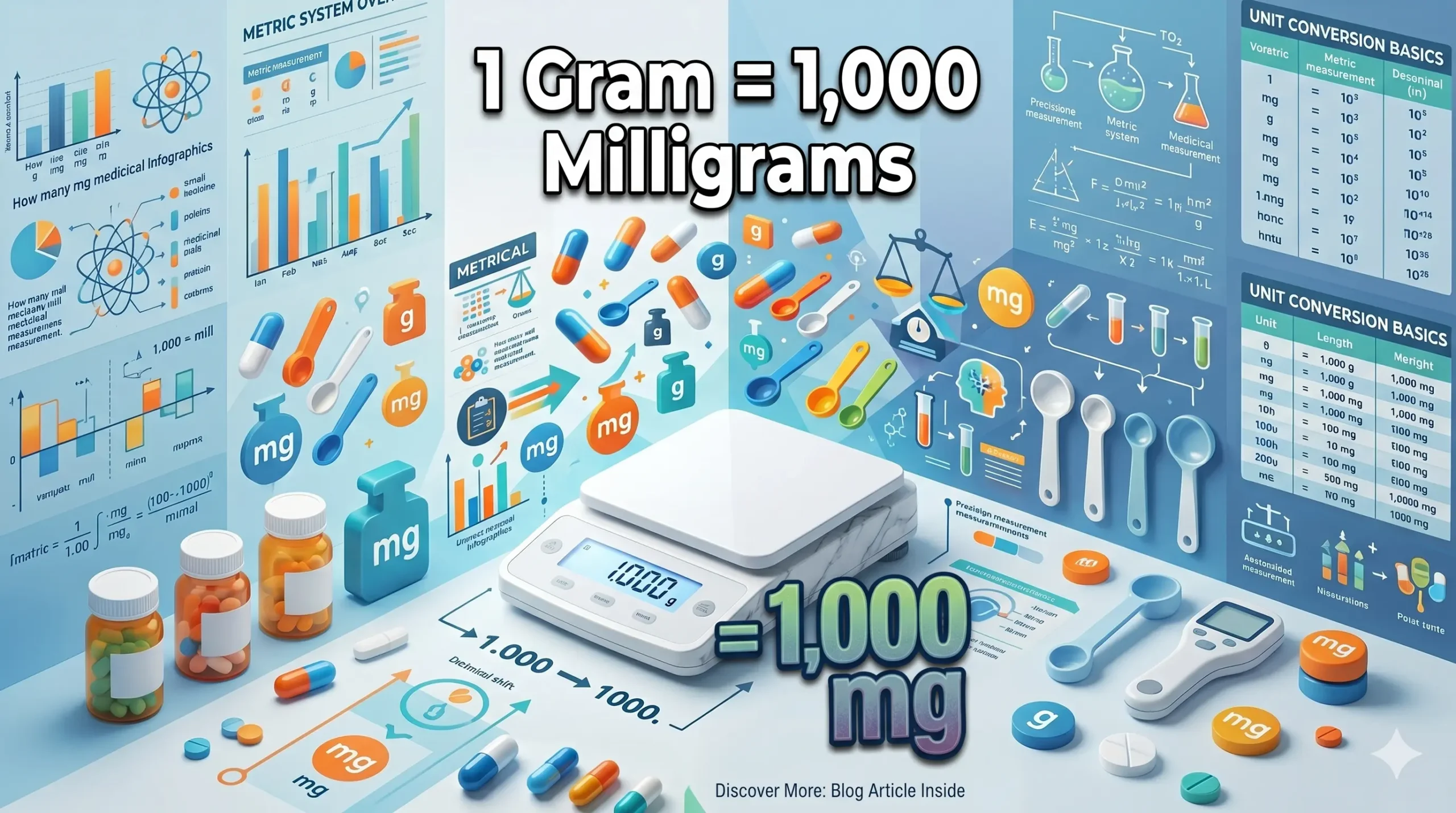
To convert 400 milligrams (mg) to grams (g), you divide the value by 1,000. Therefore, 400 mg equals 0.4 grams. This conversion is based on the metric system's standard where one gram consists of exactly 1,000 milligrams, representing a factor of $10^{-3}$ difference between the two units.
Understanding the relationship between milligrams and grams is a fundamental skill in various fields, ranging from pharmaceutical dosing and nutritional tracking to chemistry and industrial manufacturing. While the mathematical operation is simple—shifting a decimal point—the real-world implications of this conversion are significant. Whether you are managing a prescription medication or measuring out precise chemical reagents in a laboratory setting, knowing how to toggle between these units ensures safety, accuracy, and compliance with global measurement standards.
Understanding the Metric System: Grams vs. Milligrams
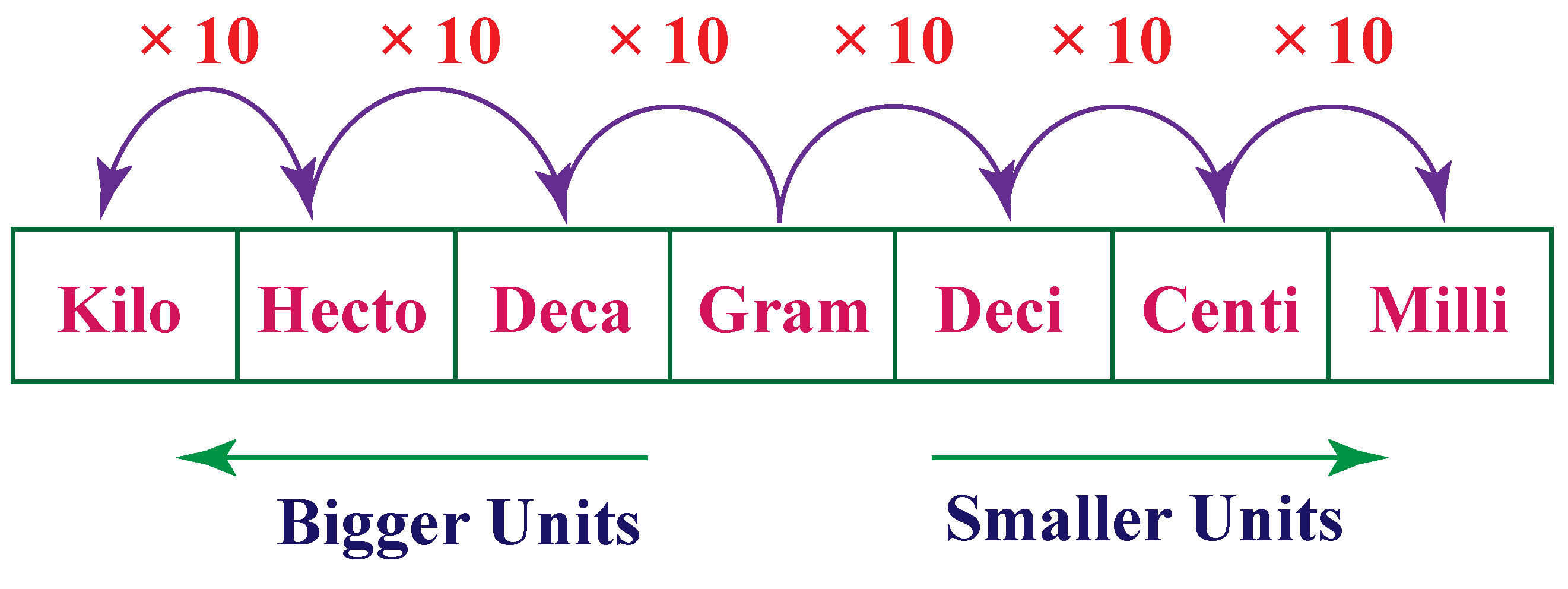
The metric system, or the International System of Units (SI), is designed around powers of ten, making conversions logical and systematic. The "gram" serves as a base unit of mass in the metric system (though the kilogram is the official SI base unit, the gram is the foundational reference for prefixes).
The prefix "milli-" is derived from the Latin mille, meaning one thousand. In scientific notation, a milligram is expressed as $1 \times 10^{-3}$ grams. This means that a milligram is one-thousandth of a gram. Conversely, a gram is 1,000 times larger than a milligram.
As of 2026, the metric system remains the universal language of science and medicine. Even in the United States, where the Imperial system is used for daily activities like driving (miles) or cooking (ounces), the medical and scientific communities strictly adhere to metric measurements to prevent errors. When you see a dosage of 400 mg on a bottle of Ibuprofen or a supplement, it represents a precise fraction of a gram, specifically four-tenths of a gram.
The Mathematics of Converting 400 mg to Grams
Converting milligrams to grams requires a basic understanding of division or decimal movement. Because there are 1,000 milligrams in a single gram, the formula is:
Grams = Milligrams / 1,000
For a value of 400 mg: 400 / 1,000 = 0.4
The Decimal Shift Method
A faster way to perform this calculation without a calculator is the decimal shift method. Since you are dividing by 1,000 (which has three zeros), you move the decimal point three places to the left.
- Start with the number: 400. (The decimal is implicitly at the end).
- Move one place left: 40.0 (This is 400 mg expressed in centigrams).
- Move two places left: 4.00 (This is 400 mg expressed in decigrams).
- Move three places left: 0.400 (This is 400 mg expressed in grams).
The resulting value is 0.4 grams. In professional medical writing and scientific documentation, it is standard practice to include a "leading zero" (the 0 before the decimal point) to prevent "naked decimals." A naked decimal (like .4) can be easily misread as a whole number (4) if the decimal point is faint or obscured, which could lead to a tenfold dosing error.
Practical Applications of 400 mg Conversions
In 2026, the prevalence of high-potency supplements and specialized pharmaceuticals makes it essential for consumers to understand these measurements. Several common substances are frequently distributed in 400 mg increments.
Pharmaceutical Dosages
Many over-the-counter and prescription medications use 400 mg as a standard dose.
- Ibuprofen: A common Non-Steroidal Anti-Inflammatory Drug (NSAID) often comes in 200 mg or 400 mg tablets. If a physician prescribes 0.8 grams of Ibuprofen, the patient must recognize that this equals two 400 mg tablets.
- Antibiotics: Certain antibiotics, such as Cefixime or Ofloxacin, are often prescribed in 400 mg doses.
- Anticonvulsants: Medications like Gabapentin may be started at 400 mg intervals.
In these contexts, confusing milligrams with grams can be life-threatening. An accidental ingestion of 400 grams of a medication instead of 400 milligrams would be a massive overdose, highlighting why the 1,000-fold difference is so critical.
Dietary Supplements and Nutrition
The health and wellness industry frequently uses milligrams to measure vitamins and minerals that the body needs only in small amounts.
- Magnesium: Many magnesium supplements are sold in 400 mg capsules, which is close to the Recommended Dietary Allowance (RDA) for adult males.
- Caffeine: A typical highly caffeinated energy drink or "pre-workout" supplement might contain 400 mg of caffeine. For context, 400 mg is generally considered the maximum safe daily intake of caffeine for healthy adults by organizations like the FDA. Knowing that this is 0.4 grams helps consumers compare it to other food items measured in grams, such as sugar or protein.
- Potassium and Sodium: While these are often measured in milligrams on nutrition labels, large-scale food manufacturing recipes may list them in grams for bulk processing.
Why Precision Matters: Grams vs. Milligrams
The distinction between 400 mg and 0.4 g might seem like a mere formality, but in technical fields, the choice of unit communicates the level of precision.
Laboratory Sensitivity
In a laboratory, an analytical balance is used to measure milligrams. These scales are often enclosed in glass cabinets to prevent air currents from affecting the reading. When a scientist records "400 mg," they are often implying a level of precision that "0.4 g" might not convey unless written as "0.400 g." In science, significant figures matter. "400 mg" implies the measurement is accurate to the nearest milligram, whereas "0.4 g" could be a rounded figure.
Manufacturing and Scale
In industrial manufacturing, ingredients are often measured in kilograms or grams. However, the active ingredients (API) in pharmaceuticals are so potent that they must be measured in milligrams. If a manufacturer is producing 10,000 tablets, each containing 400 mg of an active ingredient, they must calculate the total mass in grams or kilograms to order raw materials.
- Calculation: 10,000 tablets × 0.4 grams = 4,000 grams (or 4 kilograms).
Common Conversion Scenarios
To help visualize where 400 mg sits within the broader spectrum of mass, the following table provides a comparison with other common metric units of mass.
| Milligrams (mg) | Grams (g) | Kilograms (kg) | Scientific Notation (g) |
|---|---|---|---|
| 1 mg | 0.001 g | 0.000001 kg | $1 \times 10^{-3}$ |
| 100 mg | 0.1 g | 0.0001 kg | $1 \times 10^{-1}$ |
| 400 mg | 0.4 g | 0.0004 kg | $4 \times 10^{-1}$ |
| 500 mg | 0.5 g | 0.0005 kg | $5 \times 10^{-1}$ |
| 1,000 mg | 1.0 g | 0.001 kg | $1 \times 10^{0}$ |
| 4,000 mg | 4.0 g | 0.004 kg | $4 \times 10^{0}$ |
| 10,000 mg | 10.0 g | 0.01 kg | $1 \times 10^{1}$ |
How to Avoid Errors in Unit Conversion
Errors in converting milligrams to grams often stem from "decimal fatigue" or simple typographical mistakes. Here are the best practices for ensuring accuracy:
- Use a Leading Zero: Always write "0.4 g" instead of ".4 g." This is a standard safety protocol in the healthcare industry to prevent medication errors.
- Double-Check the Direction: Remember that a milligram is smaller than a gram. Therefore, the number of grams should always be a smaller value than the number of milligrams. If your conversion results in a larger number (e.g., 400 mg = 400,000 g), you have multiplied instead of divided.
- Standardize Your Units: When adding multiple weights together, convert them all to the same unit first. Do not try to add 400 mg and 1.2 g directly without converting one of them (400 mg + 1,200 mg = 1,600 mg OR 0.4 g + 1.2 g = 1.6 g).
- Verification Tools: In professional settings as of 2026, most Electronic Health Records (EHR) and laboratory Information Management Systems (LIMS) perform these conversions automatically. However, manual verification remains a critical backup skill for practitioners and technicians.
The History and Context of the Milligram
The gram was originally defined in 1795 by the French National Convention as the absolute weight of a volume of pure water equal to the cube of the hundredth part of a meter (1 cm³) at the temperature of melting ice. Over the centuries, the definition has been refined for extreme precision, eventually being tied to physical constants like Planck's constant.
The introduction of the milligram allowed for the measurement of substances that are physically very small but biologically or chemically very active. For example, many modern medications are so potent that even a single gram would be a lethal dose, whereas a few hundred milligrams provides the therapeutic effect. In the 21st century, and moving into 2026, we increasingly work with even smaller units, such as micrograms (µg), which are one-thousandth of a milligram.
To put 400 mg in perspective:
- A standard paperclip weighs approximately 1,000 mg (1 gram).
- 400 mg is roughly the weight of 4/10ths of a paperclip.
- A single raindrop weighs about 50 mg, so 400 mg is roughly the mass of eight raindrops.
Frequently Asked Questions
Is 400 mg the same as 4 grams?
No, 400 mg is not the same as 4 grams. To get 4 grams, you would need 4,000 milligrams. 400 mg is only 0.4 grams, which is less than half of a single gram. Confusing these two can lead to a ten-fold error in measurement.
How do I convert 400 mg to micrograms (mcg or µg)?
To convert milligrams to micrograms, you multiply by 1,000. Therefore, 400 mg equals 400,000 micrograms. Micrograms are used for extremely potent substances, such as Vitamin D or certain hormone medications.
Why do some supplement labels use 0.4 g while others use 400 mg?
The choice usually depends on the standard unit for that specific nutrient. Minerals like Magnesium or Calcium are typically measured in milligrams because the daily requirements are in the hundreds or thousands of milligrams. Macronutrients like protein, fat, and carbohydrates are measured in grams because we consume them in much larger quantities. Using "0.4 g" for a supplement might be done to make the label look "cleaner" or to align with other ingredients measured in grams.
Is 400 mg a high dose for medication?
Whether 400 mg is a "high" dose depends entirely on the substance. For Ibuprofen, 400 mg is a standard adult dose for pain relief. For a potent stimulant or a prescription blood thinner, 400 mg could be an extremely high or even toxic dose. Always follow the specific guidance provided by a healthcare professional or the product's packaging.
How can I measure 400 mg at home?
Measuring milligrams at home is difficult without a specialized digital milligram scale. Standard kitchen scales usually measure in whole grams or increments of 0.1 grams, which may not be accurate enough for 400 mg. If you need to measure 400 mg of a powder, it is safest to use a scale specifically designed for "mg" precision, often called a jeweler's scale or a laboratory scale.
Summary and Next Actions
To summarize, 400 mg is equal to 0.4 grams. This is calculated by dividing the milligram value by 1,000, which is equivalent to moving the decimal point three places to the left.
If you are currently looking at a nutritional label, a prescription bottle, or a scientific formula:
- Verify the unit: Ensure you are starting with milligrams (mg) and not micrograms (mcg) or grams (g).
- Apply the conversion: Use the 0.4 g figure for any calculations requiring grams.
- Check for precision: If you are in a medical or laboratory environment, record the value as 0.4 g (with the leading zero) to ensure there is no ambiguity for others reading your notes.
- Consult a professional: If you are converting a dosage for medication and are unsure of the math, consult a pharmacist or doctor before taking the substance. Accuracy in these conversions is not just a mathematical exercise; it is a matter of safety and efficacy.