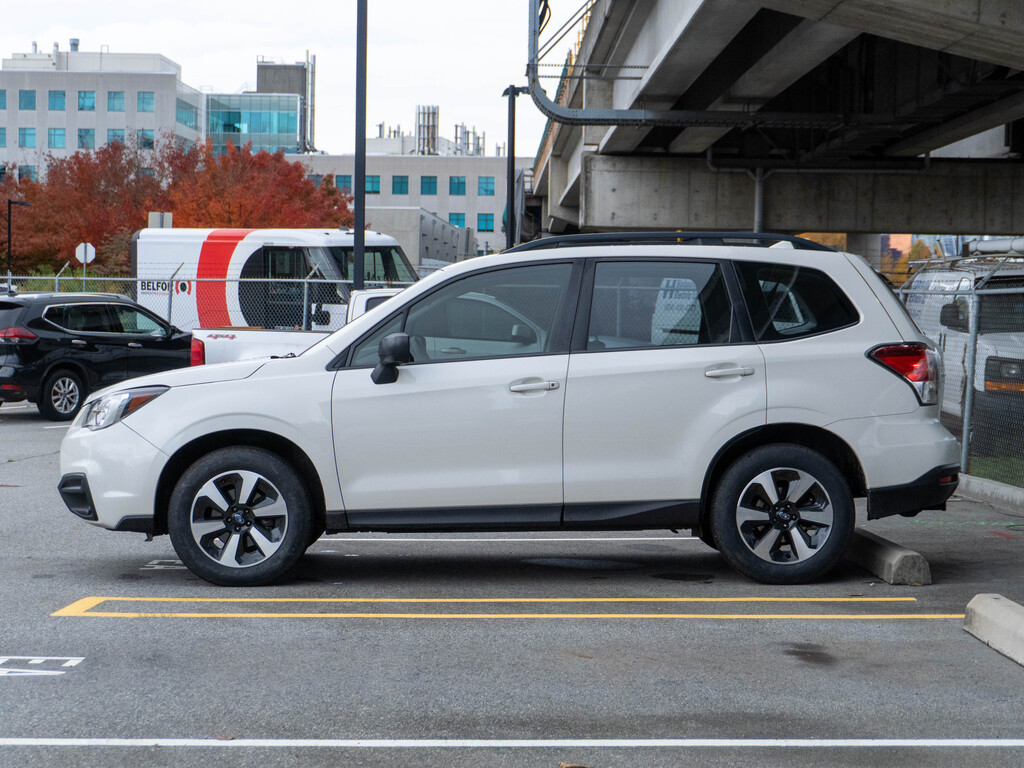
The 2018 Subaru Forester offers two distinct engine configurations that dictate its horsepower options: a 2.5-liter naturally aspirated four-cylinder engine producing 170 horsepower for standard trims, and a 2.0-liter turbocharged four-cylinder engine generating 250 horsepower exclusively for the performance-oriented 2.0XT trims.
When evaluating a compact crossover utility vehicle, prospective buyers, automotive enthusiasts, and used car shoppers frequently encounter a wide range of performance metrics. The 2018 model year represents the final iteration of the fourth-generation Subaru Forester platform, which enjoyed a strong reputation for utility, symmetrical all-wheel-drive capability, and safety. However, understanding the specific mechanics behind its powertrain choices is essential for anyone seeking to match a vehicle configuration to their daily driving habits, towing requirements, or long-term expectations. This analysis explores the core engineering, real-world performance characteristics, transmission pairings, and mechanical trade-offs of the 2018 Subaru Forester horsepower options.
Overview of the 2018 Subaru Forester Powertrain Lineup
The fourth-generation Subaru Forester (spanning model years 2014 through 2018) was engineered to cater to two distinct consumer segments: efficiency-minded commuters who prioritize utility and all-weather traction, and drivers who desire spirited acceleration and higher highway passing power. To achieve this, Subaru deployed two completely different horizontally opposed "boxer" engines across the trim hierarchy.
Unlike inline engine designs, the flat layout of the Subaru boxer engine keeps the center of gravity low, which directly influences handling stability and cornering composure. However, the choice of powertrain fundamentally alters the character of the vehicle, changing not only the peak horsepower figures but also the delivery of torque, the choice of transmission hardware, and the overall fuel economy profile. Examining these options requires a detailed look at displacement, induction methods, and the engineering philosophy behind each configuration.
The Standard Powerplant: 2.5-Liter Naturally Aspirated Engine
The vast majority of 2018 Subaru Foresters seen on the road are equipped with the standard 2.5-liter, dual-overhead-cam (DOHC), aluminum-alloy, horizontally opposed four-cylinder engine. This powerplant serves as the workhorse for the 2.5i, 2.5i Premium, 2.5i Limited, and 2.5i Touring trim levels.
Horsepower and Torque Output
The 2.5-liter engine delivers 170 horsepower at 5,800 rpm and 174 lb-ft of torque at 4,100 rpm. While these figures are modest by modern turbocharged standards, they provide adequate momentum for everyday suburban commuting, grocery hauling, and light-duty family transport. The torque peak arrives relatively early in the rev range, which helps the vehicle pull away from a stop without feeling sluggish.
Transmission Pairing and Drivetrain Integration
In most trim configurations, this engine is paired with a Lineartronic Continuously Variable Transmission (CVT). The CVT is designed to maximize fuel efficiency by keeping the engine operating within its optimal power and torque bands across varying vehicle speeds.
For buyers seeking a more traditional mechanical feel, Subaru offered a 6-speed manual transmission exclusively on the base 2.5i and the 2.5i Premium trims. Opting for the manual gearbox changes the driving dynamic, giving the driver direct control over gear ratios, though it slightly alters fuel economy ratings and omits certain active safety technologies.
Real-World Performance and Efficiency
The 170-horsepower configuration is tailored for efficiency and reliability. EPA fuel economy ratings for the CVT-equipped models hover around 26 mpg city and 32 mpg highway (with slight variations depending on wheel size and trim weight). Acceleration from 0 to 60 mph takes approximately 8.5 to 9.0 seconds. While this is entirely adequate for merging onto highways, drivers passing at high speeds on steep inclines will notice the engine working hard, accompanied by the distinct drone typical of older CVT designs under heavy throttle.
The Performance Upgrade: 2.0-Liter Turbocharged Boxer Engine
For drivers who find the base engine underpowered, Subaru reserved a more aggressive powerplant for the top-tier performance variants: the 2.0XT Premium and 2.0XT Touring. These models utilize a direct-injection turbocharged (DIT) engine that transforms the driving experience of the compact SUV.
Horsepower and Torque Output
The 2.0-liter turbocharged engine pumps out an impressive 250 horsepower at 5,600 rpm and 258 lb-ft of torque spanning from 2,000 to 4,800 rpm. This wide torque band is a defining characteristic of the DIT setup, providing nearly instant throttle response and robust pulling power across a massive sweep of the tachometer.
| Engine Option | Displacement | Induction | Horsepower | Peak Torque | Transmission |
|---|---|---|---|---|---|
| 2.5i Standard | 2.5 Liters | Naturally Aspirated | 170 hp @ 5,800 rpm | 174 lb-ft @ 4,100 rpm | 6-Speed Manual / CVT |
| 2.0XT Turbo | 2.0 Liters | Turbocharged DIT | 250 hp @ 6,200 rpm | 258 lb-ft @ 2,000-4,800 rpm | High-Torque CVT with SI-Drive |
Transmission and Drivetrain Engineering
To handle the substantial 258 lb-ft of torque, the 2.0XT models use a High-Torque version of Subaru's Lineartronic CVT. This transmission features a manual simulation mode accessible via steering wheel paddle shifters, mimicking either a 6-speed or 8-speed stepped automatic transmission depending on the selected drive mode.
Furthermore, the 2.0XT incorporates Subaru Intelligent Drive (SI-Drive), a system that allows the driver to toggle between three distinct performance profiles:
- Intelligent (I) Mode: Optimizes smooth power delivery and maximum fuel efficiency for daily commuting and heavy traffic.
- Sport (S) Mode: Sharpens throttle response and alters transmission mapping for more responsive, aggressive acceleration on winding roads.
- Sport Sharp (S#) Mode: Unlocks the full potential of the turbocharged engine by electronically stepping the CVT through 8 distinct virtual ratios, maximizing power output and delivering a pseudo-manual driving sensation.
Driving Dynamics and Efficiency Trade-Offs
The 250-horsepower turbo engine reduces the 0-to-60 mph sprint to approximately 6.2 to 6.5 seconds, making it one of the quicker compact crossovers of its era. This extra power makes highway merging, mountain driving, and passing maneuvers effortless.
However, this performance comes with compromises. Fuel economy drops to roughly 23 mpg city and 27 mpg highway. Additionally, the 2.0XT features a firmer sport-tuned suspension, larger brakes, and 18-inch wheels, resulting in a stiffer ride quality compared to the softer, more compliant setup found on standard 2.5i trims.
Symmetrical All-Wheel Drive and Power Distribution
Regardless of whether a buyer selects the 170-hp or 250-hp option, every 2018 Subaru Forester features standard Symmetrical All-Wheel Drive (AWD). However, the specific mechanical implementation of the AWD system varies based on the transmission selection, which indirectly influences how horsepower is deployed to the pavement.
- Continuous AWD (Manual Transmission): Models equipped with the 6-speed manual transmission utilize a viscous-coupling limited-slip center differential. This mechanical system splits torque 50/50 front-to-rear under normal driving conditions and actively redirects power when wheel slippage is detected.
- Active Torque Split AWD (CVT Models): Models equipped with either the standard CVT or the High-Torque CVT use an electronically managed transfer clutch. This system continuously monitors grip, transmission status, and acceleration inputs, proactively shifting power to the wheels with the best traction before slippage even occurs.
Additionally, CVT-equipped models feature X-MODE, a specialized electronic assistant that optimizes engine output, transmission ratios, AWD clutch pack pressure, and the Vehicle Dynamics Control (VDC) system. When engaged, X-MODE acts as a low-speed electronic locking differential, maximizing traction on slippery surfaces, steep off-road descents, and deep snow.
Towing Capacity Implications
Horsepower and torque ratings directly dictate the utility limits of a vehicle, particularly when towing trailers, small campers, or utility loads.
- 2.5-Liter Models: Rated for a maximum towing capacity of 1,500 pounds. While capable of pulling lightweight trailers or small pop-up campers, the naturally aspirated engine requires patience when climbing grades while loaded.
- 2.0XT Turbo Models: Rated for a higher maximum towing capacity of 1,500 pounds as well in standard US documentation, though the abundant low-end torque of the turbocharged engine makes managing loads up to that limit significantly easier and less taxing on the powertrain.
It is vital for owners to consult the official owner's manual regarding tongue weight limits and braking requirements when utilizing the Forester for towing duties.
Common Maintenance and Reliability Considerations
Purchasing or maintaining a used 2018 Subaru Forester requires an understanding of the mechanical tendencies associated with each engine option.
2.5i Naturally Aspirated Reliability
The FB25 engine used in the 2018 model year benefited from years of iterative refinement, largely resolving the oil consumption concerns that plagued earlier iterations of the FB-series engine from 2011 to 2014. Regular oil changes with synthetic 0W-20 oil and routine spark plug inspections are critical for long-term longevity. The CVT requires periodic fluid checks, though Subaru's stance on lifetime fluid has shifted toward scheduled inspections in demanding service intervals.
2.0XT Turbocharged Reliability
The FA20F direct-injection turbo engine demands more rigorous maintenance. Because direct-injection engines spray fuel directly into the combustion chamber rather than across the intake valves, carbon buildup on the intake valves can occur over high mileage, occasionally requiring walnut-blasting cleaning. Furthermore, turbochargers operate under extreme heat and pressure; timely oil changes using high-quality synthetic oil and letting the turbo cool down after heavy driving are essential preventative practices.
Frequently Asked Questions
Which 2018 Subaru Forester engine option is more reliable?
The 2.5-liter naturally aspirated engine is generally considered simpler and less prone to high-stress mechanical failures over long periods. Because it lacks a turbocharger and complex intercooler plumbing, it has fewer components that can degrade under high heat cycles, making it the preferred choice for buyers prioritizing low-maintenance longevity.
Can the 2018 Forester 2.5i be upgraded to increase horsepower?
Significant horsepower gains on the naturally aspirated 2.5-liter engine are difficult and expensive to achieve. Bolt-on modifications like cold-air intakes or exhaust systems yield minimal real-world power increases because the engine does not have forced induction. Drivers seeking more speed should look directly at the factory turbocharged 2.0XT models rather than attempting aftermarket modifications.
What kind of fuel does the 2018 Subaru Forester require?
The standard 2.5-liter engine runs smoothly on regular 87-octane unleaded gasoline. In contrast, the 2.0-liter turbocharged engine recommends (and benefits from) premium 91-octane fuel to achieve its rated 250 horsepower safely and prevent engine knock under boost, though it can run on regular fuel in emergency scenarios with a reduction in peak performance.
Do all 2018 Foresters have a Continuously Variable Transmission?
No. While the vast majority of 2018 models utilize a CVT, Subaru offered a traditional 6-speed manual transmission exclusively on the base 2.5i and 2.5i Premium trim levels. All turbocharged 2.0XT models are strictly paired with the High-Torque CVT and paddle shifters.
How does the 2018 Forester handle snow and bad weather?
Both horsepower variants feature Subaru's legendary Symmetrical All-Wheel Drive system, which provides exceptional stability in snow, rain, and mud. The inclusion of electronic aids like Vehicle Dynamics Control and X-MODE on CVT-equipped models ensures confident traction management across slippery road conditions.
Conclusion
Choosing the right configuration among the 2018 Subaru Forester horsepower options ultimately comes down to balancing daily driving priorities. If your goal is reliable, efficient, and comfortable transportation for commuting and family errands, the 170-horsepower 2.5-liter engine delivers sensible performance and strong fuel economy. If you prefer engaging acceleration, responsive passing power, and a sportier driving dynamic, tracking down a well-maintained 250-horsepower 2.0XT model provides a noticeably different, more energetic character behind the wheel. Evaluating your personal driving style, fuel preferences, and long-term maintenance expectations will guide you toward the ideal powertrain choice.