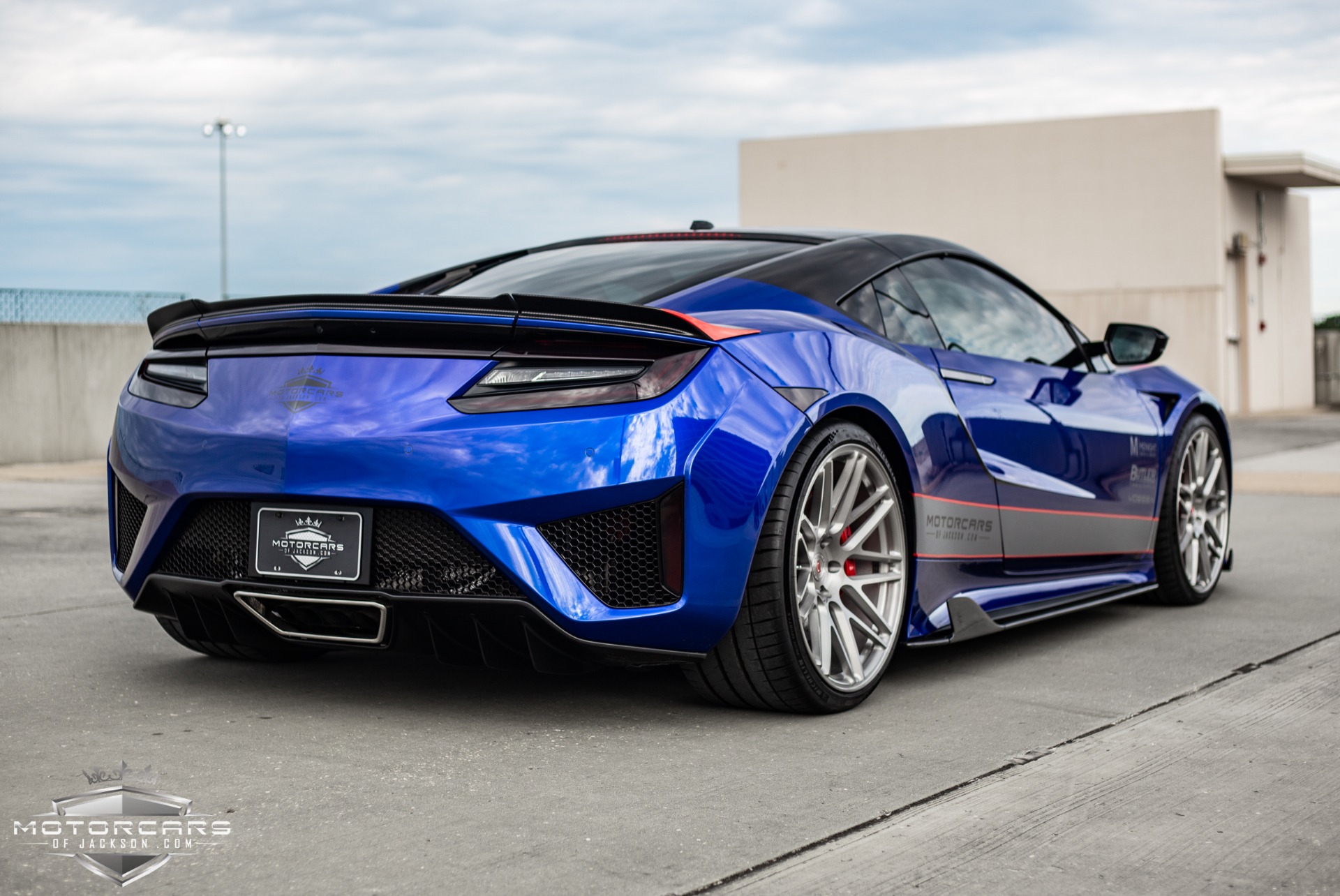
The 2016 Acura NSX launched with a base MSRP of $156,000, marking the return of a legendary nameplate in the form of a sophisticated hybrid supercar. While the base price started at mid-six figures, highly optioned models frequently exceeded $205,000 when equipped with carbon fiber packages and performance upgrades.
When Acura officially announced the pricing for the second-generation NSX in late 2015 for the 2016 production year (marketed as the 2017 model year), it signaled a massive shift in the brand’s performance hierarchy. This was not just a successor to the analog icon of the 1990s; it was a complex, multi-motor technological showcase designed to compete with the likes of the Audi R8, the Porsche 911 Turbo, and the McLaren 570S. Understanding the $156,000 entry point requires looking past the window sticker and into the sophisticated engineering and the customizable options that defined the NSX’s market position.
Breaking Down the $156,000 Base MSRP
The $156,000 base price for the 2016-era Acura NSX was a strategic figure. It positioned the car significantly higher than the flagship luxury sedans of the time but kept it within reach of buyers who might otherwise look at a high-end Porsche Carrera 4S or an entry-level exotic. However, very few NSX units actually left the Marysville, Ohio, Performance Manufacturing Center (PMC) at that exact price.
Beyond the base MSRP, every vehicle was subject to a $1,800 destination and handling charge, bringing the effective starting price to $157,800 before any taxes or dealer markups. The base configuration included the revolutionary Sport Hybrid Super Handling All-Wheel Drive (SH-AWD) system, a 9-speed dual-clutch transmission, and the twin-turbocharged V6 engine.
What the Base Price Included
For $156,000, buyers received a vehicle constructed using an industry-first ablation casting technique within a multi-material space frame. Standard features included:
- The Power Unit: A bespoke 3.5-liter V6 paired with three electric motors.
- The Interface: A 7-inch Display Audio touchscreen and an 8-inch Dynamic Meter Display.
- Wheels: staggered 19-inch front and 20-inch rear forged aluminum wheels.
- Brakes: Brembo 6-piston front and 4-piston rear calipers.
Despite the high entry cost, the "base" interior featured a mix of leather and Alcantara, which many enthusiasts felt was appropriate for a supercar that doubled as a daily driver. However, the allure of the NSX often lived in the options list, which could easily add the price of a mid-sized luxury sedan to the final invoice.
Technical Specifications and Performance Value
The true value of the $156,000 investment was found in the powertrain. Acura’s engineers opted for a "New Sports eXperience" that prioritized immediate torque response and "zero-delay" acceleration.
The Hybrid Powertrain
The heart of the NSX is its 75-degree, twin-turbocharged V6. Unlike most Honda engines, this was a clean-sheet design specifically for this car, featuring both direct and port injection. Alone, the engine produced 500 horsepower, but the integration of three electric motors changed the performance profile entirely:
- Direct Drive Motor: Positioned between the engine and the 9-speed DCT, this motor provides 47 hp and 109 lb-ft of torque, acting as a generator and assisting with instant throttle response.
- Twin Motor Unit (TMU): Located on the front axle, two 36-hp motors provide independent torque to each front wheel. This allows for active torque vectoring, meaning the car can apply positive torque to the outside wheel and regenerative braking to the inside wheel during a turn, effectively pulling the car through the apex.
Total system output was rated at 573 horsepower and 476 lb-ft of torque. In terms of performance per dollar at the 2016 price point, the NSX offered a 0-60 mph time of approximately 3.0 seconds and a top speed of 191 mph. These figures put it in direct competition with supercars costing $50,000 to $100,000 more.
Options and Packages: Escalating the Final Price
While the $156,000 MSRP was the headline, the "market price" of a well-equipped NSX was closer to $190,000. Acura offered several high-cost upgrades that most buyers deemed essential for a car of this caliber.
Carbon Fiber Enhancements
To save weight and improve aesthetics, Acura offered extensive carbon fiber packages. The Carbon Fiber Exterior Package added a carbon front spoiler, side sills, rear diffuser, and dark chrome exhaust finishers for roughly $9,000. A Carbon Fiber Roof could be added for an additional $6,000, replacing the standard aluminum roof and lowering the car's center of gravity.
Performance and Interior Upgrades
One of the most significant functional options was the Carbon Ceramic Brake package. Depending on the caliper color (Black, Silver, or Red), this option cost between $9,900 and $10,600. Inside, the Carbon Fiber Interior Sport Package added $2,900 to the price, including a carbon-fiber-trimmed steering wheel and instrument cluster hood.
| Option Item | Estimated Cost (2016 USD) | Impact on Vehicle |
|---|---|---|
| Carbon Ceramic Brakes | $9,900 - $10,600 | Reduced brake fade; lower unsprung weight |
| Carbon Fiber Exterior Package | $9,000 | Aesthetic upgrade and aerodynamic refinement |
| Carbon Fiber Roof | $6,000 | Lower center of gravity; weight reduction |
| Carbon Fiber Engine Cover | $3,600 | Visual enhancement for the engine bay |
| Technology Package | $2,800 - $3,300 | ELS Studio Audio, Navigation, Parking Sensors |
| Custom Interior Colors | $2,500 | Full semi-aniline leather power seats |
Design Philosophy: The "Everyday Supercar"
The pricing of the NSX also reflected its dual-purpose nature. Acura aimed to maintain the original NSX’s reputation as the "Everyday Supercar." This meant the $156,000 spent wasn't just for track performance; it was for a car that was as easy to drive to the grocery store as a Honda Accord.
The interior ergonomics featured a "Human-Support Cockpit," which provided excellent outward visibility—a rarity in mid-engine supercars. The Integrated Dynamics System (IDS) allowed the driver to toggle between Quiet, Sport, Sport+, and Track modes. In "Quiet" mode, the NSX could operate on electric power alone for short distances at low speeds, making it a neighbor-friendly choice for early morning starts.
This versatility justified the price for many buyers who found the Audi R8 too flashy or the Porsche 911 too common. However, the infotainment system, largely borrowed from more affordable Acura and Honda models, was a point of contention for critics who argued that a $156,000 car deserved a more bespoke interface.
Manufacturing Excellence: The Performance Manufacturing Center
The MSRP of the NSX was also a reflection of its unique manufacturing process. Unlike mass-produced vehicles, the second-generation NSX was built at the dedicated Performance Manufacturing Center (PMC) in Marysville, Ohio.
The facility utilized innovative techniques such as:
- Ablation Casting: A process that combines traditional casting with rapid cooling (using water jets) to create high-strength nodes for the space frame. This allowed the frame to be rigid for handling but energy-absorbent for safety.
- Zirconium Pre-treatment: The aluminum space frame was treated with zirconium to prevent corrosion while reducing environmental waste during the painting process.
- Human-Robot Collaboration: While robots performed the precision welding, master technicians spent over 14 hours per car on hand-assembly and alignment checks.
The overhead of maintaining such a specialized facility for a low-volume halo car was built into the $156,000 base price. Acura’s goal wasn't necessarily high-volume profit but rather a "halo effect" that would elevate the entire brand's image.
Comparative Market Position in 2016
To understand if $156,000 was a "fair" price, one must look at the landscape of the 2016–2017 automotive market. The NSX sat in a very competitive niche.
- Audi R8 V10: The R8 started around $162,000. It offered a naturally aspirated V10 and a more premium interior but lacked the futuristic hybrid torque vectoring of the NSX.
- Porsche 911 Turbo: With a starting price near $160,000, the 911 Turbo offered comparable acceleration and a more refined infotainment system but lacked the "exotic" mid-engine silhouette of the Acura.
- BMW i8: At roughly $140,000, the i8 was the other major hybrid player. While it looked like a spaceship, its 3-cylinder engine and narrow tires meant it couldn't compete with the NSX on a racetrack.
- McLaren 570S: Starting around $185,000, the McLaren was more expensive and offered a more raw, track-focused experience, but it lacked the reliability reputation and daily usability associated with the Acura/Honda badge.
The NSX occupied the "sweet spot" of being more high-tech than the Porsche, more reliable (theoretically) than the McLaren, and more modern than the Audi.
The NSX in 2026: Value and Legacy
Looking back from the perspective of 2026, the $156,000 base price of the 2016-era NSX has aged interestingly. After production ended with the limited-run Type S in 2022, the second-generation NSX (NC1) transitioned from a "new car" to a "modern classic."
In 2026, well-maintained examples of the early model years typically hold a significant portion of their original value. While they experienced initial depreciation—with some units dipping into the $110,000 to $130,000 range in the late 2010s—the market has since stabilized. The rarity of the vehicle and the complexity of its hybrid system have made it a sought-after piece for collectors who appreciate the bridge between internal combustion and the fully electric future.
Maintenance Considerations for Secondary Owners
For those looking at these vehicles in 2026, the $156,000 original price is less important than the "cost of ownership." The hybrid battery packs have proven resilient, but the complexity of the three-motor system requires specialized technicians. Owners must account for:
- Tire Replacement: The specific Continental or Michelin tires designed for the SH-AWD system are vital for maintaining the car's handling characteristics.
- Brake Service: For cars equipped with the $10,000 carbon-ceramic option, replacement rotors remain an expensive proposition, though they last much longer than steel under normal street use.
- Software Updates: Ensuring the power distribution units (PDU) have the latest firmware is essential for the seamless operation of the Twin Motor Unit.
Frequently Asked Questions
Did the 2016 Acura NSX actually sell for $156,000?
While $156,000 was the official base MSRP, most units sold for significantly more. Due to high demand and the "bespoke" nature of the ordering process, most early cars were built with $20,000 to $40,000 in options. In some cases, dealers applied "Market Value Adjustments" (markups) during the first year of release, pushing prices even higher.
How many 2016/2017 Acura NSXs were produced?
Production was limited by the manual assembly processes at the PMC. In the first full year of production (2017), Acura sold fewer than 600 units in the United States. This rarity has helped support the car's resale value over the last decade.
Is the 2016 NSX powertrain reliable compared to other supercars?
Generally, yes. Acura utilized its extensive experience with hybrid systems (from the RLX and MDX Sport Hybrids) to ensure the NSX was more reliable than many of its European counterparts. The 3.5L V6 is a robust engine, though the complexity of the electronics means it is not a car for "DIY" repairs.
What is the difference between the 2016 and 2017 model year?
The car was revealed in 2015 and production began in 2016, but in North America, the first "new" NSXs were officially designated as the 2017 model year. The pricing of $156,000 applies to the initial launch window when the order books first opened.
Did the price of the NSX change after 2016?
Yes, for the 2019 model year, Acura increased the base price to approximately $157,500 but included previously optional features like the Technology Package and certain exterior carbon accents as standard equipment. This actually represented a better value for buyers than the original 2016 pricing structure.
Final Recommendations for Buyers and Collectors
The 2016 Acura NSX remains a landmark in automotive history, representing the moment a major manufacturer successfully democratized hybrid supercar technology. If you are evaluating a 2016/2017 model in today's 2026 market, the original $156,000 MSRP serves as a baseline for its pedigree.
For collectors, focus on cars with the Carbon Fiber Exterior and Roof packages, as these remain the most desirable configurations. For drivers, the base model without carbon-ceramic brakes is often more practical for street use, as the steel brakes are cheaper to maintain and offer more consistent "cold" bite in daily traffic. Regardless of the options, ensure the vehicle has a documented service history from an "NSX Certified" dealership to protect your investment in this sophisticated piece of engineering.