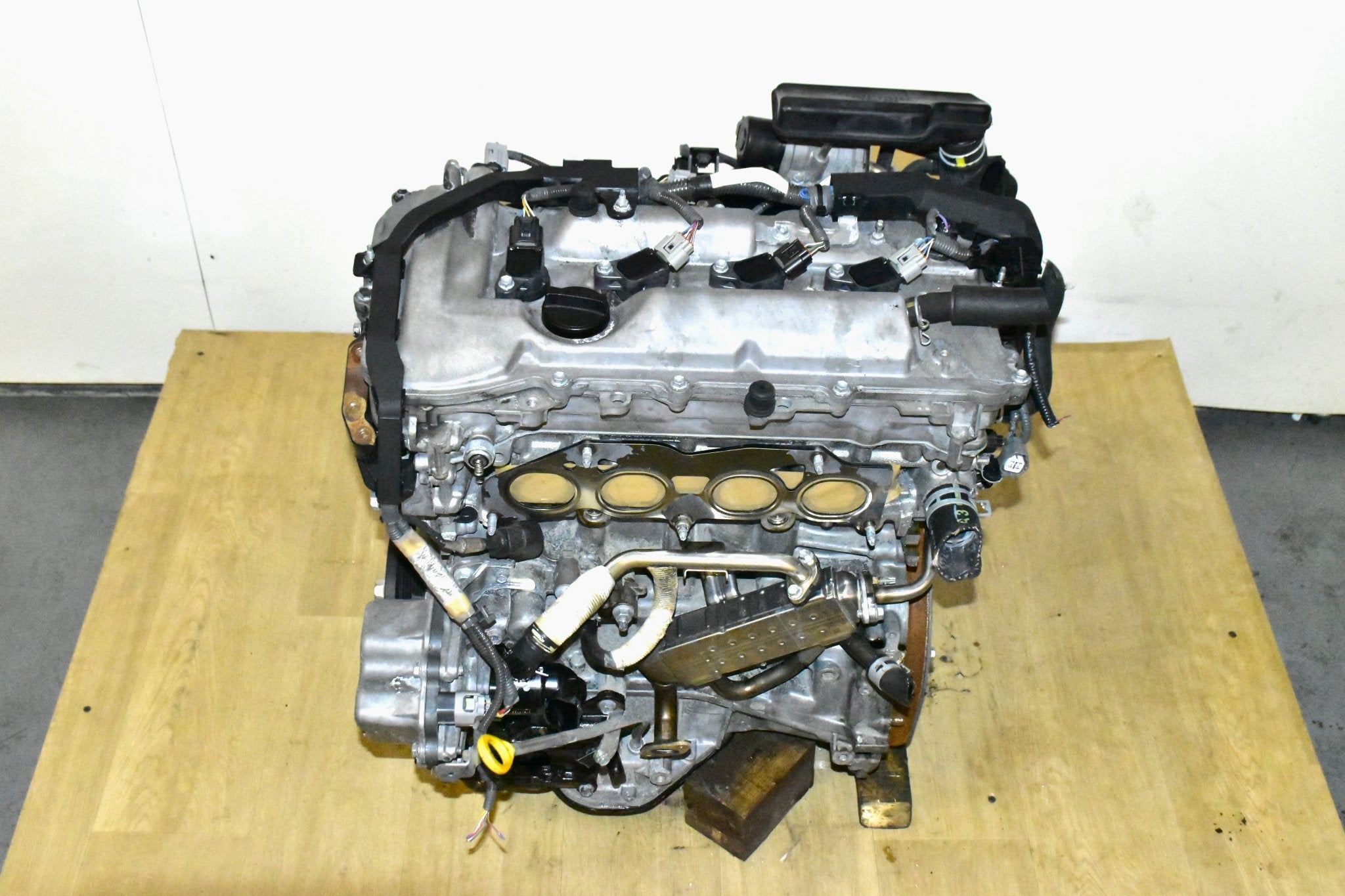
The 2015 Toyota Camry SE engine lineup consists primarily of the 2.5-liter 2AR-FE four-cylinder, producing 178 horsepower, and the 3.5-liter 2GR-FE V6, delivering 268 horsepower. Renowned for exceptional longevity and a low cost of ownership, these engines utilize timing chains and advanced variable valve timing to balance fuel efficiency with consistent daily performance.
The Core Powerplants of the 2015 Camry SE
The 2015 model year represented a significant mid-cycle refresh for the XV50 generation Camry. While the exterior received a nearly complete overhaul, Toyota retained its proven powertrain options for the SE trim. The "SE" (Sport Edition) designation in 2015 was more than just an aesthetic package; it featured specific tuning to complement the engines, including a sport-tuned suspension and a more responsive electric power steering system.
The 2.5-Liter 4-Cylinder (2AR-FE)
The vast majority of 2015 Camry SE units found on the road today are powered by the 2AR-FE engine. This 2.5-liter inline-four is widely considered one of the most reliable engines Toyota has ever produced. It features a Double Overhead Cam (DOHC) design with 16 valves and Dual VVT-i (Variable Valve Timing with intelligence).
The Dual VVT-i system is critical to the engine's character. By independently adjusting the timing of both the intake and exhaust camshafts, the engine can optimize its "breathing" based on RPM and load. At low speeds, it prioritizes torque and smooth idling; at higher speeds, it shifts timing to maximize horsepower and reduce pumping losses, which enhances fuel economy.
The 3.5-Liter V6 (2GR-FE)
For drivers seeking more significant acceleration, the 2015 Camry SE was also available with the 2GR-FE V6 engine. This 3.5-liter powerhouse transformed the Camry from a standard commuter into one of the quickest midsize sedans of its era.
The 2GR-FE is a 60-degree V6 that utilizes a sophisticated acoustic control induction system (ACIS). This system varies the effective length of the intake manifold to create a "supercharging" effect using pressure waves, which flattens the torque curve. This ensures that the SE V6 has plenty of passing power whether you are merging onto a highway or accelerating from a standstill.
Technical Specifications and Performance Data
When evaluating the 2015 Toyota Camry SE engine, it is essential to look at the raw data that defines its capabilities. In 2026, these figures remain a benchmark for what constitutes a durable and practical internal combustion engine.
| Feature | 2.5L I4 (2AR-FE) | 3.5L V6 (2GR-FE) |
|---|---|---|
| Horsepower | 178 hp @ 6,000 RPM | 268 hp @ 6,200 RPM |
| Torque | 170 lb-ft @ 4,100 RPM | 248 lb-ft @ 4,700 RPM |
| Fuel Delivery | Multi-point Fuel Injection | Multi-point Fuel Injection |
| Valvetrain | Chain-driven DOHC, 4 valves/cyl | Chain-driven DOHC, 4 valves/cyl |
| Compression Ratio | 10.4:1 | 10.8:1 |
| Bore x Stroke | 90.0 mm x 98.0 mm | 94.0 mm x 83.0 mm |
| Recommended Oil | 0W-20 Synthetic | 5W-30 or 0W-20 |
| EPA Est. MPG (City/Hwy) | 25 / 35 | 21 / 31 |
Engineering for Longevity: Why These Engines Last
Toyota’s reputation for reliability is not accidental; it is the result of specific engineering choices made during the development of the 2AR and 2GR engine families. As these vehicles reach the 11-year mark in 2026, the wisdom of these choices becomes evident.
The Move to Timing Chains
One of the most significant advantages of the 2015 Camry SE engines is the use of a stainless steel timing chain rather than a rubber timing belt. Timing belts typically require expensive replacement every 60,000 to 90,000 miles. In contrast, the timing chains used in the 2AR-FE and 2GR-FE are designed to last the life of the engine, provided that oil changes are performed regularly. This significantly reduces the long-term cost of ownership and eliminates the risk of catastrophic engine failure due to a snapped belt.
Cooling and Thermal Management
The engines feature an open-deck aluminum alloy block with "spiny" type cast-iron cylinder liners. The "spiny" exterior of the liners increases the surface area contact between the liner and the aluminum block, which greatly improves heat dissipation. Better cooling leads to less thermal stress on the head gaskets and piston rings, which are traditional failure points in high-mileage engines.
Friction Reduction
Toyota engineers utilized several techniques to reduce internal friction, which improves both longevity and fuel efficiency. This includes:
- Offset Crankshafts: The crankshaft is positioned slightly off-center from the cylinder bore, which reduces the side-thrust force of the piston against the cylinder wall during the power stroke.
- Roller Rocker Arms: These replace traditional flat-tappet followers, using needle bearings to reduce friction in the valvetrain.
- Low-Tension Piston Rings: These reduce the drag on the cylinder walls while still maintaining a proper seal.
Essential Maintenance for the 2015 Camry SE Engine
While the 2015 Camry SE engine is "over-engineered" for durability, its longevity is strictly dependent on a proper maintenance regimen. In 2026, many of these engines are entering the 150,000 to 200,000-mile range, where maintenance becomes even more critical.
Oil Service Intervals
The 2.5L engine specifically requires SAE 0W-20 fully synthetic oil. Toyota’s official recommendation is a 10,000-mile or 12-month interval under "normal" driving conditions. However, many master technicians recommend a 5,000-mile or 6-month interval, especially for vehicles used in heavy stop-and-go traffic or extreme temperatures. Frequent oil changes prevent the VVT-i actuators from clogging with sludge, which is the most common cause of "rattle" or performance degradation in these units.
The Importance of Genuine Coolant
These engines use Toyota Super Long Life Coolant (SLLC), which is a non-silicate, non-amine, non-nitrate, and non-borate coolant based on hybrid organic acid technology. Mixing this with generic "all-makes" coolants can lead to premature water pump seal failure. The first coolant flush is typically due at 100,000 miles, with subsequent flushes every 50,000 miles.
Spark Plug Replacement
Both the I4 and V6 engines use Iridium-tipped spark plugs. These are designed for high performance and long life, typically requiring replacement every 100,000 to 120,000 miles. Neglecting spark plugs can lead to ignition coil stress and reduced fuel economy. On the V6 model, replacing the rear three spark plugs is a labor-intensive process as it requires removing the intake plenum.
Common Issues and Troubleshooting
Despite their high reliability ratings from organizations like Consumer Reports, the 2015 Camry SE engines do have a few documented patterns that owners should monitor.
Water Pump Leaks
The most common mechanical failure on both the 2.5L and 3.5L engines is the water pump. Owners should look for pink crusty deposits (dried coolant) around the engine pulleys. If the water pump begins to seep, it should be replaced immediately to prevent overheating. A failing pump often emits a low-pitched "growling" or "whirring" sound before it fails completely.
VVT-i Rattle
On high-mileage units, some owners report a brief metallic rattling sound immediately after a cold start. This is often related to the VVT-i cam gear actuator losing its oil prime. While often considered a "nuisance" noise rather than a terminal failure, using a high-quality OEM oil filter with a strong anti-drainback valve can sometimes mitigate this issue.
Torque Converter Shudder (Transmission Related)
While not an engine defect, many 2015 Camry owners mistake the "torque converter shudder" for an engine misfire. This occurs typically between 25 and 45 mph when the transmission is under light load. Toyota issued a software update and extended warranty for this issue in earlier years, but it is something to verify if you feel a vibration that seems like the engine is "struggling."
Comparing the I4 vs. V6 for the SE Trim
Choosing between the two engines depends heavily on your driving environment and priorities.
The 2.5L 4-cylinder is the logical choice for the budget-conscious. It offers more than enough power for daily commuting and achieves excellent highway fuel economy, often exceeding its 35 MPG EPA rating during steady cruising. It is also easier to work on, as the engine bay is less cramped, making DIY maintenance like belt or alternator replacement much simpler.
The 3.5L V6 is the choice for enthusiasts and those who frequently carry a full load of passengers. The power delivery is exceptionally smooth, and the 2GR-FE is known for its "refined" sound profile compared to the more utilitarian buzz of the four-cylinder. However, the V6 carries a weight penalty on the front nose, slightly affecting the "flickability" of the SE’s sport-tuned steering, and it requires more expensive spark plug and cooling system maintenance.
Longevity Expectations in 2026
As we navigate through 2026, the 2015 Toyota Camry SE remains a highly sought-after vehicle in the used market. This is primarily because the 2AR-FE and 2GR-FE engines are capable of reaching 300,000 miles or more with basic care.
Unlike many modern engines from the 2020s that rely on small-displacement turbocharged designs, the 2015 Camry engines are naturally aspirated. This means they operate at lower internal pressures and generate less heat, which inherently extends the life of gaskets, seals, and plastic components under the hood. For a buyer in 2026, a 2015 Camry SE with 120,000 miles is often considered to be "just broken in," provided the maintenance history is documented.
FAQ
Does the 2015 Toyota Camry SE have a timing belt or chain?
Both the 2.5L 4-cylinder and the 3.5L V6 engines in the 2015 Camry SE use a timing chain. Unlike a timing belt, the chain is designed to last the entire lifespan of the engine and does not require periodic replacement.
What type of oil does the 2015 Camry SE engine take?
The 2.5L 4-cylinder engine requires 0W-20 fully synthetic oil. The 3.5L V6 engine can typically use either 5W-30 or 0W-20, though 0W-20 is often preferred for better cold-start protection and fuel efficiency. Always check the oil cap for the specific viscosity required for your vehicle.
Is the 2015 Camry SE engine direct injected?
The 2015 Camry engines use multi-port fuel injection (EFI). This is actually an advantage for long-term reliability because the fuel is sprayed over the intake valves, which prevents the carbon buildup common in "Direct Injection only" engines from that era.
Why is my 2015 Camry SE engine idling roughly?
Common causes for a rough idle in this model include a dirty throttle body, a vacuum leak, or old spark plugs. Because these engines use an electronic throttle control system, carbon deposits on the throttle plate can interfere with the idle air volume, leading to a dip in RPM when stopped at a light.
How much does it cost to replace a 2015 Camry SE engine?
In 2026, a used 2.5L 2AR-FE engine typically costs between $800 and $1,500, plus labor. Because these engines were produced in such high volumes, they are readily available at salvage yards. A remanufactured engine may cost between $3,000 and $4,500.
Final Recommendation
If you are maintaining or purchasing a 2015 Toyota Camry SE in 2026, focus your attention on the cooling system and oil quality. The engines themselves are structurally sound and remarkably durable. Replacing the water pump proactively if leaks are spotted and adhering to a strict 5,000-mile synthetic oil change interval will ensure the vehicle remains reliable for years to come. For those seeking the best balance of sportiness and economy, the 2.5L 4-cylinder remains the gold standard, while the V6 is the preferred option for those who prioritize a premium, high-power driving experience.