The single most defining key fact about the phosphorus trichloride ($\text{PCl}_3$) molecule is its distinctive trigonal pyramidal molecular geometry, which arises directly from its central phosphorus atom possessing a single lone pair of electrons combined with three single covalent bonds. This specific spatial arrangement dictates its polarity, reactivity patterns, and its extensive utility as an intermediate in industrial chemical synthesis.
Introduction to Phosphorus Trichloride ($\text{PCl}_3$)
Phosphorus trichloride is a fundamental inorganic compound that bridges the gap between basic phosphorus chemistry and complex industrial synthesis. To understand why $\text{PCl}_3$ behaves the way it does in a laboratory or manufacturing plant, one must first master the 1 key fact about $\text{PCl}_3$ molecule structure: its trigonal pyramidal geometry. This geometry is not merely a theoretical exercise in molecular modeling; it is the physical manifestation of quantum mechanical forces, electron repulsion, and orbital hybridization that dictate how the molecule interacts with everything from water to organic substrates.
In the landscape of modern chemical manufacturing, $\text{PCl}_3$ serves as a critical precursor for producing plasticizers, flame retardants, agricultural pesticides, and surfactants. However, handling this chemical requires a deep appreciation of its physical properties, high reactivity, and rigorous safety protocols. This comprehensive guide explores the structural foundation of $\text{PCl}_3$, its electronic configuration, chemical reactivity, physical characteristics, industrial applications, safety management, and common analytical questions surrounding its molecular identity.
The Structural Foundation: Geometry and Bonding
Electronic Configuration and Valence Shell Electron Pair Repulsion (VSEPR) Theory
The architecture of the phosphorus trichloride molecule can be fully rationalized using the Valence Shell Electron Pair Repulsion (VSEPR) theory. Phosphorus (atomic number 15) possesses five valence electrons in its outer shell, with an electron configuration of $[\text{Ne}] 3s^2 3p^3$. Chlorine (atomic number 17) contributes seven valence electrons, with an electron configuration of $[\text{Ne}] 3s^2 3p^5$.
When one phosphorus atom covalently bonds with three chlorine atoms, it shares three of its valence electrons, forming three single $\sigma$ (sigma) bonds. This leaves the phosphorus atom with two remaining valence electrons, which exist as a non-bonding lone pair. Consequently, the central phosphorus atom is surrounded by four electron domains: three bonding pairs and one lone pair.
Trigonal Pyramidal Shape vs. Tetrahedral Electron Geometry
While the electron domain geometry around the phosphorus atom is tetrahedral—accommodating the four regions of electron density—the molecular geometry is strictly defined by the positions of the atomic nuclei. Because a lone pair exerts a greater repulsive force on neighboring bonding pairs than bonding pairs exert on each other (known as lone pair-bond pair repulsion), it compresses the angle between the $\text{P}-\text{Cl}$ bonds.
In an ideal tetrahedral arrangement, the bond angle is $109.5^\circ$. In the $\text{PCl}_3$ molecule, this angle is compressed to approximately $100.3^\circ$. This deviation results in the characteristic trigonal pyramidal shape, resembling a tripod with a chlorine atom at each foot and the phosphorus atom elevated at the apex, crowned by the localized lone pair of electrons.
| Parameter | Measurement / Description |
|---|---|
| Central Atom | Phosphorus ($\text{P}$) |
| Ligands | Three Chlorine atoms ($\text{Cl}$) |
| Electron Geometry | Tetrahedral |
| Molecular Geometry | Trigonal Pyramidal |
| Valence Electrons (Total) | 26 ($5 + 3 \times 7$) |
| $\text{Cl}-\text{P}-\text{Cl}$ Bond Angle | $\approx 100.3^\circ$ |
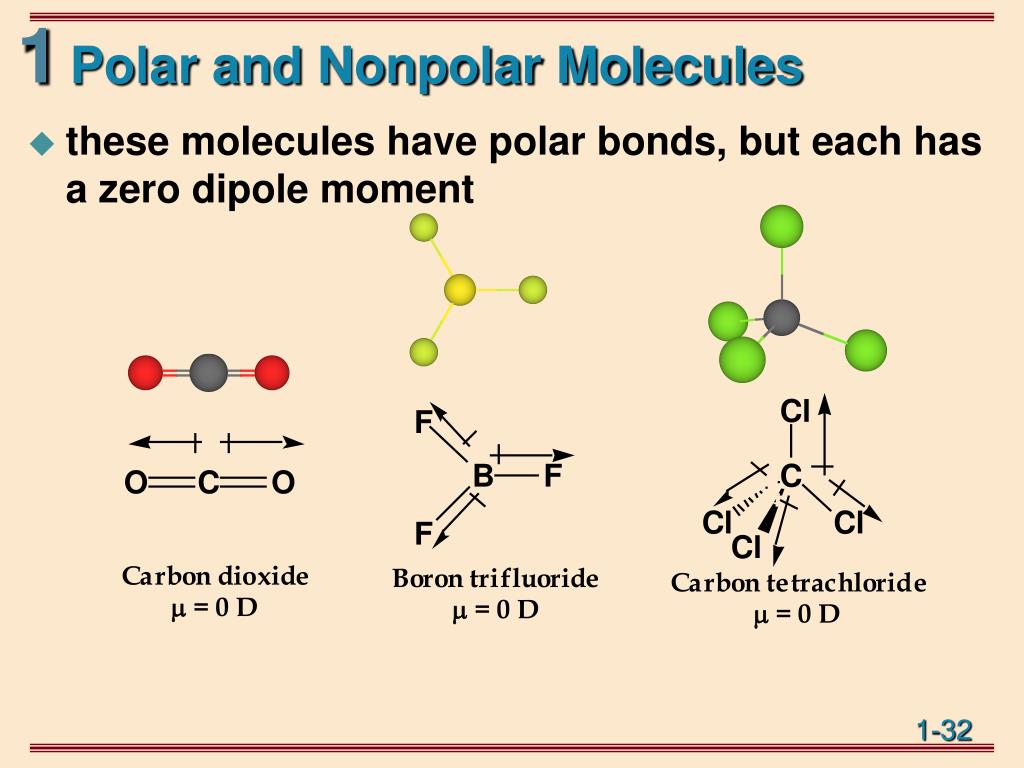
| Dipole Moment | Polar ($\approx 0.56\text{ D}$) |
Physical Properties Driven by Molecular Structure
The trigonal pyramidal geometry and the electronegativity difference between phosphorus ($\chi \approx 2.19$) and chlorine ($\chi \approx 3.16$) impart specific physical characteristics to the molecule.
Polarity and Intermolecular Forces
Because the bonds are polar due to the higher electronegativity of chlorine, and because the trigonal pyramidal geometry is asymmetric (preventing the bond dipoles from canceling out), $\text{PCl}_3$ possesses a net dipole moment. The molecular dipole points away from the chlorine plane toward the phosphorus atom and its lone pair.
Despite being a polar molecule, $\text{PCl}_3$ lacks hydrogen bonding capabilities. Its intermolecular forces are governed primarily by dipole-dipole interactions and London dispersion forces. At room temperature and standard atmospheric pressure, these forces result in $\text{PCl}_3$ existing as a clear, dense, fuming liquid.
Phase Behavior and Appearance
Pure phosphorus trichloride is colorless, but commercial samples often appear yellowish due to dissolved phosphorus impurities. It has a pungent, irritating odor reminiscent of hydrochloric acid because it reacts instantly with moisture in the air to release hydrogen chloride gas.
- Boiling Point: Approximately $76.1^\circ\text{C}$ ($169^\circ\text{F}$)
- Melting Point: Approximately $-93.6^\circ\text{C}$ ($-136.5^\circ\text{F}$)
- Density: $1.574\text{ g/cm}^3$ at $20^\circ\text{C}$
Chemical Reactivity and Mechanisms
The presence of the lone pair on phosphorus, combined with the electrophilic character of the phosphorus center and the leaving-group ability of the chloride ions, makes $\text{PCl}_3$ an exceptionally reactive reagent.
Hydrolysis and Interaction with Water
The most defining chemical reaction of phosphorus trichloride is its violent hydrolysis when exposed to water or moisture. The reaction proceeds exothermically to yield phosphorous acid ($\text{H}_3\text{PO}_3$) and hydrochloric acid ($\text{HCl}$):
$$\text{PCl}_3 + 3\text{H}_2\text{O} \rightarrow \text{H}_3\text{PO}_3 + 3\text{HCl}$$
This vigorous reaction underscores why $\text{PCl}_3$ must be stored in strictly anhydrous conditions under an inert atmosphere, such as dry nitrogen or argon.
Chlorination and Oxidation Reactions
$\text{PCl}_3$ readily acts as a chlorinating agent in organic synthesis, replacing hydroxyl groups in carboxylic acids and alcohols with chlorine atoms to form acyl chlorides and alkyl chlorides, respectively. Furthermore, it can be oxidized by oxygen, sulfur, or chlorine. For instance, reacting $\text{PCl}_3$ with chlorine gas yields phosphorus pentachloride ($\text{PCl}_5$):
$$\text{PCl}_3 + \text{Cl}_2 \rightarrow \text{PCl}_5$$
When reacted with oxygen, it forms phosphorus trichloride oxide (phosphoryl chloride, $\text{POCl}_3$), a vital intermediate used in the production of organophosphates.
Industrial Applications of $\text{PCl}_3$
Phosphorus trichloride is a high-volume industrial chemical manufactured by the direct combination of white phosphorus and chlorine gas in a continuous reactor. Its derivatives touch numerous consumer and industrial sectors.
Agrochemicals and Pharmaceuticals
A major share of global $\text{PCl}_3$ production is channeled into manufacturing organophosphorus compounds. These include glyphosate-based herbicides, insecticides, and pharmaceutical intermediates. The ability of the $\text{PCl}_3$ molecule to transfer phosphorus-carbon or phosphorus-oxygen bonds efficiently makes it indispensable in building complex organic molecules.
Flame Retardants and Plasticizers
Phosphorus-based flame retardants rely heavily on intermediates derived from $\text{PCl}_3$. When incorporated into polymers and textiles, these compounds inhibit combustion by promoting char formation. Additionally, $\text{PCl}_3$ is used to produce phosphite esters, which serve as secondary antioxidants and plasticizers for polyolefins and polyvinyl chloride (PVC), enhancing polymer stability against thermal and ultraviolet degradation.
Safety, Toxicity, and Environmental Management
Due to its high reactivity and the generation of corrosive hydrogen chloride upon contact with moisture, $\text{PCl}_3$ is classified as a hazardous chemical requiring strict engineering controls.
Health Hazards
- Inhalation: Vapor or mist causes severe irritation of the respiratory tract, pulmonary edema, and chemical pneumonitis.
- Skin and Eye Contact: Causes severe chemical burns, irreversible eye damage, and deep tissue necrosis due to the rapid hydrolysis forming hydrochloric and phosphorous acids on moist biological surfaces.
- Ingestion: Causes severe corrosion of the gastrointestinal tract, systemic toxicity, and potential circulatory collapse.
Safe Handling and Storage Protocols
Industrial facilities utilize closed systems, glove boxes, and dedicated scrubbers to capture any escaping vapors. Personnel handling $\text{PCl}_3$ must wear full chemical-resistant suits, respiratory protection equipped with acid-gas canisters, and face shields. Spills must never be neutralized with water directly, as the violent, exothermic hydrolysis will scatter corrosive acid mists; instead, dry absorbents such as soda ash or dry sand are deployed under controlled ventilation.
Frequently Asked Questions
What is the 1 key fact about the $\text{PCl}_3$ molecule?
The single most important fact about the $\text{PCl}_3$ molecule is its trigonal pyramidal molecular geometry. This shape is caused by three bonding electron pairs and one unshared lone pair on the central phosphorus atom, which compresses the bond angles and creates a polar molecule.
Why is the $\text{PCl}_3$ bond angle less than $109.5^\circ$?
While the electron domain geometry is tetrahedral with an ideal angle of $109.5^\circ$, the lone pair on the phosphorus atom exerts a stronger repulsive force on the bonding pairs than the bonding pairs exert on each other. This pushes the chlorine atoms closer together, reducing the $\text{Cl}-\text{P}-\text{Cl}$ bond angle to approximately $100.3^\circ$.
Is the $\text{PCl}_3$ molecule polar or nonpolar?
$\text{PCl}_3$ is a polar molecule. Although the individual $\text{P}-\text{Cl}$ bonds are polar due to the electronegativity difference between phosphorus and chlorine, the asymmetrical trigonal pyramidal geometry ensures that the bond dipoles do not cancel out, resulting in a net dipole moment.
How does $\text{PCl}_3$ react with water?
Phosphorus trichloride reacts violently and exothermically with water to produce phosphorous acid ($\text{H}_3\text{PO}_3$) and toxic, corrosive fumes of hydrogen chloride gas ($\text{HCl}$).
What are the primary commercial uses of phosphorus trichloride?
$\text{PCl}_3$ is primarily used as a chemical intermediate to manufacture agricultural pesticides, flame retardants, plasticizers, surfactants, and pharmaceutical active ingredients.
Conclusion and Recommended Next Actions
Understanding the trigonal pyramidal geometry and electronic structure of phosphorus trichloride provides the foundational knowledge required to predict its physical behavior, chemical reactivity, and industrial utility. For professionals, researchers, and students engaging with inorganic synthesis, recognizing how the lone pair dictates molecular polarity and bond compression is essential for safe handling and effective application.
When working with or studying $\text{PCl}_3$, ensure that all experimental designs account for its extreme moisture sensitivity and corrosive hydrolysis products. For further technical specifications, consult official chemical safety data sheets (SDS) provided by certified chemical manufacturers or reference peer-reviewed literature in inorganic chemistry repositories such as the Royal Society of Chemistry.