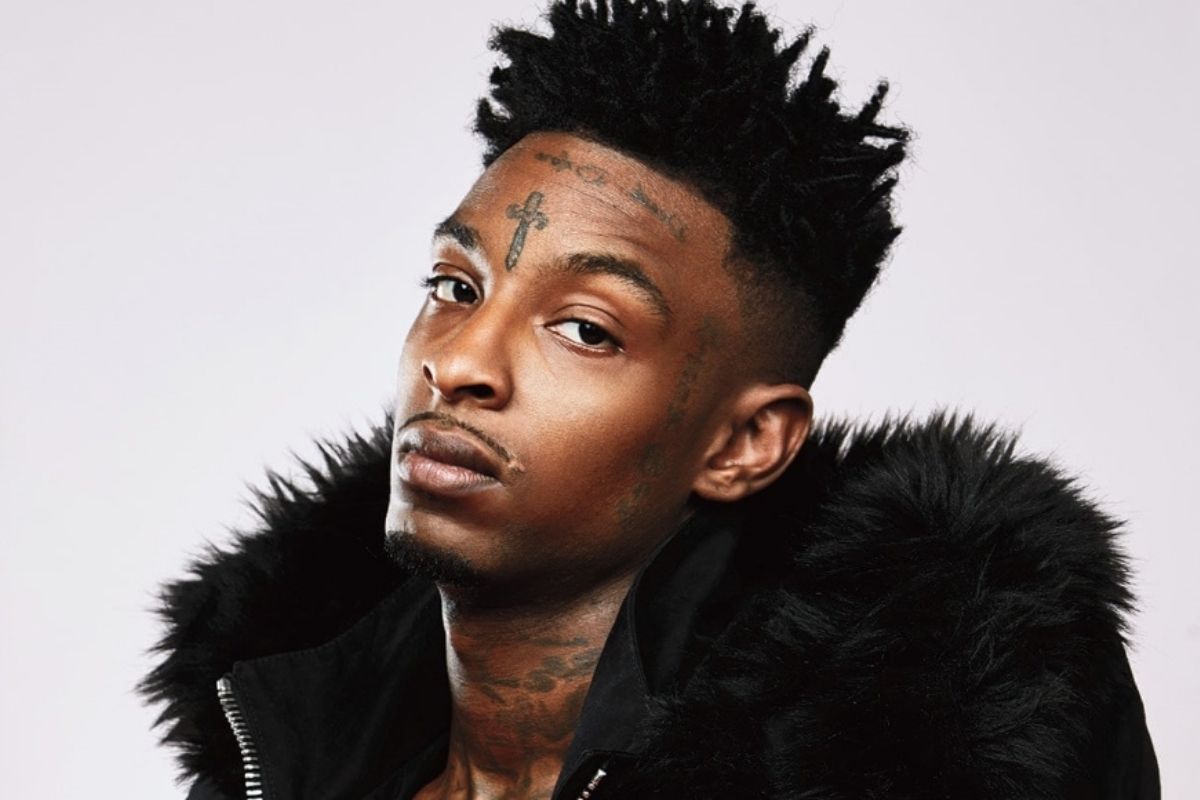
21 Savage, born Shéyaa Bin Abraham-Joseph, is a prominent British-American rapper and songwriter who rose to prominence in the mid-2010s. Known for his understated flow and dark, narrative-driven lyrics, he has become a definitive voice in modern trap music. His career is characterized by significant commercial success, multiple Grammy nominations, and a highly publicized immigration case that reshaped his public image.
Early Life and Background
Born on October 22, 1992, in Newham, London, England, 21 Savage spent his formative years in the United Kingdom before moving to Atlanta, Georgia, with his mother at the age of seven. His upbringing in the Decatur area of Atlanta profoundly influenced his music, providing the backdrop for the gritty, street-oriented storytelling that would later define his sound.
During his youth, he faced significant challenges, including legal run-ins and personal losses that frequently appear as recurring themes in his discography. These early experiences served as the catalyst for his music, providing a visceral authenticity that resonated with listeners who identified with his depictions of poverty, violence, and institutional systemic struggle.
The Rise of 21 Savage in the Trap Scene
The rapper’s ascent to fame began with a series of mixtapes that gained traction within the Atlanta underground scene. His collaborative projects, most notably Savage Mode (2016) with producer Metro Boomin, solidified his reputation. The project’s dark, atmospheric production paired perfectly with his detached vocal delivery, establishing a blueprint that many trap artists would attempt to emulate.
His major label debut, Issa Album (2017), reached number two on the Billboard 200, signaling his transition from a regional favorite to a mainstream powerhouse. This was followed by the critically acclaimed I Am > I Was (2018), which debuted at number one on the Billboard 200. This album marked a maturation in his artistic development, featuring more introspective tracks and collaborations with artists across the spectrum of R&B and hip-hop.
The Immigration Case and Legal Status
One of the most defining moments in the artist's public life occurred in February 2019, when he was taken into custody by U.S. Immigration and Customs Enforcement (ICE) agents. The arrest revealed to the public that 21 Savage was, in fact, a British national who had overstayed a visa that expired in 2006.
The legal proceedings that followed became a subject of intense national debate regarding immigration policy and the portrayal of international residents within the United States. While his legal team worked to secure his residency status, the artist received widespread support from fellow musicians and social activists. This situation shed light on the complexities of the U.S. immigration system, particularly for individuals who moved to the country as minors and essentially grew up as Americans without legal permanent resident status.
Musical Style and Artistic Impact
The primary appeal of 21 Savage lies in his minimalism. Unlike the rapid-fire lyrical acrobatics seen in other subgenres of hip-hop, his approach relies on sparse, menacing beats and a delivery that feels intentionally unhurried. He often uses his platform to comment on the realities of gang life, the consequences of street violence, and the psychological toll of his environment.
His evolution as an artist is best observed through his discography:
- The Early Mixtape Era: Focus on raw, unpolished storytelling and street authenticity.
- The Collaboration Era: Establishing a signature sound with Metro Boomin, utilizing heavy bass and haunting synths.
- The Modern Maturity Era: Exploring legacy, fatherhood, and deeper emotional narratives.
Comparative Analysis of Key Projects
| Album/EP | Primary Producer | Key Themes | Billboard Peak |
|---|---|---|---|
| Savage Mode | Metro Boomin | Survival, Street Life | #23 |
| Issa Album | Various | Lifestyle, Wealth | #2 |
| I Am > I Was | Various | Introspection, Success | #1 |
| Savage Mode II | Metro Boomin | Legacy, Competition | #1 |
| American Dream | Various | Heritage, Identity | #1 |
Philanthropy and Community Engagement
Beyond his musical contributions, 21 Savage has consistently invested in the Atlanta community that raised him. He is the founder of the "21 Savage Bank Account Campaign," a financial literacy initiative launched in 2018. This program provides youth with the education and resources necessary to manage finances, open bank accounts, and understand the basics of credit—skills he identified as lacking in his own upbringing.
His commitment to education and financial empowerment serves as a deliberate counter-narrative to the stereotypes often associated with trap artists. By sponsoring back-to-school drives and funding various community support programs, he demonstrates a tangible commitment to systemic improvement within urban centers.
Common Misconceptions
Because of his rapid rise and the sudden revelation of his birthplace, several myths have circulated regarding his persona.
- The "Atlanta Local" Label: While he is fundamentally an Atlanta artist in terms of musical culture and upbringing, his British origins were kept private until his legal troubles. This led to accusations of inauthenticity by some observers, despite his long-term residency in Georgia.
- Musical Range: Critics who initially labeled him a "one-dimensional" rapper were later forced to acknowledge his ability to curate complex, melody-driven albums that feature diverse guest artists and intricate production choices.
- Financial Motives: Some listeners misinterpret the themes of his "Bank Account" hit and his financial literacy campaigns as contradictory; however, he frames his financial advice as a tool for empowerment for those living in similar socioeconomic conditions.
Frequently Asked Questions
Is 21 Savage still an active artist in 2026?
Yes. As of 2026, 21 Savage continues to release music, tour, and collaborate with high-profile artists. His influence on the sound of modern hip-hop remains significant, and he maintains a consistent output of both solo work and feature appearances.
Did the 2019 immigration issue affect his ability to perform?
Following his arrest in 2019, his legal status became a long-term, ongoing process. While he faced significant restrictions on international travel during the pendency of his immigration hearings, he remained active within the United States.
How did he impact the sound of modern trap music?
He helped popularize the "less is more" approach to lyricism within trap music. By prioritizing atmosphere and mood over dense wordplay, he allowed the production—specifically the work of producers like Metro Boomin—to take center stage, defining the "dark trap" sound of the late 2010s.
What is the "21 Savage Bank Account Campaign"?
It is a financial literacy program he launched to help students learn how to manage money, save, and build credit. The initiative provides access to online financial courses and has partnered with various organizations to support underserved youth in the Atlanta area.
How has his music changed since his debut?
His music has shifted from purely street-level narratives to more nuanced reflections on his life as a famous artist, father, and someone navigating the complexities of his heritage. While his core delivery remains consistent, his subject matter now incorporates themes of legacy and personal growth.
Next Actions for Fans and Listeners
To fully appreciate the scope of 21 Savage’s career, listeners should move beyond his most popular radio hits and engage with his full-length albums in their intended sequence. I Am > I Was serves as the best entry point for those looking to understand his transition into an artist who values substance over strictly aesthetic appeal. Furthermore, following his charitable work through his official channels can provide a broader view of his efforts to affect positive change in the community that defined his early years.