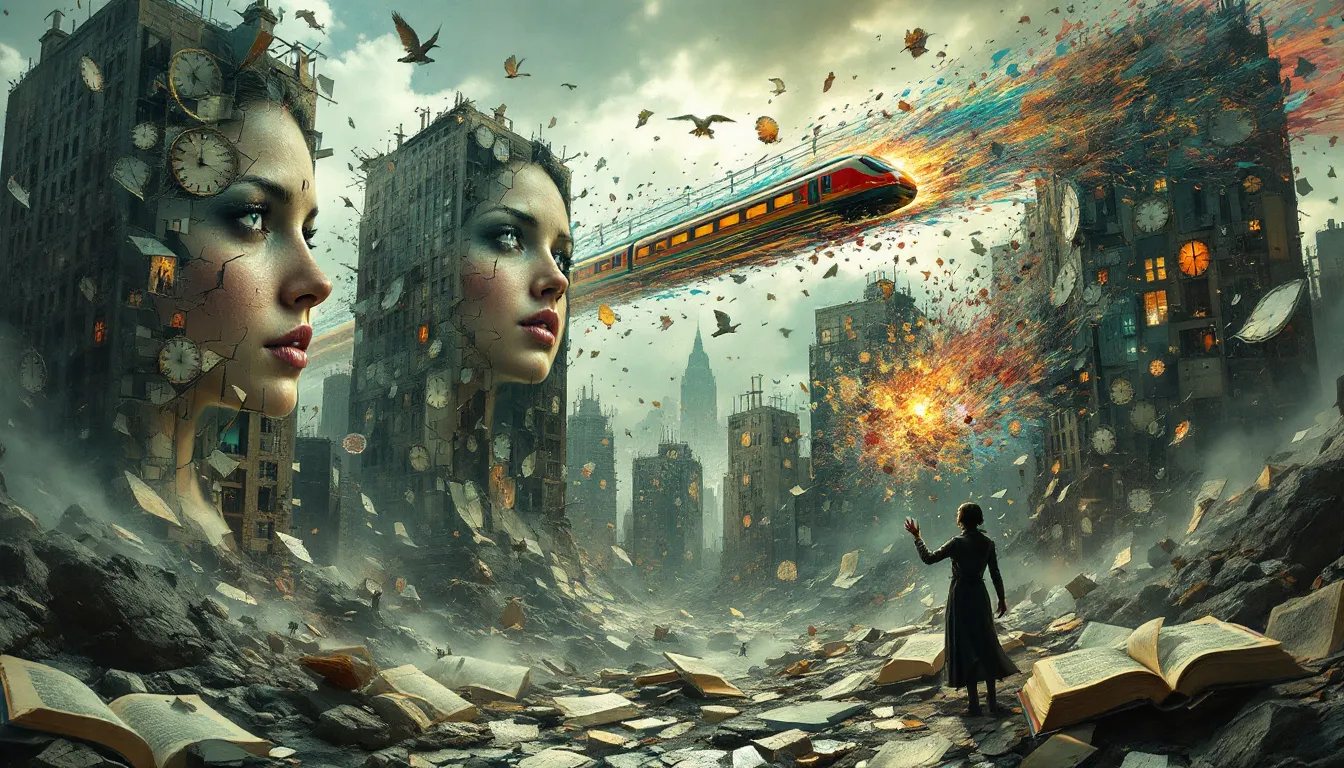
N.K. Jemisin’s The Fifth Season reshapes speculative fiction expectations by dismantling the traditional "hero’s journey" and replacing it with a radical second-person narrative, a non-linear structure, and a world where magic is a biological burden linked to systemic oppression. By centering the story on a middle-aged mother during an apocalypse, Jemisin shifts the genre's focus from world-saving escapism to the visceral survival of the marginalized.
Speculative fiction has long been a vessel for exploring the "what if" of human existence, yet it often falls into comfortable patterns: the chosen one, the clear distinction between good and evil, and the static nature of the setting. As we look back from 2026, it is clear that the publication of The Fifth Season (2015) and the subsequent Broken Earth trilogy served as a pivotal turning point. It didn't just tell a story; it rewired the structural DNA of how science fantasy could be written, proving that high-concept world-building and intimate character studies are not mutually exclusive.
The Narrative Pivot: Why the Second Person Changes Everything
One of the most jarring and effective ways The Fifth Season reshapes reader expectations is its use of the second-person perspective ("You"). In contemporary fiction, the second person is often relegated to experimental short stories or "Choose Your Own Adventure" books. Jemisin, however, utilizes it to create an immediate, inescapable intimacy between the reader and the protagonist, Essun.
The Psychology of "You"
When a reader encounters the sentence "You are she," it forces an identification that the third person ("She is Essun") or the first person ("I am Essun") cannot achieve. In the context of speculative fiction, this serves a dual purpose:
- Trauma Processing: The story begins with the discovery of a murdered child. The "You" acts as a protective layer for the character, a way of disassociating from a reality too painful to bear, while simultaneously dragging the reader into that grief.
- Structural Mystery: The choice of "You" is eventually revealed to have a narrative justification rooted in the world’s lore. It is not a gimmick; it is a vital component of the storytelling that challenges the expectation of a transparent narrator.
Breaking the Linear Timeline
Traditional epic fantasy often follows a chronological progression. The Fifth Season subverts this by following three separate characters: Essun, a woman searching for her kidnapped daughter; Damaya, a young girl taken to be trained in the use of her powers; and Syenite, an ambitious woman tasked with a mission alongside a more powerful mentor.
The reshaping of expectations occurs when the reader realizes these are not three different women living at the same time, but the same woman at three different stages of her life. This revelation forces a retrospective re-evaluation of everything read up to that point, a technique that rewards close reading and elevates the work from a simple adventure to a complex psychological profile.
World-Building as Social Critique: The Concept of Orogeny
In most speculative fiction, "magic" is either a wonder to be harnessed or a corrupting force to be feared. Jemisin introduces orogeny—the ability to manipulate thermal, kinetic, and chemical energy directly from the Earth. While this sounds like a standard superpower, the societal response to it is what reshapes the genre's tropes.
The Biological Cost of Power
Orogeny is not a gift; it is a biological function governed by a specific organ called the sessapinae. Because orogenes can accidentally trigger earthquakes or "flash-freeze" people around them if they lose emotional control, they are feared, enslaved, and institutionalized.
By grounding "magic" in biology and then subjecting it to the mechanics of systemic oppression, Jemisin moves away from the "Wizard's Tower" trope and into a space that mirrors real-world histories of chattel slavery and institutionalized segregation. The Fulcrum, the organization that "trains" orogenes, is not a school of magic like Hogwarts; it is a prison and a processing plant. This shifts the search intent of the reader from wanting to see "cool powers" to understanding the cost of survival in a world that hates you for what you can do.
The Earth as an Antagonist
The setting, known as The Stillness, is an ironically named supercontinent plagued by "Fifth Seasons"—catastrophic climate events that last for decades or centuries. In this world, the Earth is not a passive backdrop or a goddess to be worshipped; it is "Father Earth," a vengeful, sentient entity that actively tries to purge humanity. This subverts the "Mother Earth" archetype and forces characters to interact with their environment through the lens of "Stone Lore"—a collection of survival rules etched in stone to ensure the species outlasts the next apocalypse.
Comparing Traditional Speculative Fiction vs. The Broken Earth
To understand how The Fifth Season reshapes expectations, it is helpful to compare its elements against the traditional tropes of the genre.
| Feature | Traditional Epic Fantasy | The Fifth Season / Speculative Innovation |
|---|---|---|
| Protagonist Archetype | The young "Chosen One" or hidden heir. | A middle-aged mother and teacher. |
| Primary Conflict | Defeating a "Dark Lord" or external evil. | Surviving systemic oppression and environmental collapse. |
| Magic System | Arcane, learned from books, often limitless. | Biological (Orogeny), physically taxing, highly regulated. |
| Narrative Voice | Third-person omniscient or limited. | Mixed, including a dominant Second-Person ("You"). |
| Setting Stability | Static world with deep but unchanging history. | Volatile world defined by periodic apocalypses (Seasons). |
| Moral Alignment | Clear distinctions between Good and Evil. | Ambiguous; characters make horrific choices to survive. |
The Role of "Stone Lore" and Technical World-Building
Jemisin provides a level of technical depth that reshapes the "soft magic" expectations of many fantasy readers. The inclusion of an appendix and a glossary in the books is not just for flavor; it is necessary because the world-building is rooted in geology and seismology.
Technical Terms and Concepts
- Comms: The basic unit of society. A community must prove its utility to survive a Season. If a Comm cannot sustain itself, it is "de-comm'd," a euphemism for being left to die.
- Guardians: Humans with embedded obsidian who control orogenes. They represent the "necessary evil" of a police state, further complicating the moral landscape.
- Stone Eaters: A truly alien race of silicon-based beings that move through rock. They reshape expectations of what "non-human" races look like, moving away from Elves and Dwarves toward something genuinely lithic and inscrutable.
By 2026, the term "Cli-Fi" (Climate Fiction) has become a staple of literary analysis, and The Fifth Season remains its most robust example. It treats environmental collapse not as a singular event to be stopped, but as a recurring, inevitable reality that shapes culture, religion, and biology.
Addressing the Barriers: Requirements for Reading
For readers accustomed to lighter fare, The Fifth Season presents several challenges. Understanding these prerequisites helps in navigating the text effectively:
- Emotional Resilience: The book deals heavily with themes of child loss, institutionalized abuse, and the dehumanization of marginalized groups. It is not a "comfort read."
- Structural Patience: Readers must be willing to trust the author through the first half of the book, as the three timelines and the second-person perspective can be disorienting until the "click" moment occurs.
- Scientific Literacy: While not a textbook, having a basic understanding of tectonic plates and geothermal energy enhances the appreciation of how Jemisin "hardens" her fantasy world.
Why This Reshaping Matters for the Future of Fiction
The impact of The Fifth Season extends beyond its own pages. It has opened the door for "The New Weird" and more diverse voices in speculative fiction by proving that audiences are hungry for stories that don't follow the 20th-century blueprint.
Diversification of Perspective
Before Jemisin’s historic three-consecutive Hugo wins, the genre was often criticized for its Eurocentricity. The Fifth Season centers Black characters in a world where race is not the primary divider—ability (orogeny) is—yet the mechanics of their oppression are deeply familiar. This allows the narrative to explore intersectionality without being a direct allegory, expanding the boundaries of what speculative fiction can "say" about the real world.
The Evolution of the Apocalypse
Most post-apocalyptic fiction focuses on the immediate aftermath of a fall. Jemisin looks at the "Long Apocalypse." In her world, the world has ended dozens of times. This shifts the story's focus from "how do we fix it?" to "how do we live within it?" This is a profound shift in expectation, moving the reader from a mindset of restoration to one of adaptation.
Frequently Asked Questions
Is The Fifth Season considered Science Fiction or Fantasy?
It is best categorized as Science Fantasy. While it features elements typically associated with fantasy (manipulating the earth, ancient mysteries), the "magic" is explained through biological organs and energy conservation laws, and the setting involves lost high-technology (obelisks), which aligns it with science fiction.
Why is the book written in the second person?
The second person serves as a narrative device to represent the protagonist's trauma and dissociation. It also has a specific in-universe explanation: the story is being told to the protagonist by another character who is intimately familiar with her journey, making the "You" a literal part of the plot rather than just a stylistic choice.
Do I need to read the entire trilogy to understand the ending?
Yes. The Fifth Season is the first book of the Broken Earth trilogy. While it concludes a major character arc, the central mysteries regarding the Moon, the Stone Eaters, and the fate of the Stillness are only fully resolved in The Obelisk Gate and The Stone Sky.
How does this book handle the "Chosen One" trope?
It effectively subverts it. While Essun is incredibly powerful, she is not "chosen" by a prophecy to save the world. She is a woman trying to find her daughter. Her involvement in world-altering events is a consequence of her refusal to be a victim, rather than a pre-destined fate.
Is the world of The Stillness based on a real location?
While the supercontinent is fictional, the geological principles are based on real-world seismology. The concept of a "Fifth Season" mirrors real-world volcanic winters and extreme climate shifts, such as the Year Without a Summer (1816).
Final Recommendation: How to Approach the Work
If you are looking for an example of speculative fiction that reshapes expectations, The Fifth Season is the primary text to study. To get the most out of the experience:
- Listen to the audiobook: The narration by Robin Miles highlights the rhythmic, almost oral-tradition quality of the "Stone Lore" and helps clarify the shifts between perspectives.
- Focus on the "Why" of the world: Instead of just following the plot, pay attention to the "Stone Lore" interludes. They provide the historical context that explains why the society acts the way it does.
- Read it twice: This is a rare example of a book that becomes more impressive on a second reading, as the foreshadowing for the character "mergers" is visible from the very first chapter.
The Fifth Season reminds us that the best speculative fiction doesn't just show us another world; it provides a new set of eyes with which to view our own. By 2026, it stands not just as a successful trilogy, but as a blueprint for the next generation of writers seeking to challenge the limits of the human imagination.