The progression through associate, bachelor, master, and doctorate pathways represents a structured framework of higher education designed to build specialized knowledge, technical competencies, and research capabilities over time. Each academic tier serves as a distinct building block, offering specific entry points, professional credentials, and exit strategies tailored to various career trajectories across industries.
Higher education is structured around a sequence of academic credentials that progressively demand higher levels of independent critical thinking, research proficiency, and specialized expertise. Understanding how these degrees connect—and where they diverge—allows students and working professionals to map their educational goals efficiently. Whether a person aims to enter the workforce quickly with a technical skill set or pursue advanced scientific research and university-level teaching, navigating these pathways requires a clear evaluation of prerequisites, time commitments, financial investments, and professional outcomes.
Understanding the Higher Education Framework
The modern global education architecture is built on levels of learning that scale in complexity, autonomy, and scope. This framework is not merely a collection of isolated degrees; it is a cumulative ecosystem where each completed tier often serves as the foundational prerequisite for the next.
The Purpose of Academic Progressions
Educational pathways provide standardized benchmarks that employers, licensing boards, and academic institutions use to measure an individual's competency. An associate degree introduces foundational theories and practical vocational skills. A bachelor's degree expands this base into a comprehensive study of a major discipline, emphasizing analytical reasoning and broad conceptual understanding.
Master's degrees narrow the focus significantly, demanding advanced professional mastery or specialized technical research. Finally, doctorate degrees culminate in the creation of original knowledge, positioning the scholar as a leading authority in their domain. Recognizing this architecture helps students avoid redundant coursework, minimize student debt, and align their educational investments with concrete career milestones.
Structural Comparison of Degree Tiers
To visualize how these degrees differ across duration, credit requirements, and primary objectives, the following table breaks down the core characteristics of each tier in the standard educational progression.
| Degree Level | Typical Duration | Standard Credit Hours | Primary Objective | Common Entry Prerequisite |
|---|---|---|---|---|
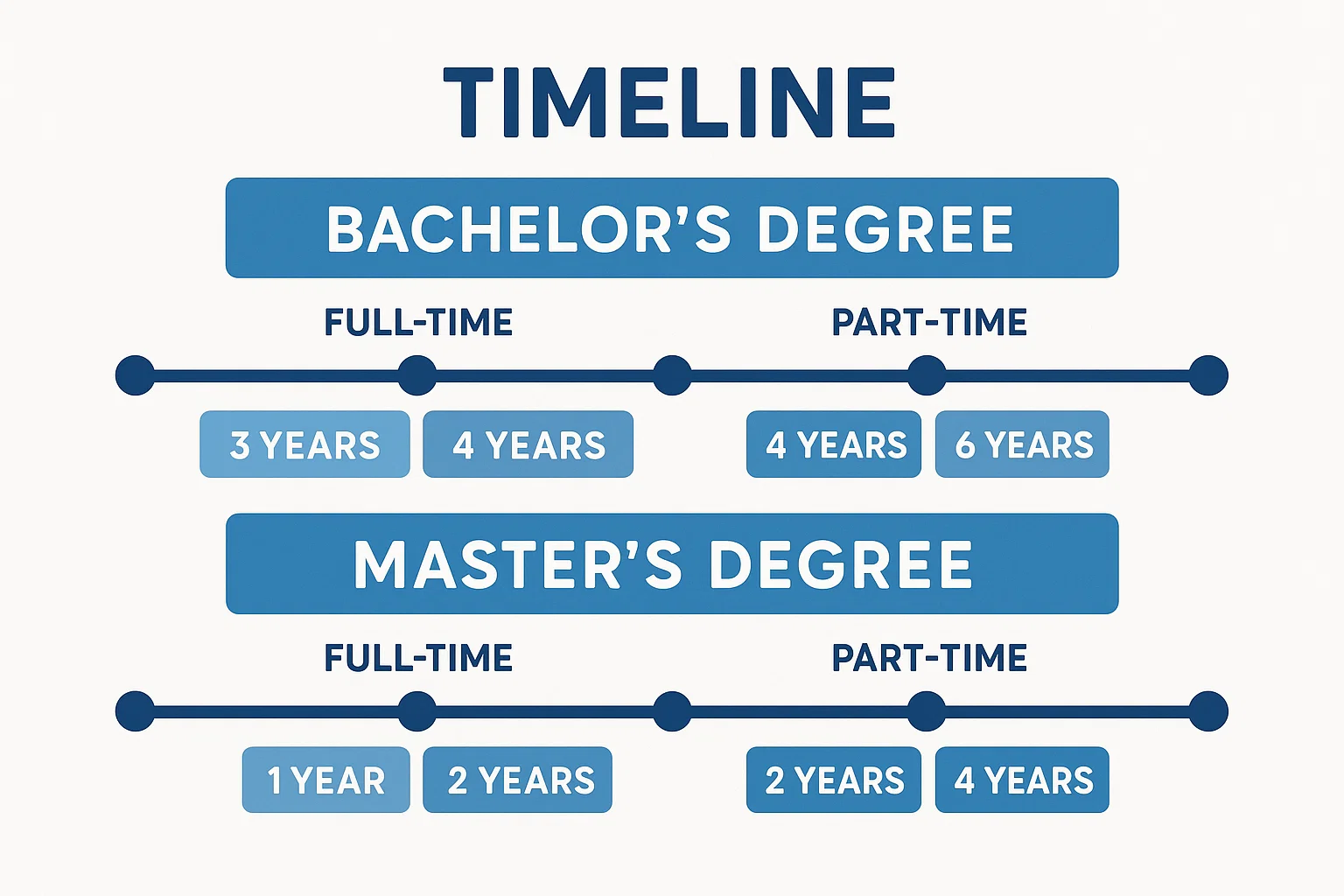
| Associate Degree | 2 years (Full-time) | 60–65 semester credits | Practical skill acquisition, general education foundation | High school diploma or GED |
| Bachelor's Degree | 4 years (Full-time) | 120–128 semester credits | Comprehensive disciplinary knowledge, critical thinking | High school diploma or associate degree |
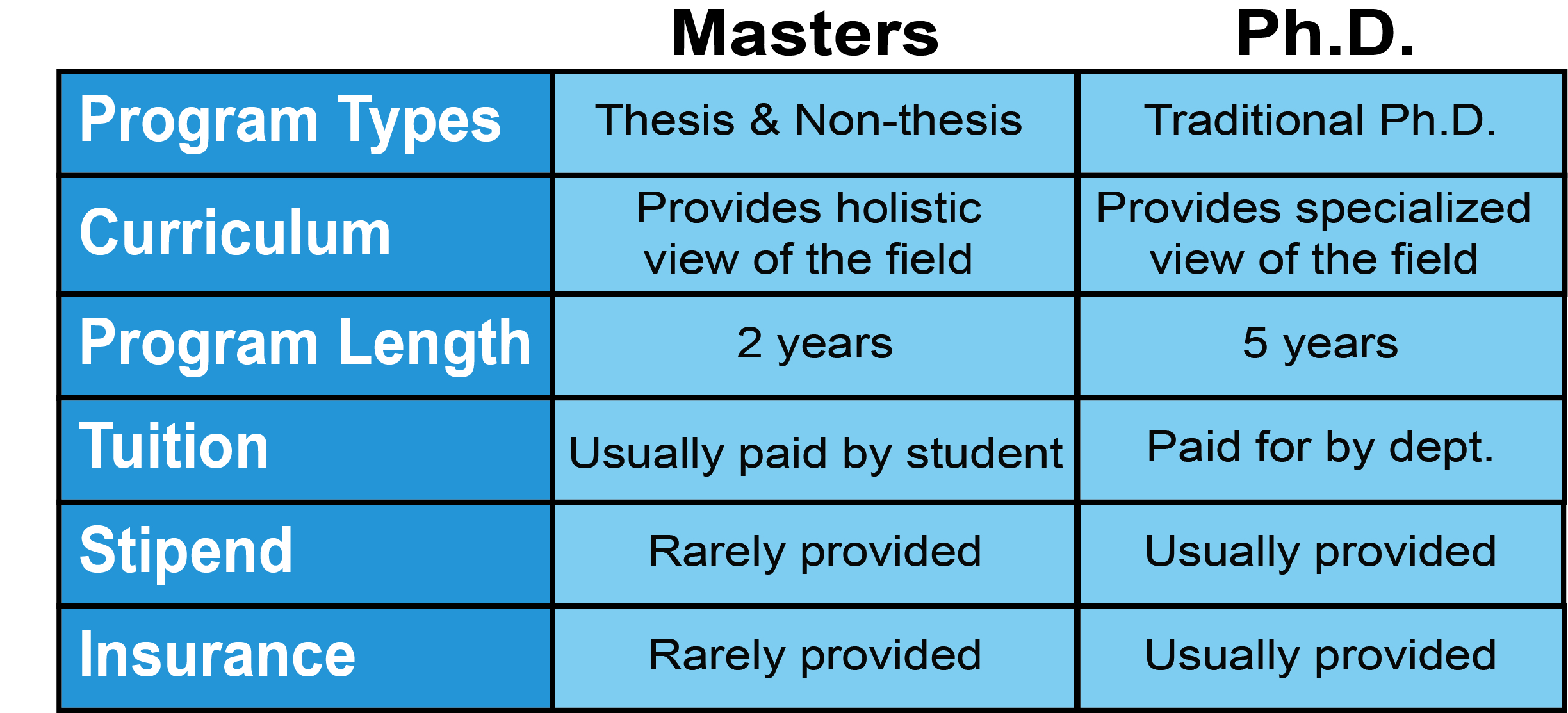
| Master's Degree | 1–3 years (Full-time) | 30–60 graduate credits | Advanced professional specialization, applied research | Bachelor's degree |
| Doctorate Degree | 3–7 years (Full-time) | Varies (often 60+ post-bachelor) | Original research, academic leadership, domain mastery | Bachelor's or Master's degree |
Tier 1: The Associate Degree
The associate degree is typically the first formal post-secondary credential a student earns. Offered primarily by community colleges, technical schools, and some four-year universities, these programs are engineered to bridge the gap between secondary education and immediate workforce entry or further academic study.
Types of Associate Degrees
Associate degrees generally fall into two operational categories: terminal degrees and transfer degrees.
- Associate of Applied Science (AAS): Designed primarily for immediate entry into the workforce. These programs minimize general education requirements in favor of intensive, hands-on technical training in fields such as nursing, information technology, culinary arts, or criminal justice.
- Associate of Arts (AA) and Associate of Science (AS): Structured specifically for students intending to transfer their credits to a four-year institution. These programs mirror the general education requirements of the first two years of a bachelor's program, focusing on humanities, social sciences, or STEM prerequisites.
Benefits and Limitations
The primary advantages of an associate degree include lower tuition costs, smaller class sizes, flexible scheduling options (including extensive evening and online classes), and rapid completion times. For adult learners or career changers, an associate degree provides a low-risk, high-return entry point into specialized employment sectors.
However, limitations do exist. Certain career advancement paths are strictly capped for individuals holding only an associate degree. Furthermore, students pursuing transfer pathways must verify institutional articulation agreements to ensure their credits transfer seamlessly to a bachelor's degree program without loss of credit.
Tier 2: The Bachelor’s Degree
The bachelor's degree—encompassing Bachelor of Arts (BA), Bachelor of Science (BS), and specialized variants like the Bachelor of Fine Arts (BFA)—stands as the standard benchmark for professional employment and the traditional gateway to graduate education.
Structure and Curriculum
A standard bachelor's program requires approximately 120 semester credits, typically completed over four years of full-time study. The curriculum is divided into three main components:
- General Education Core: Courses in mathematics, composition, natural sciences, and humanities designed to foster broad intellectual flexibility.
- Major Concentration: Deep, rigorous coursework focused on a specific discipline, such as finance, mechanical engineering, or psychology.
- Electives: Supplementary courses that allow students to explore minor fields of study or gain cross-disciplinary skills.
Bridging to Advanced Study
For those planning to move beyond undergraduate education, the bachelor's degree functions as the foundational bedrock. Admission to reputable master's and professional programs almost universally requires a completed bachelor's degree from an accredited institution. During these undergraduate years, students aiming for graduate school must focus heavily on maintaining a competitive grade point average (GPA), securing letters of recommendation from faculty, and—where applicable—engaging in undergraduate research or internships that strengthen their graduate school applications.
Tier 3: The Master’s Degree
A master's degree represents specialized postgraduate education designed to elevate a professional's expertise, grant eligibility for advanced leadership roles, or prepare scholars for doctoral-level research.
Master of Arts (MA) vs. Master of Science (MS) vs. Professional Degrees
Master's programs diverge based on their pedagogical orientation:
- Master of Arts (MA): Typically focuses on humanities, arts, and social sciences, emphasizing theoretical analysis, literature, and qualitative research.
- Master of Science (MS): Concentrates on hard sciences, technology, engineering, mathematics, and quantitative business fields, often requiring empirical research, data analysis, or laboratory work.
- Professional Master’s Degrees: Degrees such as the Master of Business Administration (MBA), Master of Public Administration (MPA), or Master of Social Work (MSW) prioritize practical application, case studies, and industry-specific problem-solving over traditional academic research.
Admissions Prerequisites and Expectations
Gaining entry into a master's program requires more than a completed bachelor's degree. Admissions committees evaluate candidates based on undergraduate GPA (often requiring a minimum of 3.0), professional work experience (particularly for MBAs), statements of purpose, letters of recommendation, and standardized test scores such as the GRE or GMAT, though many institutions have adopted test-optional policies. The coursework itself demands a high degree of autonomous study, critical evaluation of primary literature, and, in many cases, the successful defense of a master's thesis or capstone project.
Tier 4: The Doctorate Degree
At the apex of the academic hierarchy sits the doctorate degree. These programs are designed to train scholars, researchers, and top-tier practitioners to generate original contributions to human knowledge or apply advanced theory to complex, real-world systems.
Research Doctorates (PhD) vs. Applied Doctorates (EdD, DBA, PsyD)
Doctoral pathways split into two primary operational branches:
- Doctor of Philosophy (PhD): A research-focused degree spanning multiple disciplines. PhD candidates spend years conducting empirical investigations, publishing peer-reviewed papers, and authoring an exhaustive dissertation that must defend original research before a committee of experts.
- Applied Doctorates: Degrees such as the Doctor of Education (EdD), Doctor of Business Administration (DBA), or Doctor of Psychology (PsyD) focus on the application of research to professional practice. While rigorous, these programs emphasize solving operational challenges within an industry rather than solely generating theoretical discoveries.
The Dissertation and Defense Process
The defining milestone of a research doctorate is the dissertation. Candidates must identify an unaddressed gap in their field's literature, formulate original hypotheses, execute rigorous research or experimentation, and analyze the resulting data. The process culminates in the dissertation defense—an oral examination where the candidate presents their findings and defends their methodology against rigorous questioning from an academic committee.
Strategic Mapping: Choosing Your Pathway
Navigating associate, bachelor, master, and doctorate pathways requires deliberate planning. Students must evaluate their personal career goals, financial resources, and time horizons before committing to an educational track.
Direct Entry vs. Staged Progression
Some professionals enter the workforce immediately after earning an associate degree, returning later to complete a bachelor's degree via degree-completion programs designed for working adults. Others follow the traditional continuous pipeline from high school to bachelor's, followed by immediate or delayed graduate work. Understanding credit transfer regulations, prior learning assessments, and employer tuition reimbursement programs can significantly reduce the financial and temporal cost of navigating these transitions.
Evaluating Return on Investment (ROI)
Higher education represents a substantial investment of capital and time. Prospective students should research employment projections, median salary data published by government labor departments, and industry credential requirements. While a doctorate may be essential for a university professorship or clinical psychology practice, a master's or targeted bachelor's degree may offer a superior financial return for careers in software engineering, project management, or corporate finance.
Frequently Asked Questions
Can I skip an associate degree and go straight to a bachelor's degree?
Yes. The vast majority of traditional four-year university students enter directly from high school into a bachelor's degree program without earning an associate degree first. Associate degrees are typically utilized by students seeking lower tuition costs, technical vocational training, or an academic stepping stone after secondary school.
Is a master's degree always required to enter a doctoral program?
No. Many universities offer direct-entry PhD programs that accept students holding only a bachelor's degree. These rigorous programs integrate master's-level coursework directly into the first two years of the doctoral curriculum, allowing high-achieving undergraduates to move efficiently toward doctoral candidacy.
How do I know if my prior college credits will transfer up the academic ladder?
Credit transferability depends on institutional accreditation, course equivalency evaluations, and specific university policies. Regionally accredited institutions generally accept transfer credits from similarly accredited schools, provided the coursework aligns with the receiving program's curriculum and the student earned a passing grade (typically a C or higher).
What is the difference between an academic doctorate and a professional doctorate?
An academic doctorate (such as a PhD) focuses heavily on original research, theory generation, and preparing candidates for academic or scientific research careers. A professional doctorate (such as an EdD or DBA) focuses on applying existing research to solve practical, operational challenges within professional industries.
Can work experience substitute for academic prerequisites in graduate programs?
While work experience cannot replace a conferred bachelor's degree, many master's programs—particularly in business and administration—heavily weigh professional experience, managerial portfolios, and letters of recommendation when evaluating candidates whose undergraduate GPAs fall slightly below standard admission thresholds.
Conclusion and Next Actions
Navigating the educational continuum from associate degrees to doctorates requires balancing academic ambition with practical career planning. Begin your journey by identifying the specific credential required by your target profession. Research accredited institutions that offer flexible learning formats, clear credit transfer policies, and robust career placement services. Schedule a consultation with an academic advisor or professional mentor to map out your prerequisite coursework, evaluate funding options, and construct a realistic timeline for your educational advancement.