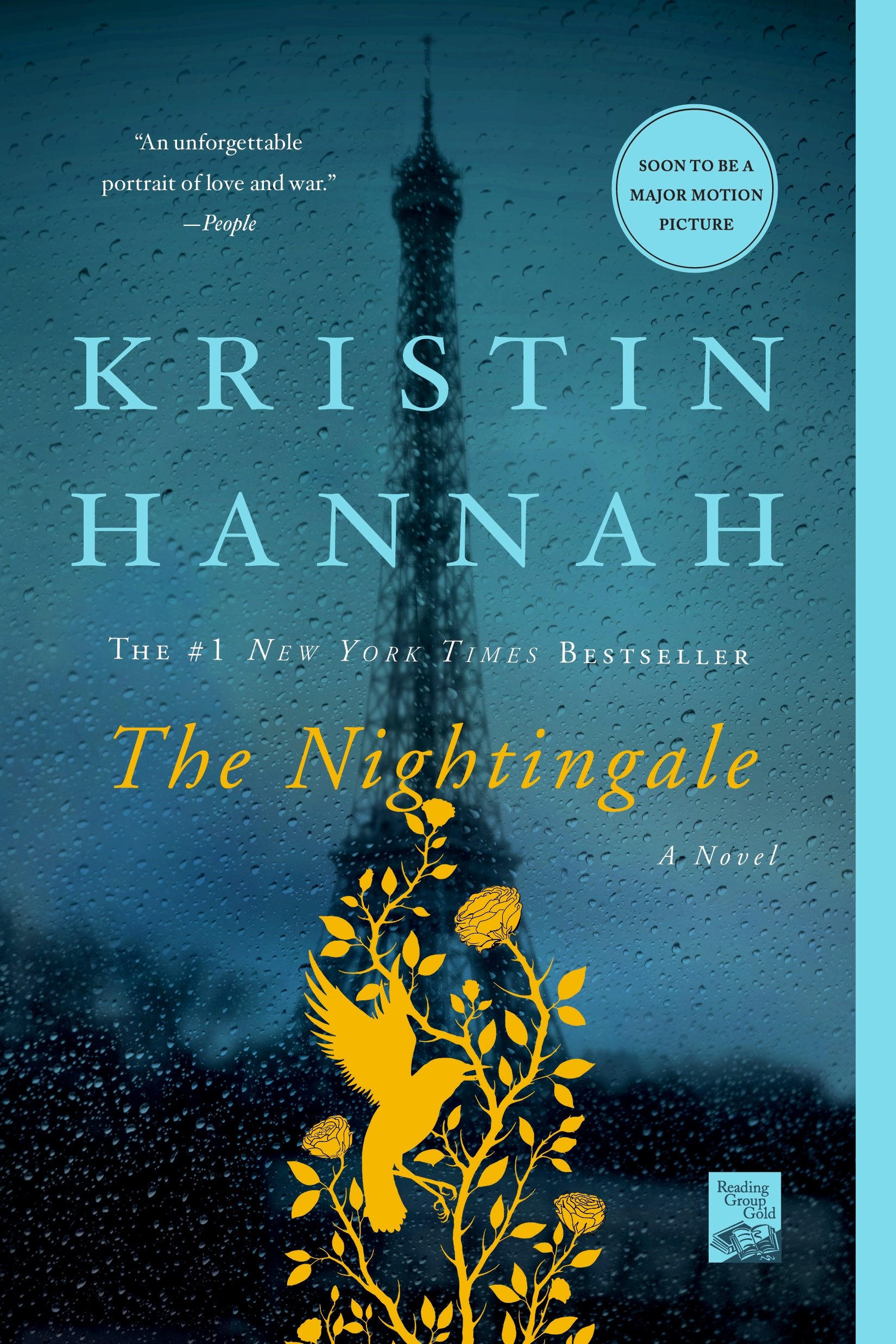
In Kristin Hannah's historical novel The Nightingale, Antoine Mauriac does not die during World War II. Although he spends five years in a German prisoner-of-war camp under severe conditions, Antoine survives the conflict and returns to his wife, Vianne, in 1945. He lives a long life after the war before passing away of old age decades later.
Clarifying Antoine Mauriac's Fate in The Nightingale
Readers of Kristin Hannah's 2015 historical novel The Nightingale frequently search for clarification regarding Antoine Mauriac's fate. Because the novel deals extensively with the trauma, displacement, and heavy casualties of German-occupied France, many readers assume that Antoine perishes during his long absence. However, Antoine survives the war and returns to his home in Carriveau.
Antoine Mauriac is the devoted husband of Vianne Mauriac and the father of Sophie. He lives at Le Jardin, the family estate in the quiet French village of Carriveau. When France mobilizes its armed forces in 1939 to counter Nazi Germany, Antoine is called up to serve in the French Army. Shortly after active combat begins, he is captured by German troops during the Fall of France in 1940 and placed in a military prisoner-of-war (POW) camp.
Antoine remains absent for almost the entire duration of the story, spanning 1939 through 1945. His prolonged absence, combined with the catastrophic mortality rate among other key characters in the novel, creates widespread misunderstanding about whether he dies. Readers frequently confuse Antoine's outcome with that of other male figures in the book—most notably Julien Rossignol, Vianne's father, who dies in a concentration camp—or assume that his imprisonment ended fatally.
Timeline of Antoine Mauriac's War Experience: [August 1939: Mobilization] ➔ [June 1940: Captured during Battle of France] ➔ [1940–1945: Imprisoned in German POW Camp] ➔ [May 1945: Liberated & Returns to Le Jardin]
Antoine’s World War II Timeline: Mobilization to Liberation
Understanding Antoine’s journey requires examining the timeline of his wartime experience and how his absence drives the narrative arc for his wife, Vianne.
Mobilization and Separation (1939–1940)
In August 1939, as war with Germany becomes inevitable, France orders a general mobilization of its military reservists. Antoine is among the millions of French men drafted into service, leaving Vianne and their young daughter, Sophie, to manage Le Jardin alone. This separation marks the emotional turning point that forces Vianne—initially portrayed as passive and conflict-averse—to confront the harsh realities of wartime survival on her own.
When the German Wehrmacht invades France in May 1940, the French military suffers a swift defeat. During the chaotic fighting preceding the June 1940 armistice, Antoine's unit is surrounded and captured by advancing German forces.
Imprisonment in a German POW Camp (1940–1945)
Following the French surrender, over 1.5 million French soldiers were transported to Germany as prisoners of war, housed in prisoner camps known as Stalags (for enlisted men) and Oflags (for officers). The Imperial War Museums document that French prisoners were held under forced labor conditions, facing strict rationing, cold winters, and physical exhaustion throughout the five-year occupation.
Antoine spends five painful years in captivity. Throughout this period:
- Communication between Antoine and Vianne is restricted to heavily censored postcards sent through the International Red Cross.
- Messages arrive months apart, and long gaps occur where Vianne receives no news at all, leaving her uncertain whether Antoine is dead or alive.
- The physical toll of the POW camp severely weakens Antoine, leaving him malnourished and suffering from long-term health problems.
While Antoine is imprisoned, his home at Le Jardin is commandeered by Nazi forces. German officers are quartered directly in his house, leaving Vianne to endure psychological torture, physical threats, and extreme food shortages without his protection.
Liberation and Return to Carriveau (1945)
With the defeat of Nazi Germany in May 1945, Allied forces liberate the POW camps across Europe. Weakened, emaciated, and deeply traumatized by five years of captivity, Antoine makes his way back to France and returns to Le Jardin in Carriveau.
His return is a moment of profound relief for Vianne, but it is also complicated by the immense personal growth and secret trauma both partners experienced during their half-decade apart.
Psychological and Emotional Impact of Antoine's Return
Antoine’s survival is not a simple "happy ending"; instead, it highlights the complex reality of post-war reintegration for soldiers and survivors of trauma.
Reconnecting with Vianne and Sophie
When Antoine returns, he finds that his daughter, Sophie, has grown from a child into a courageous young woman who assisted her mother through the dark years of occupation. He also finds his wife fundamentally changed. The shy, gentle Vianne who waved goodbye in 1939 had become a resilient resistance figure who secretly sheltered 19 Jewish children in a nearby convent to save them from deportation to extermination camps.
The Birth of Julien and Antoine's Acceptance
The most emotionally charged aspect of Antoine's return involves the presence of a newborn baby boy at Le Jardin.
During the final phase of the German occupation, a ruthless SS officer named Sturmbannführer von Richter was billeted at Le Jardin. Von Richter subjected Vianne to repeated sexual violence. As a consequence of this abuse, Vianne became pregnant and gave birth to a son shortly before the war ended.
When Antoine returns from Germany, Vianne faces the heartbreaking task of revealing the infant to her husband. In a powerful demonstration of love, compassion, and emotional maturity:
- Antoine recognizes that Vianne was a victim of wartime brutality and bears no guilt for the assault.
- He chooses not to reject or resent the child.
- He claims the boy as his own son, naming him Julien in honor of Vianne’s late father.
Antoine raises baby Julien with the same unconditional devotion he shows to Sophie, ensuring the boy grows up loved and protected from the stigma of his origins.
Who Actually Dies in The Nightingale?
Much of the confusion surrounding Antoine's fate stems from the high death toll among secondary and lead characters in The Nightingale. Kristin Hannah does not shy away from the mortal cost of resistance and war.
| Character Name | Relationship / Identity | Final Fate | Cause of Death / Circumstances | Story Arc Significance |
|---|---|---|---|---|
| Antoine Mauriac | Vianne's husband | Survived War | Passes away of natural causes decades later (prior to 1995 frame narrative) | Represents survival, post-war forgiveness, and family reconstruction. |
| Vianne Rossignol Mauriac | Protagonist; Antoine's wife | Survived War | Passes away of cancer in 1995 (as an elderly woman in Oregon) | Rescued 19 Jewish children; lives a long life with Antoine and her family. |
| Isabelle Rossignol | Protagonist; Vianne's sister ("The Nightingale") | Deceased | Illness and exhaustion in 1945 shortly after liberation | Led the "Nightingale" escape line for Allied airmen; tortured at Ravensbrück. |
| Julien Rossignol | Vianne and Isabelle's father | Deceased | Executed / Perished at Buchenwald Concentration Camp | Sacrificed himself by claiming to be "The Nightingale" to protect Isabelle. |
| Hauptmann Beck | Wehrmacht officer billeted at Le Jardin | Deceased | Killed by Vianne/Isabelle in self-defense in 1944 | Complex German officer whose death forces Isabelle into hiding and escalates danger. |
| Sturmbannführer von Richter | SS Officer billeted at Le Jardin | Deceased | Shot during the liberation of France | Villainous figure who assaulted Vianne; killed as German forces retreat. |
| Rachel de Mornay | Vianne's best friend | Deceased | Murdered during deportation / Extermination camp | Her deportation drives Vianne to save her son Ari (Daniel) and start hiding Jewish children. |
Detailed Character Analysis: Those Who Sacrificed Their Lives
To fully understand why readers misremember Antoine’s fate, it is helpful to look closely at the characters who do perish during the narrative.
Isabelle Rossignol ("The Nightingale")
Isabelle Rossignol, Vianne's fiery younger sister, is the central hero of the French Resistance network in the novel. Using the code name Juliette Gauthier and the legendary moniker The Nightingale, Isabelle personally escorts downed Allied airmen across the treacherous Pyrenees mountains into neutral Spain, enabling them to escape back to Britain.
Isabelle’s resistance work eventually leads to her capture by the Gestapo. She is brutally interrogated and sent to the infamous Ravensbrück concentration camp for women. According to records compiled by the United States Holocaust Memorial Museum, Ravensbrück was known for extreme overcrowding, forced labor, disease, and systematic torture.
Isabelle survives until the camp is liberated at the end of the war, but her body is broken by malnutrition, disease, and abuse. She makes it back to France and reunites briefly with her family and her former lover, Gaëtan, before succumbing to her physical injuries in 1945. Her death is one of the most tragic climaxes of the novel.
Isabelle's Journey: Joins Resistance (1940) ➔ Escorts Airmen via Pyrenees ➔ Betrayed & Captured (1944) ➔ Imprisoned at Ravensbrück ➔ Liberated (1945) ➔ Dies of Physical Trauma
Julien Rossignol (The Father)
Julien Rossignol is the father of Vianne and Isabelle. An emotionally distant veteran of World War I, Julien spent most of his daughters' lives emotionally detached due to severe war trauma (post-traumatic stress disorder).
However, late in the novel, Julien accomplishes a heroic act of redemption. When the Gestapo comes close to identifying Isabelle as The Nightingale, Julien publicly claims that he is the operative responsible for the escape lines. By taking the blame, he saves Isabelle's life. He is arrested, deported to the Buchenwald concentration camp, and killed by the Nazi regime. Because Julien shares his first name with Vianne's son and is a father figure, readers often mix up his death with Antoine’s story.
Narrative Structure: The 1995 Frame Story Explained
Another source of confusion regarding Antoine's survival is the frame narrative that opens and closes the novel.
The Oregon Framing Sequence
The book opens in 1995 with an elderly woman living in the Pacific Northwest (Oregon) who is dying of cancer. She receives an invitation to a resistance reunion in Paris to honor the legacy of The Nightingale. Throughout the majority of the novel, Kristin Hannah intentionally conceals the identity of this elderly narrator, prompting readers to wonder whether she is Isabelle or Vianne.
At the climax of the book, the identity of the narrator is confirmed:
- The Narrator is Vianne Mauriac: Isabelle died in 1945, meaning Vianne is the surviving sister attending the reunion.
- Antoine Has Already Died: In the 1995 timeline, Vianne notes that her beloved husband, Antoine, passed away years prior after spending decades raising their family together in peace.
- Julien is Grown: Accompanying the elderly Vianne to Paris is her adult son, Julien, who grew up knowing Antoine as his loving father and only recently learned the full truth of his family's wartime history.
Because Antoine is deceased by the time the 1995 framing story occurs, readers who skim the opening or closing chapters might conclude that Antoine died during the events of World War II. In reality, he lived a long, fulfilling life after 1945 alongside Vianne.
Historical Context: French POWs in World War II
Kristin Hannah's depiction of Antoine’s war experience reflects the historical realities faced by French military personnel between 1940 and 1945.
Stalags and Forced Labor
When France capitulated in June 1940, Adolf Hitler used the 1.5 million French military captives as diplomatic leverage over the Vichy regime. The vast majority of French prisoners were sent to Stalags across Germany, Austria, and occupied Poland.
French POW Experience (1940–1945): • Initial Capture: Over 1.5 million French troops taken prisoner in May–June 1940. • Living Conditions: Cold, cramped barracks; low food rations; severe labor requirements. • Mail Restrictions: Communication limited to standardized, heavily censored Red Cross cards. • Repatriation: Delayed until total Allied victory in Europe (May 1945).
French POWs were forced to work in German industrial factories, agricultural farms, and infrastructure construction. Many suffered severe malnutrition, respiratory infections, and exhaustion. The psychological strain of long isolation from their families was severe.
By grounding Antoine's arc in these documented historical realities, the novel emphasizes that survival itself was a form of endurance. Antoine did not need to die on the battlefield to convey the immense cost paid by French families during World War II.
Frequently Asked Questions
Does Antoine ever find out about Vianne’s baby in The Nightingale?
Yes, Antoine finds out about the baby immediately upon returning home to Le Jardin in 1945. Vianne introduces him to the newborn boy, Julien, who was fathered by the German officer von Richter through sexual assault. Antoine chooses to forgive the circumstances, accept the baby as his own son, and raise him with unconditional love.
How does Isabelle die in The Nightingale?
Isabelle Rossignol dies in 1945 shortly after the end of World War II. Her death is caused by extreme illness, exhaustion, and physical damage sustained during her imprisonment and torture at the Ravensbrück concentration camp. She passes away peacefully shortly after being reunited with her family and her love, Gaëtan.
What happens to Vianne’s father, Julien Rossignol?
Julien Rossignol dies in a German concentration camp after sacrificing himself to save his younger daughter, Isabelle. When Nazi forces close in on The Nightingale, Julien claims that he is the resistance leader. He is arrested by the Gestapo, sent to Buchenwald, and executed.
Who is the old woman at the beginning and end of The Nightingale?
The elderly woman living in Oregon in 1995 is Vianne Mauriac. She is dying of cancer and traveling to Paris with her son, Julien, to attend a resistance memory ceremony honoring her late sister, Isabelle.
Is The Nightingale based on a true story?
While the characters of Vianne, Antoine, and Isabelle are fictional, the novel is directly inspired by true historical events. Isabelle Rossignol's storyline is based on Andrée de Jongh, a 24-year-old Belgian woman who created the Comet Line (Réseau Comète), a secret escape route that helped over 700 Allied airmen escape Nazi-occupied territory across the Pyrenees.
Practical Takeaways for Book Clubs and Readers
When reviewing or discussing The Nightingale in literary groups or book clubs, keeping these structural and thematic points in mind will help clear up character fates:
- Distinguish Between WWII Fates and 1995 Fates: Antoine survives the wartime events of 1939–1945. His death occurs decades later from natural causes prior to the 1995 frame story.
- Recognize Character Parallels: Do not confuse Julien Rossignol (the father who dies at Buchenwald) with baby Julien (Vianne's son who grows up in Oregon).
- Focus on the Theme of Survival: Kristin Hannah balances Isabelle’s tragic martyrdom with Antoine and Vianne’s survival, demonstrating that surviving trauma and rebuilding a shattered life requires immense courage.