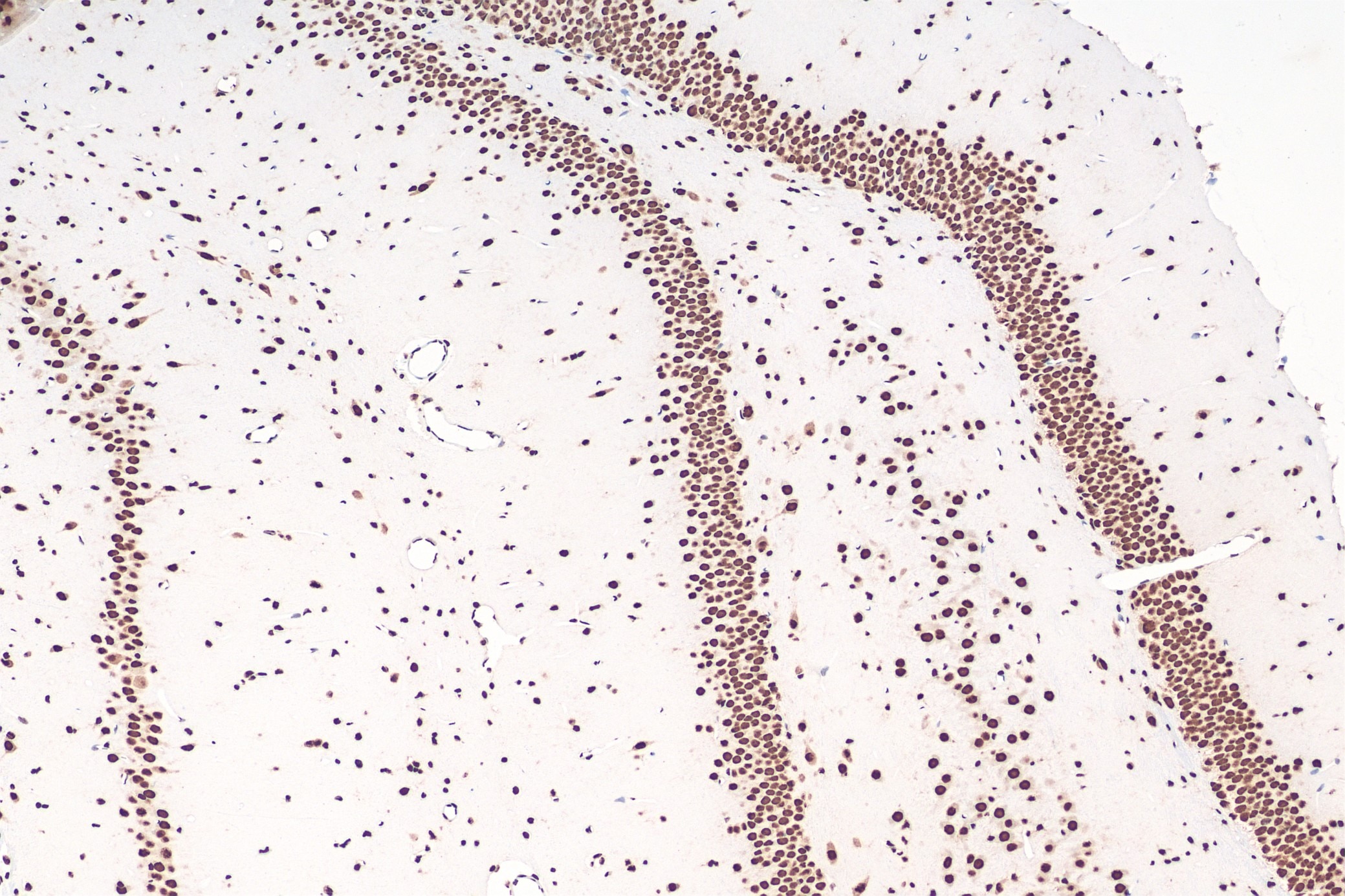
Anti-HRP antibodies are specialized reagents designed to bind Horseradish Peroxidase, primarily used for signal amplification in immunoassays like Western blotting and immunohistochemistry. They are widely available through major life science suppliers as monoclonal or polyclonal variants, supporting advanced neuroanatomical tracing and sensitive detection of HRP-conjugated probes in complex biological samples.
Understanding the Role of Anti-HRP Antibodies
To appreciate the utility of an anti-HRP antibody, one must first understand the ubiquity of Horseradish Peroxidase (HRP) in modern laboratory science. HRP is a 44 kDa glycoprotein extracted from the roots of the horseradish plant (Armoracia rusticana). It is the most widely utilized enzyme for signal visualization in molecular biology due to its high turnover rate, stability, and small size, which prevents steric hindrance when conjugated to secondary antibodies or streptavidin.
An anti-HRP antibody is an immunoglobulin specifically generated to recognize and bind to the HRP enzyme itself. While HRP is typically used as a detection "tag" to find other proteins, the anti-HRP antibody reverses this dynamic. By targeting the enzyme, researchers can achieve exponential signal amplification or utilize the enzyme as a tracer in specialized histological applications. As of 2026, these antibodies remain essential components in high-sensitivity diagnostic kits and neurobiology research.
The primary mechanism involves the antibody binding to epitopes on the HRP molecule without interfering with the enzyme's catalytic site. This allows the enzyme to remain functionally active—oxidizing substrates like DAB (3,3'-Diaminobenzidine) or luminol—while being tethered to the antibody. This dual-functionality is the cornerstone of its application in complex "sandwich" assays.
Primary Applications in Research and Diagnostics
The use cases for anti-HRP antibodies have expanded significantly over the decades, evolving from simple verification tools to critical components of ultra-sensitive detection systems.
1. Signal Amplification in Immunoassays
The most common use of anti-HRP antibodies is the amplification of weak signals in Western Blotting (WB) and Immunohistochemistry (IHC). In a standard detection protocol, a primary antibody binds the target, and an HRP-conjugated secondary antibody binds the primary. However, if the target protein expression is extremely low, the signal may fall below the detection threshold.
By introducing an anti-HRP antibody (often conjugated to additional HRP molecules), researchers can create a "polymer" effect. This increases the number of enzyme molecules per binding site, resulting in a significantly brighter chemiluminescent or chromogenic signal. This is particularly useful in 2026 for identifying rare biomarkers in liquid biopsies or early-stage disease tissues.
2. Neuroanatomical Tracing
In the field of neuroscience, HRP has long been used as a retrograde and anterograde tracer. When injected into neural tissue, HRP is taken up by axon terminals and transported back to the cell body. While the enzymatic activity of HRP can be visualized directly using the tetramethylbenzidine (TMB) reaction, the resulting crystals are often unstable or provide poor morphological detail.
Using an anti-HRP antibody in an IHC protocol allows for a much cleaner and more permanent visualization of neuronal pathways. The antibody provides a stable scaffold for fluorophores or heavy metals, enabling high-resolution mapping of brain circuitry via confocal or electron microscopy.
3. Detection of HRP-Conjugated Probes
In multi-plexed assays, researchers may use different enzymatic tags simultaneously. Anti-HRP antibodies allow for the specific isolation or verification of the HRP-conjugated fraction. For instance, if a researcher is developing a new conjugation chemistry, an anti-HRP antibody can be used in an ELISA (Enzyme-Linked Immunosorbent Assay) format to quantify the efficiency of the HRP-to-protein linkage.
4. Plant Biology and Food Science
Since HRP is a plant-derived enzyme, anti-HRP antibodies can sometimes be used to detect related peroxidases in other plant species. In food science, they serve a role in detecting horseradish adulteration in products like wasabi, where the presence of specific HRP epitopes serves as a diagnostic marker for the authentic plant source.
Availability and Selection Criteria
Procuring an anti-HRP antibody in 2026 requires an understanding of the various formats available on the market. Availability is generally high, with major global suppliers maintaining significant stock of both liquid and lyophilized (freeze-dried) versions.
Host Species and Clonality
The choice of host species (rabbit, mouse, goat, or sheep) is critical to avoid cross-reactivity with secondary antibodies used in the same experiment.
- Polyclonal Anti-HRP: Usually raised in rabbits or goats. These are the most common and provide high sensitivity because they bind to multiple epitopes on the HRP surface. They are ideal for signal amplification.
- Monoclonal Anti-HRP: Usually raised in mice (e.g., clone HP-03). These offer high specificity and batch-to-batch consistency. They are preferred for standardized diagnostic assays where reproducibility is the primary concern.
Conjugation Status
Anti-HRP antibodies are available in several "flavors" depending on the downstream application:
- Unconjugated: Used as a primary detection layer or for capturing HRP-labeled molecules in a sandwich ELISA.
- HRP-Conjugated (Anti-HRP/HRP): A specialized reagent where the antibody is itself conjugated to HRP. This is the "gold standard" for signal amplification.
- Biotinylated: Used in conjunction with streptavidin-based detection systems.
- Fluorescently Labeled: Used for direct visualization of HRP tracers in microscopy without the need for additional enzymatic substrates.
Quality and Purity
Most commercially available anti-HRP antibodies are affinity-purified. This process ensures that the antibody population is highly specific to HRP, minimizing background noise from non-specific binding to other glycoproteins or cellular components.
Technical Specifications and Comparison
When selecting a product, researchers must compare the performance characteristics of different antibody types. The following table provides a comparison of the most common anti-HRP antibody configurations available in 2026.
| Feature | Polyclonal (Rabbit/Goat) | Monoclonal (Mouse) | Recombinant (Rabbit/Human) |
|---|---|---|---|
| Sensitivity | High (Multiple epitopes) | Moderate (Single epitope) | High/Adjustable |
| Specificity | High | Very High | Exceptional |
| Batch Consistency | Variable | High | Absolute |
| Best Use Case | Western Blotting / IHC | Diagnostic Kits | High-throughput Screening |
| Price Point | Moderate | High | Premium |
| Common Dilution | 1:1,000 - 1:10,000 | 1:500 - 1:5,000 | 1:2,000 - 1:20,000 |
Optimization and Troubleshooting
Successfully using an anti-HRP antibody requires careful optimization of laboratory protocols. Because the antibody targets an enzyme that is often used as a reporter elsewhere in the lab, the risk of "background noise" is a significant consideration.
1. Blocking Endogenous Peroxidase Activity
Many tissues, such as liver, kidney, and blood-rich samples, contain endogenous peroxidases. If these are not neutralized using hydrogen peroxide (H2O2) or specialized blocking buffers, the anti-HRP antibody may indirectly lead to false-positive signals by amplifying the noise from these native enzymes.
2. Avoiding Azide Interference
A common mistake in HRP-based assays is the use of Sodium Azide as a preservative in buffers. Sodium Azide is a potent inhibitor of HRP activity. Even if the anti-HRP antibody binds perfectly, the presence of azide will "kill" the enzymatic signal. Always ensure that the final wash and incubation buffers are azide-free.
3. Steric Hindrance and Epitope Masking
In some cases, the conjugation of HRP to another protein may mask the epitopes that the anti-HRP antibody needs to recognize. If a signal is unexpectedly weak, it may be necessary to switch to a polyclonal antibody that recognizes a broader range of surface-exposed epitopes on the HRP molecule.
Market Landscape and Procurement in 2026
As of 2026, the market for anti-HRP antibodies is mature but stable. Leading manufacturers like Thermo Fisher Scientific, Abcam, Sigma-Aldrich (Merck), and Bio-Rad offer comprehensive catalogs. Additionally, smaller specialized companies such as Jackson ImmunoResearch and Vector Laboratories provide high-affinity versions specifically optimized for immunohistochemistry.
The current trend in 2026 is the transition toward recombinant antibodies. These are produced in vitro using synthetic genes, ensuring that the antibody sequence is fixed forever. This eliminates the "lot-to-lot" variability historically associated with polyclonal antibodies, making them the preferred choice for long-term clinical trials and standardized manufacturing processes.
Pricing for a standard 100 µg vial of affinity-purified anti-HRP antibody typically ranges from $300 to $550 USD, depending on the conjugation and the vendor's specialized validation. Bulk quantities for diagnostic kit manufacturing are generally negotiated through contract pricing.
Frequently Asked Questions
Can I use an anti-HRP antibody to detect any peroxidase?
Not necessarily. While HRP is a peroxidase, the anti-HRP antibody is specifically designed to recognize the protein structure of Horseradish Peroxidase. It may show some cross-reactivity with other plant peroxidases (like soybean peroxidase) due to structural similarities, but it will generally not recognize animal peroxidases like myeloperoxidase (MPO) found in human neutrophils.
Is an anti-HRP antibody the same as an HRP-conjugated secondary antibody?
No. An HRP-conjugated secondary antibody is an antibody against a species (like "Goat anti-Mouse") that has an HRP enzyme attached to it. An anti-HRP antibody is an antibody that targets the HRP enzyme itself. The latter is often used to find the former during signal amplification steps.
Why would I use a monoclonal anti-HRP instead of a polyclonal one?
You would choose a monoclonal anti-HRP if you require absolute consistency over a multi-year study or if you are developing a regulated diagnostic test. Monoclonals bind to a single, defined site on the HRP enzyme, ensuring that every vial of the antibody performs exactly like the previous one.
Does the anti-HRP antibody stop the enzyme from working?
Most commercial anti-HRP antibodies are screened to ensure they do not bind to the active site of the enzyme. Therefore, the HRP remains catalytically active while bound. However, it is always recommended to verify this with a pilot assay, as high concentrations of any antibody can occasionally cause steric interference that slows down the enzymatic reaction.
How should I store my anti-HRP antibody to ensure longevity?
Most anti-HRP antibodies are stable at 4°C for short-term use (1-2 months). For long-term storage, they should be aliquoted and stored at -20°C or -80°C. If the antibody is conjugated to HRP or a fluorophore, it should be protected from light and kept in a buffer containing stabilizing proteins like BSA (Bovine Serum Albumin) but no sodium azide.
Recommendation for Researchers
For most standard laboratory applications requiring signal amplification, a polyclonal rabbit anti-HRP antibody remains the most cost-effective and sensitive choice. Its ability to bind multiple epitopes makes it robust against variations in HRP conjugation. However, if your work involves clinical diagnostics or high-throughput automated platforms in 2026, investing in a recombinant monoclonal anti-HRP is advisable to ensure long-term reproducibility and regulatory compliance. Always perform a titration curve to determine the optimal dilution for your specific tissue or membrane type to balance high signal intensity against low background noise.