Anthrax bomb threats involve the reported or suspected presence of Bacillus anthracis spores intended to cause mass harm through aerosolization. Effective response requires immediate isolation of the suspected material, cessation of ventilation systems to prevent spore dispersal, and notification of specialized law enforcement and hazardous materials (HAZMAT) teams for professional detection and decontamination.
The Nature of Anthrax as a Biological Threat
To understand why an anthrax bomb threat is treated with such high priority by emergency services in 2026, one must first understand the biological characteristics of the pathogen. Anthrax is a serious infectious disease caused by gram-positive, rod-shaped bacteria known as Bacillus anthracis. While it occurs naturally in soil and commonly affects domestic and wild animals, its potential as a weapon stems from the unique resilience of its spores.
Unlike many bacteria that die quickly when exposed to the environment, anthrax spores are dormant cells that can survive for decades in harsh conditions. They are resistant to heat, cold, and many common disinfectants. In the context of a "bomb" or dispersal device, the goal is aerosolization—turning these microscopic spores into a fine mist that can be inhaled deeply into the lungs. This is why a threat involving a suspicious powder or an explosive device designed to scatter biological agents is handled with extreme caution.
The primary concern during an anthrax threat is inhalation anthrax, the most lethal form of the disease. When spores are inhaled, they travel to the lymph nodes in the chest, where they germinate into active bacteria, multiply, and release toxins that cause systemic organ failure and internal bleeding. Because the initial symptoms often resemble the common flu, early detection and a rapid response are critical to survival.
Identifying and Validating a Threat
In the years leading up to 2026, the protocols for identifying "white powder" threats have been refined to distinguish between "low-yield" hoaxes and credible biological events. A threat generally manifests in two ways: a written or verbal communication claiming a device exists, or the discovery of a suspicious substance.
Indicators of a Credible Threat
Law enforcement agencies, including the FBI’s Weapons of Mass Destruction (WMD) coordinators, look for specific indicators to determine the credibility of a threat. These include:
- Specific Intelligence: Detailed information regarding the location, delivery mechanism, or strain of the biological agent.
- Delivery Mechanism: The presence of a dispersal device, such as a pressurized sprayer, an improvised explosive, or a specialized ventilation attachment.
- Physical Characteristics: While many hoaxes use flour or cornstarch, a credible threat may involve professionally "milled" powder that is highly concentrated and easily airborne.
- Tactical Context: Threats directed at critical infrastructure, high-profile government buildings, or large public gatherings are automatically escalated to the highest response level.
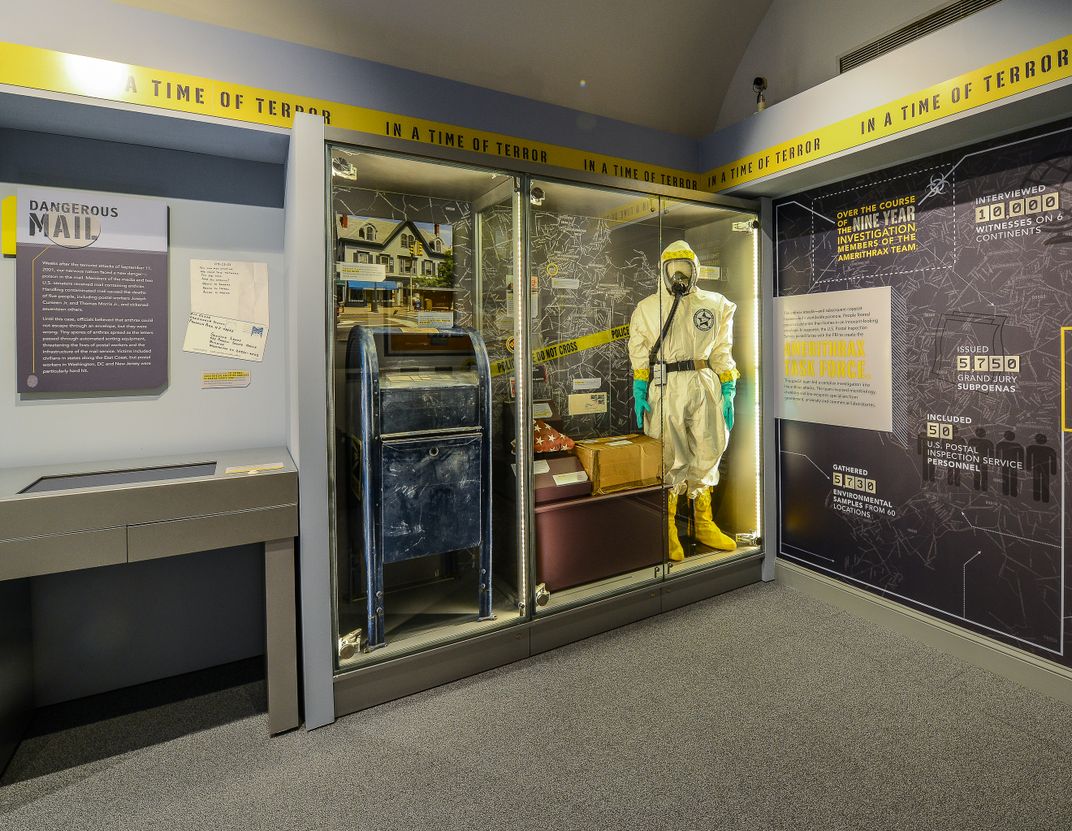
It is important to note that most "white powder" incidents investigated since the 2001 Amerithrax attacks have been hoaxes. However, the cost of a false negative is so high that every incident must be treated as a live biological event until proven otherwise by laboratory analysis.
Immediate Response Protocols for Individuals and Organizations
If an individual discovers a suspicious package or a device suspected of containing anthrax, the first several minutes are the most critical for life safety and containment. The objective is to minimize the number of people exposed and prevent the spores from traveling through the building.
Step 1: Isolation and Containment
The person who discovered the material should not move it, sniff it, or attempt to clean it up. If the powder has spilled, it should be covered gently (e.g., with a trash can or a piece of clothing) to prevent air currents from stirring it up. Everyone should evacuate the immediate room, and the door must be closed and locked to prevent re-entry.
Step 2: HVAC Shutdown
One of the most dangerous elements of a biological threat in a modern building is the Heating, Ventilation, and Air Conditioning (HVAC) system. Anthrax spores are light enough to be carried through ductwork to other floors or wings. Building security or facilities management must immediately shut down all air circulation systems to "seal" the internal environment.
Step 3: Decontamination of Exposed Persons
Individuals who believe they have come into direct physical contact with the powder should remain in a designated "warm zone" near the incident site but away from the source. They should wash their hands and any exposed skin with soap and water. They must not leave the premises until cleared by emergency responders, as they may inadvertently spread spores to their vehicles or homes.
Step 4: Notification
Call 911 or the local emergency number immediately. Specify that the incident involves a potential biological hazard. This ensures that first responders arrive with the appropriate Personal Protective Equipment (PPE), such as Level A or Level B HAZMAT suits and self-contained breathing apparatus (SCBA).
Professional HAZMAT and Law Enforcement Intervention
Once emergency services arrive, the incident transitions into a multi-agency operation involving the fire department, police, public health officials, and federal investigators.
The Response Hierarchy
- HAZMAT Teams: They establish "Hot," "Warm," and "Cold" zones. Their primary task is to stabilize the site and conduct initial field testing using tools like protein swabs or lateral flow strips (similar to a pregnancy test or rapid COVID test) to rule out common substances.
- The FBI: As the lead agency for domestic terrorism, the FBI manages the criminal investigation. They work to preserve evidence while ensuring the safety of the public.
- Public Health (CDC/State Health Departments): These agencies manage the medical side of the response, including tracking potential exposures and coordinating the distribution of antibiotics.
Field Detection vs. Laboratory Confirmation
While field tests provide quick results, they are prone to false positives. The definitive confirmation of Bacillus anthracis must be performed at a laboratory within the Laboratory Response Network (LRN). These labs use gold-standard techniques such as Polymerase Chain Reaction (PCR) and specialized cultures to identify the specific strain of the bacteria.
Medical Management and Prophylaxis
If a threat is deemed credible, the focus shifts to protecting the health of those potentially exposed. In 2026, the Strategic National Stockpile (SNS) remains prepared to deploy large quantities of medical countermeasures within hours of a confirmed incident.
Post-Exposure Prophylaxis (PEP)
Individuals who were in the vicinity of an aerosolized release may be started on a regimen of antibiotics before symptoms even appear. The standard treatment typically involves a 60-day course of:
- Ciprofloxacin
- Doxycycline
This long duration is necessary because anthrax spores can remain dormant in the lungs for weeks before germinating. Antibiotics only kill the active bacteria, not the dormant spores.
Vaccination
In some cases, the anthrax vaccine (BioThrax) may be administered alongside antibiotics as part of the PEP protocol. This helps the body develop its own immune response while the antibiotics provide immediate protection.
Comparison of Anthrax Exposure Routes
| Feature | Inhalation Anthrax | Cutaneous Anthrax | Gastrointestinal Anthrax |
|---|---|---|---|
| Primary Cause | Breathing in aerosolized spores | Spores entering a cut/abrasion | Eating undercooked contaminated meat |
| Fatality Rate (Untreated) | 85% - 95% | 20% | >50% |
| Incubation Period | 1 to 7 days (up to 60) | 1 to 7 days | 1 to 7 days |
| Early Symptoms | Fever, cough, chest pain | Small blisters or bumps | Nausea, bloody vomiting, diarrhea |
| Standard Treatment | IV Antibiotics + Antitoxins | Oral Antibiotics | IV Antibiotics |
Technical Decontamination Procedures
Returning a building to service after a confirmed anthrax release is a complex engineering and chemical feat. Simple cleaning with bleach is often insufficient for porous surfaces or complex HVAC systems.
Remediation Methods
- Gaseous Decontamination: This is the most effective method for large buildings. Professionals use chlorine dioxide gas or vaporized hydrogen peroxide (VHP). These gases can penetrate every crack, crevice, and duct, effectively killing the spores without damaging electronics.
- HEPA Vacuuming: Special High-Efficiency Particulate Air (HEPA) vacuums are used to remove bulk material before chemical treatment.
- Validation Sampling: After decontamination, hundreds of "wipe" and "air" samples are taken and sent to a lab. The building cannot be re-occupied until it is proven that no viable spores remain.
The 2001 cleanup of the Brentwood Postal Facility in Washington, D.C., which took over two years and cost tens of millions of dollars, serves as the historical benchmark for the scale of effort required. Modern techniques in 2026 have shortened this timeframe, but the process remains rigorous.
Psychological Impact and Crisis Communication
A biological threat often causes more harm through panic and psychological trauma than through physical infection. The "invisible" nature of the threat creates significant anxiety. Effective response must include clear, transparent communication from officials to prevent "worried well" individuals from overwhelming emergency rooms.
Public health officials emphasize that anthrax is not contagious. You cannot "catch" it from another person like a cold or the flu. Understanding this distinction is vital for maintaining public order during an investigation.
Frequently Asked Questions
What should I do if I find a suspicious white powder in the mail?
Do not shake or empty the contents of any suspicious envelope. Put it down on a stable surface, leave the room, and wash your hands with soap and water immediately. Call 911 and ensure that anyone else in the room also stays in a safe, designated area to prevent the potential spread of spores.
Can anthrax be used as a "bomb"?
While "bomb" often implies an explosion, a biological bomb is any device intended to disperse the agent into the air. An explosion might actually destroy many of the spores due to heat, but a "cold" dispersal device, like a pressurized sprayer or a small bursting charge, is more effective at creating a dangerous aerosol cloud.
Is there a cure for inhalation anthrax?
Yes, anthrax can be treated if caught early. Treatment usually involves a combination of aggressive intravenous antibiotics and antitoxins, which neutralize the poisons produced by the bacteria. However, once the toxins reach high levels in the bloodstream, the damage can become irreversible, which is why immediate response to a threat is so important.
How long do anthrax spores stay dangerous in an environment?
Anthrax spores are incredibly hardy and can remain infectious for 40 years or more if protected from direct sunlight and extreme chemical treatment. This is why professional decontamination is required rather than standard janitorial cleaning.
Can I get an anthrax vaccine just in case?
In 2026, the anthrax vaccine is generally not available to the general public. It is primarily reserved for military personnel, laboratory workers who handle the bacteria, and some first responders. In the event of a wide-scale threat, the government would distribute vaccines and antibiotics from the Strategic National Stockpile.
Practical Recommendation for Facilities Managers
For those responsible for office buildings, schools, or public venues, the best defense is a proactive Emergency Action Plan (EAP). Ensure your staff knows exactly where the HVAC "kill switch" is located and how to operate it. Conduct regular training on "suspicious package" identification based on USPS guidelines. Maintaining an updated list of contact information for your local FBI WMD coordinator and regional public health office can save precious minutes during an actual event.