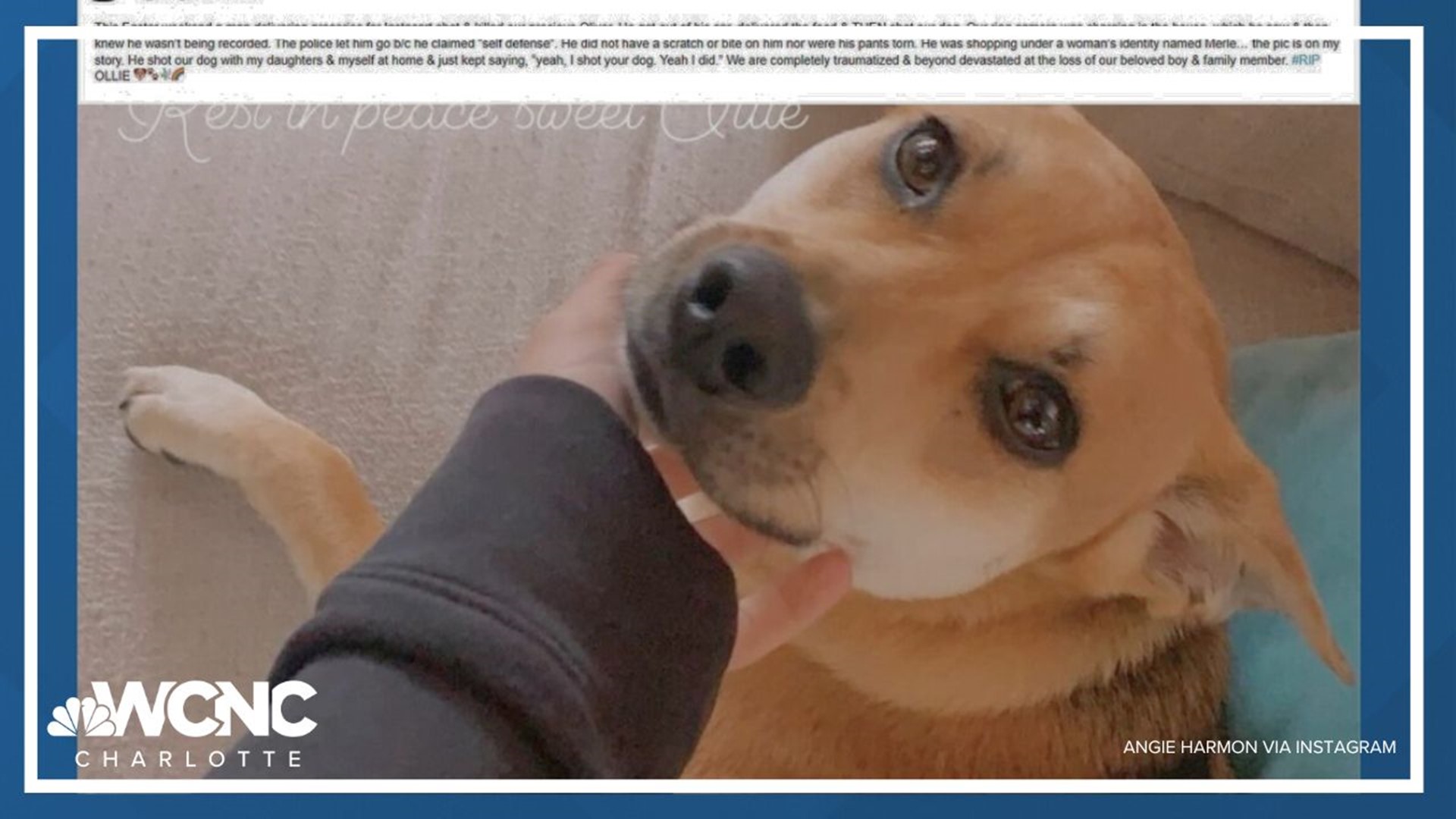
In March 2024, an Instacart delivery driver shot and killed German Shepherd-Beagle mix Oliver, the family dog of actress Angie Harmon, at her residence in Charlotte, North Carolina. Following a formal investigation, local law enforcement declined to file criminal charges due to self-defense claims, prompting Harmon to launch a comprehensive civil lawsuit against the driver and Instacart.
Chronology of the Incident
On Saturday, March 30, 2024, actress Angie Harmon placed a routine grocery delivery order through the delivery platform Instacart. The order was scheduled for delivery to her residence in the South Charlotte area of Mecklenburg County, North Carolina. According to app notifications provided to the household, the order was assigned to a driver profile registered under the name "Meridith."
Upon arrival at the property, a male delivery driver—later identified by law enforcement as Christopher Wayne Bell—exited his vehicle to complete the delivery. Shortly after arriving on the property, an altercation occurred involving Harmon’s family dog, Oliver, a German Shepherd and Beagle mix rescue animal.
According to statements provided by Harmon on social media platforms and subsequent legal filings, family members heard a gunshot from the driveway area. Upon investigating the sound, they found Oliver mortally wounded. The driver had drawn a concealed handgun and shot the dog once, resulting in fatal injuries.
The incident precipitated an immediate call to emergency services, bringing officers from the Charlotte-Mecklenburg Police Department (CMPD) and CMPD Animal Care and Control to the scene to secure the area, interview witnesses, and initiate a formal investigation into the shooting.
- March 30, 2024: Incident occurs at Charlotte residence; CMPD responds.
- April 2024: CMPD concludes criminal investigation with no charges filed.
- May 2024: Angie Harmon files civil lawsuit in Mecklenburg County Superior Court.
- 2024–2026: Civil litigation, discovery, and platform policy reviews proceed.
Police Investigation and Law Enforcement Findings
The Charlotte-Mecklenburg Police Department conducted an initial assessment and follow-up criminal investigation to determine whether the discharge of the firearm constituted a criminal offense under North Carolina state law.
Self-Defense Claims and Evidence Evaluation
During questioning by CMPD detectives, driver Christopher Wayne Bell stated that he acted in self-defense. Bell alleged that upon stepping out of his vehicle, the dog acted aggressively, charged at him, and bit him, placing him in immediate fear of severe physical injury.
Under North Carolina law, individuals facing an imminent threat of bodily harm or an animal attack may use force, including deadly force, if they reasonably believe it is necessary to protect themselves from injury. To secure a criminal conviction for illegal discharge of a firearm or cruelty to animals, prosecutors must prove beyond a reasonable doubt that the shooter acted unlawfully, without justification, and without a legitimate fear of harm.
Conclusion of the Criminal Investigation
Following interviews with the driver, members of the Harmon household, and initial physical evidence gathering, CMPD issued a public statement concluding its criminal inquiry. The police department confirmed that no criminal charges would be filed against Bell.
CMPD explained that because the driver claimed he was attacked by the dog, and investigators did not find sufficient physical or testimonial evidence to disprove the claim of self-defense beyond a reasonable doubt, there were no legal grounds for criminal prosecution. CMPD’s Animal Care and Control division similarly closed its investigation without issuing citations.
Gig Economy App Security and Driver Identity Discrepancies
A central element of the investigation and public reaction involved the identity of the delivery driver relative to the driver profile displayed on the Instacart application.
Profile Impersonation and Account Sharing
Harmon and her legal team highlighted that the Instacart application indicated the shopper was a woman named "Meridith." However, the individual who arrived at the residence and delivered the groceries was a male, Christopher Wayne Bell.
Account sharing, subleasing, or using unauthorized third-party credentials violates the terms of service of virtually all major delivery and ride-share platforms. Platforms mandate strict identity verification—including initial background checks, social security verification, and periodic biometric photo checks—to ensure that the approved individual performing the delivery matches the active account profile.
Platform Response and Policy Enforcement
Upon notification of the shooting and the profile mismatch, Instacart released a public statement expressing deep concern over the event and stating a zero-tolerance policy for violence. Instacart confirmed that it immediately suspended the account associated with the order and banned the driver from the platform.
The presence of an unauthorized driver on a residential property raised critical security questions regarding delivery platform safety controls, background check compliance, and driver credential verification protocols.
Civil Litigation: Harmon v. Instacart and Christopher Wayne Bell
Because criminal authorities declined to press charges, Angie Harmon sought legal remedy through the civil justice system. In May 2024, Harmon filed a formal civil complaint in Mecklenburg County Superior Court, naming both Christopher Wayne Bell and Instacart (Maplebear Inc.) as defendants.
- Angie Harmon (Plaintiff)
- Files Civil Suit: Mecklenburg County Superior Court
- Claims Against Christopher Wayne Bell:
- Battery / Conversion
- Trespass to Property
- Emotional Distress
- Claims Against Instacart (Maplebear Inc.):
- Negligent Hiring & Vetting
- Vicarious Liability / Agency
- Deceptive Trade Practices
- Claims Against Christopher Wayne Bell:
- Files Civil Suit: Mecklenburg County Superior Court
Key Causes of Action Raised by the Plaintiff
The legal complaint asserts multiple causes of action against both defendants, seeking compensatory and punitive damages:
- Negligent Hiring, Retention, and Supervision: The lawsuit alleges that Instacart failed to enforce adequate screening procedures, allowing an unauthorized driver to execute deliveries using another person’s account credentials without proper oversight.
- Misrepresentation and Fraud: Harmon contends that Instacart misled consumers by representing that deliveries would be completed by vetted, background-checked individuals displayed on the app profile.
- Trespass to Land and Conversion: The complaint argues that the driver unlawfully entered private property under false pretenses and committed conversion by fatally shooting the family pet.
- Intentional and Negligent Infliction of Emotional Distress: The lawsuit details the severe mental anguish, shock, and trauma suffered by Harmon and her children, who were present on the premises during and immediately after the shooting.
Defense Arguments and Legal Framework
The civil litigation involves several complex legal principles:
- Independent Contractor Defense: Delivery platforms frequently argue that delivery drivers are independent contractors (1099 workers) rather than direct employees. Under traditional tort doctrine, companies are generally shielded from vicarious liability (respondeat superior) for the intentional or negligent torts committed by independent contractors, unless specific exceptions apply (such as direct negligence in platform management or non-delegable safety duties).
- Self-Defense Standard in Civil Court: Unlike a criminal proceeding—where the state must prove guilt beyond a reasonable doubt—a civil court evaluates claims based on the preponderance of the evidence (i.e., whether it is more likely than not that the defendant acted wrongfully). Bell’s defense must demonstrate that his fear of bodily harm was objectively reasonable under the circumstances.
- Property Classification of Pets: Historically, common law treats companion animals as personal property, limiting recovery to the market value of the animal. However, modern civil litigation increasingly incorporates claims for emotional distress and punitive damages when pets are killed through gross negligence or intentional acts.
Comparison of Legal Proceedings
The legal proceedings surrounding the incident involve distinct standards, authorities, and potential outcomes across criminal and civil jurisdictions:
| Feature / Dimension | Criminal Investigation (CMPD) | Civil Lawsuit (Harmon v. Instacart et al.) |
|---|---|---|
| Primary Authority | Charlotte-Mecklenburg Police Dept. / Local Prosecutor | North Carolina State Civil Court (Mecklenburg County) |
| Standard of Proof | Beyond a reasonable doubt | Preponderance of the evidence |
| Focus of Inquiry | Statutory criminal conduct, unlawful firearm discharge | Duty of care, negligence, contractual breach, emotional distress |
| Key Defendants | Individual driver (Christopher Wayne Bell) | Individual driver AND corporate entity (Instacart) |
| Burden on Self-Defense | Prosecution must disprove self-defense beyond reasonable doubt | Defendant must establish justification against civil tort claims |
| Potential Remedies | Imprisonment, criminal fines, probation | Financial damages (compensatory, statutory, punitive) |
| Final Resolution Status | Closed (No charges filed) | Active civil litigation (2024–2026 proceedings) |
Broader Implications for Delivery Platforms and Homeowners
The investigation and resulting litigation highlight critical policy and safety considerations for delivery platforms, contractors, and residential customers.
Platform Firearm Policies and Account Integrity
Most major delivery platforms maintain explicit corporate policies regarding firearms and driver verification:
- Weapon Restrictions: Instacart’s corporate policy strictly prohibits delivery workers from carrying firearms or weapons of any kind while performing services on behalf of the platform. The presence of a firearm on a delivery run constitutes a direct violation of service agreements.
- Account Renting and Fraud: The incident exposed ongoing challenges within the gig economy regarding "account sharing" or account renting. Unauthorized account usage circumvents background checks, tax reporting, and platform identity checks, creating liability risks for platforms and safety concerns for consumers.
Pet Safety and Delivery Protocols
For homeowners utilizing third-party delivery applications, the case underscores practical steps to manage pet safety during scheduled drop-offs:
- Securing Animals During Delivery Windows: Maintaining dogs indoors or within fenced yards behind closed gates during expected delivery periods minimizes potential confrontation between animals and delivery personnel.
- Verifying Driver Profiles: Homeowners should check app notifications upon arrival. If the individual arriving on the property does not match the photo or name provided by the platform, customers should avoid direct contact, remain inside, and report the discrepancy immediately through the application.
- Providing Delivery Notes: Indicating the presence of pets in the delivery instructions alerts drivers to use caution when approaching gates or front entryways.
Current Status of Litigation
Following the conclusion of the CMPD criminal investigation in April 2024 without criminal charges, the civil case (Harmon v. Instacart and Bell) entered procedural motion practice and discovery in Mecklenburg County Superior Court. As the legal proceedings move forward through 2026, the court will evaluate motions regarding corporate liability for unauthorized drivers, contractual arbitration clauses, and evidentiary standards regarding pet loss and emotional distress.
Legal Disclaimer: This overview is provided for informational and educational purposes only and does not constitute formal legal advice. Jurisdictional rules, property laws, and civil litigation outcomes depend on specific court filings and local statutory frameworks.
Frequently Asked Questions
Why were no criminal charges filed against the delivery driver?
The Charlotte-Mecklenburg Police Department concluded its investigation without filing criminal charges because the driver claimed he shot the dog in self-defense after being attacked. Under North Carolina law, individuals may use force to defend themselves against perceived imminent bodily harm. Because investigators could not find conclusive evidence to disprove the driver’s self-defense claim beyond a reasonable doubt, criminal prosecution was not pursued.
Did the driver violate Instacart’s terms of service?
Yes. The driver violated multiple platform policies. First, Instacart strictly prohibits delivery workers from carrying firearms while performing deliveries. Second, the driver was utilizing an account registered to another individual ("Meridith"), violating platform rules that prohibit account sharing, subleasing, or unauthorized profile usage. Instacart permanently deactivated the account following the incident.
What are the main arguments in Angie Harmon’s lawsuit against Instacart?
Harmon’s civil lawsuit alleges negligent hiring, supervision, and retention, arguing that Instacart failed to prevent an unapproved, unvetted driver from using its platform to access private property. The lawsuit also includes claims for misrepresentation, trespass, conversion, and intentional and negligent infliction of emotional distress resulting from the death of the family dog.
How does a civil lawsuit differ from the police investigation in this case?
The criminal investigation focused on whether the driver committed a crime against the state, requiring proof beyond a reasonable doubt, which police determined was not met due to self-defense laws. The civil lawsuit is a private legal action seeking monetary damages, where the standard of proof is lower (preponderance of the evidence) and examines broader issues such as corporate negligence, driver impersonation, and emotional distress.
Can gig platforms be held legally liable for actions taken by unauthorized drivers?
This is a central legal question in the ongoing civil litigation. Platforms typically argue that drivers are independent contractors, shielding the company from vicarious liability. However, plaintiffs can establish platform liability if they demonstrate direct negligence by the company—such as inadequate identity verification systems, failure to enforce account security, or deceptive safety representations to consumers.
Recommended Actions for Residential Consumers
To ensure safety and accountability when using on-demand delivery services, consumers should take proactive precautions:
- Review Driver Verification: Always confirm that the driver arriving at your residence matches the profile picture and name displayed in the delivery application prior to opening your door or granting gate access.
- Report Identity Discrepancies Immediately: If an unapproved individual completes your delivery, document the interaction and submit an immediate report through the application’s safety center to initiate account auditing.
- Secure Companion Animals: Keep pets safely inside or away from entry paths during active delivery windows to protect both your animals and service workers from accidental encounters.