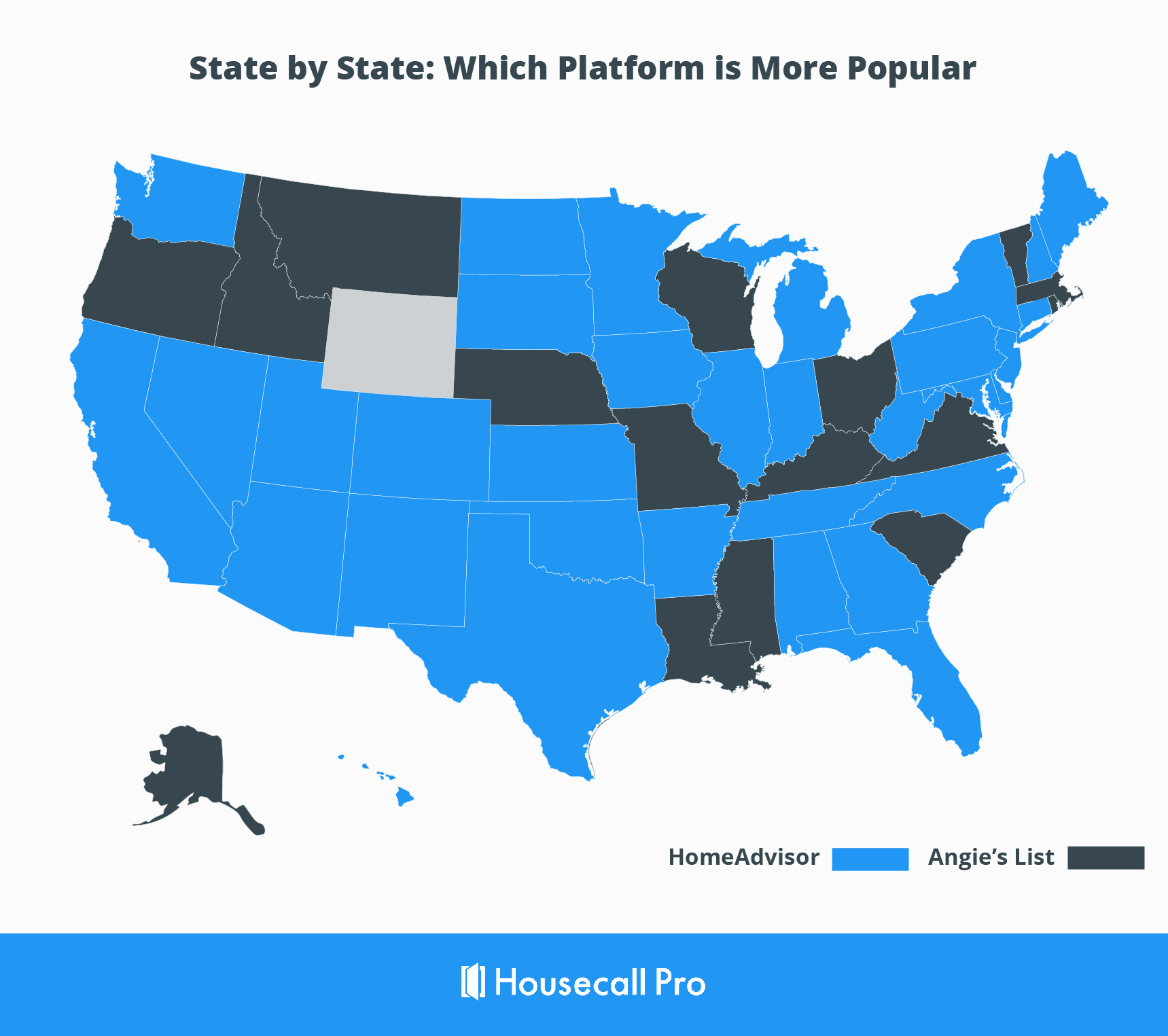
In 2017, IAC (InterActiveCorp), the parent company of HomeAdvisor, acquired Angie’s List in a deal valued at approximately $500 million. The acquisition combined the two largest digital platforms in the home services industry under a new publicly traded parent company, Angi Homeservices Inc. In 2021, Angie’s List rebranded to Angi, fully integrating its review database with HomeAdvisor’s lead-matching technology.
Corporate History: The 2017 Acquisition and the Creation of ANGI
The acquisition of Angie’s List marked a pivotal shift in how homeowners connect with home improvement contractors online. Founded in 1995 by Angie Hicks and William S. Oesterle, Angie’s List originally operated as a local print publication and subscription-based online directory. Its revenue model relied heavily on membership fees paid by homeowners seeking verified ratings and unedited customer reviews.
By contrast, HomeAdvisor (originally founded in 1998 as ServiceMagic and acquired by IAC in 2004) operated on a transaction-based marketplace model. Homeowners submitted project requests for free, while contractors paid fee-per-lead charges to receive consumer contact details.
By 2016, Angie’s List faced severe monetization challenges. Although the company had accumulated millions of user-submitted reviews over two decades, its paid-membership paywall restricted consumer traffic compared to free competitors like Google, Yelp, and HomeAdvisor. In mid-2016, Angie’s List dropped its consumer paywall for basic directory access, but revenue remained under pressure.
In May 2017, IAC announced a definitive agreement to acquire Angie’s List. The transaction combined Angie’s List with IAC’s HomeAdvisor business. Under the terms approved by shareholders, Angie’s List stockholders received either $8.50 per share in cash or Class A common stock in the newly formed parent company, Angi Homeservices Inc.
The merger closed in October 2017, trading on the NASDAQ under the ticker symbol ANGI. At closing, IAC retained majority voting control of the combined corporate entity, which brought together over 22 million annual user requests and hundreds of thousands of active service professionals.
The Rebranding Evolution: From Two Platforms to a Unified Brand
Following the 2017 merger, Angi Homeservices initially operated Angie’s List and HomeAdvisor as distinct consumer-facing brands. HomeAdvisor handled algorithm-driven quote matching and instant connections, while Angie’s List continued to emphasize user reviews, searchable provider directories, and localized ratings.
- IAC (Parent Company)
- HomeAdvisor (Acquired 2004)
- Free for homeowners
- Pay-per-lead for contractors
- Angie's List (Acquired 2017)
- Subscription directory model
- User-submitted reviews focus
- 2017 Merger: Angi Homeservices Inc.
- 2021 Brand Unification: Rebranded to "Angi"
- HomeAdvisor (Acquired 2004)
In March 2021, the company announced a major corporate and consumer rebranding. Angie’s List shortened its name to Angi, updating its logo, web platform, and mobile applications. Subsequently, the corporate entity changed its name from Angi Homeservices Inc. to Angi Inc.
Over the next two years, the company phased out the standalone HomeAdvisor operational engine, gradually redirecting HomeAdvisor web traffic, user accounts, and contractor portals into the unified Angi ecosystem.
Key Motivations for Brand Unification
- Brand Equity Consolidation: Combining marketing budgets under a single name allowed the company to streamline consumer advertising and lower user-acquisition costs.
- Simplified User Experience: Homeowners no longer had to figure out whether to submit a job request on HomeAdvisor or search for reviews on Angie’s List.
- Product Integration: The unified platform merged Angie’s List’s extensive review database with HomeAdvisor’s automated routing, schedule booking, and fixed-price payment processing.
Comparing the Legacy Platforms vs. Unified Angi
To understand how the home services landscape evolved after the acquisition, it helps to analyze how the distinct legacy models compare to the current integrated Angi platform.
| Operational Feature | Legacy Angie’s List (Pre-2017) | Legacy HomeAdvisor (Pre-2017) | Modern Unified Angi |
|---|---|---|---|
| Consumer Access Fee | Paid membership (Basic/Plus/Premium tiers) | 100% Free for consumers | Free access; optional "Angi Key" discount subscription |
| Contractor Monetization | Paid directory placement & advertising | Pay-per-lead fees per consumer inquiry | Combination of pay-per-lead, directory ads, and direct booking commissions |
| Matching Mechanism | Directory search; consumers contacted pros directly | Algorithmic routing; matching up to 4 pros automatically | Search directory, instant request routing, or fixed-price upfront booking |
| Review Verification | Strict member-submitted reviews with letter grades (A–F) | Post-job ratings scale (1–5 stars) submitted by matched leads | 5-star rating system combining legacy history and verified project reviews |
| Payment Processing | Direct payment between homeowner and contractor | Primarily direct, with limited platform invoicing | Integrated digital payments, financing options, and upfront pricing guarantees |
How the Acquisition Impacted Homeowners
For everyday consumers looking to hire plumbers, electricians, roofers, or remodelers, the merger between Angie’s List and HomeAdvisor altered pricing, service discovery, and user workflows.
Homeowner Search Workflow (Modern Angi):
- Search Service/Location
- Select: Directory Browsing OR Instant Quote
- Directory Browsing: Browse Rated Contractors
- Filter by ratings/reviews
- Read history & credentials
- Instant Quote: Submit Project Details
- Algorithm alerts up to 4 pros
- Pros purchase lead & contact consumer
- Directory Browsing: Browse Rated Contractors
- Compare Quotes & Hire Contractor
1. Elimination of Mandatory Consumer Paywalls
Prior to the acquisition, homeowners had to pay an annual subscription fee simply to view full reviews and contact details for local service providers on Angie’s List. Today, accessing contractor ratings, customer reviews, and business listings on Angi is completely free.
Angi introduced a paid tier called Angi Key (formerly Angie’s List Premium), which offers an optional membership for homeowners. For an annual fee, members receive a percentage discount on pre-priced services booked directly through the app, along with dedicated customer support. However, standard directory searches and contractor outreach remain free.
2. Shift from Pure Directory Search to Active Matching
Legacy Angie’s List relied on self-directed browsing: homeowners read reviews, selected a contractor, and initiated contact on their own terms. HomeAdvisor built its brand on speed: homeowners entered project details, and the platform distributed that request to up to four local contractors who contacted the user directly.
The unified Angi platform uses a hybrid approach:
- Directory Search: Homeowners can manually browse contractor profiles, read historical customer feedback, and send direct messages.
- Request a Quote / Project Matching: Homeowners can submit a job request, allowing Angi’s system to match the project with available local pros who purchase the lead.
- Fixed-Price Booking: For standard jobs (such as gutter cleaning, handyman work, or lawn care), Angi offers pre-priced booking where the user pays upfront, and Angi dispatches a vetted professional.
3. Review Systems and Ratings Integration
One of the main concerns following the merger was whether the strict review integrity of Angie’s List would survive HomeAdvisor's match-based system. Angie’s List historically evaluated contractors on an A through F grading scale across specific metrics like price, quality, responsiveness, and punctuality.
Under Angi, ratings were standardized into a 5-star scale. Historical reviews from Angie’s List were converted into star equivalents and merged with HomeAdvisor’s review archive. While Angi still enforces review guidelines and monitors for fraud, the open-access model means reviews now come from both verified platform transactions and self-reported direct users.
How the Acquisition Impacted Contractors and Service Professionals
While the transaction expanded market reach for home service contractors, it also generated significant operational changes for small business owners relying on digital lead generation.
Contractor Monetization Flow:
- Contractor Creates Profile
- Selects Service Radius & Job Types
- System Generates Lead from User Request
- Targeted Lead Fee Charged
- Cost varies by job value & region
- Automatic charge against account balance
- Shared Competitive Lead
- Lead sent to up to 4 local pros
- Fast response required to convert
- Targeted Lead Fee Charged
1. Transition to Fee-Per-Lead Costs
Under the early Angie’s List model, contractors primarily bought advertising packages to appear higher in consumer search results within specific ZIP codes. HomeAdvisor, however, monetized via subscription account fees plus individual lead fees (charging the contractor every time a consumer's request details were sent to them).
Following the merger, the pay-per-lead model became the dominant revenue driver across the integrated company. Contractors using Angi now pay lead fees that vary based on:
- The specific trade (e.g., roof replacement leads cost significantly more than lawn mowing leads).
- Market demand and geographic ZIP code density.
- Scope of the project submitted by the consumer.
2. Lead Distribution and Competition
Because lead fees are charged automatically when a consumer submits a matching request, contractors face intense competition to secure the client. In the match-based workflow, Angi distributes a single lead to multiple competing pros (typically up to four). The contractor who calls or messages the homeowner first often secures the contract, making fast follow-up critical.
3. Unified Contractor Dashboard
Contractors previously forced to maintain separate listings, billing portals, and review responses across Angie’s List and HomeAdvisor now manage their online reputation through a centralized portal, Angi Ads (for profile advertising) or Angi Leads (for project matching). This central hub allows pros to:
- Manage project categories and operational service radiuses.
- Set weekly or monthly lead spending budgets.
- Collect customer reviews via direct SMS/email requests.
- Request credit refunds for invalid or fraudulent customer lead info.
Critiques, Challenges, and Industry Competition
The merger created a dominant force in digital lead generation for home services, but it also faced pushback from contractors, regulatory scrutiny, and stiff market competition.
Contractor Disputes Over Lead Quality
A long-standing point of friction in the pay-per-lead business model involves lead validity. Contractors using Angi Leads often express frustration over paying for leads that contain incorrect phone numbers, disconnected contacts, or homeowners who were merely browsing without intent to hire.
While Angi maintains a lead-credit request workflow where pros can dispute charges for invalid contact info or out-of-scope work, contractors must strictly follow dispute windows and criteria to receive account credits.
Regulatory and Legal Actions
The aggressive lead-generation and sales practices of legacy HomeAdvisor resulted in legal enforcement prior to and during full brand integration:
- In March 2022, the Federal Trade Commission (FTC) issued an administrative complaint against HomeAdvisor, Inc., alleging deceptive claims regarding the quality, intent, and cost of its leads, as well as deceptive representations regarding membership pricing for contractors.
- In January 2023, the FTC finalized an order requiring HomeAdvisor to pay $7.2 million in restitution to affected service providers and prohibited the company from misrepresenting the source, quality, or conversion rates of its leads.
These regulatory proceedings accelerated Angi's internal policy updates, leading to clearer contractor disclosure terms, simplified cancellation methods, and improved lead filtering options.
Modern Competitive Alternatives
While Angi remains one of the largest home services networks in North America, homeowners and contractors routinely utilize alternative platforms:
- Google Local Services Ads (LSAs): Appears at the very top of Google search results. Homeowners can call or request quotes directly from "Google Guaranteed" pros, while contractors pay per qualified lead rather than per click.
- Thumbtack: Operates on a direct-matching marketplace model where contractors set targeting preferences and pay when interested consumers contact them directly.
- Yelp for Business: Combines local business directory pages, user reviews, and paid direct-messaging leads ("Request a Quote").
- Houzz: Focuses heavily on high-end residential remodeling, architectural design, and interior decor services.
- Nextdoor: Leverages hyper-local neighborhood recommendations, relying on organic peer reviews rather than national matching algorithms.
Frequently Asked Questions
Did HomeAdvisor buy Angie's List, or did Angie's List buy HomeAdvisor?
HomeAdvisor’s parent company, IAC (InterActiveCorp), acquired Angie’s List in 2017. IAC combined Angie’s List with HomeAdvisor to form a new publicly traded company named Angi Homeservices Inc. (now Angi Inc.). While HomeAdvisor was the acquirer operationally, the combined business ultimately adopted the established brand name Angi.
Is Angi (formerly Angie's List) free for homeowners?
Yes, creating an account, browsing contractor directories, reading customer reviews, and requesting project quotes on Angi is completely free for homeowners. Angi offers an optional paid annual subscription called Angi Key, which provides discounts on upfront fixed-price services, but subscription membership is not required to use the platform.
How do contractors pay for leads on Angi?
Contractors using Angi Leads pay an annual membership fee plus variable pay-per-lead fees. Whenever a homeowner submits a matching project request, the contractor’s account is automatically charged for that consumer's contact details, regardless of whether the contractor successfully lands the job. Alternatively, contractors can choose Angi Ads to pay for prominent directory positioning.
What happened to legacy reviews from Angie's List?
When Angie’s List rebranded to Angi, existing consumer reviews and business profiles were preserved. Ratings previously measured on an A–F letter-grade scale were converted into equivalent 5-star values and merged into the contractor’s consolidated profile alongside HomeAdvisor ratings.
How can a contractor request a credit for bad leads on Angi?
Contractors can submit lead-credit requests directly through their account dashboard within specified timeframe limits (typically within 7 to 14 days of receiving the lead). Eligible grounds for a lead credit include invalid phone numbers, wrong geographic locations outside the set radius, duplicate submissions, or requests for services the pro does not offer.
Practical Recommendations for Homeowners and Contractors
Whether you are looking to hire a professional for home repairs or managing a business listing on the platform, following industry best practices ensures optimal results.
Guidance for Homeowners
- Cross-Reference Reviews: Do not rely on a single directory. Check a contractor's rating on Angi alongside their standing with the Better Business Bureau (BBB) and local business profiles.
- Verify Licensing and Insurance: While Angi performs basic background checks on business owners entering their lead network, always ask for proof of active general liability insurance, workers' compensation, and relevant state trade licenses before signing contracts.
- Request Detailed Estimates: Obtain written, itemized quotes from at least three contractors before making a final hiring decision, especially for large remodeling projects.
Guidance for Service Professionals
- Establish Responsive Lead Routing: Because matching leads are distributed to multiple pros simultaneously, set up instant mobile notifications to call prospective clients within 5 minutes of receiving a lead submission.
- Define Precise Targeting Boundaries: Carefully configure your target ZIP codes, job scope filters, and weekly budget caps within the contractor portal to avoid paying for out-of-area or low-margin leads.
- Maintain Accurate Dispute Records: Promptly flag invalid lead submissions within your provider account to ensure eligible lead fee credits are processed correctly by customer support.