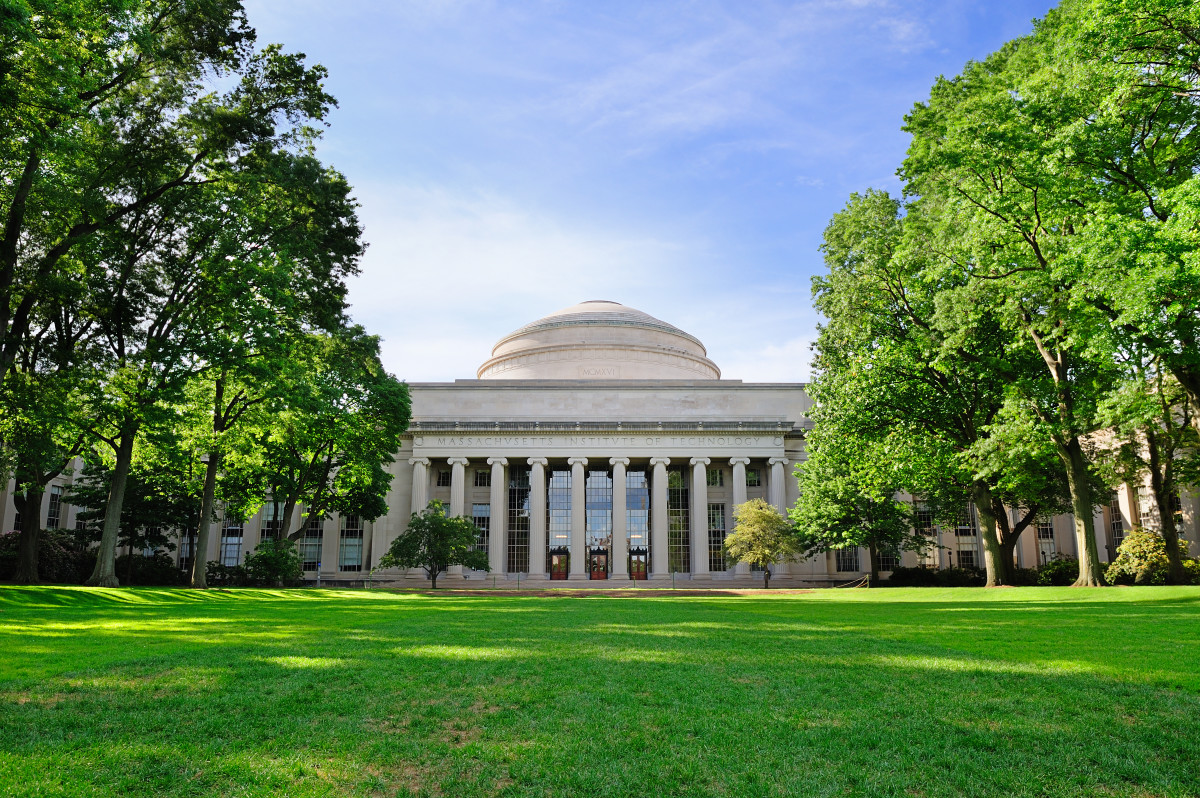
In 2026, the American top 100 universities represent the pinnacle of global higher education, led by institutions like Princeton, MIT, and Harvard. These rankings, primarily determined by research output, faculty resources, and graduate outcomes, serve as a critical benchmark for students navigating the competitive landscape of U.S. admissions and long-term career preparation.
The landscape of American higher education remains a complex hierarchy of prestige, research capacity, and specialized training. When discussing the "Top 100," we are generally referring to the National Universities category—institutions that offer a full range of undergraduate majors, plus master's and doctoral programs, and are committed to producing groundbreaking research. As we move through 2026, the criteria for what makes a university "top tier" have shifted slightly to include a heavier emphasis on social mobility, post-graduation debt-to-income ratios, and the integration of emerging technologies like artificial intelligence into the curriculum.
The Framework of University Rankings
To understand the American top 100 universities, one must first understand how they are measured. Several major organizations provide these rankings, each utilizing a different set of metrics that can lead to varying results.
U.S. News & World Report
Historically the most influential, U.S. News & World Report emphasizes peer assessment, graduation and retention rates, and faculty resources. In recent years, they have increased the weight of "social mobility" indicators, which measure how well a school graduates students who received federal Pell Grants.
QS World University Rankings
The QS rankings focus heavily on academic reputation and employer reputation. This makes them particularly popular among international students who are concerned with how their degree will be perceived by global corporations.
Times Higher Education (THE)
Times Higher Education places a significant premium on the "research environment" and "research quality," including citation impact. For students aiming for careers in academia or high-level scientific research, these rankings often hold the most weight.
The "Ivy Plus" and the Top 10
The very top of the list—the first 10 to 15 spots—is remarkably stable. This group includes the eight members of the Ivy League (Brown, Columbia, Cornell, Dartmouth, Harvard, UPenn, Princeton, and Yale) alongside "Ivy Plus" institutions like Stanford, MIT, the University of Chicago, and Duke.
These schools are characterized by extremely low acceptance rates, often below 5%, and massive endowments that allow for "need-blind" admission policies. For example, in 2026, most of these institutions provide full-ride scholarships to students whose families earn below a certain threshold (often around $75,000 to $100,000 annually), ensuring that the "Top 10" are not exclusively the domain of the wealthy.
The Power of the "Public Ivies"
A significant portion of the American top 100 universities consists of large public institutions that offer an Ivy League-level education at a lower cost, particularly for in-state residents. These are often referred to as the "Public Ivies."
- University of California, Berkeley & UCLA: Frequently tied or trading places for the #1 public university spot, these schools rival the best private institutions in research output and faculty Nobel Prizes.
- University of Michigan—Ann Arbor: Known for its dominant combination of elite academics and "Big Ten" athletics.
- University of Virginia (UVA) & UNC-Chapel Hill: These schools offer a classic "collegiate" experience with high academic rigor and deep historical roots.
By 2026, these public institutions have become even more competitive as the cost of private education continues to rise, leading many top-tier students to choose the value proposition of a flagship state university.
Geographic Distribution of Top 100 Schools
The concentration of top 100 universities is not uniform across the United States. There are several "hubs" where academic excellence is concentrated:
- The Northeast Corridor: From Boston (Harvard, MIT, BU, BC) down to Washington D.C. (Georgetown, George Washington), this region contains the highest density of top 100 schools.
- California: The UC system (Berkeley, UCLA, UCSD, Davis, Irvine, Santa Barbara) along with private giants like Stanford, Caltech, and USC.
- The Great Lakes/Midwest: Anchored by the University of Chicago and Northwestern, this region features strong public schools like the University of Illinois Urbana-Champaign and the University of Wisconsin-Madison.
- The Texas Triangle: In 2026, UT Austin and Rice University continue to climb in rankings, supported by the state’s massive investments in tech and energy research.
Representative Data of Elite U.S. Institutions
The following table highlights a cross-section of the American top 100 universities, showcasing the diversity of location, type, and primary strengths.
| University Name | Approximate Ranking Range | Location | Type | Notable Strength |
|---|---|---|---|---|
| Princeton University | 1–3 | Princeton, NJ | Private | Undergraduate Teaching |
| MIT | 1–5 | Cambridge, MA | Private | STEM & Innovation |
| Stanford University | 1–5 | Stanford, CA | Private | Entrepreneurship |
| UC Berkeley | 15–25 | Berkeley, CA | Public | Research Output |
| Univ. of Michigan | 20–30 | Ann Arbor, MI | Public | Business & Engineering |
| Georgetown University | 20–35 | Washington, D.C. | Private | International Relations |
| Georgia Tech | 30–40 | Atlanta, GA | Public | Cybersecurity/AI |
| NYU | 35–45 | New York, NY | Private | Arts & Global Studies |
| Univ. of Texas at Austin | 35–50 | Austin, TX | Public | Computer Science |
| Purdue University | 45–60 | West Lafayette, IN | Public | Aerospace Engineering |
Admissions Trends in 2026
Gaining entry into a top 100 university in 2026 requires more than just high grades. The "holistic review" process has become the standard, where admissions officers look for a "spike" in a student's profile rather than just being well-rounded.
The Standardized Testing Debate
By 2026, the role of the SAT and ACT has reached a new equilibrium. While many schools went "test-optional" during the early 2020s, several top-tier institutions have returned to requiring them, citing their ability to predict academic success when viewed alongside high school GPA. However, many schools in the 50-100 range remain test-optional or "test-blind," focusing instead on portfolios, essays, and interviews.
The Role of Artificial Intelligence
AI has fundamentally changed the application process. Universities now use sophisticated software to detect AI-generated essays, and in response, many top 100 schools have shifted toward proctored writing samples or video introductions to ensure authenticity. Conversely, students are using AI to research which schools in the top 100 best fit their specific career goals and learning styles.
Financial Aid and the "Sticker Price"
One of the biggest hurdles to attending an American top 100 university is the cost. In 2026, the total cost of attendance (tuition, room, and board) at elite private universities can exceed $95,000 per year. However, it is vital to distinguish between the "sticker price" and the "net price."
- Need-Based Aid: Most schools in the top 50 use the FAFSA and the CSS Profile to determine financial need. Many guarantee to meet 100% of demonstrated need without loans.
- Merit Scholarships: While Ivies do not offer merit scholarships, many schools in the 30-100 range (like USC, Vanderbilt, or large state flagships) use them to attract high-achieving students who might otherwise go to a higher-ranked school.
Choosing the Right School in the Top 100
Ranking should not be the only factor in a student's decision. A school ranked #80 might be #5 in the world for a specific niche, like Petroleum Engineering or Jazz Performance.
Research vs. Teaching Focus
Students should determine if they prefer a large research university where they can work in multi-million dollar labs (like Johns Hopkins) or a smaller environment where professors prioritize undergraduate teaching (like Dartmouth or many top-tier Liberal Arts Colleges).
Career Outcomes and Networking
The primary value of the American top 100 universities is often the "alumni network." Schools like Harvard, Stanford, and Penn have networks that dominate Silicon Valley, Wall Street, and Capitol Hill. Prospective students should research where a school’s graduates are employed via platforms like LinkedIn to see if the institution’s reach aligns with their own ambitions.
Common Myths About Top-Tier Universities
- Myth: Only the Top 10 Matter. In reality, the difference in starting salaries for graduates of the #20 university versus the #60 university is often negligible, especially in fields like nursing, engineering, or accounting.
- Myth: They are only for "Geniuses." While academic ability is required, top 100 schools seek diverse perspectives, including geographic diversity, first-generation college students, and those with unique talents or life experiences.
- Myth: Public Universities are "Easier" to Get Into. For out-of-state students, getting into a school like Georgia Tech or UNC-Chapel Hill can be just as difficult as getting into an Ivy League school due to state-mandated caps on non-resident enrollment.
Frequently Asked Questions
What is the difference between a "National University" and a "Liberal Arts College"?
National Universities (the focus of most top 100 lists) are large, research-focused institutions with graduate programs. Liberal Arts Colleges (like Williams, Amherst, or Pomona) focus almost exclusively on undergraduate education and offer smaller class sizes and more direct faculty interaction. Both can be "top tier," but they are usually ranked on separate lists.
Are SAT and ACT scores still required for the Top 100 in 2026?
It depends on the institution. Approximately 40% of the top 100 have returned to requiring standardized tests, while 60% remain test-optional or test-blind. You must check the specific admissions page of each university. Institutions like MIT and Dartmouth were among the first to reinstate requirements.
How do international students apply to these universities?
International students follow the same general process but must also provide proof of English proficiency (TOEFL or IELTS) and financial certification for visa purposes (I-20). Many top 100 schools are "need-aware" for international students, meaning their ability to pay may factor into the admission decision.
Is it better to be at the bottom of a Top 10 school or the top of a Top 50 school?
This depends on the student’s personality. Being at the top of your class at a Top 50 school often leads to better access to research opportunities and "big fish in a small pond" advantages. However, the brand name and recruitment pipelines of a Top 10 school provide a different kind of long-term leverage.
How has AI affected rankings in 2026?
Rankings now look at how universities are preparing students for an AI-driven workforce. Schools that have integrated computational thinking across all majors (humanities included) and those with high-performance computing clusters have seen their "Academic Reputation" scores increase.
Practical Recommendations for Prospective Students
If you are aiming for an American top 100 university in the current 2026 cycle, start by identifying 10-12 schools that span the ranking spectrum: two "safety" schools (where your stats are well above average), six "target" schools, and two to four "reach" schools.
Prioritize institutions that offer the best "net price" rather than just the lowest "sticker price." Use the Net Price Calculator found on every university’s website to get an honest estimate of what you will actually pay. Finally, focus on developing a specific interest or "hook"—whether it is community service, a specific research niche, or a unique artistic talent—that will help you stand out in an increasingly crowded and competitive applicant pool.