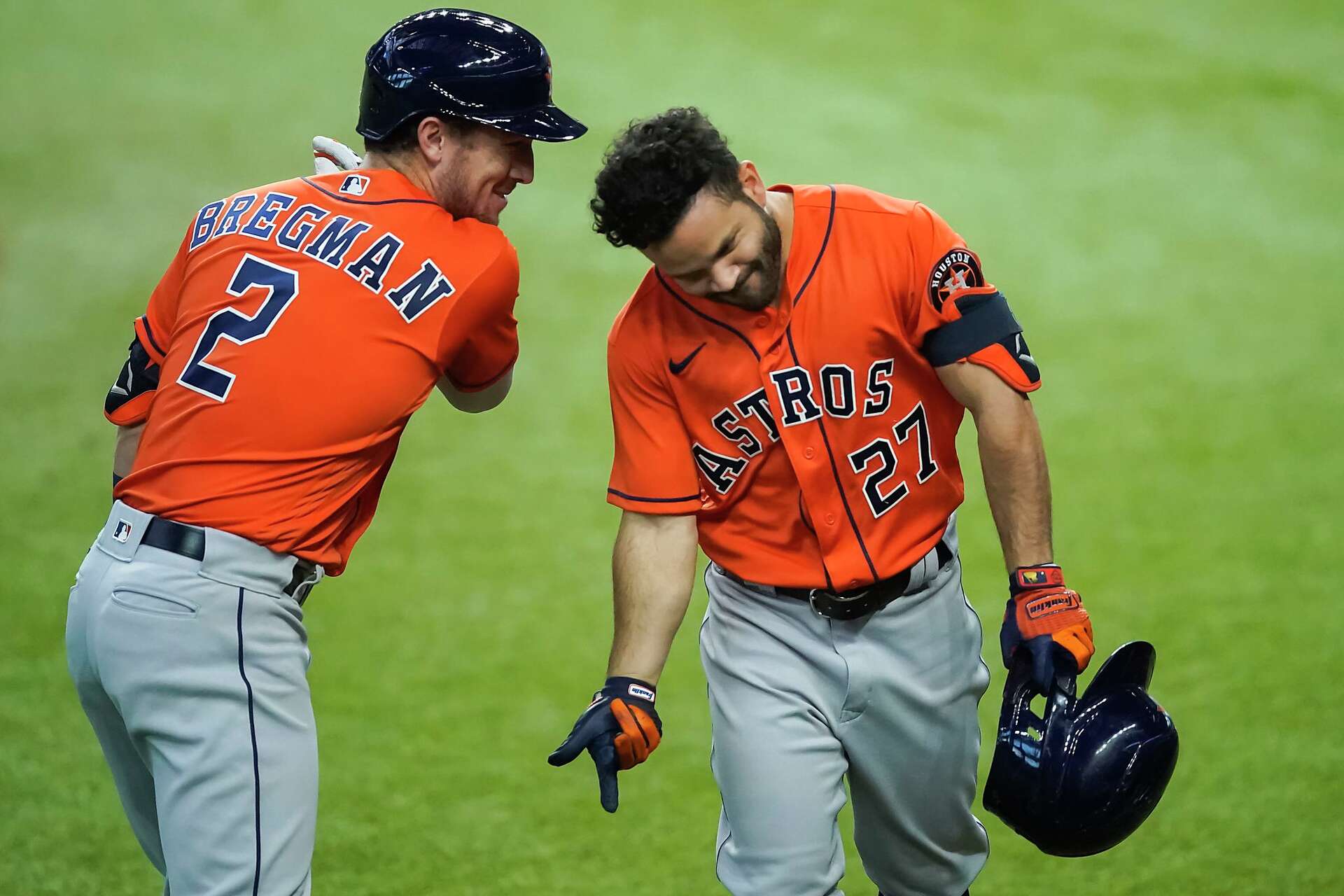
Jose Altuve’s five-year, $125 million contract extension with the Houston Astros ensures the franchise icon remains in Houston through the 2029 season. Signed in early 2024 and officially beginning in 2025, the deal includes a $15 million signing bonus and a front-loaded salary structure designed to maximize the second baseman’s earning potential during his mid-30s.
The Financial Architecture of the 2025–2029 Extension
When the Houston Astros announced the five-year extension for Jose Altuve, it signaled a departure from traditional aging-curve concerns. The deal, which covers the 2025 through 2029 seasons, is valued at exactly $125 million in new money. This followed the conclusion of his previous seven-year, $163.5 million agreement that expired after the 2024 campaign.
The structure of the contract is particularly noteworthy for its front-loaded nature. In the first three years of the deal (2025, 2026, and 2027), Altuve receives a base salary of $30 million per year. As we navigate the 2026 MLB season, Altuve is currently in the second year of this extension, earning that peak $30 million figure. In the final two years of the agreement (2028 and 2029), the base salary drops significantly to $10 million per year.
Why the Salary Drop Matters
The sharp decline in salary for the 2028 and 2029 seasons serves two primary purposes. First, it acknowledges the natural physical decline expected of a player in his late 30s (Altuve will be 39 in the final year of the deal). Second, it provides the Astros with significant "payroll breathing room" in the future, allowing the front office to allocate funds toward younger stars or free-agent acquisitions while Altuve transitions into the twilight of his career.
Signing Bonus and Total Value
In addition to the annual salaries, the contract included a $15 million signing bonus. In Major League Baseball, signing bonuses are often paid out in installments or upfront, but for the purposes of the Competitive Balance Tax (CBT), they are pro-rated over the life of the contract. This brings the Average Annual Value (AAV) of the extension to $25 million per year.
Comparative Breakdown of Altuve's Contract Year-by-Year
To understand the full impact of this extension on the Houston Astros' books, it is helpful to view the year-by-year financial obligations. The following table outlines the specific cash flow and age milestones for Jose Altuve through the end of the decade.
| Season | Player Age | Base Salary | Signing Bonus Pro-Ration | Total Luxury Tax Hit (AAV) |
|---|---|---|---|---|
| 2025 | 35 | $30,000,000 | Included in AAV | $25,000,000 |
| 2026 | 36 | $30,000,000 | Included in AAV | $25,000,000 |
| 2027 | 37 | $30,000,000 | Included in AAV | $25,000,000 |
| 2028 | 38 | $10,000,000 | Included in AAV | $25,000,000 |
| 2029 | 39 | $10,000,000 | Included in AAV | $25,000,000 |
Note: The $15 million signing bonus was paid separately from the base salary, but the $25M AAV remains constant for luxury tax purposes.
Strategic Context: Why the Astros Committed $125 Million
The decision to extend a second baseman into his late 30s is historically risky. Traditional aging curves suggest that middle infielders lose range and bat speed rapidly after age 32. However, the Houston Astros and owner Jim Crane viewed Altuve as an exception to the rule for several key reasons.
Elite Production and Bat Speed
Leading into the extension, Altuve continued to post elite numbers. Even as he crossed the age-33 threshold, his hard-hit rate and contact ability remained in the top percentiles of the league. In the 2023 and 2024 seasons, Altuve maintained an OPS (On-base Plus Slugging) well above .800, proving that his specialized swing mechanics—characterized by a quick "short-to-the-ball" path—were resistant to the typical slowing of reflexes.
The "Astro for Life" Philosophy
Beyond the statistics, this extension was a legacy move. Altuve is widely considered the greatest player in the history of the Houston Astros franchise, rivaling the likes of Jeff Bagwell and Craig Biggio. By securing this five-year deal, the organization ensured that Altuve would never wear another uniform. This has immense value in terms of brand loyalty, jersey sales, and clubhouse leadership. As a veteran leader in 2026, his presence is vital for integrating younger prospects into the "Astros Way."
Market Comparison
At the time of the signing, the market for elite second basemen had been set by players like Marcus Semien (7 years, $175M). Altuve's deal, while high in AAV at $25 million, is shorter in duration than many other superstar "lifetime" contracts. This allows the Astros to avoid a 10-year commitment while still paying Altuve like a top-tier performer during his productive years.
Luxury Tax Implications and Roster Construction
In the modern MLB era, the Competitive Balance Tax (CBT) dictates how teams build their rosters. The "Luxury Tax" is calculated based on the AAV of all players on the 40-man roster.
Because Altuve's AAV is $25 million, he represents a significant but manageable portion of the Astros' payroll. By front-loading the actual cash payments ($30M in 2025-2027), the Astros are paying him while the team is in a championship window. If the team needs to rebuild or reset their tax penalties in 2028 or 2029, Altuve’s actual cash cost will be much lower, even though his tax hit remains $25M.
This financial flexibility is crucial as the Astros manage other high-profile extensions. During this period, the team has had to balance the contracts of players like Yordan Alvarez and the eventual free agency of other core members. Altuve’s deal provides a blueprint for how the Astros handle their "Legacy Stars"—rewarding them for past performance while structuring the deal to protect the team’s future maneuverability.
Performance Benchmarks: Altuve’s Pursuit of 3,000 Hits
A central theme of the 2025–2029 extension is Jose Altuve’s pursuit of the 3,000-hit milestone. When he signed the extension, he had already surpassed 2,000 hits and several franchise records.
To reach 3,000 hits by the end of his contract in 2029, Altuve needs to average approximately 150 to 160 hits per season. As of 2026, he remains on pace for this Hall of Fame milestone. The five-year duration of the contract was specifically calibrated to give him enough "runway" to achieve this goal in an Astros uniform.
For fans and historians, the details of this contract are as much about the 3,000-hit club as they are about the $125 million value. Each year of the extension represents another chapter in what is likely a first-ballot Hall of Fame career.
Defensive Adjustments and Longevity
Another technical aspect of the "five-year extension details" involves Altuve's defensive positioning. While the contract does not explicitly mandate a position change, there has been ongoing discussion about his long-term viability at second base.
- Range and Lateral Quickness: As players enter their late 30s, the ability to cover the "hole" between first and second base typically diminishes.
- The DH Factor: With the universal Designated Hitter (DH) now standard in MLB, the Astros have the option to move Altuve off the field more frequently in 2027-2029 to preserve his health while keeping his bat in the lineup.
- Physical Maintenance: Altuve’s training regimen has shifted toward flexibility and core strength to mitigate the risk of soft-tissue injuries, which became a minor concern in his early 30s.
The contract reflects the team's belief that even if Altuve eventually transitions into a part-time second baseman or full-time DH, his offensive output and leadership will justify the $25M AAV.
Contractual Protections and No-Trade Clauses
While the full text of MLB contracts is rarely public, major reports from outlets such as MLB Trade Rumors and The Athletic have confirmed that Jose Altuve possesses significant "10-and-5" rights.
Under MLB rules, a player who has been in the major leagues for 10 years and with the same team for the last five years earns the right to veto any trade. Altuve reached this status long before this extension was signed. Therefore, while a formal "No-Trade Clause" may be written into the document, his 10-and-5 rights effectively serve as a total veto power over any potential move. This reinforces the "Astro for Life" narrative, as Altuve has full control over his destination and has repeatedly stated he has no intention of leaving Houston.
Frequently Asked Questions
What is the total value of Jose Altuve's current contract?
The five-year extension is worth $125 million. When combined with the $15 million signing bonus, the average annual value (AAV) used for luxury tax purposes is $25 million per year from 2025 through 2029. This followed his previous $163.5 million deal.
How much does Jose Altuve earn in 2026?
In the 2026 season, Jose Altuve earns a base salary of $30 million. This is part of the front-loaded portion of his five-year extension, where he earns $30 million annually for the first three years (2025-2027) before the salary drops to $10 million for the final two years.
Does Jose Altuve have a no-trade clause in his extension?
Yes, effectively. Due to his "10-and-5" rights (10 years in the MLB, 5 years with the same team), Altuve has the right to veto any trade. He is one of the few players in the league with absolute control over his movement, ensuring he can remain with the Houston Astros for the duration of the contract.
When does Jose Altuve's contract expire?
Altuve’s current extension runs through the end of the 2029 MLB season. He will be 39 years old when the contract concludes. At that point, he will have completed 19 seasons with the Houston Astros.
How does this contract affect the Astros' luxury tax?
The contract carries a $25 million annual hit toward the Competitive Balance Tax (CBT). Even though his actual cash salary is $30 million in 2026, the tax is calculated based on the average value of the contract ($125M / 5 years). This allows the team more flexibility than if the tax hit was tied to the $30M cash payment.
Summary of Next Steps for the Franchise
With the financial details of Altuve’s extension settled and the 2026 season underway, the focus for the Houston Astros shifts toward optimizing the roster around their veteran core. Fans should monitor Altuve’s health and hit totals as he approaches the 3,000-hit milestone, as his performance in these high-salary years (2025–2027) will largely determine the team’s championship ceiling. For the front office, the upcoming salary drop in 2028 will be the next major inflection point for roster rebuilding or reloading.