In 2026, the "winning" eBay alternative depends entirely on your specific product niche: Etsy dominates for handmade and vintage goods, Amazon leads for high-volume new items, and Mercari or Poshmark win for casual resale. For local, fee-free transactions, Facebook Marketplace remains the top choice for maximizing profit margins on heavy items.
For decades, eBay was the undisputed king of the secondary market and small-scale e-commerce. However, as we move through 2026, the landscape has fractured into specialized ecosystems. Sellers are no longer asking if there is an alternative, but rather which specific platform offers the lowest fees, the most protective seller policies, and the highest conversion rates for their specific inventory. Determining a "winner" requires looking past the surface and analyzing the technical infrastructure, fee structures, and audience demographics of the current market leaders.
The Evolution of the Marketplace Landscape in 2026
The e-commerce environment of 2026 is defined by hyper-specialization. While eBay attempted to be everything to everyone—from a place to buy a $5 used t-shirt to a $50,000 classic car—newer competitors have won by narrowing their focus. eBay’s increasing "Final Value Fees," which now often exceed 13% for many categories plus per-order fixed costs, have driven professional sellers toward platforms with more predictable overhead or better organic reach.
Furthermore, the rise of managed payments and stricter shipping requirements has neutralized many of eBay’s historical advantages. Sellers are looking for platforms that offer better "listing health" tools, more transparent search algorithms, and integrated shipping solutions that don't require third-party subscriptions. To find the winner, we must examine the contenders across different selling categories.
Amazon: The Heavyweight for Professional Scaling
For sellers moving new, mass-produced, or private-label products, Amazon is the primary alternative to eBay. While eBay is a marketplace of "listings," Amazon is a marketplace of "products." This distinction is critical for your business model.
Fulfillment and Logistics
In 2026, Fulfillment by Amazon (FBA) remains the gold standard for logistics. While eBay has attempted various fulfillment programs, they lack the massive warehouse infrastructure of Amazon. If you want to scale your business without renting your own warehouse, Amazon wins. However, this comes at a steep price. Amazon’s fee structure is often more complex than eBay's, involving referral fees (usually 15%), storage fees, and fulfillment fees that can consume 30% to 40% of your gross revenue if your margins are thin.
The Search Advantage
Amazon’s A10 algorithm (and its 2026 iterations) prioritizes sales velocity and conversion over the historical feedback metrics that eBay favors. For a new seller with a high-quality product, it is often easier to "rank" on page one of Amazon through aggressive PPC (Pay-Per-Click) advertising than it is to build the long-term reputation required to dominate eBay’s Best Match search results.
Etsy: The Undisputed Winner for Creators and Collectors
If your inventory consists of handmade items, craft supplies, or vintage goods (defined as 20 years or older), Etsy is the clear winner over eBay. In 2026, Etsy has successfully defended its brand identity as a "human" marketplace, whereas eBay is often perceived as a digital flea market.
Fee Structure and Profitability
Etsy’s fee structure remains relatively straightforward compared to eBay. While eBay often charges different percentages based on the category, Etsy maintains a consistent transaction fee (currently 6.5%) plus a listing fee ($0.20). Even with their mandatory offsite ads for high-volume sellers, many boutique businesses find their net profit per item is higher on Etsy because the audience is willing to pay a "handmade premium" that eBay buyers—who are often looking for the lowest possible price—will not support.
Audience Psychology
The primary reason Etsy wins in the creative niche is intent. Users go to Etsy to discover something unique; they go to eBay to find a deal. This leads to lower return rates and higher customer loyalty for Etsy sellers who invest in high-quality photography and brand storytelling.
Mercari and Poshmark: The Mobile-First Resale Leaders
For casual sellers and "closet flippers," the friction of listing on eBay has become a significant deterrent. In 2026, Mercari and Poshmark have optimized the selling process to the point where an item can be listed in under 60 seconds from a smartphone.
Mercari’s "No Seller Fee" Model
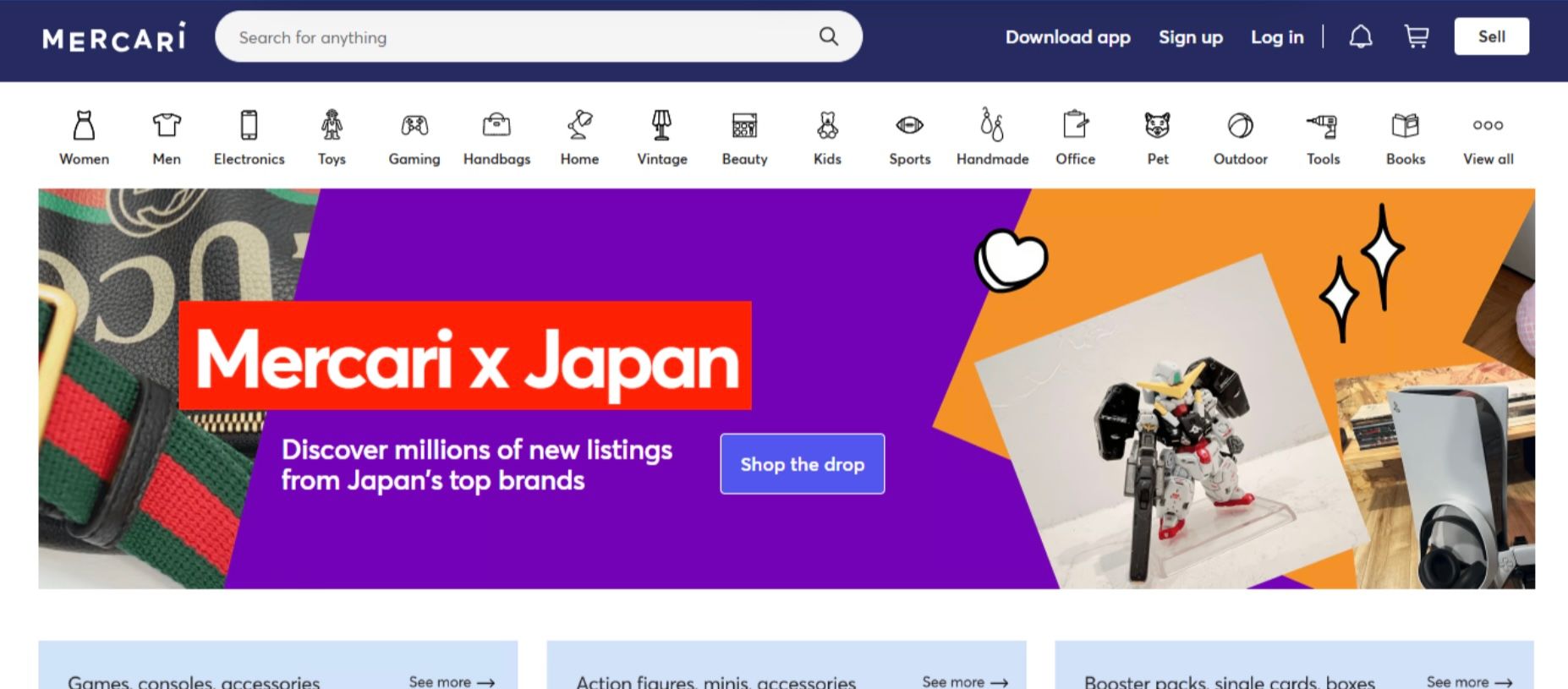
Mercari made waves in the mid-2020s by shifting most of its fee burden to the buyer, allowing sellers to list and sell with 0% selling fees (though payment processing fees still apply). This makes Mercari the winner for sellers who are price-sensitive and want to see the exact amount they will receive without calculating complex percentages. It is particularly strong for electronics, toys, and small household items.
Poshmark’s Social Selling Edge
Poshmark wins the fashion and luxury category through its social-media-style interface. By 2026, Poshmark’s "Live Shows" have become a dominant revenue stream for professional resellers. Unlike eBay’s stagnant auction format, Poshmark Live allows for real-time interaction, building a community around a seller’s "closet." This social proof allows Poshmark sellers to move inventory faster than the traditional 7-day eBay auction.
Facebook Marketplace: The Local and Profit-Margin Winner
When considering which marketplace wins based on pure profit retention, Facebook Marketplace is the champion for local sales. Because there are no listing fees and no shipping costs for local pickups, the seller keeps 100% of the sale price.
Solving the "Shipping Headache"
For heavy, fragile, or bulky items—such as furniture, fitness equipment, or large appliances—eBay is often a logistical nightmare. The risk of shipping damage and the high cost of freight make eBay a poor choice. Facebook Marketplace leverages the local community, allowing for "porch pickups" or meetups. In 2026, the integration of verified profiles and ratings has significantly improved the safety and reliability of these local transactions compared to the early days of Craigslist.
Comparative Overview of Top Marketplaces in 2026
The following table compares the core metrics of the top eBay alternatives to help you identify which platform aligns with your business goals.
| Marketplace | Primary Niche | Standard Selling Fee | Listing Fee | Best For |
|---|---|---|---|---|
| Amazon | New / Mass Market | ~15% + FBA Fees | None (w/ Monthly Sub) | High-volume scaling |
| Etsy | Handmade / Vintage | 6.5% + 3% + $0.25 | $0.20 per item | Artists and crafters |
| Mercari | General Resale | 0% (Buyer pays fees) | Free | Quick, easy sales |
| Poshmark | Fashion / Beauty | 20% (for $15+) | Free | Clothing and luxury |
| Local / General | 0% (Local) / 5% (Shipped) | Free | Heavy items / Max profit | |
| Whatnot | Collectibles / Live | 8% + 2.9% + $0.30 | Free | Auctions and community |
Technical Depth: The Infrastructure of 2026 Selling
To truly move away from eBay, a professional seller must understand the technical requirements of multi-channel selling. By 2026, relying on a single platform is considered a high-risk strategy. "Winning" often means using cross-listing software like Vendoo or ListPerfectly to sync inventory across four or five of these alternatives simultaneously.
SEO and Discoverability
Each alternative requires a different SEO strategy. On eBay, "keyword stuffing" in titles still holds some weight. On Etsy, your "tags" and attributes are more critical than the title alone. On Amazon, the backend search terms and A+ content (enhanced brand content) drive the rankings. A seller transitioning from eBay must be prepared to rewrite their metadata to satisfy these varying algorithms.
Managed Payments and Tax Compliance
In 2026, all major platforms have integrated managed payment systems. This means sellers no longer deal with third-party processors like PayPal directly for their payouts. While this simplifies bookkeeping, it also means platforms have total control over your funds. Sellers should prioritize platforms with a proven track record of timely payouts and transparent 1099-K reporting to avoid tax-season complications.
Addressing the Common Pitfalls of Switching Platforms
While the alternatives offer many benefits, moving away from eBay is not without its challenges. The most common mistake is assuming that what works on eBay will work elsewhere.
- Photography Standards: eBay buyers are used to "authentic" (sometimes messy) photos. On Etsy and Amazon, the standard is much higher. Professional lighting and clean backgrounds are mandatory for success.
- Shipping Expectations: Amazon has conditioned buyers to expect 2-day shipping. If you move to a platform like Mercari but take four days to drop off a package, your ratings will suffer.
- Customer Service Tone: Poshmark and Etsy require a more "social" and personal touch. eBay interactions are often purely transactional, but on these alternatives, personalized notes or quick responses to "comments" are expected.
FAQs: Navigating eBay Alternatives
Which marketplace has the lowest fees in 2026?
Facebook Marketplace (local) and Mercari currently offer the lowest fees for sellers. Facebook Marketplace charges 0% for local transactions where the buyer picks up the item. Mercari transitioned to a model where the buyer pays the majority of the service fees, allowing sellers to keep nearly the entire asking price, minus a small payment processing fee.
Is Amazon better than eBay for used items?
Generally, no. Amazon is designed for products with a single "Universal Product Code" (UPC). While you can sell used items on Amazon, they are often buried under the "Used" tab on the main product page. eBay remains superior for unique used items where the specific condition of that one unit is the selling point, though Mercari is a strong challenger for this in 2026.
How do I move my eBay listings to another platform?
You should use a cross-listing tool. These software services allow you to import your existing eBay listings and "push" them to Etsy, Poshmark, Mercari, and others. This saves hundreds of hours of manual data entry and ensures that when an item sells on one platform, it is automatically delisted from the others to prevent overselling.
Which platform is safest for sellers regarding returns?
Poshmark is often cited as the safest because all sales are final once the buyer accepts the item or three days pass after delivery. Unlike eBay, which has a very generous "Money Back Guarantee" that buyers sometimes abuse, Poshmark’s mediated return process requires the buyer to prove the item was "Not as Described" before a return is even considered.
Can I still sell collectibles efficiently without eBay?
Yes, Whatnot has become the primary winner for collectibles (cards, comics, coins) in 2026. Their live-stream auction format creates a "FOMO" (Fear Of Missing Out) environment that often drives prices higher than eBay’s static 7-day auctions. The community-based verification on Whatnot also helps reduce the prevalence of counterfeits in the collectible space.
Final Recommendation: Choosing Your Winner
There is no single "eBay killer," but rather a suite of specialized tools. If you are a high-volume retailer, Amazon is your winner for its logistical might. If you are an artist or vintage curator, Etsy wins for its high-intent audience. For the average person cleaning out their garage, Facebook Marketplace and Mercari provide the best balance of ease and profit.
To succeed in 2026, the best strategy is to identify your "primary" platform based on your niche but maintain a presence on at least one other marketplace to diversify your risk. Start by listing your 10 most popular items on a competing platform this week to test the interface and audience response before committing to a full migration.